avg —
Horseradish Snack for Winter

Instructions
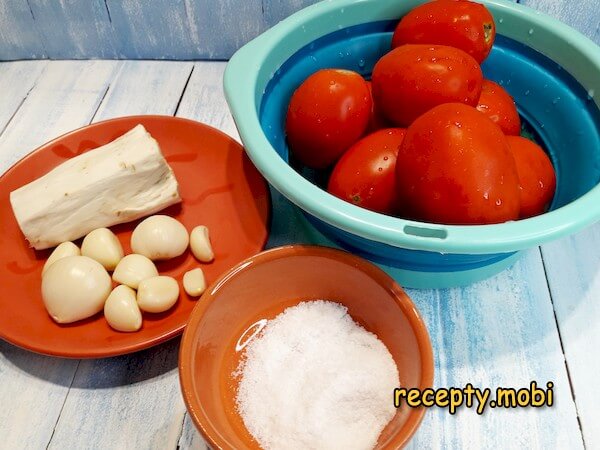
I get the ingredients ready for the horseradish snack. It is best to use meaty tomatoes so the snack doesn't turn out too watery. For lovers of very spicy food, I recommend adding 0.5 tsp of ground hot pepper, or grinding part of a fresh chilli together with the tomatoes. The glass jars should be sterilised in advance, and the lids, whether metal or plastic, scalded with boiling water.
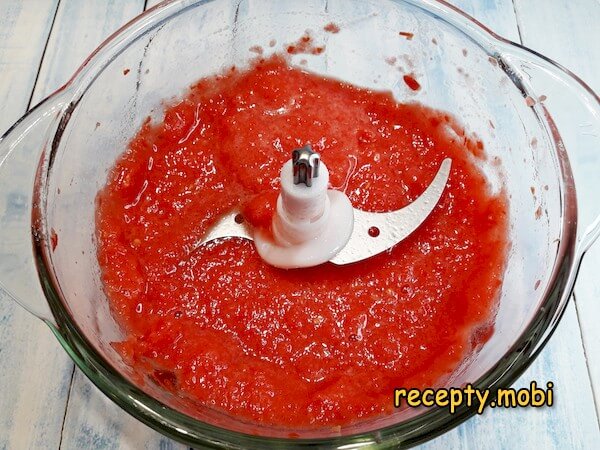
I cut the tomatoes into large chunks, removing the stem end, then grind them in a blender or an ordinary meat grinder into a smooth, pulpy mass. It is the meaty juice that should be the base of the snack, not a paste thinned with water.
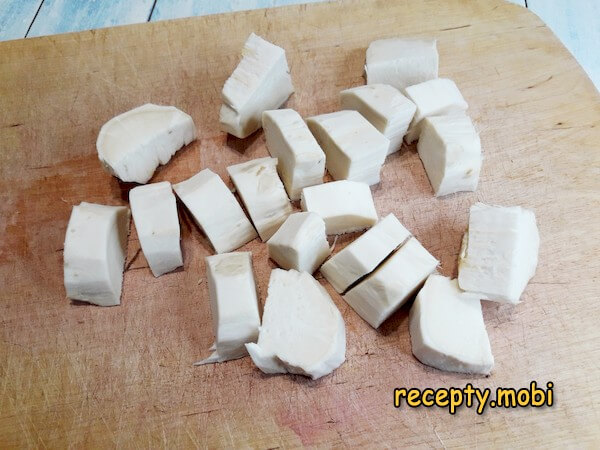
Horseradish contains volatile, fiery oils that strongly irritate the eyes while you work with it. So, to keep this to a minimum, I work step by step: first I peel the root, then cut it into medium-sized pieces. There is no need to cut it very fine – the meat grinder will finish the job.
Next I fit a food bag over the meat grinder and tie it on around the plate with a rubber band. I grind the pieces of horseradish – they drop straight into the bag, and you barely notice the essential oils. This is a "protective trick": without the bag the kitchen would be impossible to breathe in from the sting of grated horseradish.
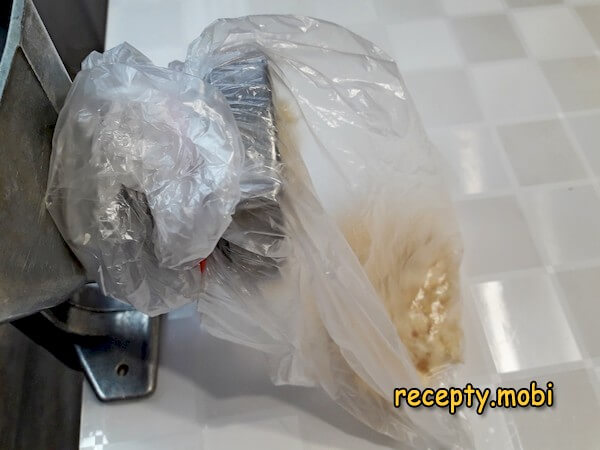
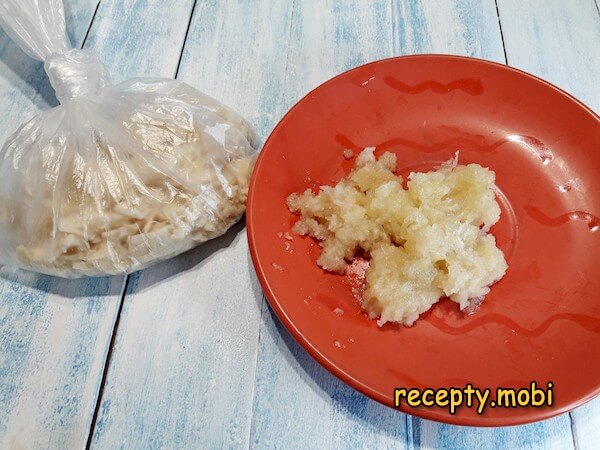
Then I carefully take the bag off the grinder and tie it in a knot. I press the garlic through a garlic press – using the press here specifically, so the garlic flavour spreads through the whole mass.
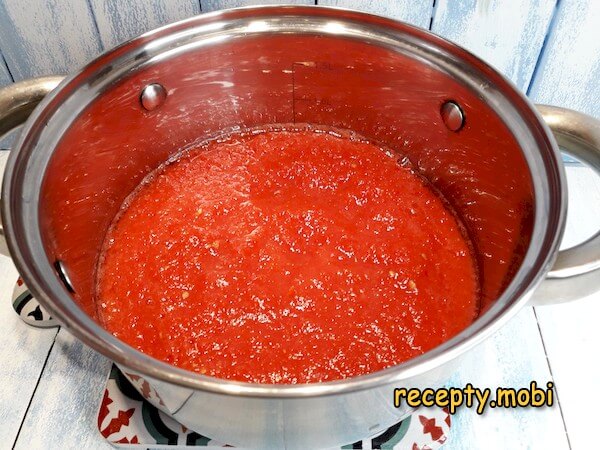
I pour the tomato into a container that is convenient for mixing – ideally stainless steel or glass. Aluminium or untinned dishes will oxidise from the salt and horseradish.
I add the salt while the tomato is still clean, without spicy additions – that way I can calmly taste it for salt.
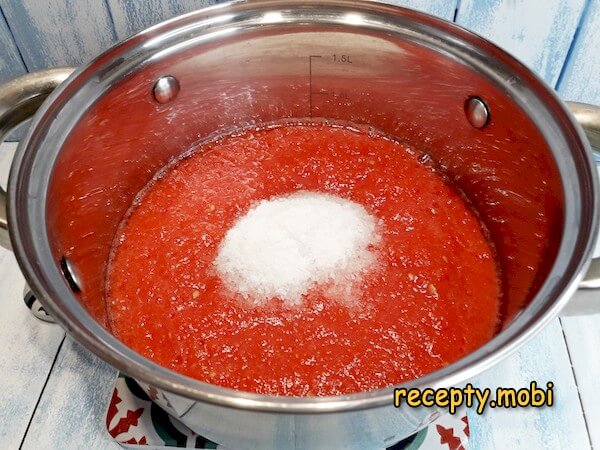
I stir it and let it stand for about 20 minutes so the salt dissolves and I can taste it (the flavour should be a little saltier than for ordinary cooking). Once the horseradish and garlic go in, tasting for salt becomes impossible – their heat overwhelms all the taste receptors.
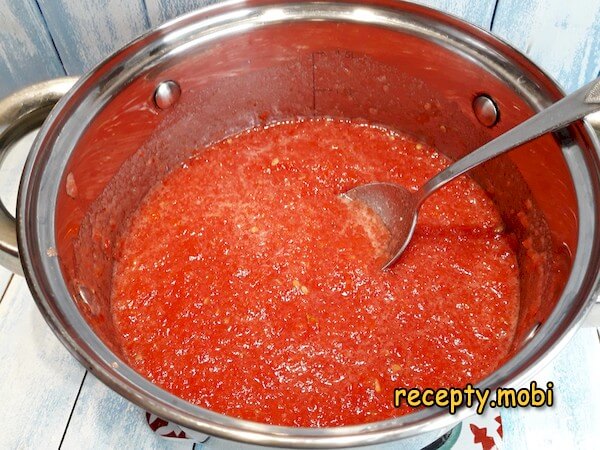
Now I add the garlic.
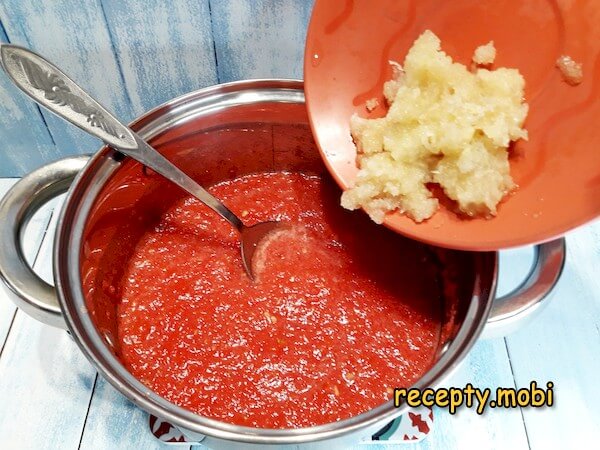
And the horseradish. I untie the bag of horseradish, prepared earlier, over the bowl – the fiery oils have already aired out a little inside the bag, so it is more comfortable to work with now.
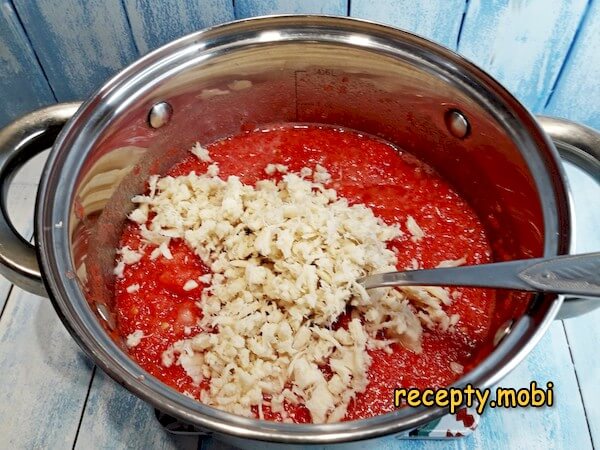
I mix everything thoroughly – it is important to spread the horseradish and garlic evenly throughout the tomato.
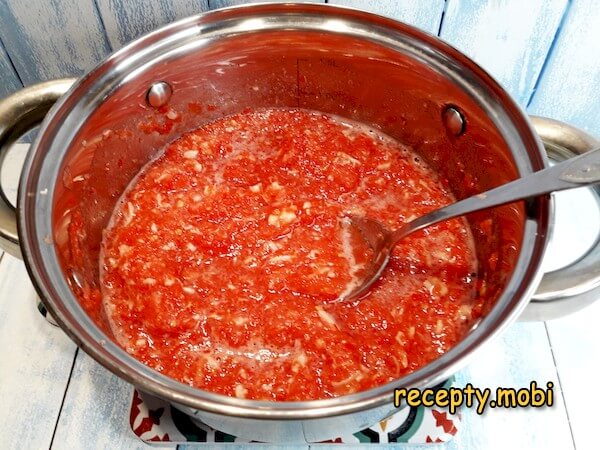
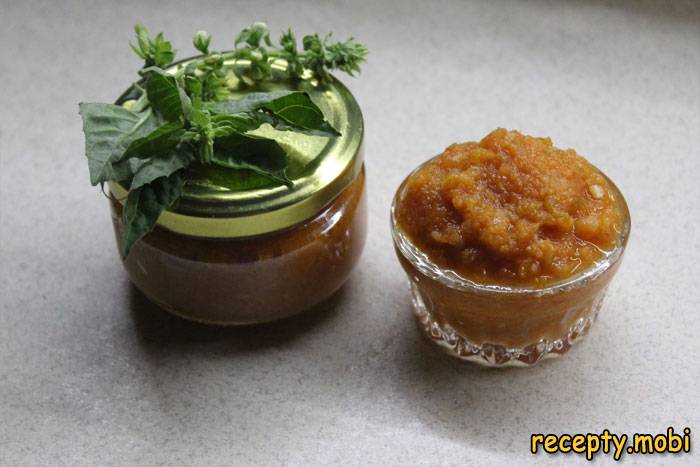
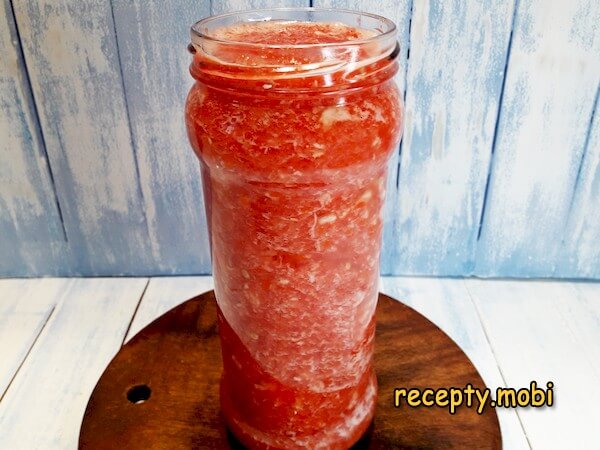
I spoon the finished seasoning into jars and close them with plastic or metal lids. Fill them right to the top, with no layer of air.This horseradish snack keeps in the refrigerator only. That is both its drawback and its strength – all the ingredients in it are alive, uncooked and made without any vinegar. On a fridge shelf the snack will keep until next summer: the lid won't bulge and the top won't grow mould. The only thing that happens over time is that the snack loses some of its punch and heat, becoming milder.


Tips
- 1
HORSERADISH THROUGH THE GRINDER INTO A BAG – the "secret" to no tears. Without a bag, the essential oils of horseradish irritate the eyes and nose and make the kitchen impossible to breathe in. A bag on the grinder's plate plus a rubber band means the grated horseradish drops straight into a sealed space, and the kitchen stays comfortable.
- 2
TASTE FOR SALT BEFORE THE SPICY ADDITIONS – the "secret" to getting the saltiness right. Once the horseradish and garlic are added, the taste receptors are blocked by their heat and you can't judge the saltiness. Salt plus 20 minutes of resting in the clean tomato gives you time to taste and adjust. The same trick works in homemade aubergine caviar with garlic for winter.
- 3
MEATY TOMATOES – the "secret" to a thick texture. Watery varieties give a runny snack that separates in the jar. Meaty types such as Slivka and Roma make a thick base that holds its consistency for weeks.
- 4
SALT AS THE ONLY PRESERVATIVE – the "secret" to a "live" snack. Vinegar and heat destroy the beneficial properties of horseradish and garlic, leaving only a marinade flavour. With 0.75 tbsp of salt per 800 g of mass, the snack stays "live" and keeps for up to a year in the fridge. The same principle is used in aubergine caviar for winter without sterilisation.
FAQ
Which horseradish is best for this snack? +
The "classic" choice is a freshly dug autumn horseradish root, 100 g, about 2–3 cm in diameter and 15–20 cm long. Alternatives: shop-bought root in vacuum packaging (weaker in aroma, so you need more – about 130 g), grated frozen horseradish (used ready, without grinding), and dried ground horseradish (1 tbsp instead of 100 g of fresh, but with a weaker "fire"). Do not use: a sprouted root with long green shoots (bitter, having lost its heat), or one that is dry and fibrous (it grinds badly and gives an unpleasant texture). Ideal is your own root from the garden, dug in autumn or early spring before it sprouts.
Can I replace the fresh garlic? +
Fresh garlic is preferable for aroma. Alternatives: dried garlic flakes (15–20 g instead of 75 g of fresh), dried ground garlic (10–15 g), and pickled garlic (100 g, but it will add a vinegary note). Do not use: garlic powder with MSG and salt (it distorts the flavour), or black fermented garlic (a different flavour profile – sweetish). Young spring garlic (with scapes) is the "premium" option, with an even brighter aroma. Old spring garlic (after winter) works too, but add 10–15 g more to compensate.
How long does the snack keep in the fridge? +
In the fridge, in a tightly closed glass jar, it keeps for 8–10 months. In the second week the flavour becomes richer – the tomato soaks up the heat more deeply. From the sixth month the heat gradually fades and the snack becomes milder and more "tomatoey". Signs of spoilage: a bulging lid, mould on the surface, a sour fermenting smell, or a colour change to brownish – I throw a jar like that out. There is no point putting it in the freezer – after thawing the texture becomes watery. It is ideal to make it for the season in autumn and finish the supply by summer.
What do you serve the horseradish snack with? +
It is a versatile spicy condiment. The classics are with kholodets, jellied meat or fish, and meat roulade. With hot dishes: with borscht (a spoonful in the bowl), with pelmeni, and with potato vareniki. With meat: with baked pork, boiled tongue, and roast beef. On a sandwich: with salo and black bread, or with boiled beef. With alcohol: vodka alongside a cold appetiser, or dark beer. As a base for other sauces: mix it with sour cream 1:2 for a milder horseradish-and-sour-cream sauce for meat. For home cold-season use: 1 tsp in warm water with honey in the morning during the cold season.
- Comment
or post as a guest
Be the first to comment.