avg —
Caviar from green tomatoes for winter (without sterilization)

Instructions
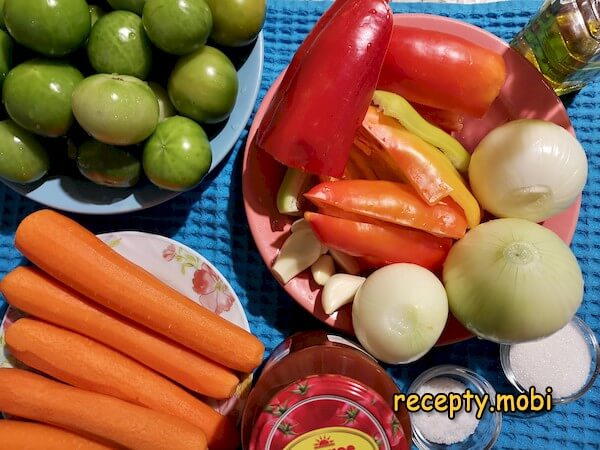
I prepare the ingredients needed for the green tomato caviar for winter (without sterilization). I peel the carrots and remove the skins from the onion and garlic. I take the seeds and the stem out of the bell pepper. Beforehand, I sterilize the jars and lids.
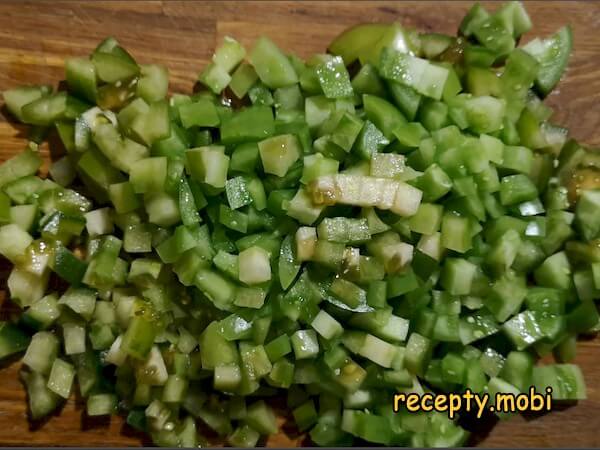
I cut the green tomatoes into small cubes.
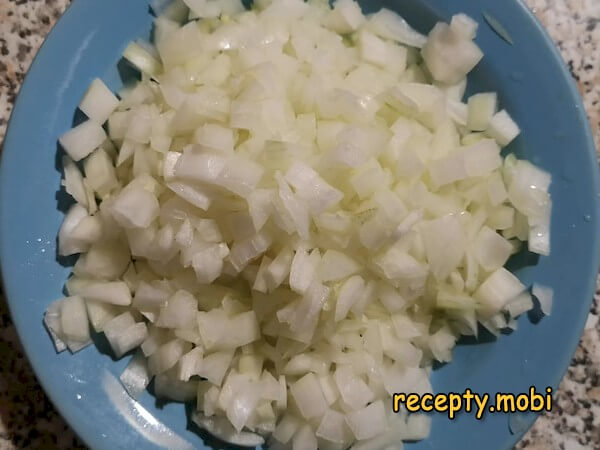
I chop the three onions into the same small cubes.
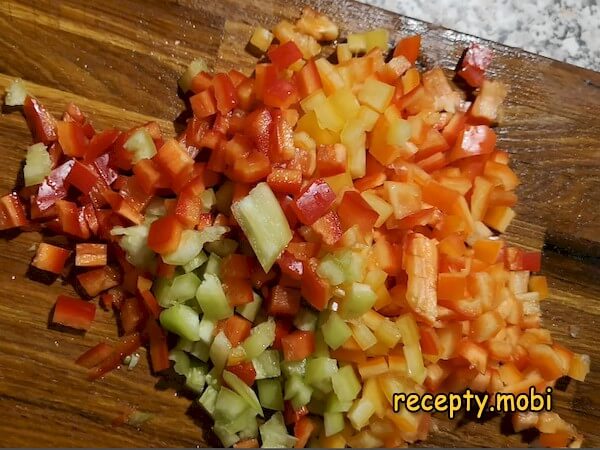
I finely dice the 200 g of bell pepper.
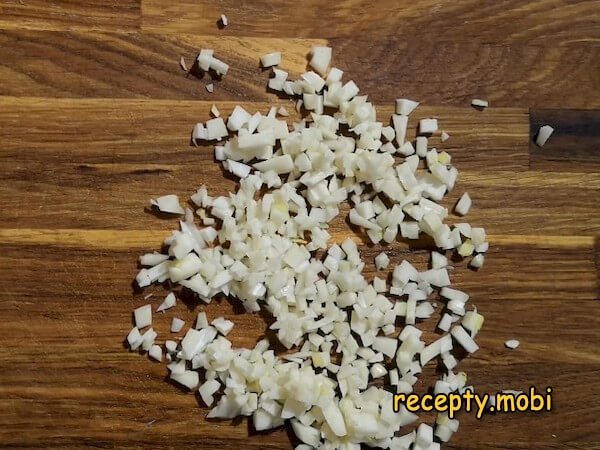
I chop the six garlic cloves into small cubes.
I grate the 500 g of peeled carrots on a vegetable grater.

I transfer all the prepared vegetables to a deep pot.
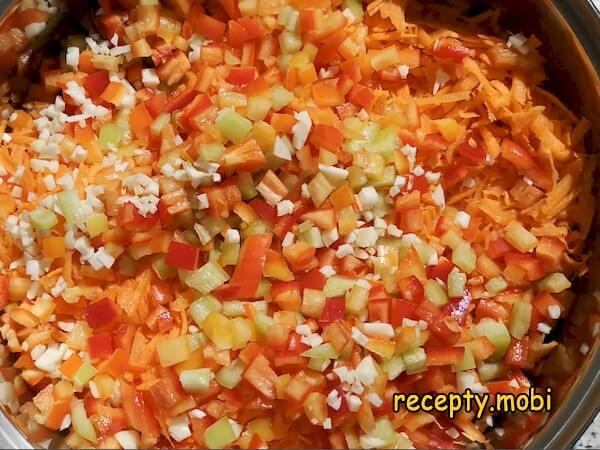
I add 1 tablespoon of salt, 3 tablespoons of sugar and 2 tablespoons of tomato paste to the vegetables. I mix everything together and set the pot over medium heat.
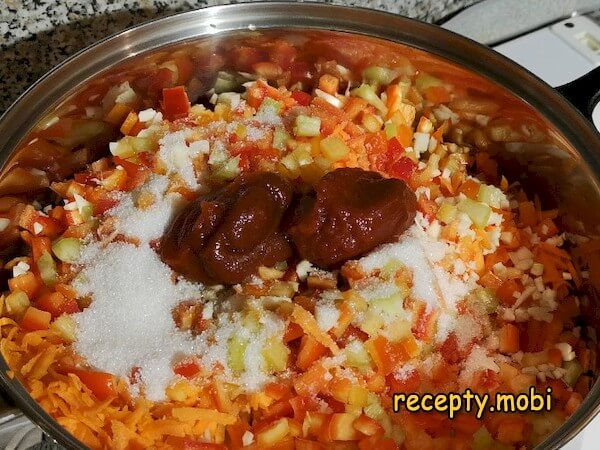
Once it comes to a boil, I reduce the heat to just below medium. I simmer the green tomato caviar for 40 minutes, remembering to stir it from time to time.

After the time is up, I add 2 tablespoons of vegetable oil and mix everything together. I cook it for another 10 minutes.
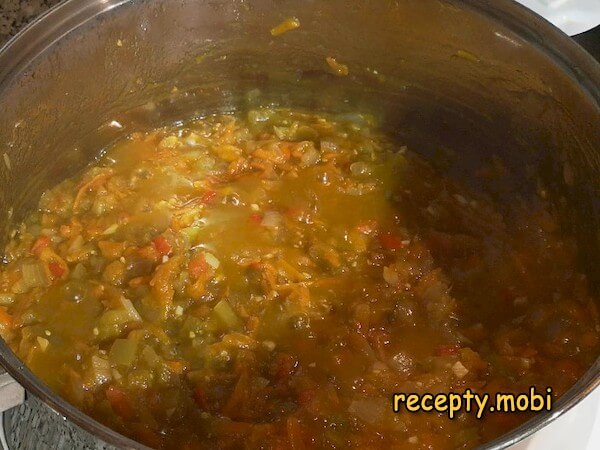
The caviar is ready.
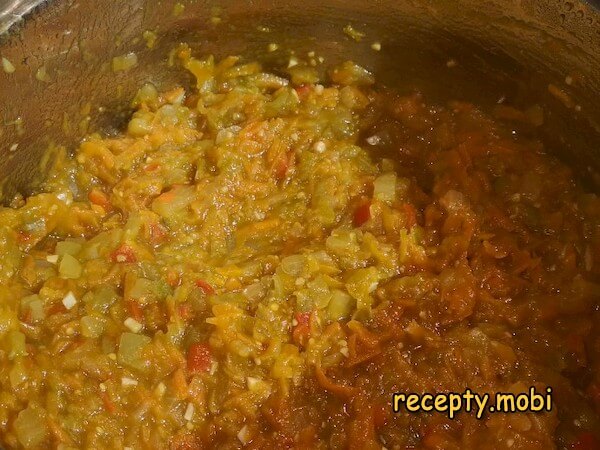
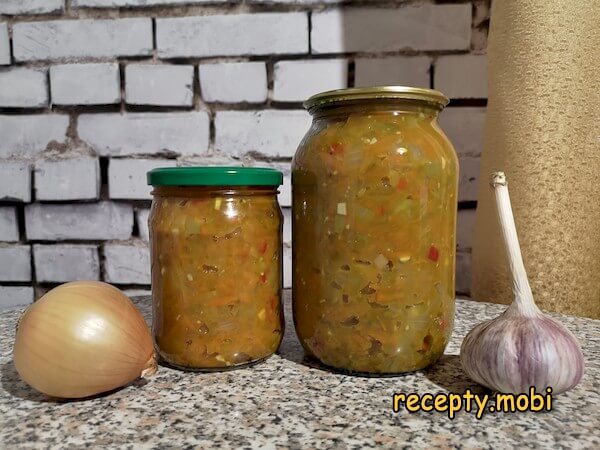
I fill the sterilized jars with the caviar and seal them with sterilized lids. I turn them upside down onto the lids and leave them that way until they are completely cool.
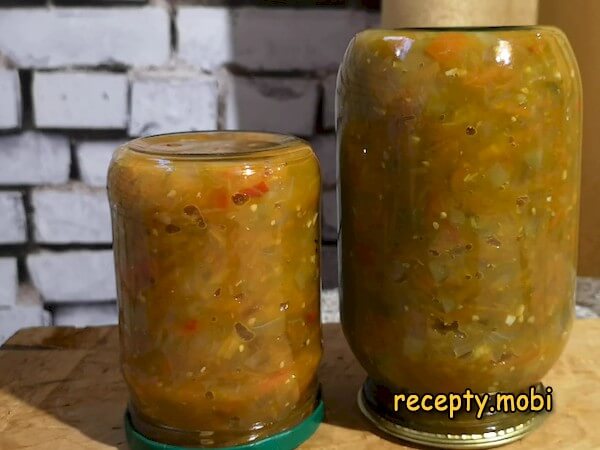
The green tomato caviar for winter (without sterilization) is ready. Happy preserving!


Tips
- 1
The 40 minutes of cooking are the secret to the texture. Cook it for less and the vegetables stay crunchy and the caviar separates. Exactly 40 minutes gives you a soft, thick mass.
- 2
Adding the oil at the end is the secret to the flavour. If you pour it in at the start, it simply cooks away. Added at the end for the last 10 minutes, it brings out the aroma and gives the caviar a glossy sheen.
- 3
Turning the jars onto their lids is the secret to a good seal. This is how you check the quality of the seal: if it leaks, the jar has not sealed properly. You can see it straight away.
- 4
Sterilizing the jars is the secret to keeping the caviar through winter. Without sterilization there is a risk the lids will swell. The same principle applies to other vegetable caviars you put up for winter.
Video
FAQ
Can I replace the green tomatoes? +
Unripe green tomatoes (1.2 kg) are ideal, as they give the dish its characteristic mild, slightly tart flavour. Alternatives include brown tomatoes at the "milky ripeness" stage (1.2 kg, for a milder result), a 50/50 mix of green and red tomatoes (600 g of each, for a brighter colour), green varieties such as Green Zebra (1.2 kg), or very pale pink tomatoes (1.2 kg, which are almost green). Tomatoes picked fresh from the vine are the best choice of all. Do not use overripe red tomatoes, which will rob the caviar of its character, or any that are spoiled or spotted. For a true classic, stick to unripe green autumn tomatoes.
What can I use instead of tomato paste? +
Alternatives include home-made tomato sauce (4 tbsp, for an economical option), ketchup (3 tbsp, for a tangier result), tomato passata (4 tbsp, for an Italian touch), chopped sun-dried tomatoes in oil (3 tbsp) or thick tomato juice (5 tbsp, for a milder version). Home-made tomato paste is the best option. Do not use tomatoes in their own juice, which makes it too watery, or a sweet-and-sour sauce, which will throw off the balance. For a true winter classic, use a paste with 25–30% dry matter.
How long does the caviar keep? +
In a dark, cool cellar (10–15°C) under a sealed lid it keeps for up to a year. Beyond that the flavour fades and the colour darkens. An opened jar keeps in the refrigerator for 5–7 days. Frozen in portions (before sealing) it keeps for up to 2 months; thaw it in the refrigerator. Freshly cooked caviar is at its best 2–3 weeks after sealing, once it has had time to mature, and by the second month the flavour is deeper and richer. Do not leave an opened jar at room temperature for longer than 4 hours, as it spoils quickly. It is ideal to put up half-litre jars for a single meal.
What do I serve green tomato caviar with? +
The winter classic is on a slice of dark bread at breakfast. It is also good with boiled potatoes for a quick supper, with fried potatoes and onion, with macaroni and cheese as a sauce, or with rice or buckwheat as a gravy. Serve it with fried meat or cutlets, with roast chicken, or on the side with dumplings (unusual, but tasty). It goes with fried eggs or an omelette, with hard cheese and a baguette as a snack with wine, or with a shot of vodka for a celebration. In winter it makes a nice contrast with fresh cucumbers. It is a versatile preserve for the winter table.
- Comment
or post as a guest
Be the first to comment.