avg —
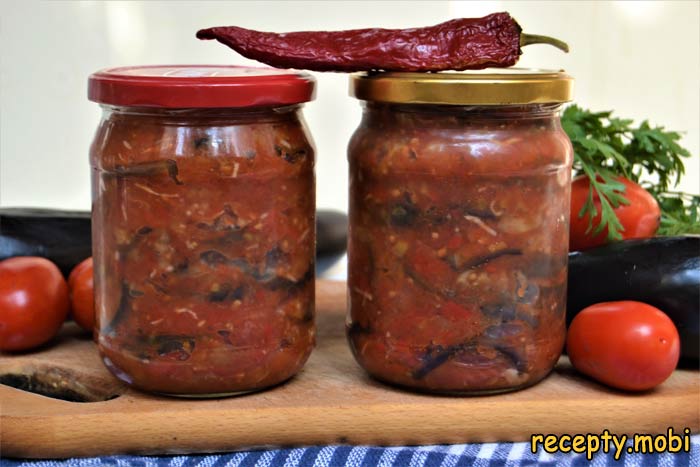
Beetroot Caviar for Winter

Instructions
I prepare the ingredients for the beetroot caviar for winter. I scrub the vegetables with a brush — especially the beetroot and carrots, as soil lodges in their folds. For this preserve it is best to choose sweet, juicy varieties of beetroot and carrot, so the flavour stays balanced and does not tip towards sourness.
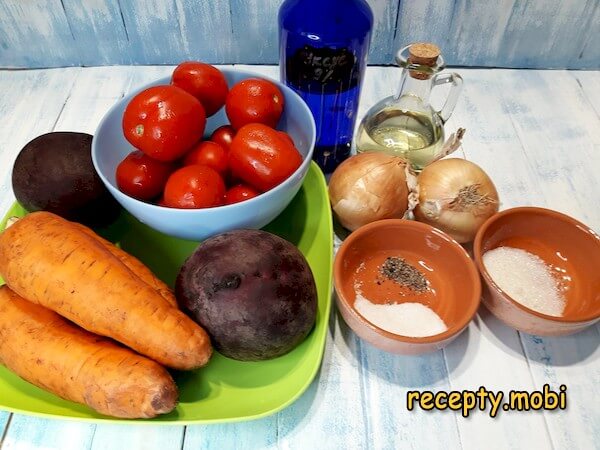
I cut the onion into large pieces and grind it through a meat grinder or blender — that way it releases more juice and cooks through faster in the mixture, leaving no tough bits.
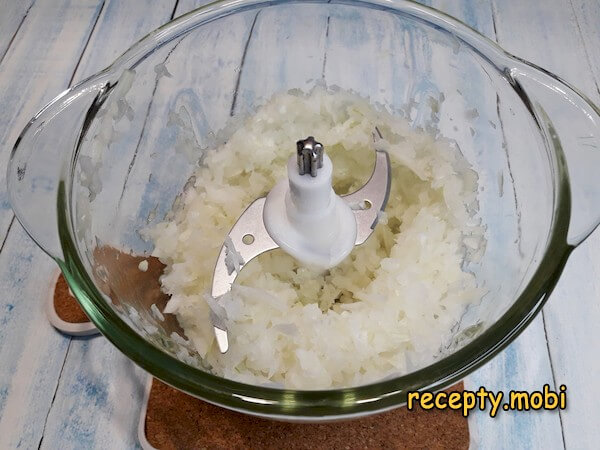
I do the same with the tomatoes, cutting out the stem end first — that coarse, tough spot at the base of the fruit gives an unpleasant texture in the finished caviar.
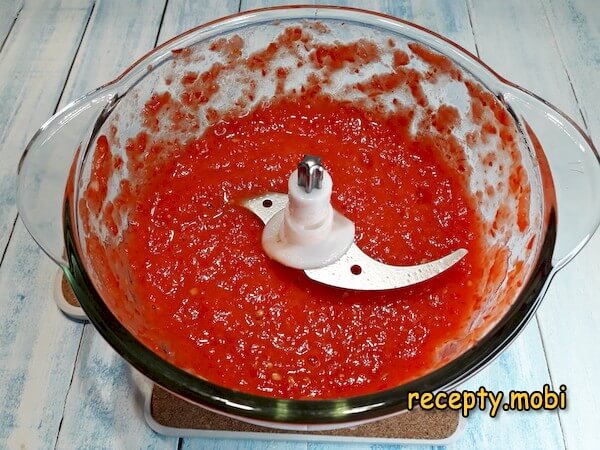
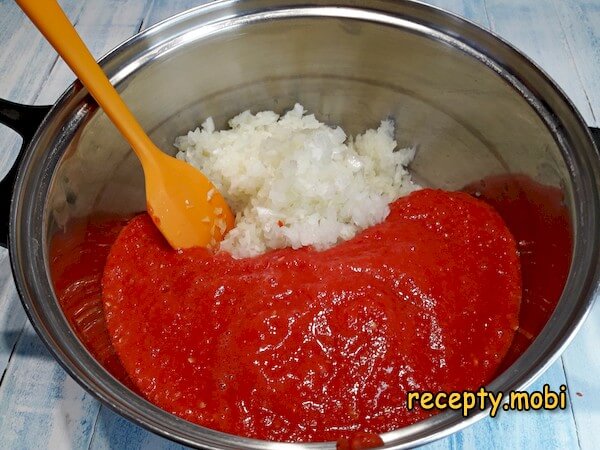
I transfer both pulpy mixtures into the pot where the caviar will be stewed — I choose a heavy-bottomed pot so the caviar does not scorch during the long, uncovered stewing.
I peel the beetroot and carrots. Young beetroot has a thin skin that comes off easily with a peeler; old beetroot has a dense skin that peels poorly.
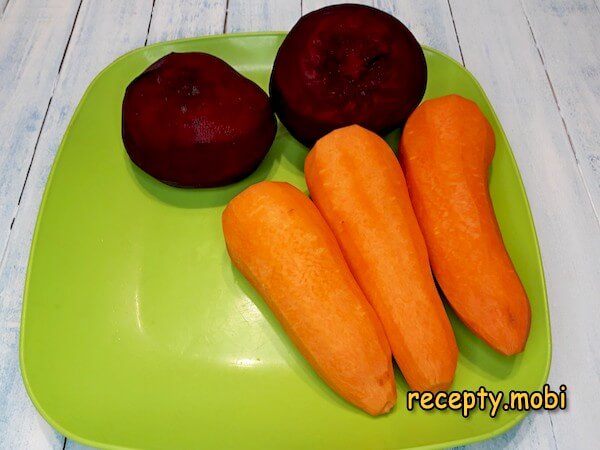
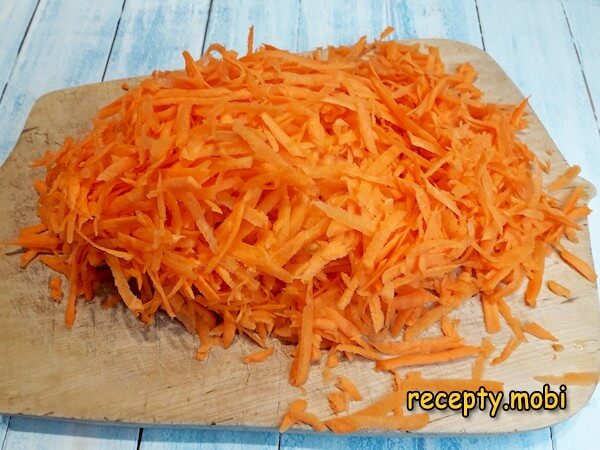
These vegetables can be put through a meat grinder, but then the caviar will have a pulpy, mushy structure. It is far better to grate the carrot on a coarse grater — this form affects not only the look but also the taste. In the finished caviar you will see carrot strands with a light texture.
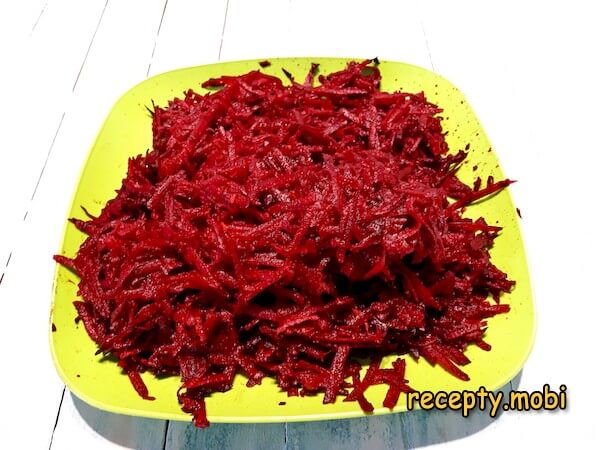
I do the same with the beetroot — grating it on a coarse grater. The long beetroot strands give the finished caviar a pleasant, light chew and set this preserve apart from a typical zucchini paste.
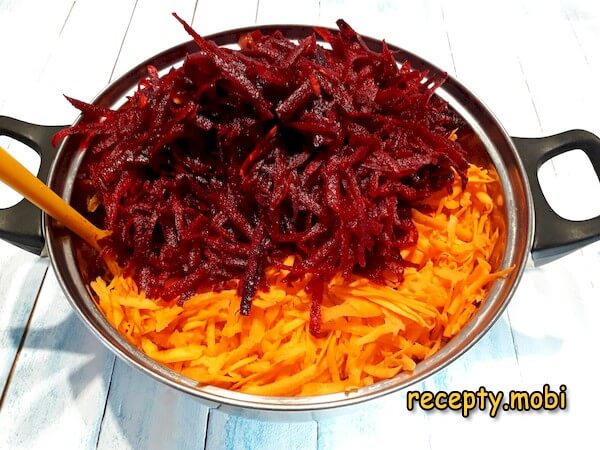
I transfer the grated vegetables into the common pot — to the onion-and-tomato mixture. I stir gently so the beetroot and carrot strands are evenly distributed.
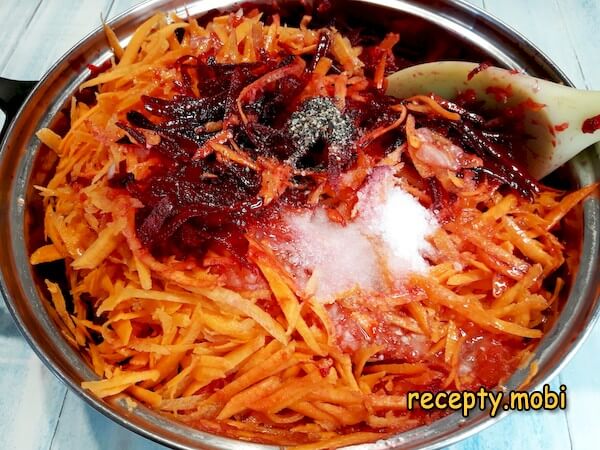
Right away I add the salt, pepper and vegetable oil — the salt helps the vegetables release their juice faster, and the oil provides "stewing in its own juices" with a light fat emulsion.
I put the pot on medium heat and bring it to a boil under the lid — the closed lid speeds up the moment it comes to the boil and stops extra moisture from evaporating too early.
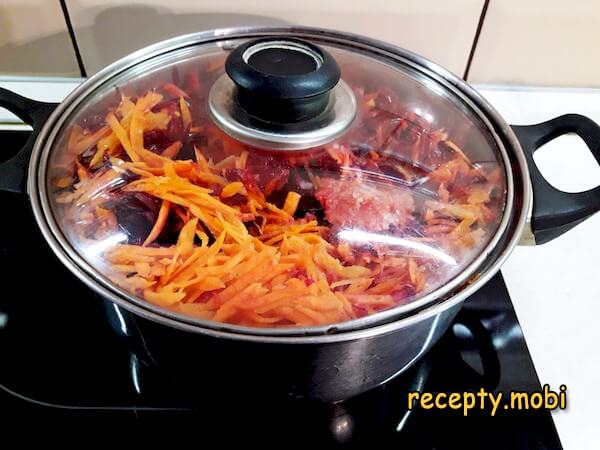
When the mixture boils, I lower the heat and stir the softened vegetables. From the start of boiling I time it — I stew the caviar uncovered for 1 hour, so the excess moisture evaporates and the preserve takes on a thick consistency.
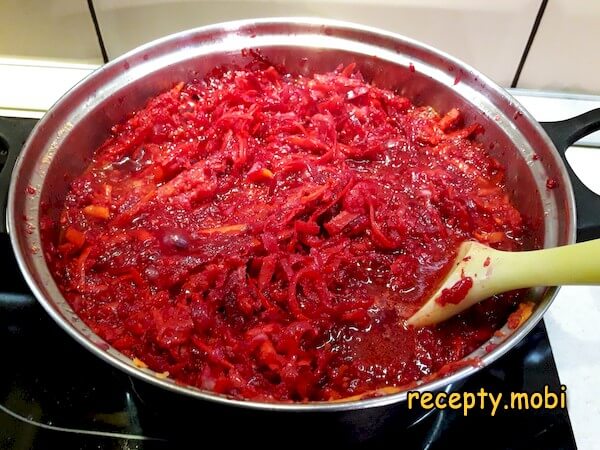
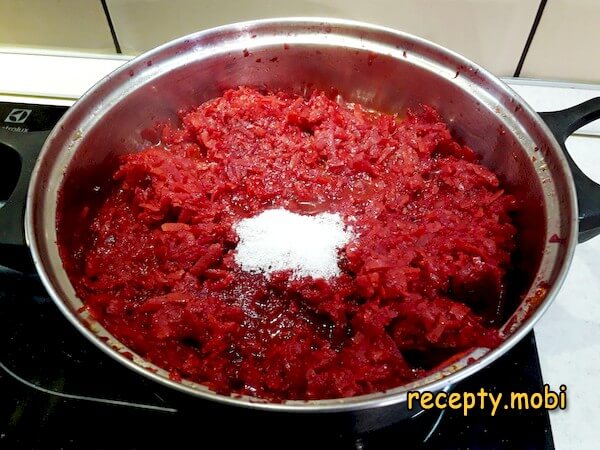
Then I add the sugar to the pot — a small amount to "round out" the flavour and balance the acidity of the tomatoes and vinegar. Without sugar the preserve would seem too sharp and sour.
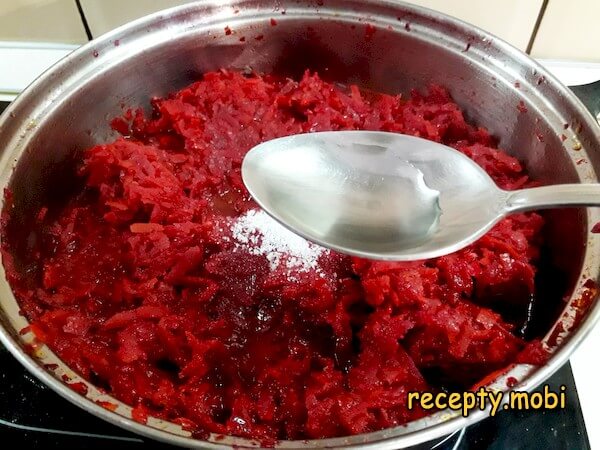
And straight after it — the vinegar. I stir the mixture and stew it for another half hour — the vinegar goes in right at the end so its acidity does not boil off during the long cooking and keeps its preserving power for reliable storage.
During this time I sterilise the jars and lids. Once the set time has passed, I fill the glass jars right to the top with the beetroot caviar and screw on the lids — a minimal air gap means maximum keeping quality.
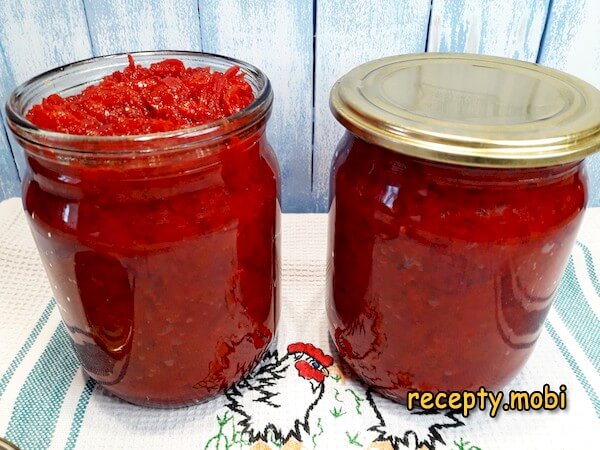
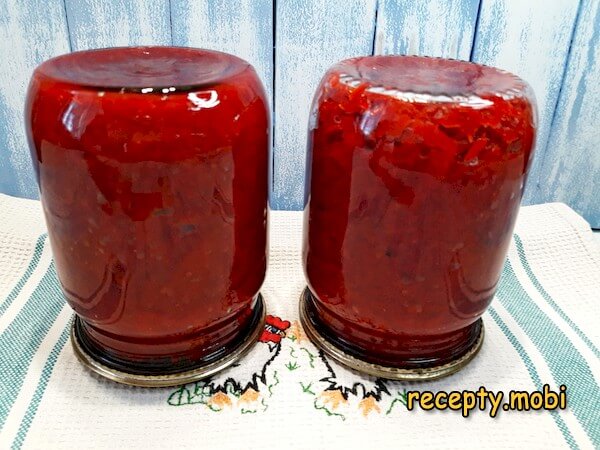
I turn the jars over and make sure they are tightly sealed — if nothing leaks from under the rim, the seam holds and the preserve will keep through the winter without trouble.
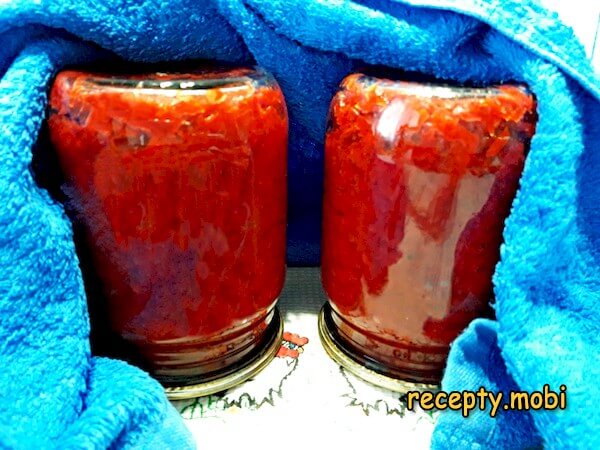
I cover the jars with a warm blanket and leave them like that for about 8 hours — slow cooling under the blanket works as an extra pasteurisation and improves the tightness of the seal.Beetroot caviar for winter keeps on ordinary kitchen shelves until the next harvest, but if you can store it in a cellar — even better. A little sugar and the sweet carrots give the caviar a slightly sweet taste, balanced by the tartness of the tomatoes. Stores of this preserve are the first to run out, so do be sure to try making it.


Tips
- 1
GRATER, NOT MEAT GRINDER — the "secret" to texture. Beetroot and carrot ground through a meat grinder give a uniform mush with no recognisable structure. Grated on a coarse grater, the strands keep their shape during stewing and give a pleasant, light chew in the finished caviar — the preserve comes out distinctive and does not blend into a typical zucchini paste.
- 2
VINEGAR AT THE END — the "secret" to the preservative's strength. Vinegar added to the boiling mixture for 30-plus minutes evaporates and loses its preserving power. Adding it half an hour before the end of stewing keeps all the acetic acid intact and working as a preservative. The same trick works in zucchini caviar for winter without sterilisation.
- 3
GARLIC AT SERVING — the "secret" to fresh aroma. I do not put garlic in the jar — during long storage it gives a characteristic "stale" note and loses the freshness of its aroma. It is far better to press a clove straight into the opened preserve before serving — the aroma will be bright and fresh.
- 4
DOUBLE PURPOSE — the "secret" to versatility. This same preserve works as a ready-made dressing for beetroot borscht for winter — two jars per three-litre pot of borscht save 40 minutes of sautéing the beetroot and carrots. Plus a ready appetiser and a base for herring under a fur coat — one preserve, three uses.
FAQ
Can garlic be added to the jars? +
It can, but I do not recommend it — during long storage in a sealed jar, garlic loses its bright, fresh aroma and gives a characteristic "stale" note that changes the taste of the whole preserve. On top of that, in rare cases garlic can cause the lid to bulge from slight fermentation. It is far better to add a clove pressed through a garlic press straight into the opened jar before serving — the aroma will be fresh and bright, as if from freshly made caviar.
How long does beetroot caviar keep? +
In a cool larder or cellar at 8-15 °C — until the next harvest, that is about a year. In an ordinary kitchen cupboard at room temperature — up to 8-9 months. Once the jar is opened — up to a week in the fridge under a lid. Signs of spoilage: a bulging lid, fermentation bubbles, a film of mould on the surface, a sour or fermented smell — I throw such a jar out without regret. If the method is followed, the preserve keeps reliably all season.
What can be made from beetroot caviar? +
It is a universal preserve with three main uses. As a standalone appetiser — served cold with black bread and herbs; you can add garlic and sour cream. As a ready-made dressing for borscht — two half-litre jars per three-litre pot save 40 minutes of sautéing the beetroot and carrots, and the borscht comes out rich and vivid. As a base for herring under a fur coat — it replaces a whole step with boiled beetroot; you only need to spread the ready caviar in a layer over the herring.
Can fresh tomatoes be replaced with tomato paste? +
Yes, at a push a good-quality tomato paste with no additives will do — for the stated amount of fresh tomatoes you need 100-120 g of paste, diluted with water to a volume of 600 ml. The taste will be more concentrated and intense than from fresh tomatoes, but less fresh. The colour will be darker, closer to a burgundy-red. When using paste it is better to add the salt and sugar gradually, tasting the mixture as you go — paste often already contains salt, and it is easy to oversalt.
- Comment
or post as a guest
Be the first to comment.