avg —
Korean Zucchini for Winter without Sterilization

Instructions
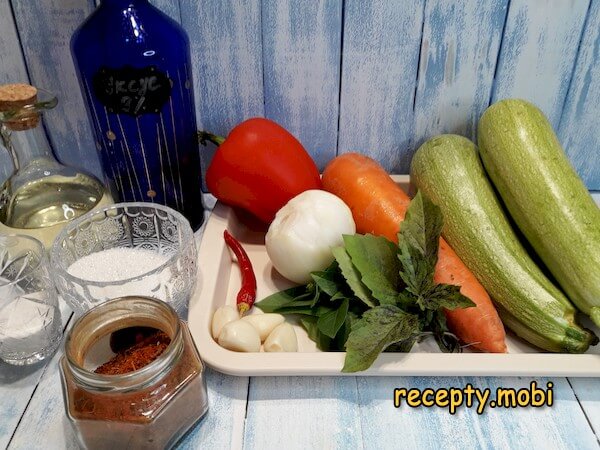
I prepare the ingredients. If you do not have fresh basil, you can use 1 teaspoon of dried basil. The glass jars and lids should be sterilised in advance by a convenient method – without this, even a hot pack will not give long storage.
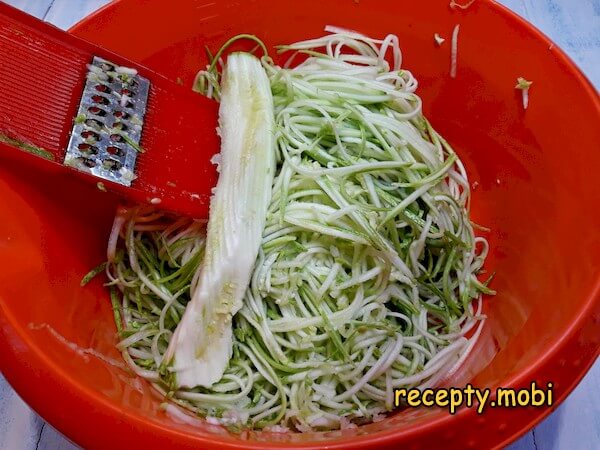
I trim the ends off the zucchini and wash them well. I grate them on a Korean-carrot grater to get long, thin strips. It is best not to use the core with the seeds – it has a loose structure and turns to mush in the salad.
On the same grater I shred the carrot – matching strips give the characteristic «Korean» look and even marinating.
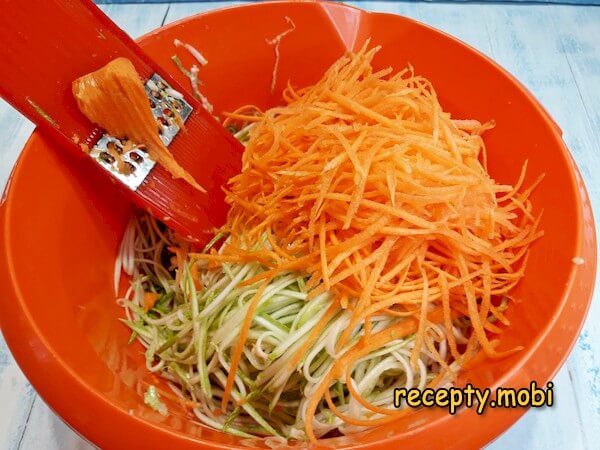
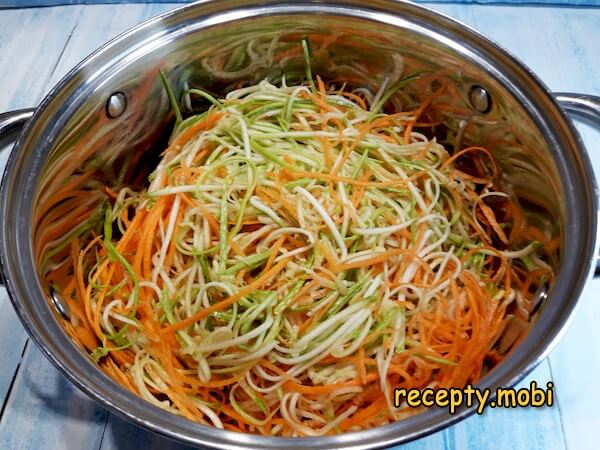
I mix the vegetables and, for convenience in the next steps, transfer them to a pot.
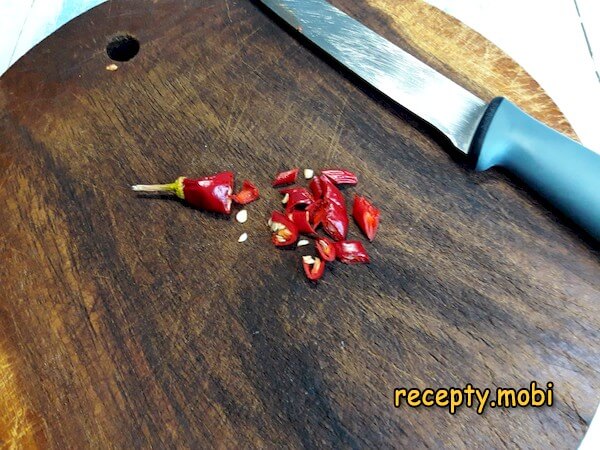
I finely chop the hot pepper – a fine cut spreads the heat more evenly.
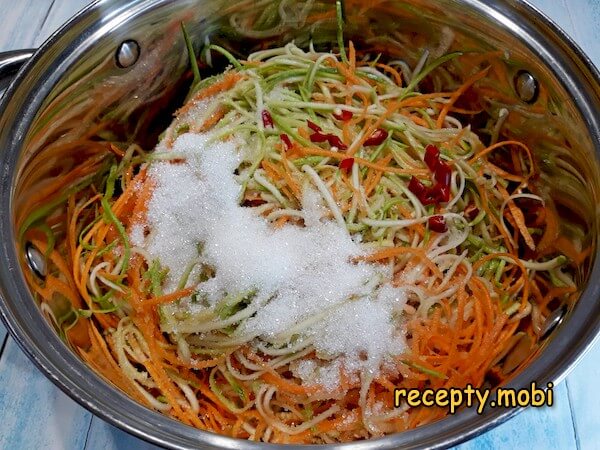
I add it to the pot, along with the salt and sugar – the salt draws the juice out of the zucchini, and the sugar balances the acidity of the marinade.
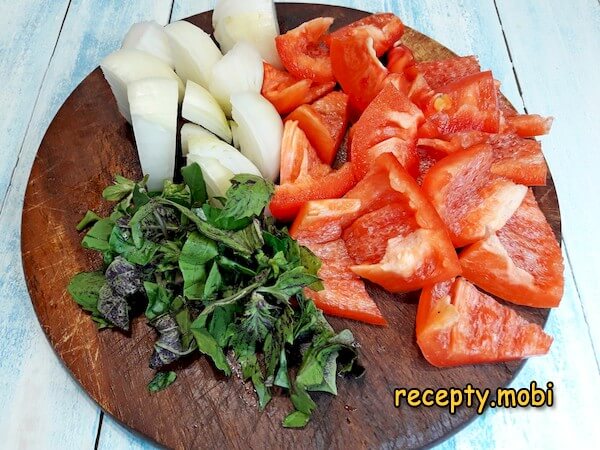
I remove the seed pod from the bell pepper, rinse it and get it ready for grinding together with the onion and basil, cutting everything into medium pieces.
I grind the prepared pieces in a chopper or screw meat grinder – it is the ground pepper with onion and basil that forms the «Korean» spiced sauce.
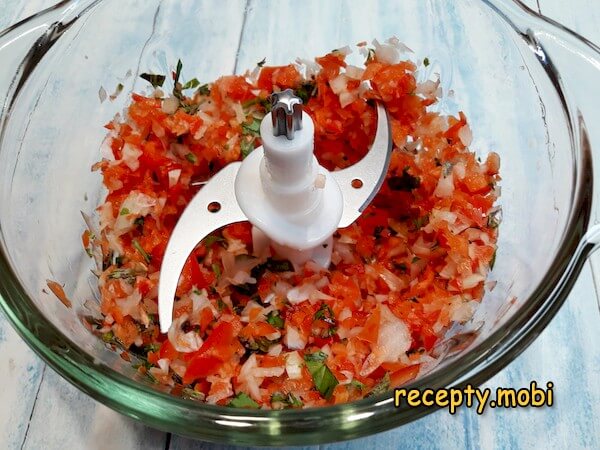
I add the resulting paste to the rest of the mixture.
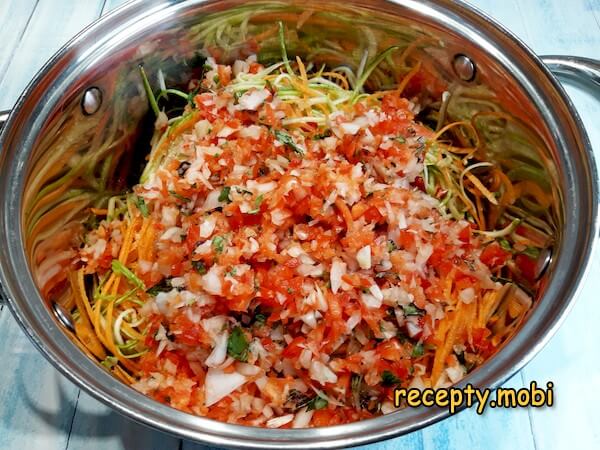
I also add the Korean-carrot seasoning and squeeze in the garlic through a press (I do not stir yet – the key step with the smoking-hot oil is still to come).
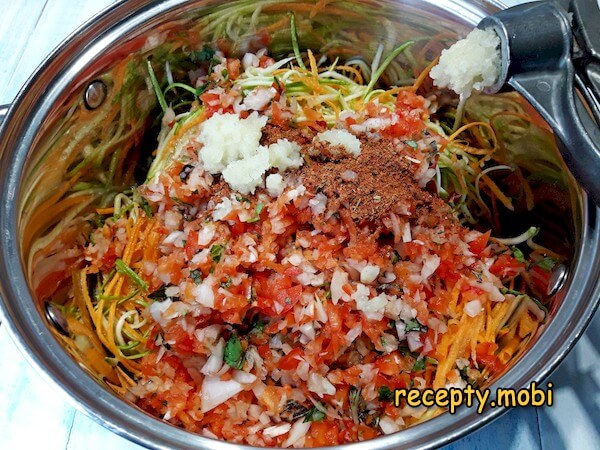
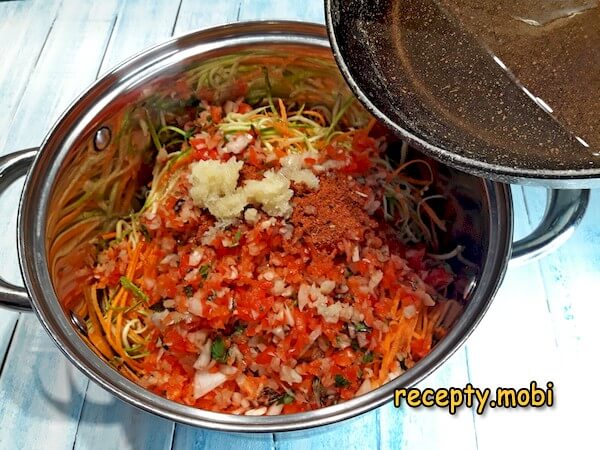
I heat the vegetable oil very strongly in a pan, then pour it straight over the Korean seasoning and garlic – a pleasant aroma typical of these spices appears at once. This is the classic «Korean» technique: hot oil activates the essential oils of the spices and garlic, giving the characteristic fragrance.
Now I add the vinegar, then mix the vegetables thoroughly, helping them soak up every ingredient evenly.
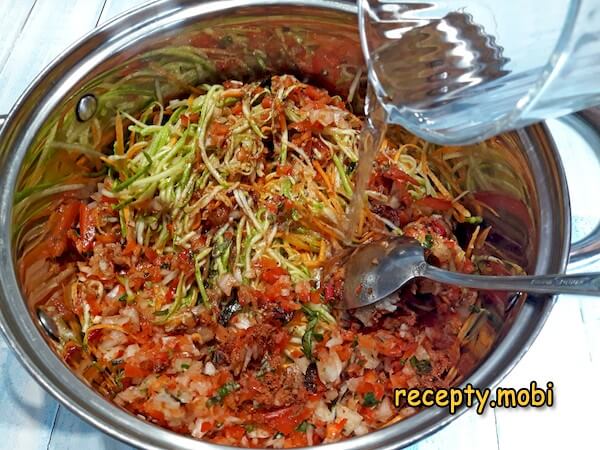
Now I leave the salad alone for half an hour – during this time it releases quite a lot of juice, and the vegetables can then be boiled in it without adding water.
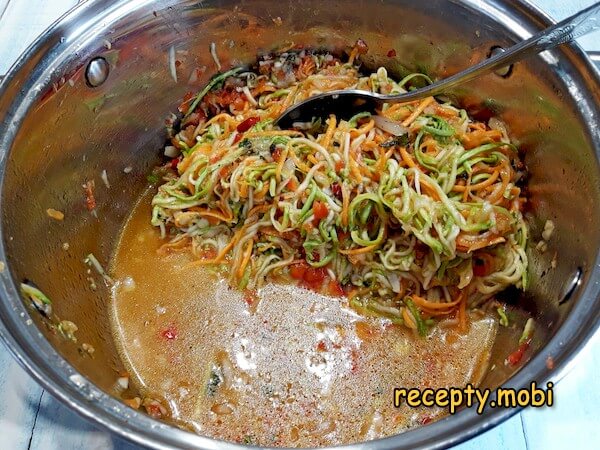
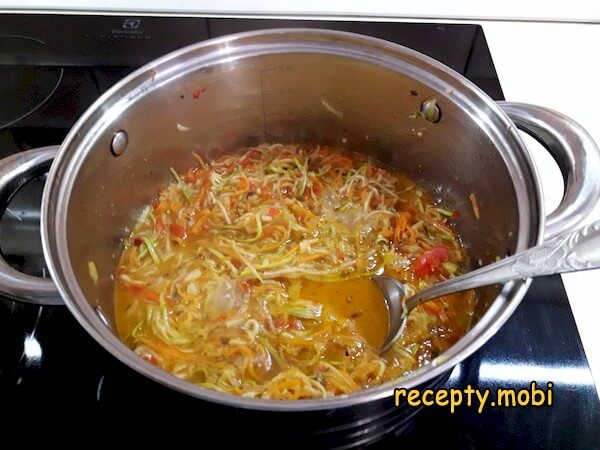
After this period, I put the pot on the heat and boil the mixture for 10 minutes over medium heat (counting the time from when it starts to boil). During these 10 minutes pasteurisation takes place, which replaces sterilisation.
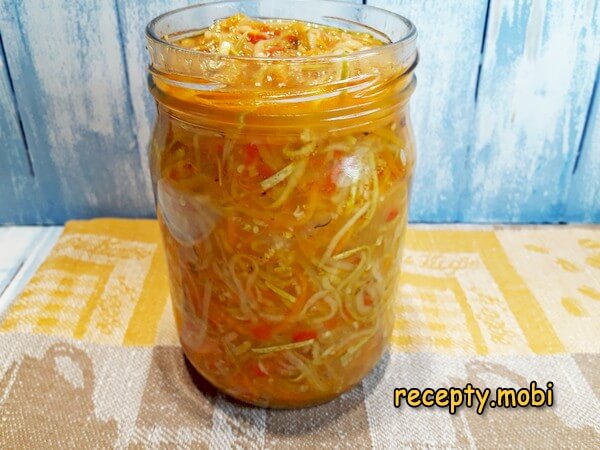
I fill the jar with salad, trying to pack in the less moist part first and then top it up with the remaining juice – this way no air pocket forms in the jar, which could become a source of mould.
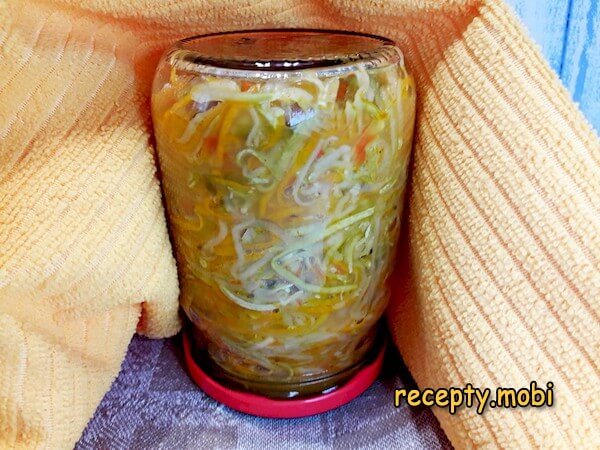
I screw the lid on firmly. I turn the sealed jar upside down and wrap it in a blanket. I leave it in this warm bath until the salad has cooled completely – slow cooling under the blanket works like a mini autoclave.It is best to store Korean-style zucchini for winter without sterilization in a cool place, but it also keeps well at room temperature until the next harvest. This preserve makes a wonderful addition to any dish, even the plainest, and adds bright flavour accents to an everyday menu.


Tips
- 1
THE KOREAN-CARROT GRATER is the «secret» to the strip shape. An ordinary coarse grater gives short, square pieces that fall apart in the salad. A special Korean grater gives long, thin strips, the classic shape for the Korean style.
- 2
SMOKING-HOT OIL OVER THE SPICES is the «secret» to the aroma. Cold oil mixed with the spices gives a dull, flat flavour. Oil heated until it smokes and poured straight over the garlic and Korean seasoning instantly activates the essential oils, and the aroma opens up fully. The same technique works in zucchini with tomatoes for winter «lick your fingers».
- 3
REMOVING THE ZUCCHINI CORE is the «secret» to the texture. With the core, the zucchini turns to mush when stewed. Without it, the strips stay firm and hold their shape even after boiling.
- 4
30 MINUTES OF RESTING BEFORE BOILING is the «secret» to avoiding added water. Without the rest, you would have to add water to the zucchini and the marinade would come out diluted. After 30 minutes under the salt and sugar, the vegetables give off so much juice that you can boil them in it, with no water and no loss of spice concentration. The same principle is used in green tomatoes Korean-style for winter.
FAQ
Which zucchini are best for the Korean preserve? +
The «classic» choice is young courgettes 15–25 cm long with thin skin and small seeds (500 g makes a 0.5 l jar). Alternatives: pattypan squash (a finer, more delicate option), white zucchini (a slightly sweeter option), and overgrown zucchini (a budget option, but you must peel the skin and remove the seeds). Do not use zucchini with drying skin and spots – they will give a stale taste in the finished preserve. Ideal are ones freshly picked from the garden that have not sat for more than a day. Older zucchini are better used for stew or squash caviar.
How can I replace the Korean-carrot seasoning? +
The direct equivalent is a homemade mix: ground coriander (1 tsp) + ground black pepper (0.5 tsp) + ground paprika (0.5 tsp) + dried garlic (0.5 tsp) – 2.5 tsp in total will replace 2 tsp of the ready-made seasoning. Alternatives: ready-made «Korean carrot» blends are reliable. A premium option is to buy Korean «gochugaru» seasoning (ground red pepper) at a Korean market. Do not use general «salad» seasonings – they do not give the characteristic Korean profile.
How long does Korean-style zucchini keep without sterilization? +
In a cool pantry (8–15°C) – up to 1.5 years without losing colour or crunch. In an ordinary kitchen cupboard at room temperature – up to 1 year. Once the jar is opened – 5–7 days in the fridge under the lid. Signs of spoilage: a bulging lid, cloudy juice with fermentation bubbles, a sour or rotten smell – I throw such a jar out. A properly made preserve becomes more aromatic and slightly softer with age (but the strips do not fall apart). After 2–3 months of storage the flavour is at its most balanced.
What do you serve Korean-style zucchini for winter with? +
It is a versatile appetiser. The classic pairing is with boiled potatoes or mashed potato, and with fluffy buckwheat. With meat: pork, shashlik, beef cutlets, homemade dumplings. With rice: pilaf, long-grain basmati, risotto. On a sandwich: rye bread with butter and the zucchini on top as a piquant layer. With drinks: dark beer, vodka, white wine. On a Korean table: with kimchi, rice and Korean-style beef. It works as an appetiser, a side dish and a spicy savoury layer all at once.
- Comment
or post as a guest
Be the first to comment.