avg —
Salted Cucumbers for Winter

Instructions
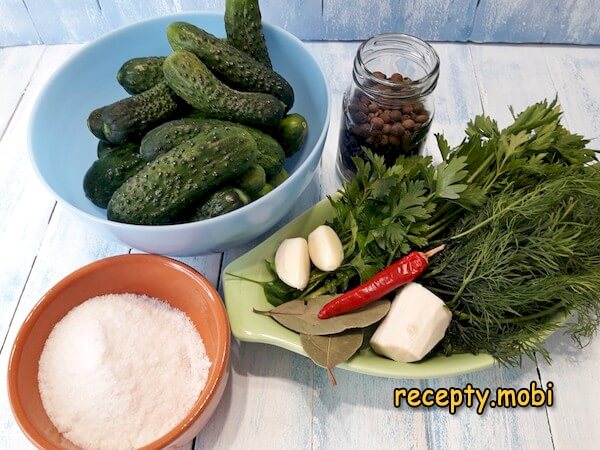
I prepare the ingredients. The number of cucumbers depends on their size. Larger specimens are better put up in 2- or 3-litre jars – that way they are completely covered by the brine and salt evenly.
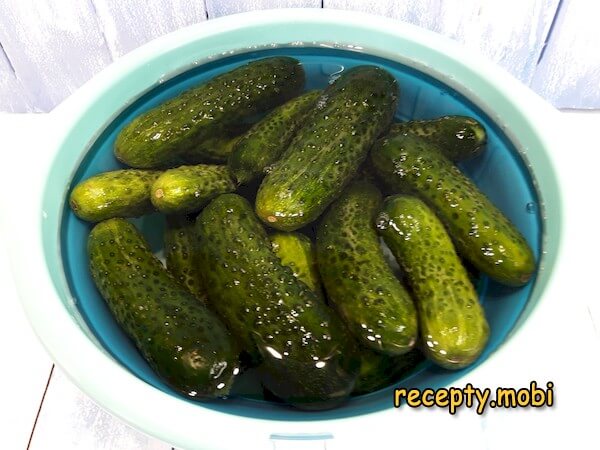
I soak the cucumbers for half an hour in cold water, then wash off dirt and dust. Soaking replaces the moisture lost since picking – without this step voids form inside the cucumber and there will be no crunch. The jars don't have to be sterilised, just washed thoroughly with baking soda or mustard. I boil the lids.
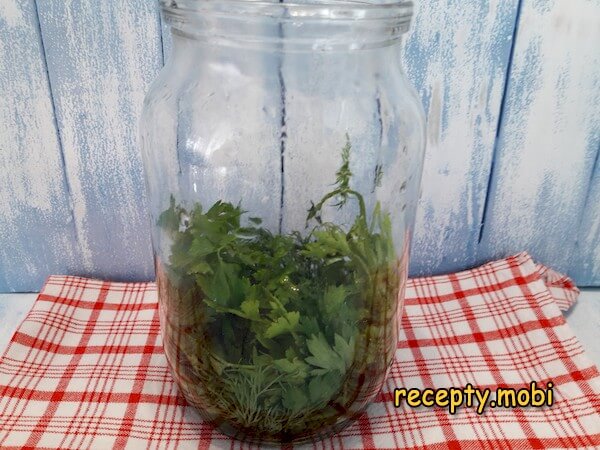
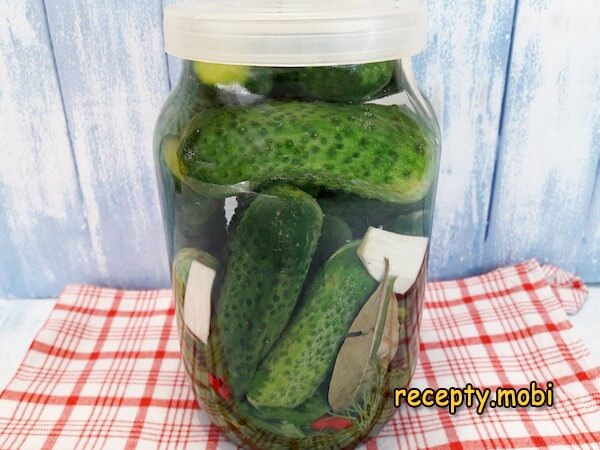
I lay dill and parsley on the bottom of the glass jar – greens at the bottom don't float up in the finished jar and gradually release their aroma into the brine.
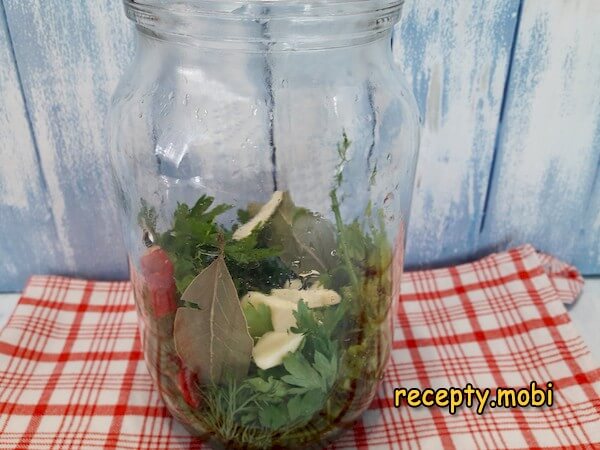
I distribute the garlic cloves, bay leaves and peppercorns evenly, add the piece of horseradish and the hot pepper. The horseradish matters here – it gives the characteristic barrel-like sharpness and works as an additional natural preservative.
I try to stand the first cucumbers upright, choosing the larger ones – this packing leaves more room and lets you fit the most cucumbers into one jar.
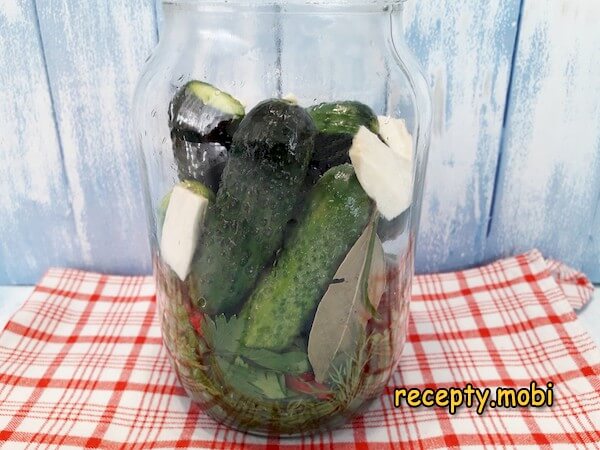
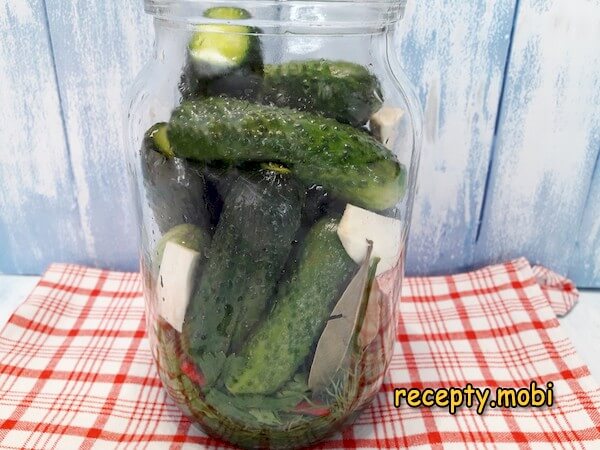
Next I pack in the smaller cucumbers – they fill the gaps between the larger ones.
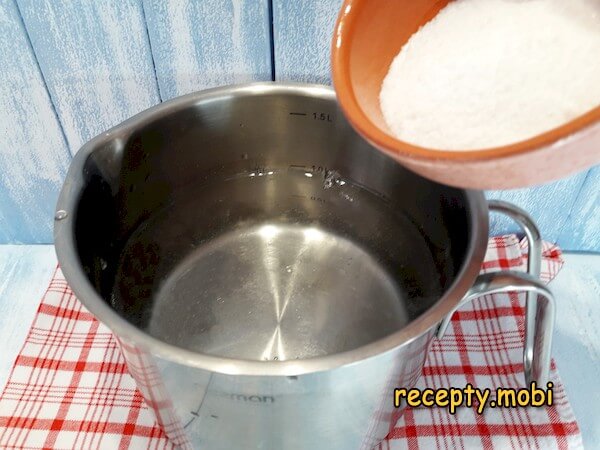
In a saucepan I dissolve the salt in the water and bring the brine to the boil. 2 tablespoons of salt per 1 litre of water is about 4–5%, the classic concentration for fermenting. Boiling kills off wild microflora and leaves only what comes in with the cucumbers and the greens.
I pour it over the cucumbers straight away – the hot brine starts a gentle pasteurisation without overcooking the cucumbers.
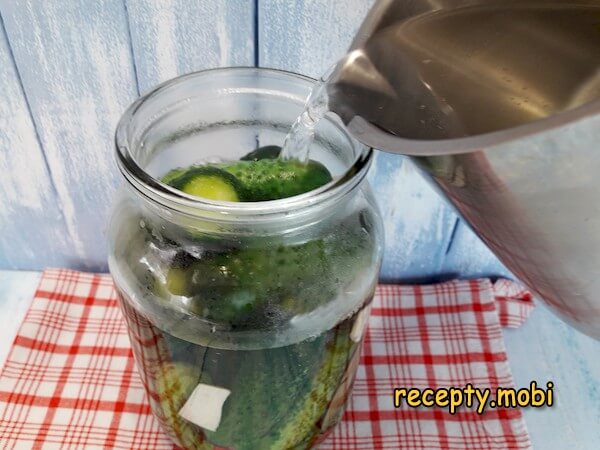
I close the jar with a plastic lid and leave it at room temperature for a couple of days – this is exactly the time it takes for a light lactic-acid fermentation to start. A metal lid must not be used at this stage – the souring brine would oxidise the metal.
As the light fermentation gets going, foam will start to form – this happens on the second day. The foam is a sign of active fermentation, as with home-made bread or kvass.
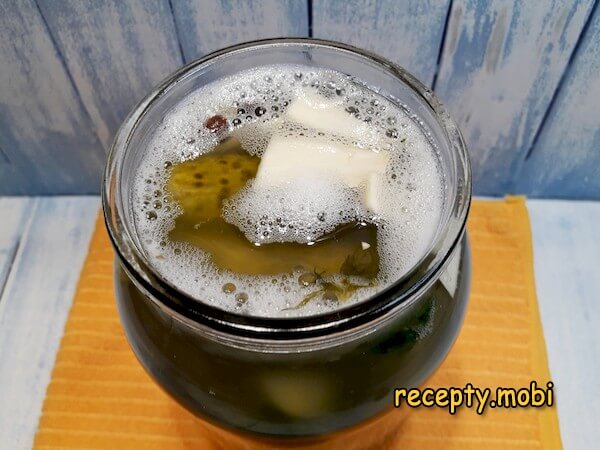
It needs to be removed – the foam contains waste fermentation products that would leave a cloudy sediment and an off taste in the finished jar.
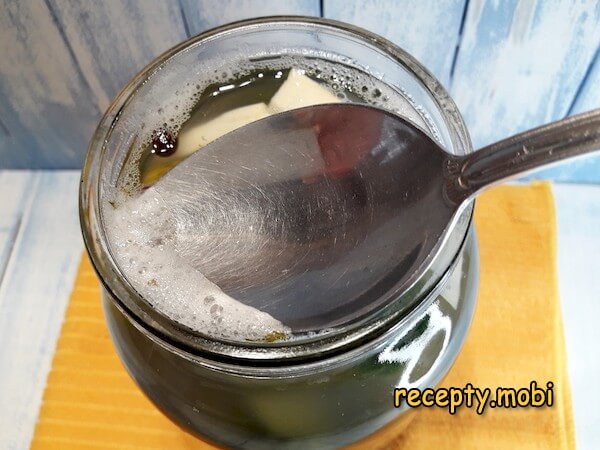
Now it's time for the mustard powder – this is what makes the snack characteristically "salty with a kick".
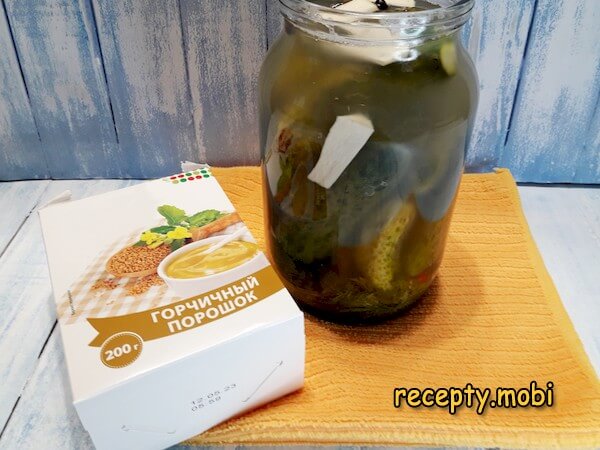
I add it at 0.75 of a tablespoon per litre jar – no more, or the mustard flavour will "drown out" the cucumber, and no less, or it won't work as a preservative.
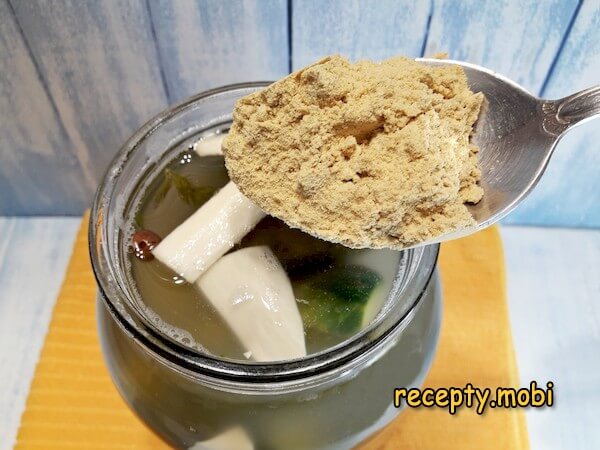
I close the jar with the plastic lid again, shake it, and leave it at room temperature for 5–6 hours – the mustard should distribute evenly through the brine and soak into the cucumbers.
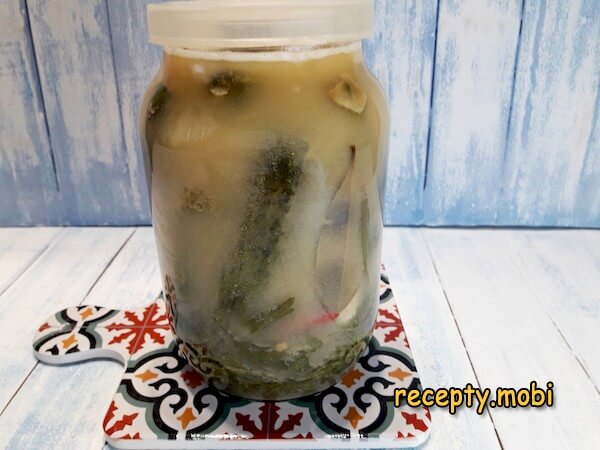
After the stated time I shake the brine in the jar once more and pour it off into the saucepan.
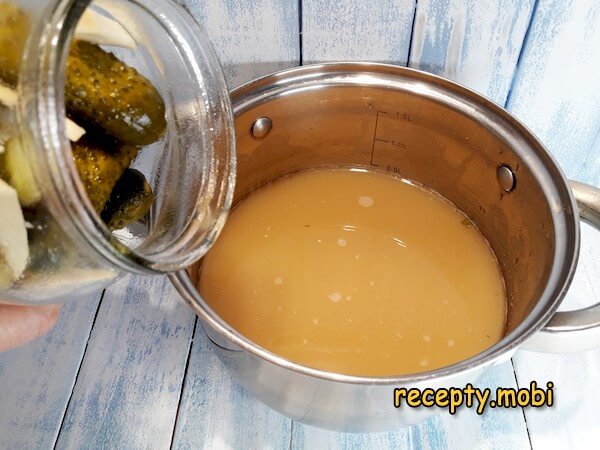
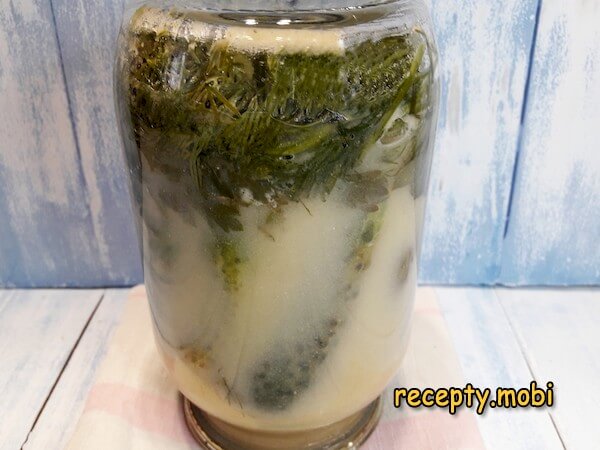
I bring the mustard brine to the boil and pour it straight back into the jar with the cucumbers. I screw on the lid. I check that the seal is sound by turning the jar upside down – if nothing leaks from under the rim, the seal is tight. This preserve needs no water bath – the mustard preservative works strongly enough.After cooling, I put the salted cucumbers for winter in a cool place, though they can also keep in an ordinary flat right through to summer. It's a pleasure to crunch on these spicy salted cucumbers even just with black bread, and with boiled potatoes and a cutlet it's a real treat.


Tips
- 1
SOAKING IN COLD WATER – the "secret" of the crunch. Without soaking, cucumbers are hollow inside and turn out limp after salting. Half an hour in cold water and the cucumbers drink up moisture and stay crunchy.
- 2
MUSTARD POWDER INSTEAD OF VINEGAR – the "secret" of the barrel flavour. Vinegar gives a "marinade", shop-bought taste. Mustard powder works as a natural preservative and at the same time gives that characteristic sharpness – a taste like "barrel" salted cucumbers from the cellar. The same trick works in salted honey mushrooms for winter.
- 3
SKIMMING THE FOAM – the "secret" against cloudy brine. Foam with fermentation products left in the jar will give sediment and a grey haze in the finished preserve. Skimming the foam together with the hot sealing keeps the brine clear.
- 4
A PLASTIC LID DURING FERMENTATION – the "secret" against oxidation. A metal lid at the fermentation stage oxidises from the lactic acid and a rusty taste appears. Only a plastic or nylon lid during fermentation, with a metal one for the final sealing. The same principle is used in Bulgarian-style pickled cucumbers for winter.
FAQ
Which cucumbers are best for salting? +
The "classic" choice is pickling varieties with dark, prickly bumps, 7–12 cm long: "Nezhinsky", "Zasolochny", "Parisian cornichon", "Rodnichok", "Khrustyashchiy" ("Crunchy") (500 g for a litre jar). Alternatives: barrel-type "Voronezhsky" (premium, ideal firmness) and mini-cornichons up to 6 cm (premium for pretty little jars). Don't use: salad varieties with smooth skin and white spines – they will go to mush within a week in the jar. Cucumbers picked fresh from the bed in the morning and not kept more than a day are the "star" option.
What can replace mustard powder? +
The direct equivalent is mustard seeds, 1 tablespoon instead of 0.75 tablespoon of powder (the seeds work more slowly but give the same effect). Alternatives: caraway seeds, 1 teaspoon plus 0.5 tablespoon of mustard powder (a premium flavour), or dry dill with seeds, 1 tablespoon (a more "herbal" taste). Don't use: ready-made liquid mustard from a tube – it has a lot of flavourings and will spoil the clean barrel taste. Herbes de Provence or other blends are no good either – they don't give the preserving effect of mustard.
How long do salted cucumbers made by this recipe keep? +
In the fridge or a cool larder (8–12°C) – up to 1 year without loss of quality. In an ordinary kitchen cupboard at room temperature – up to 8–9 months, after which they start to lose firmness. Once the jar is opened – 7–10 days in the fridge under a lid. Signs of spoilage: a bulging lid, cloudy brine with white flakes, a sour or rotten smell – I throw such a jar out. Properly made cucumbers gain a richer flavour with age and soften slightly, but stay crunchy inside. They are best eaten before the next harvest.
What to do if the brine turns cloudy after a week? +
Light cloudiness in the first days of fermentation is normal – it's the lactic-acid bacteria at work. If the cloudiness appears after a week and is accompanied by bubbles of fermentation, the jar wasn't sealed fully and a repeat fermentation is going on. In that case I pour off the brine, boil it for 5 minutes with 0.5 teaspoon of salt added, pour it back hot and reseal. If the cloudiness appears after a month with a sharp smell, the preserve has spoiled and must not be eaten. Prevention: thorough sterilising of the lids and the inversion check right after sealing.
- Comment
or post as a guest
Be the first to comment.