avg —
Tomato juice for winter at home

Instructions
I prepare the ingredients. Any variety and shape of tomato will do for this preserve, as long as they are as ripe, juicy and sweet as possible.
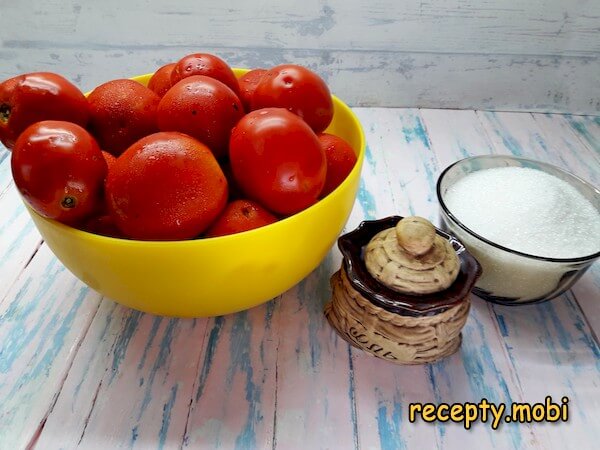
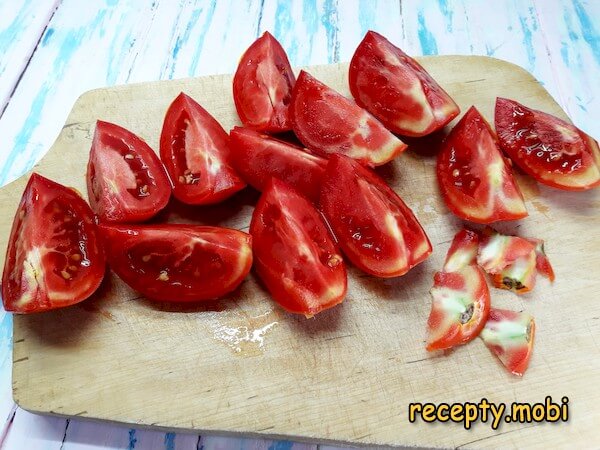
The easiest way to get juice is with a juicer, but you can achieve a wonderful result even without special equipment. I cut the tomatoes into pieces that fit a meat grinder or food processor and cut out the green part near the stem.
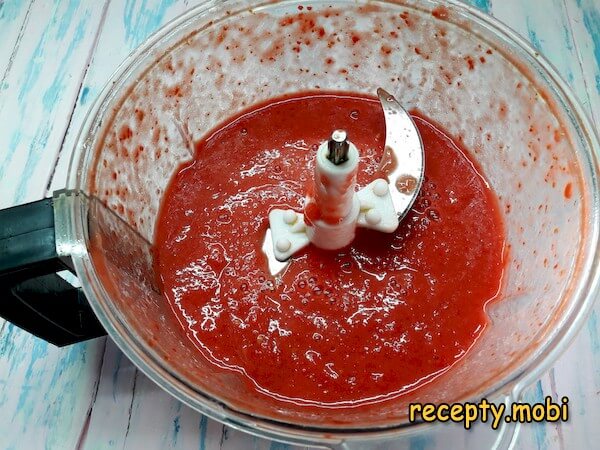
I grind the tomatoes into a paste-like mass. How much juice you get depends directly on how ripe and juicy the chosen fruit is.
I pour the thick tomato mixture, which still contains the seeds and skins, into a pot; these need to be removed.
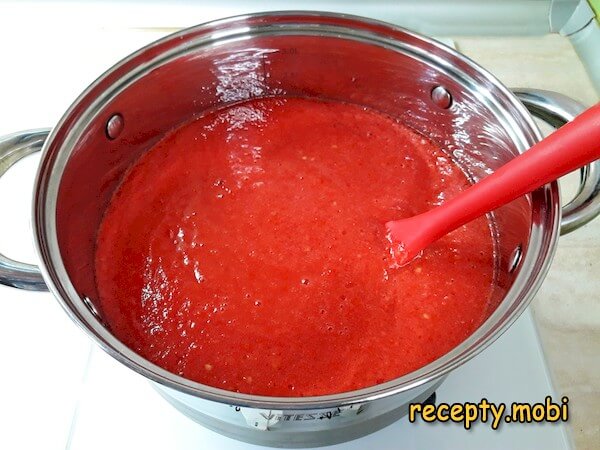
To make this easier, I boil the tomato for 20 minutes – the mass then strains through a sieve more readily. There is no need to skim off the foam that forms. In the meantime I sterilize the glass jars and metal lids by any method.
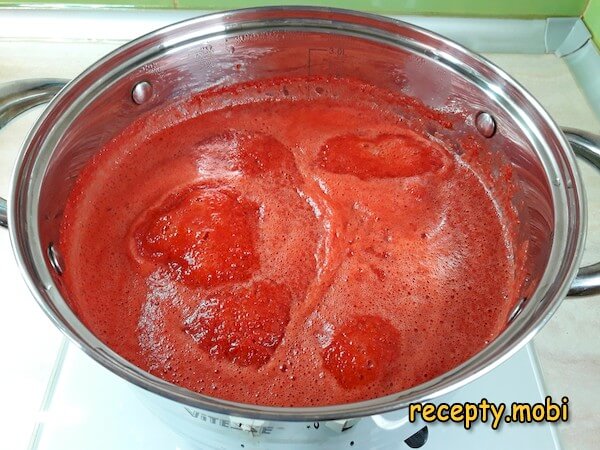
After the time is up, the thick mass begins to settle and clear juice appears on top – that is the signal to start straining. I pour some of the tomato into a sieve and start pressing it through, for example with a ladle.
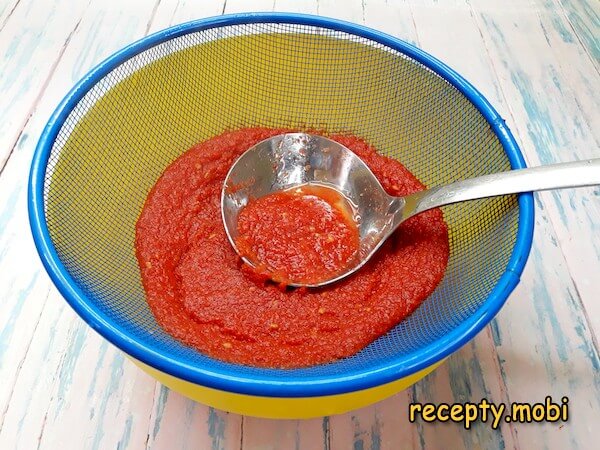
Or I press it through with a stiff silicone spatula. As a result, only the skins and seeds are left behind on top.

Now the pure juice needs to be weighed so you can calculate how much salt and sugar to use. They should be added to the tomato. I boil the preserve for 5 minutes.
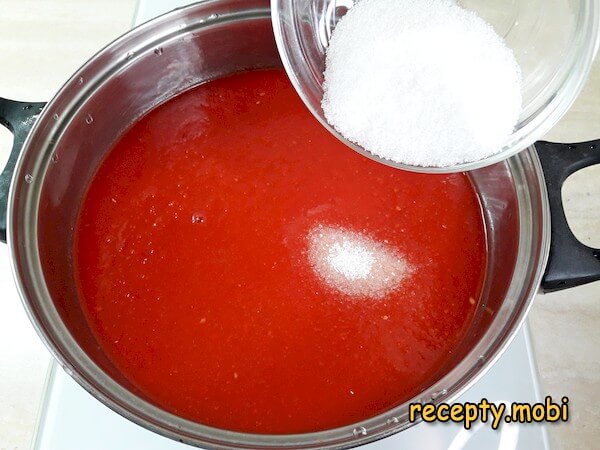
I pour the juice into the prepared containers.

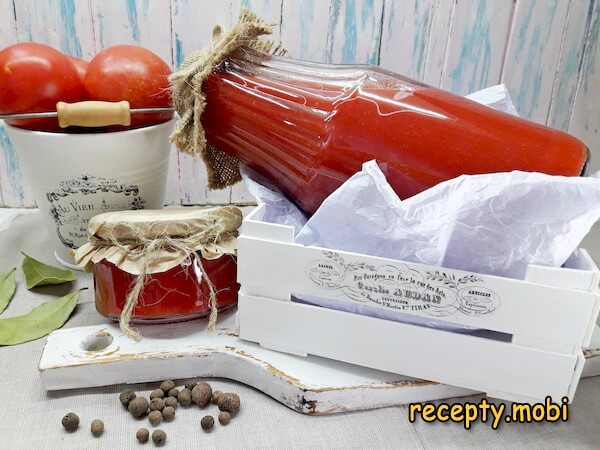
I screw on the lids and leave the tomato to cool on the table.

This perfectly balanced tomato juice for winter at home, made without any special appliances, can be kept at room temperature until the next harvest.


Tips
- 1
The 20-minute boil before straining is the "secret" to an easy job. A raw mass passes through the sieve poorly, while a boiled one strains easily.
- 2
Weighing the juice is the "secret" to accuracy. 10 g of salt plus 25 g of sugar per 1 kg of crushed tomatoes is the optimal balance.
- 3
Ripe, sweet tomatoes are the "secret" to flavour. Green or under-ripe ones give a sour juice; ripe, fleshy ones give a balanced one.
- 4
No special equipment is needed – a meat grinder and a sieve do the job, and a juicer is not essential. The same principle works for other kinds of vegetable juices for winter.
FAQ
Which tomatoes should you choose? +
The ideal choice is fleshy, sweet varieties (Beefsteak, Pink Giant, San Marzano) – they give plenty of juice with a rich flavour. Alternatives include the red plum-shaped "Slivka" (elongated and fleshy), "Black Prince" (an unusual colour) and "Mikado" (premium). Fresh tomatoes should be firm, with no green patches near the stem. Ripeness should be at its peak (soft and aromatic). Not suitable: cherry tomatoes (little juice), green ones (sour) and overripe, rotten ones. Trusted seed brands are "Gavrish", "Poisk" and "Aelita". For a "premium" result, choose farm-grown soil-raised tomatoes. Greenhouse tomatoes give less juice, so go for sweet soil-raised ones. Any shape will do (round or elongated, it does not matter).
Can it be made without salt and sugar? +
Yes, it can – a natural juice with no additives. However, the keeping time then shortens to 6 months (salt and sugar are natural preservatives). For a "diet" version, leave out the sugar and use only salt at 10 g/kg. For a "baby" version, use neither salt nor sugar. Salt alternatives: sea salt (10 g/kg – milder) and pink Himalayan salt (10 g/kg – "premium"). Sugar alternatives: fructose (20 g/kg – "diabetic") and 1 tablespoon of honey (unusual). Do not use iodized salt (it changes the flavour) or sugar substitutes. The 10:25 ratio (salt to sugar per kg) is the "classic" one and gives a balanced flavour.
How long does the juice keep? +
In sterile, sealed jars at room temperature, up to 1 year. In a cool cellar, up to 1.5 years. Once opened, 5–7 days in the fridge. Label the jars with the canning date. If a lid bulges or fermentation starts, do not open it – throw it out. Do not store in sunlight, or the colour will fade. It is best used within the first 8–10 months. Seal it in jars of a convenient size (0.5–1 L). Before serving, chill it for 1–2 hours in the fridge. It can be warmed for sauces and gravies without any loss of quality.
What do you serve the juice with? +
It is a drink in its own right with breakfast or lunch. With rich, meaty food it is a "Baltic" serving (it cuts the heaviness nicely). With fried potatoes. With steak or barbecue it is a "bar" serving. With fried eggs or an omelette as a "breakfast". With dumplings, unusually. With a shot of vodka or tequila as a "bar" accompaniment. With crackers and cheese as a "premium" snack. For making sauces: for meat, fish and vegetables. For gravies to go with pasta or buckwheat. With pizza as an "Italian" aperitif. For tomato soup in the winter. With rice side dishes. A versatile vegetable juice for winter meals.
- Comment
or post as a guest
Be the first to comment.