avg —
Borscht Base for Winter with Beets (+Cooking Video)

Instructions
I prepare all the necessary ingredients. I peel all the root vegetables, and remove the seeds and stem from the sweet pepper. I pick over the beans to remove any debris and rinse them. You can soak them in cold water for a few hours beforehand.
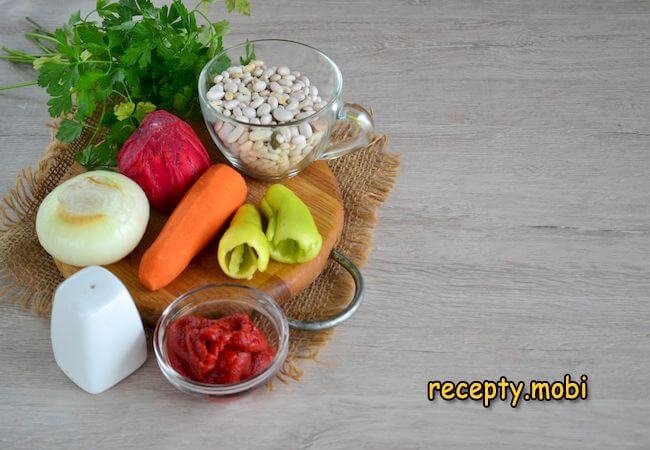
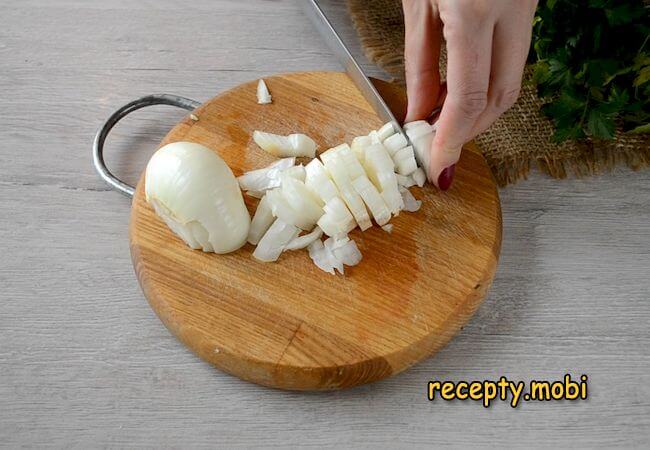
I cut the onion into small cubes.
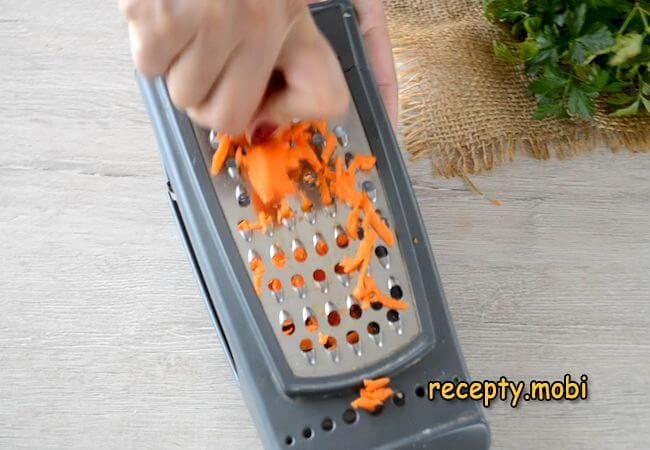
I grate the carrot on a coarse grater.
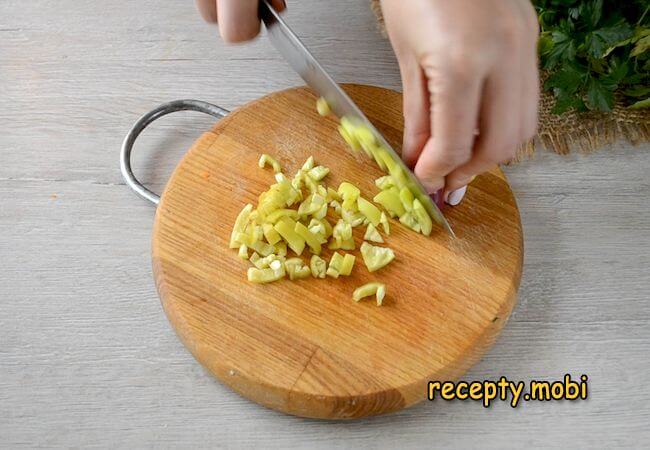
I finely chop the sweet pepper.
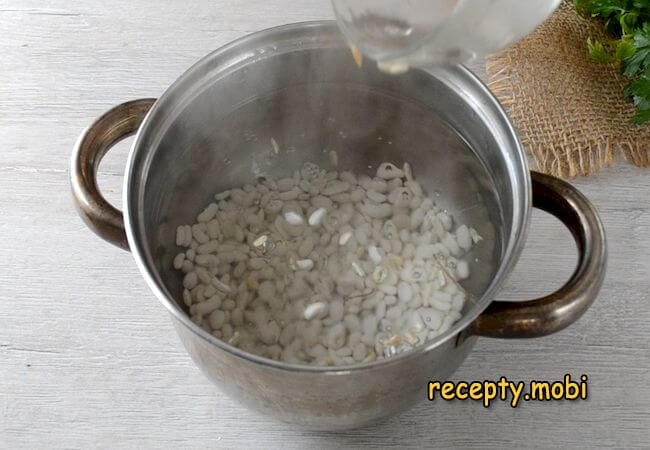
I boil the beans until half-cooked, about 30 minutes. The cooking time depends on the variety of beans – mine take quite a while to cook.
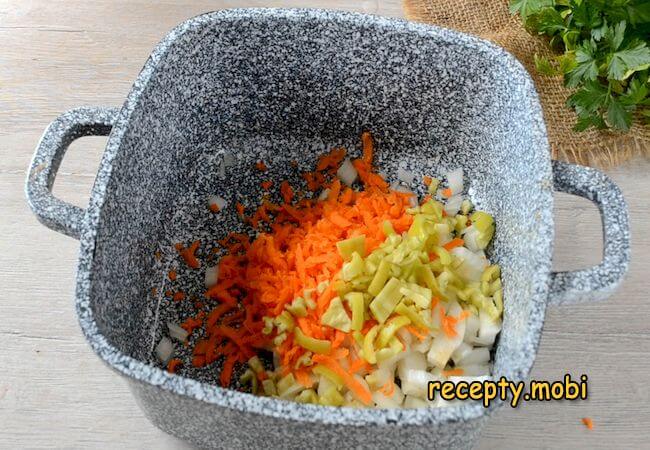
In a thick-walled pot or large skillet, I heat the vegetable oil, add the onion, carrot and sweet pepper, and cook for 5 minutes, stirring.
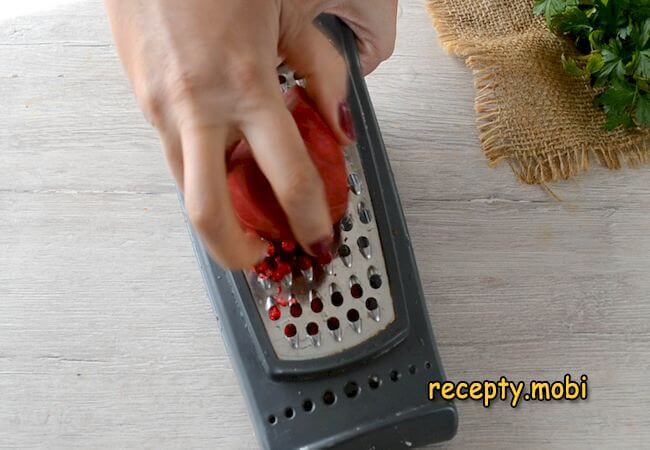
Meanwhile, I grate the beetroot on a coarse grater.
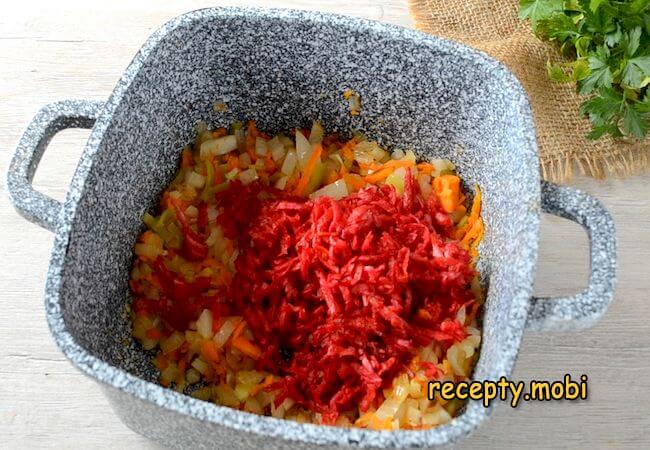
I add the beetroot to the other vegetables, stir, and cook over medium heat until all the vegetables are soft.
Then I add the tomato paste, pour in 200 ml of water, put it on the heat and bring to a boil. I stew it for a few minutes.
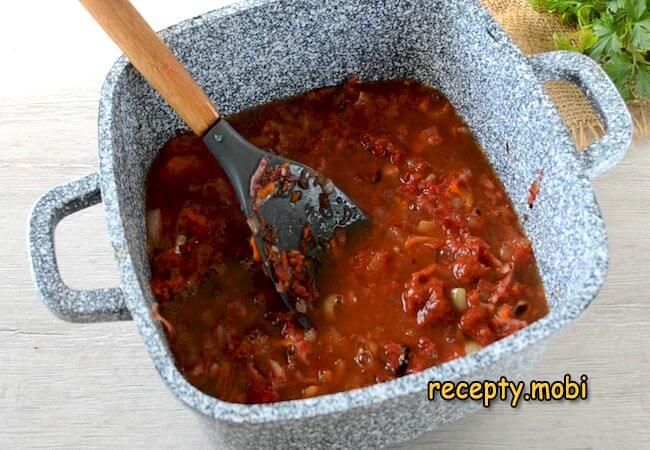
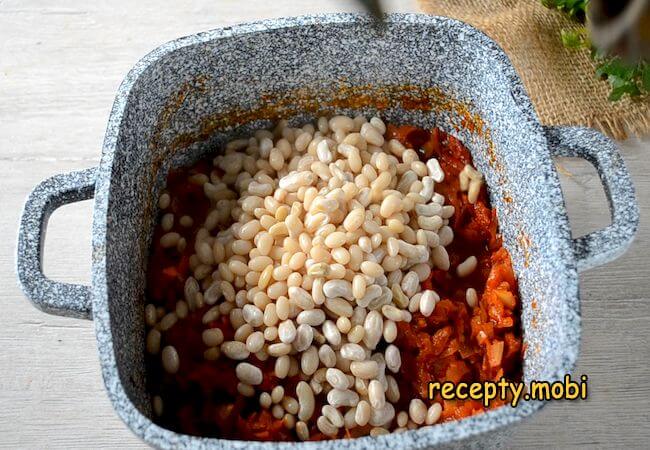
I add the half-cooked beans, the salt and the table vinegar. I stir and cook everything together for 5–7 minutes.
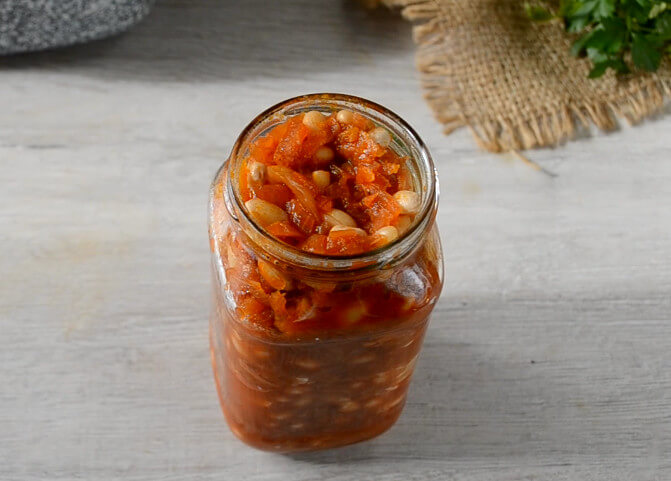
I spoon the borscht base into sterilized jars and seal them with metal lids. I ended up with 2 jars of 420 ml. One jar is enough to make one pot of borscht.
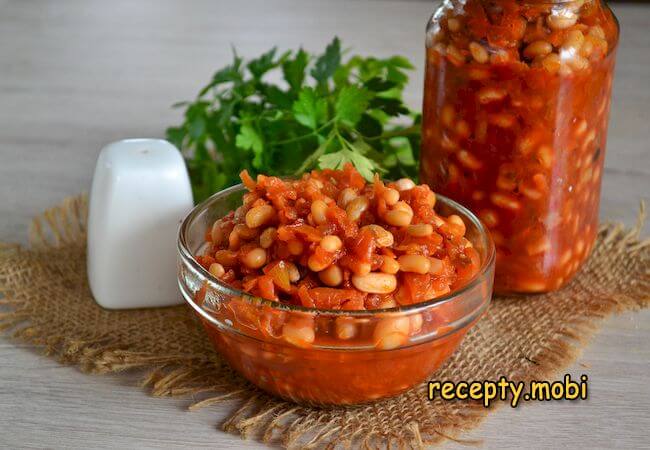
The borscht base for winter with beetroot is ready.Enjoy your meal!


Tips
- 1
SOAK THE BEANS BEFOREHAND – in cold water for 4–6 hours (or overnight). This will cut the boiling time in half.
- 2
ADD THE BEETROOT AFTER the other vegetables – it contains a «colour fixer» that works better once the other vegetables are already done.
- 3
ALWAYS STERILIZE THE JARS – a fresh base with beans will not survive until winter without sterilization.
- 4
USE 1 jar per pot of borscht (a 3-litre pot) – the optimal proportion. The same principle works in other winter vegetable bases.
Video
FAQ
Which beans should I choose? +
The best choice is medium-sized red beans (not too large). They cook faster and hold their shape well in the base. Alternatives: white beans (more neutral in flavour, cook faster), pinto beans (with brown streaks), black beans (a Latin American accent). Avoid very large varieties (lima beans) – they take a long time to cook and can give an unpleasant texture. For an express version, use canned beans – 200 g without the brine, add them straight away, and the cooking time will drop to 10 minutes.
Can it be done without sterilization? +
I do not recommend it. A base with beans and vegetables is a favourable environment for botulism. Sterilizing the jars is essential. For a «fresh version» (not for winter storage), cook it without sealing and keep it in the fridge for up to 7 days. For the most reliable protection, sterilize the filled jars in a pot for 15 minutes after the water comes to a boil. The marinade in the mix (vinegar) also helps with preservation, but it does not fully replace sterilization.
How long does the base keep? +
In a cellar or a cool pantry (10–15 °C) – up to 8–10 months. At room temperature – 4–6 months. Once opened – 3–5 days in the fridge. Signs of spoilage: a bulging lid, a sour smell, «hissing» when opening – do not eat it! With the right technique, the jars last until the next season. For winter preserves, make 4–6 jars at once – that will be enough for a whole season of borschts.
How do I use the base? +
Method 1: cook a meat broth (beef or pork), add potatoes and cabbage. When the potatoes are done – add 1 jar of borscht base, cook for another 5–7 minutes, and add the greens at the end. Method 2: without meat (lean borscht) – on a vegetable broth. Method 3: a «cold borscht» – use the base with kefir or ayran for a chilled borscht. For an «urgent» lunch – half a jar + 1 litre of broth + potatoes = a quick borscht in 20 minutes. Handy to take to the dacha or on a hike.
- Comment
or post as a guest
Be the first to comment.