avg —
Apple-Pumpkin Juice for Winter

Instructions
I prepare the ingredients for the apple-pumpkin juice. It is worth noting that the quantities are fairly approximate – you can change the ratio of apples to pumpkin to suit your own taste. The amount of sugar also depends on how sweet the fruit is, while the citrus gives the juice a fresh aroma and makes the pumpkin's flavour more refined and appealing.
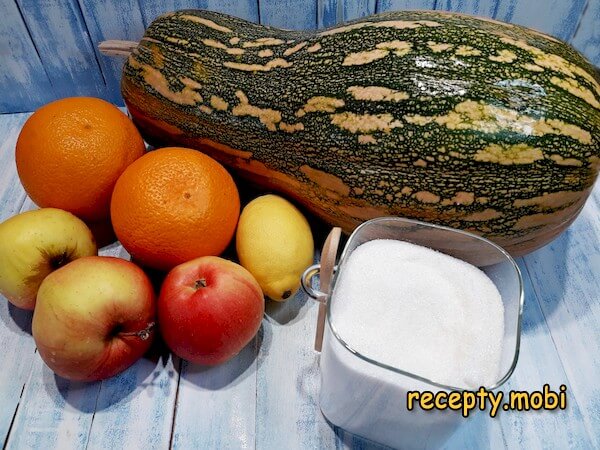
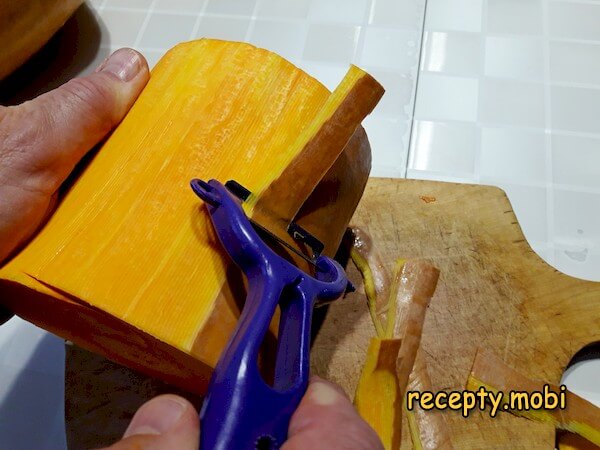
I peel the hard rind off the pumpkin – a special quick vegetable peeler makes this easy. Then I clear out the middle with the pulp and seeds – the seeds can be dried separately and used as a snack.
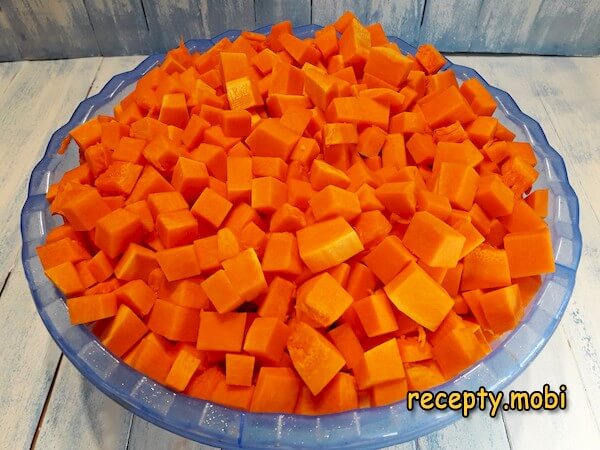
Next I cut the pumpkin into rough pieces – roughly 1.5 centimetres. Cubes this size heat through faster and soften within 15–20 minutes of cooking.
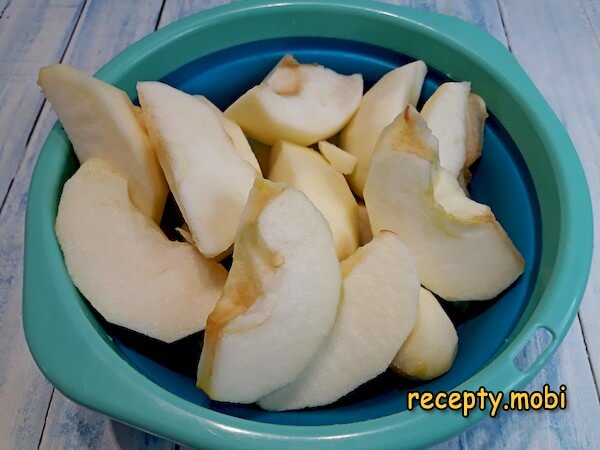
I peel the apples and remove the cores, then cut them into 4 pieces. Peeled apples give a more delicate, smooth juice with no tough bits of skin in the final mixture.
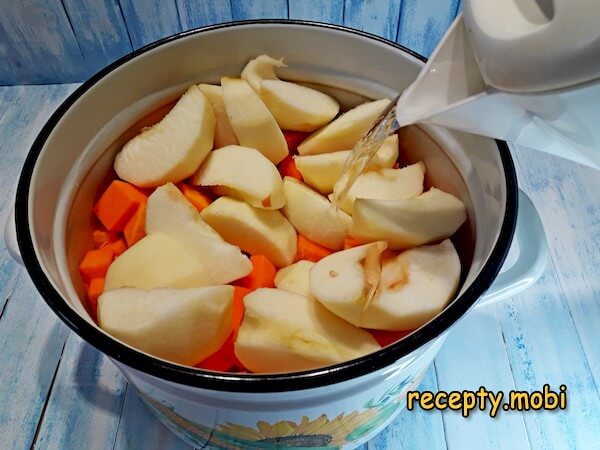
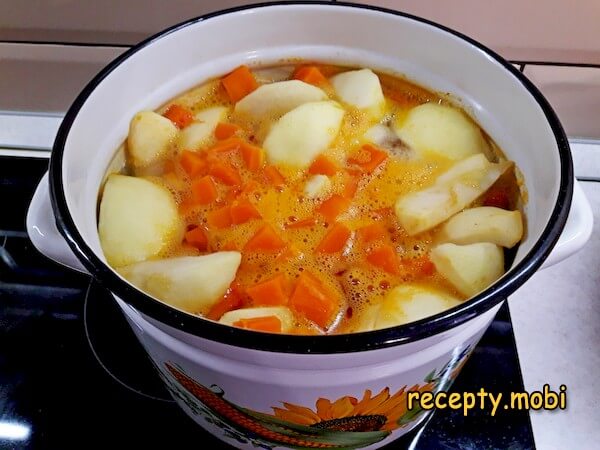
I put the prepared pieces into a large pot and pour in the water – it should almost completely cover the fruit. I use purified drinking water without chlorine, as chlorine can give the finished juice an off-taste.
I put the pot on the heat, bring the contents to a boil and cook until the pumpkin softens. This usually takes 15–20 minutes – the pumpkin should be fully soft so the blender can work it into a smooth mass with no lumps.
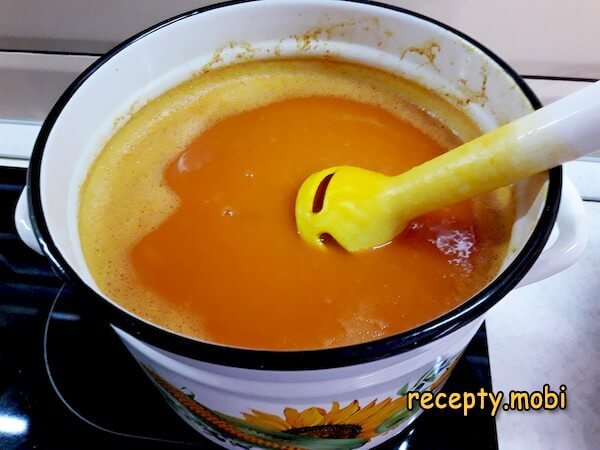
When the pumpkin is ready, I blend the contents with an immersion blender until smooth and put the pot back on medium heat. The blender works right in the pot – there is no need to transfer the hot mixture into a countertop blender jug.
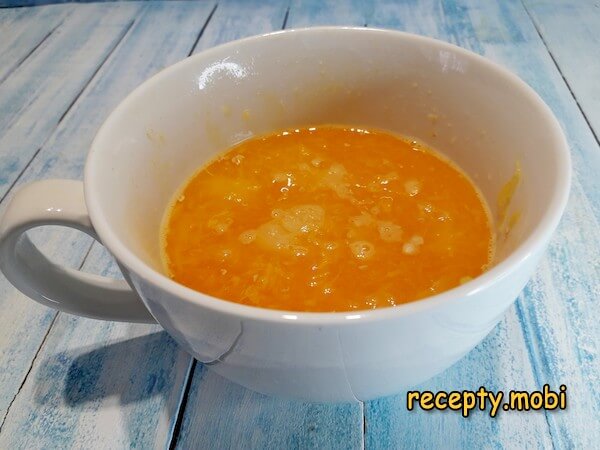
While the mixture comes back to a boil, I squeeze the juice from the oranges and half a lemon – pulp and all is fine. I sterilise the glass jars by whatever method is convenient, and boil the lids for 5 minutes.
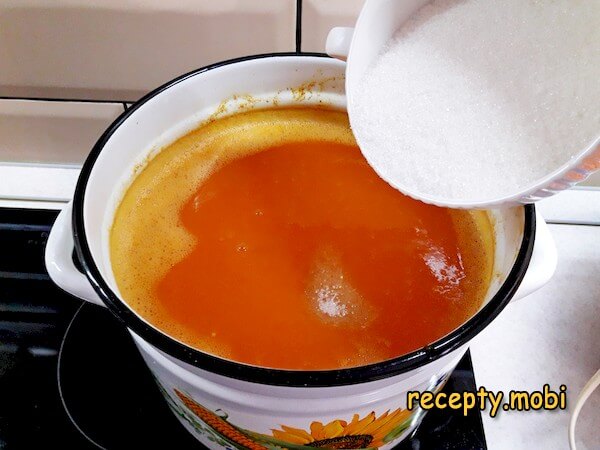
The moment it comes to a boil, I add the sugar – right now, while the liquid is boiling, so the sugar dissolves evenly without lumps and does not settle as crystals on the bottom.
I pour in the citrus juice. At this stage it is a good idea to taste the drink and add more sugar or lemon juice if needed – the variety of fruit used can have different flavour characteristics. Tasting gives the ideal result for your particular harvest.
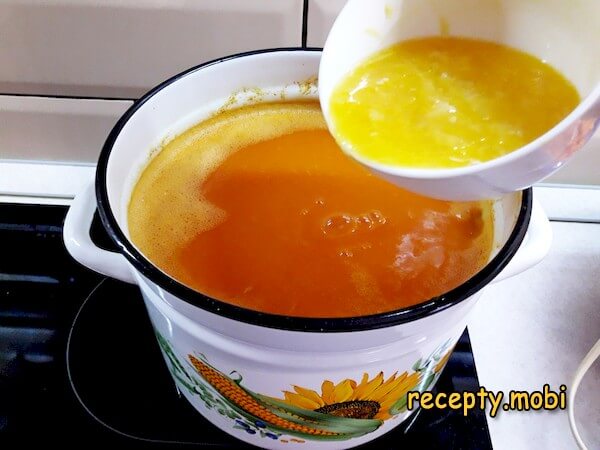
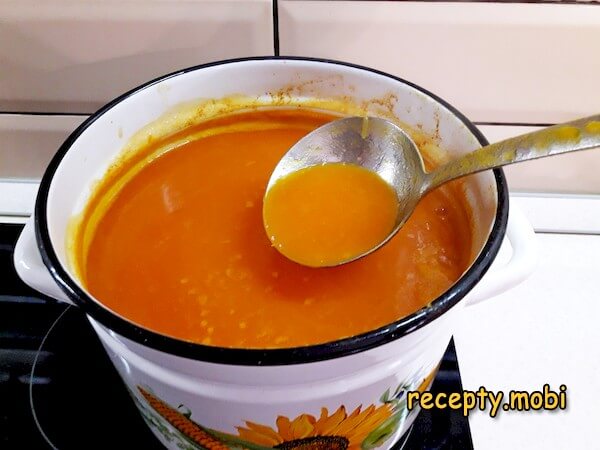
I simmer the juice for 5–7 minutes, stirring constantly. During this time the foam that forms settles to the bottom; there is no need to skim it off – it is harmless and will not affect storage quality.
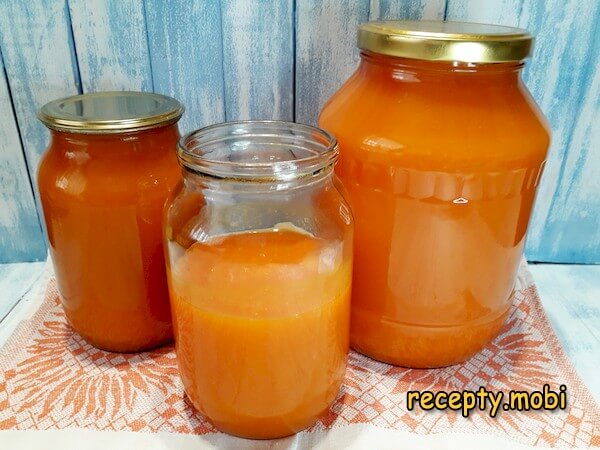
I pour the boiling juice into the hot jars and seal them with the lids. The quantities given make one 2-litre jar and one 1-litre jar. Another half-litre is left over to try – you can taste it straight away and enjoy the fresh, warm juice.Natural apple-pumpkin juice for winter can be stored even at room temperature – it keeps perfectly until the next autumn. A glass of this bright drink will not only lift your mood but also top up the vitamin menu through the winter months.


Tips
- 1
THE BLENDER METHOD, NOT A JUICER – the "secret" of its economy. A juicer gives clear juice without pulp, but it leaves more waste than finished product – 2.5 kg of raw fruit yields only about 800 ml of juice. The "cook + blend" method uses 100% of the raw fruit – from the same 2.5 kg you get 3.5 litres of thick juice with pulp, without a single gram of waste. The same approach works for tomato juice for winter at home.
- 2
CITRUS – the "secret" of a bright flavour. Plain apple-pumpkin juice without citrus turns out "flat" in taste – pumpkin gives a soft "autumn" note and apples a sweet-and-sour one, but together it is a monotonous flavour. Orange and lemon add a bright "top" note that makes the juice interesting and layered. Without them the recipe loses half its appeal.
- 3
TASTE AND ADJUST – the "secret" of the perfect flavour. The variety of apple and pumpkin strongly affects the final balance of sweet and sour. After adding the basic amount of sugar and citrus, I always taste the juice – it may need 50–100 g more sugar or another half a lemon. Without tasting, it is easy to get the balance wrong.
- 4
BERRY VARIATIONS – the "secret" of seasonal blends. This same basic recipe works with any seasonal berries and fruit. Following the idea of strawberry jelly for winter, you can add a handful of strawberries for a pink tint, raspberries for extra sweetness, or blackcurrants for a tangy edge. Any combination gives its own unique "blend".
FAQ
Which pumpkin variety is best for juice? +
Ideal are sweet varieties with bright orange flesh: muscat, butternut, and hokkaido. They give a rich colour and natural sweetness and need less sugar. Fodder "yellow" pumpkins are bland and watery and are poorly suited to juice: the colour will be pale and the taste watery. Large table varieties are a middle option and give a decent result. Young pumpkin harvested in September–October is more fragrant and sweeter than one that has been stored all winter – its juice is preferable.
How long does homemade juice keep? +
In a cool pantry at 8–15°C – up to a year without losing quality. In an ordinary kitchen cupboard at room temperature – up to 8–9 months. Once a jar is opened – 5–7 days in the fridge with the lid on. Signs of spoilage: a bulging lid, cloudiness with bubbles of active fermentation, a sour or fermented smell – I throw such a jar away. The juice separating into pulp and a clearer liquid is normal and is easily "restored" by simply shaking it before drinking.
Can I reduce the amount of sugar? +
You can, especially if you use sweet varieties of pumpkin and apples – you may not need any sugar at all. However, sugar works not only as a sweetener but also as a preservative, helping the juice keep better. It is advisable to leave at least 100 g of sugar for the volume given, for safety. If you go completely without sugar, the preserve should be kept only in the fridge and for no more than 3 months. Sweeteners (stevia, erythritol) are safer from a preservation point of view – but they have no effect on the consistency.
What to serve apple-pumpkin juice with? +
It is a versatile drink for children and adults alike. For breakfast: with porridge, buttered toast, or an omelette – refreshing and full of vitamins. With tea: in place of tea or other juice, served in pretty glasses over ice. For dinner: with light dishes – braised vegetables, steamed chicken, or steamed fish. As a base for cocktails: mixed with mineral water or soda for a light, fresh-tasting drink. In winter you can serve it warm with a pinch of cinnamon and a slice of orange – it makes a fragrant, warming drink.
- Comment
or post as a guest
Be the first to comment.