avg —
Pickled Pumpkin for Winter

Instructions
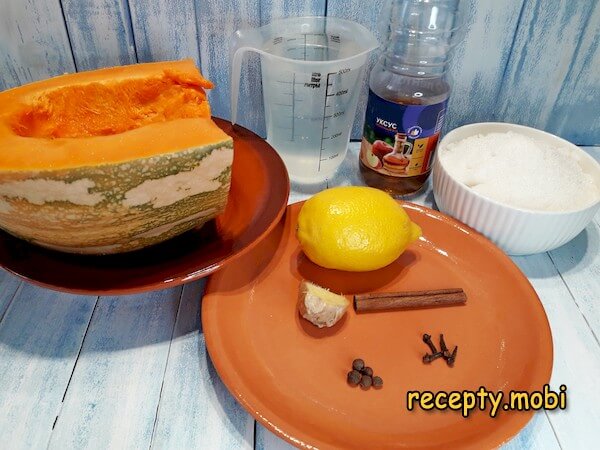
I prepare the ingredients for the marinated pumpkin for the winter. For this preserve you should choose sweet, non-watery varieties of pumpkin. All of the spices are essential, otherwise the flavour of the finished product will not be quite what you expect – it is precisely the combination of cinnamon, ginger, cloves and lemon that creates the "pineapple effect".
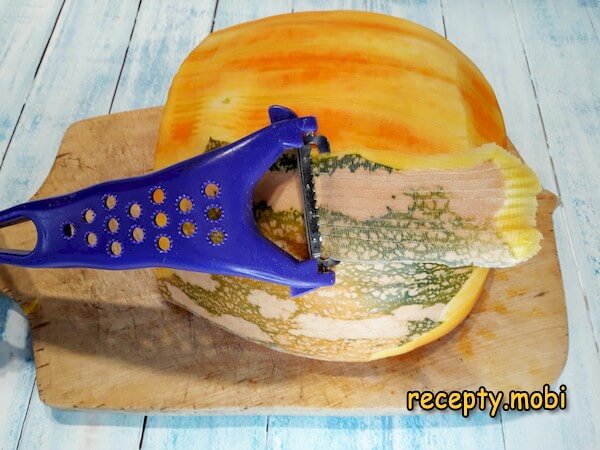
I peel the hard skin off the pumpkin – this is easy to do with a vegetable peeler. First I cut the pumpkin into wedges, then I peel each wedge: working a peeler over a large piece is awkward and you can hurt yourself.
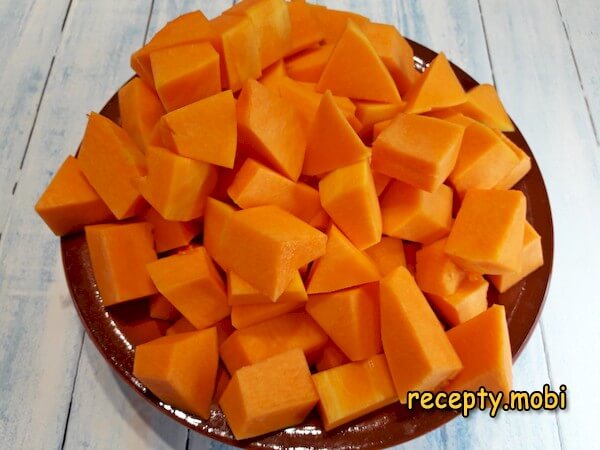
I cut the dense orange flesh into small pieces, about 2×2 centimetres – this is the size that is convenient for serving and soaks up the marinade well. Do not cut them any smaller, or the pumpkin will boil to pieces.
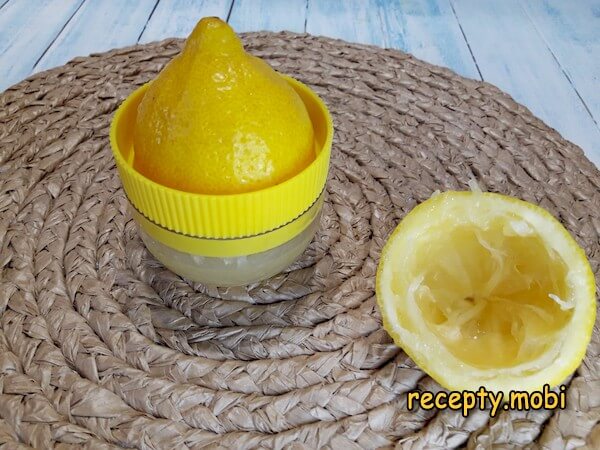
I squeeze the juice from the whole lemon – both the juice and the zest are used. The juice is added to the marinade at a separate stage, and the zest goes in together with the spices.
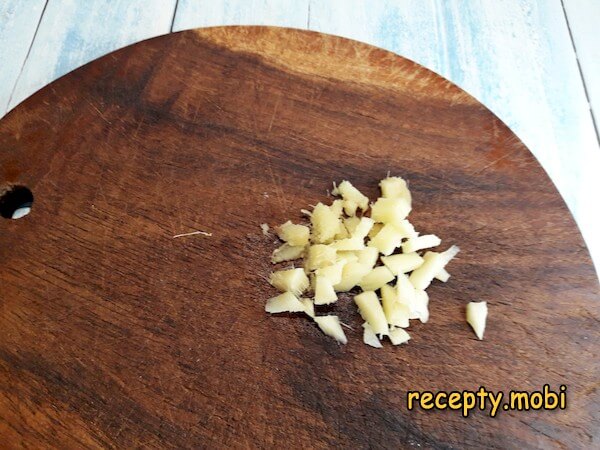
I scrape the skin off the ginger root, then chop it into small cubes – the finer it is, the more essential oils the ginger gives up to the marinade. Fresh root gives a brighter aroma than dried ground ginger.
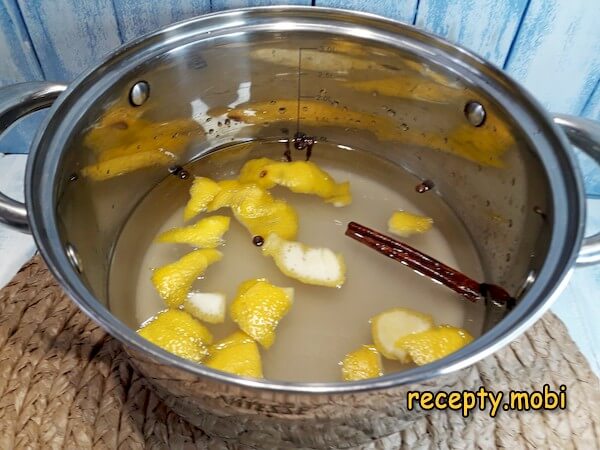
I put them into a pot with the water, sugar, lemon zest, ginger, cloves and allspice. I set it all on the stove and bring it to a boil – the spices open up precisely in the hot liquid and release their essential oils into the marinade.
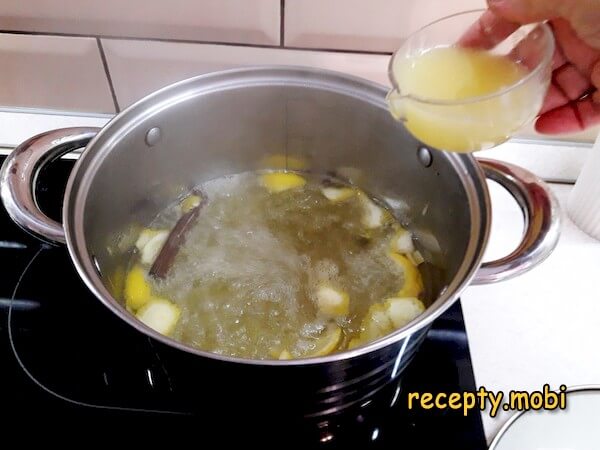
At this moment I add the lemon juice – the juice, not the squeezed-out pulp, so that the marinade does not turn cloudy and stays clear.
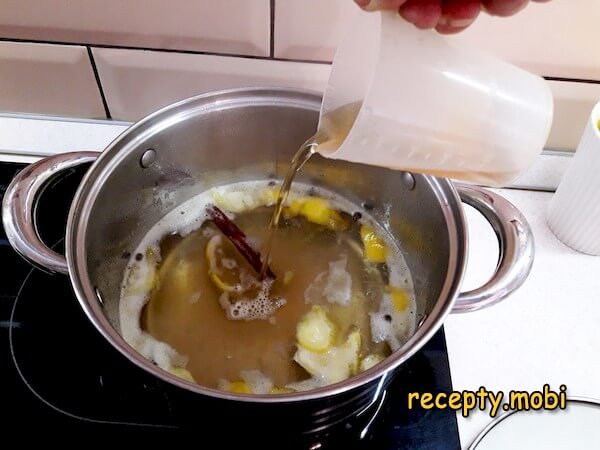
Next goes the vinegar, and I bring the mixture back to a boil. The vinegar needs to go in right now, so that it has time to dissolve in the hot syrup and does not boil away during the later cooking of the pumpkin.
Then I send all the pumpkin pieces into the pot – I tip them all in at once and stir gently so that they sink evenly into the marinade.
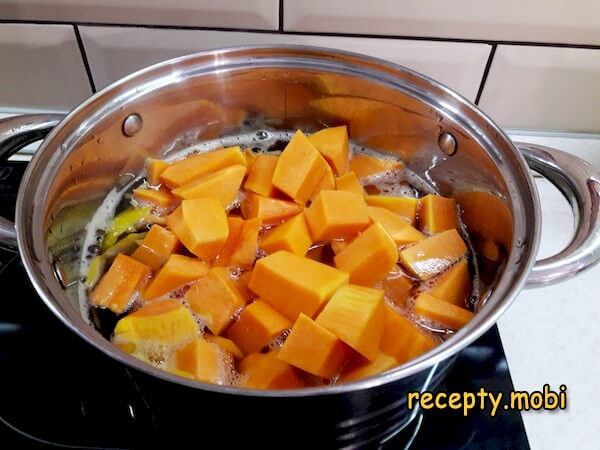
When the marinade comes to a boil, I note the time and cook the preserve for at least 15 minutes – this is the base time at which the pumpkin will have soaked up the marinade and softened slightly, but will still hold its cubic shape.
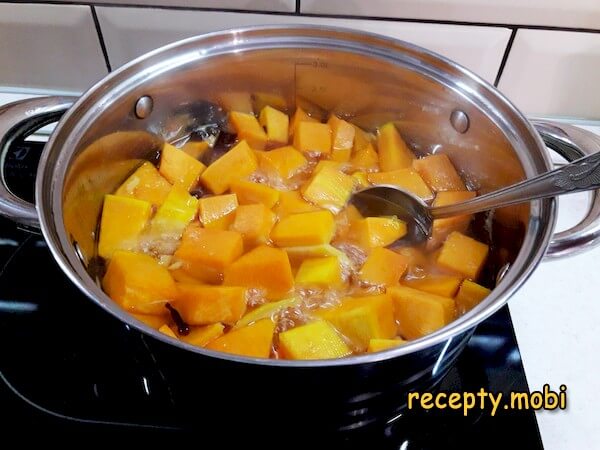
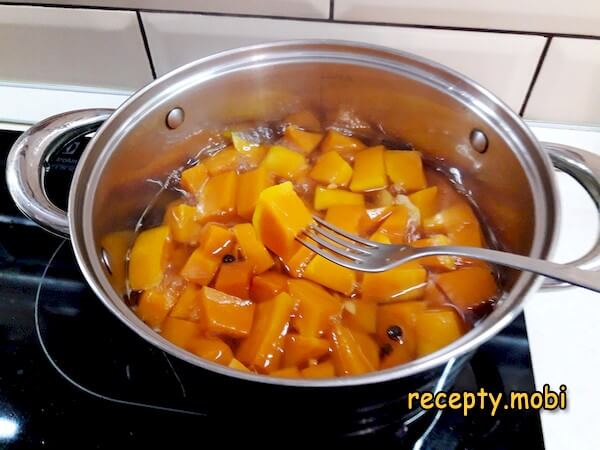
From here you need to take an individual approach, since different varieties of pumpkin need different amounts of time to cook through. If the pieces have not softened, I keep boiling – this may take another 5-10 minutes. I check for doneness with a fork: if it pierces the vegetable easily, without much pressure, I turn off the stove. While it cooks, I sterilise the glass jars and lids.
I arrange the pumpkin pieces in the hot jars and pour in marinade right to the very top. I screw the lids on – a minimum air gap means maximum keeping quality of the preserve all winter long.
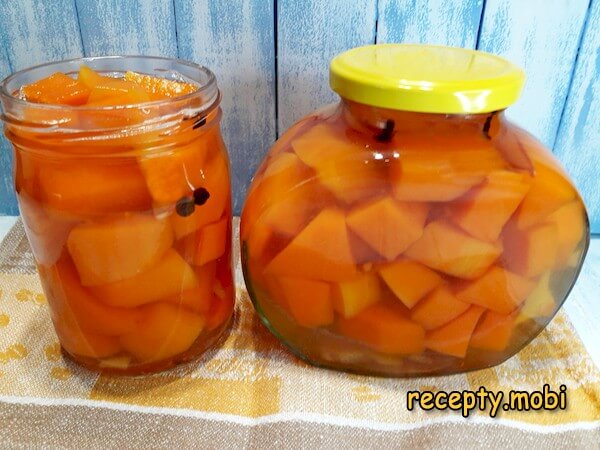
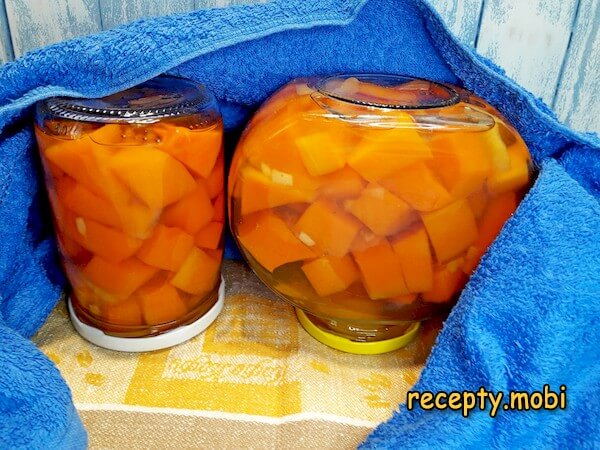
I turn the sealed jars over and wrap them in a warm blanket. I keep them in this heat bath for about 6-8 hours – the slow cooling under the blanket works as an additional pasteurisation and improves the tightness of the seal.For long-term storage, the marinated pumpkin for the winter goes into an ordinary kitchen cupboard, where it will keep until the next season. This aromatic appetiser, with its citrus tang and gingery freshness, goes wonderfully with meat and poultry. It can also stand in for expensive pineapple in salads.


Tips
- 1
GINGER + CINNAMON + CLOVES – the "secret" behind the pineapple effect. It is precisely this trio of spices that creates the characteristic "tropical" aroma which turns ordinary pumpkin into something like canned pineapple. Without any one of these spices the trick will not work: ginger gives a sharp freshness, cinnamon a warm sweet note, and cloves a spicy depth. All three are essential.
- 2
CHOICE OF VARIETY – the "secret" of firm cubes. Sweet, non-watery varieties such as musky, butternut, walnut (nutmeg) and hokkaido pumpkin give firm cubes that hold their shape after cooking and look attractive in the jar. Fodder "yellow" pumpkins are soft and watery, and they fall apart into mush. A similar result is needed for pumpkin jam with dried apricots – it too calls for firm, sweet varieties.
- 3
APPLE VINEGAR, NOT TABLE VINEGAR – the "secret" of the aroma. Table 9% vinegar is too sharp and overwhelms the delicate ginger-and-citrus profile of the marinade. Apple 6% vinegar gives a soft tang with a fruity hint that harmoniously rounds out the other aromatic components. I do not substitute it – the result would be fundamentally different in flavour.
- 4
DONENESS BY FORK – the "secret" against overcooking. Different varieties of pumpkin cook in different times – from 15 to 25 minutes. Overcooking causes the cubes to fall apart in the marinade and lose their shape. I check doneness with a fork: if it goes in without pressure, the pumpkin is ready. A similar principle of checking doneness works for pickled beetroot for the winter in jars.
FAQ
Does the pumpkin in this recipe really taste like pineapple? +
Yes – with the right choice of variety and an exact spice blend in the marinade, marinated pumpkin takes on a surprising resemblance to canned pineapple in both flavour and texture. The firm, sweet cubes with their citrus-and-ginger tang really do call to mind the tropical fruit, especially if you use them in salads rather than eating them straight from the jar. Many guests cannot tell this pumpkin from real pineapple in festive salads or in Polynesian-style meat dishes.
Which variety of pumpkin is suitable for marinating? +
Ideally, sweet varieties with dense flesh and a rich orange colour: musky, walnut (nutmeg), butternut and hokkaido pumpkin. They give clean cubes that hold their shape after cooking. Fodder "yellow" pumpkins are watery and bland, and marinating with them will not work: the cubes fall apart and the flavour stays flat even with the spices. Large-fruited table varieties can be used, but they need a longer cooking time and more sugar.
How long does marinated pumpkin keep? +
In a cool pantry at a temperature of 8-15°C – up to one year without loss of quality. In an ordinary kitchen cupboard at room temperature – up to 8-9 months. Once the jar is opened – 7-10 days in the fridge under a lid. Signs of spoilage: a swollen lid, a cloudy marinade, a film of mould on the surface, or a sour, fermented smell. Crystallisation of the sugar over time is normal and does not indicate spoilage. When the method is followed, the preserve keeps reliably for the whole season.
What do you serve marinated pumpkin with? +
It is a versatile appetiser with two main uses. On its own – as a bright, festive appetiser with meat, especially roast pork, duck, turkey or lamb. As a pineapple substitute – in salads, in Polynesian-style chicken, or in pork with pineapple. With cheeses: hard aged ones (parmesan, gruyère) and goat's cheese – an unexpected pairing. With drinks: medium-sweet white wine, liqueurs and whisky. As a sweet dessert – with ice cream and whipped cream.
- Comment
or post as a guest
Be the first to comment.