avg —
Zucchini Jam with Lemon for Winter

Instructions
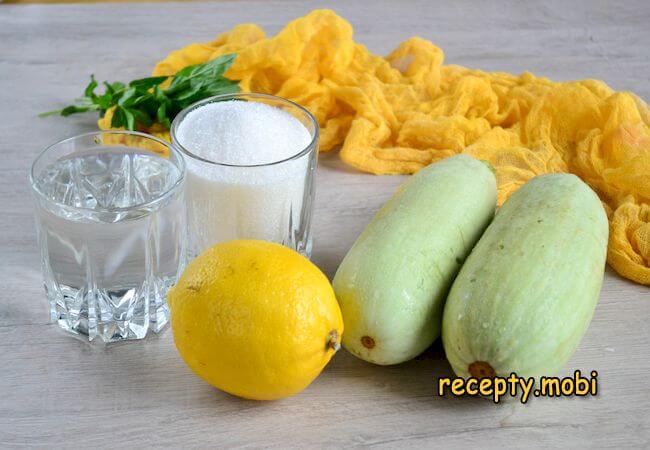
I get all the necessary ingredients ready. I choose young zucchini with thin skin and no seeds – jam made from this kind turns out tastier and more tender.
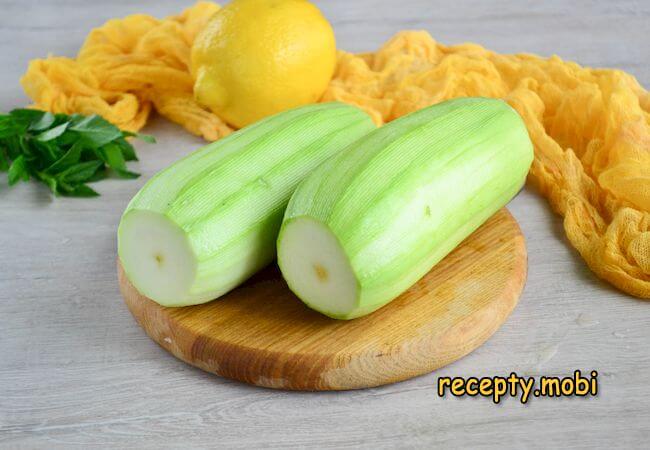
I peel the zucchini with a vegetable peeler. Thin young ones can be left with the skin on, but the skin of older zucchini is coarse.
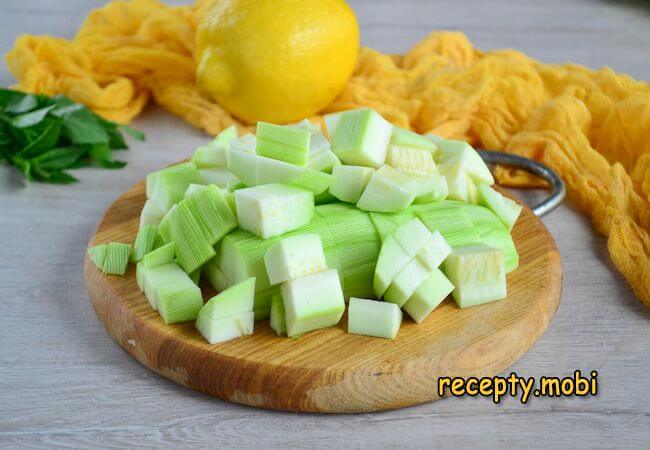
I cut the zucchini into small cubes. If there are seeds, I remove them. The small cubes will imitate the “pineapple” pieces.
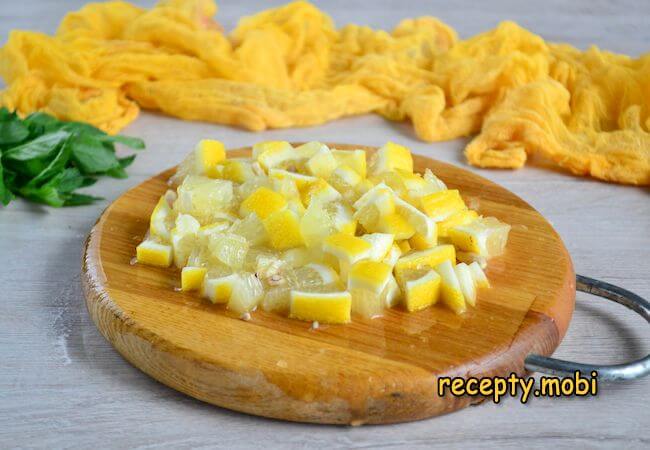
I cut the lemon into small cubes. You can peel it first, but it is perfectly fine to use it with the skin on – it will give a richer citrus aroma.
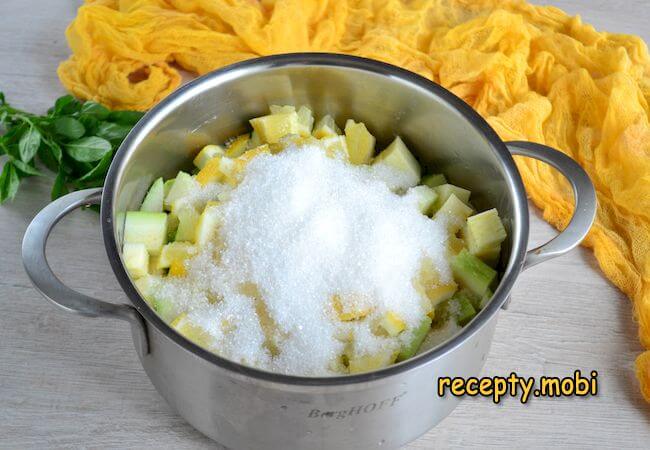
I put the zucchini and lemon cubes into a saucepan, add the water and the sugar. I stir and place it on the heat.
I slowly bring it to a boil and cook for 10 minutes. I cook this jam in three rounds – thanks to this the pieces of zucchini do not fall apart and stay whole, while the syrup turns rich and aromatic. I take the saucepan off the heat and leave it for 8–10 hours. I usually start cooking in the morning, then cook again in the evening, and the last time the next morning.
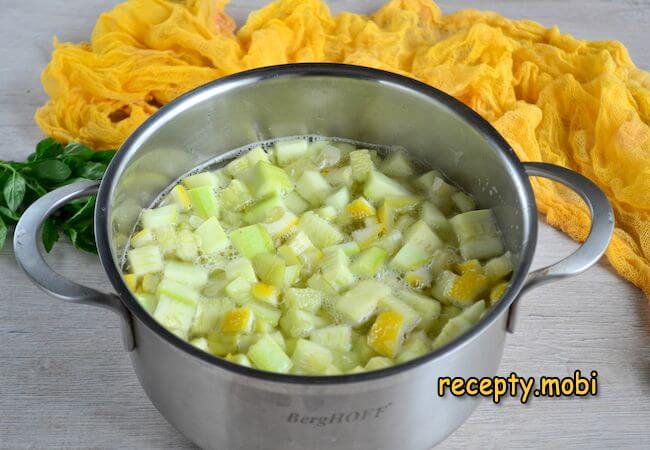
This is how the jam looks after the second cooking – the syrup has thickened and the pieces of zucchini have turned translucent.
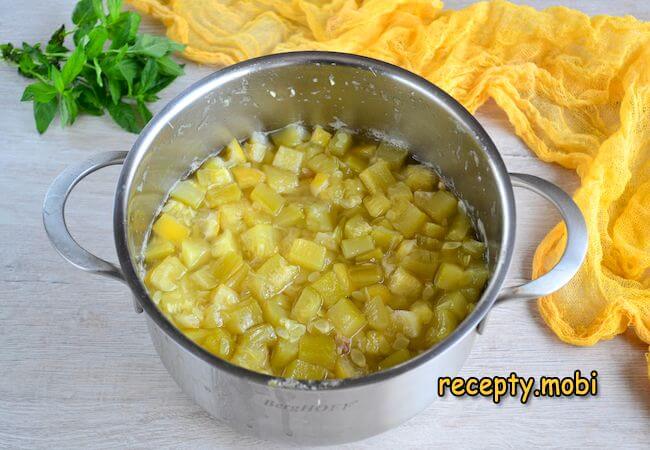
For the third time I cook the jam for 10 minutes and pour it into clean sterilized jars.
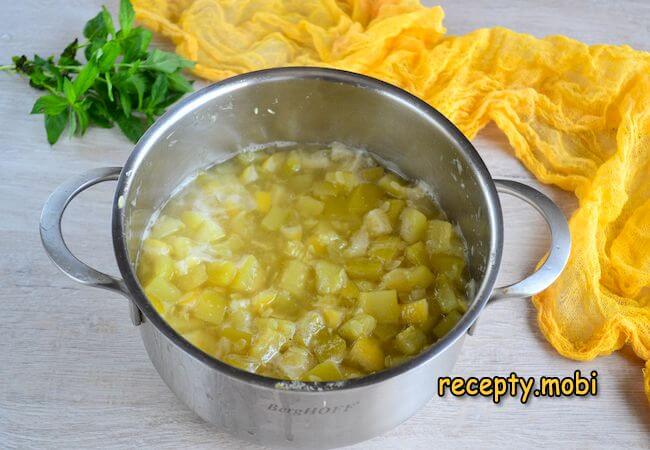
I seal the jars with metal lids and leave them until completely cooled.
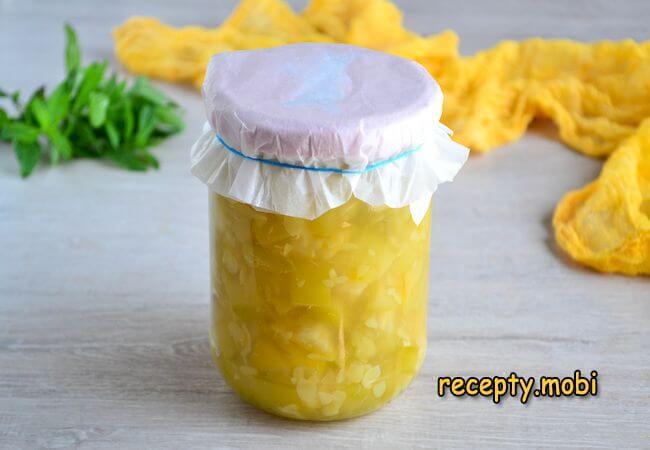
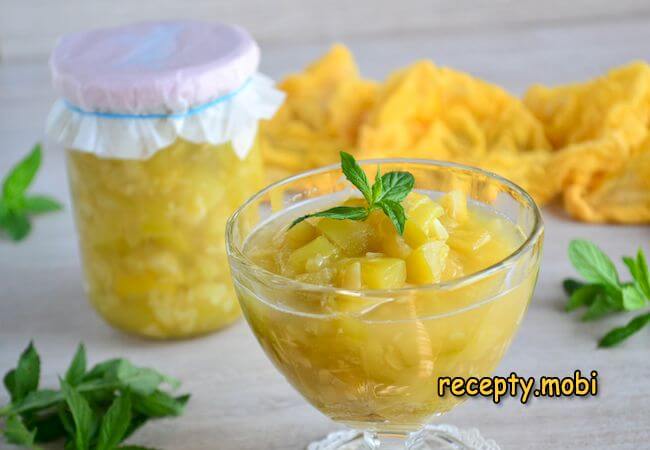
The tasty and aromatic zucchini jam with lemon for winter is ready.Enjoy your tea!


Tips
- 1
USE YOUNG ZUCCHINI – thin skin, no seeds. Such zucchini gives a more tender flavour and a nicer texture.
- 2
THREE ROUNDS of cooking – do not save time here. This method keeps the pieces in shape and makes the syrup rich – that is the “secret” of the zucchini pineapple.
- 3
LEMON WITH THE SKIN gives a brighter citrus flavour. Without the skin it is more delicate. Choose to taste.
- 4
LET THE JAM REST between cookings for 8–10 hours – the zucchini soaks up the syrup and comes to resemble pineapple. The same principle works in other jams that take time.
FAQ
How do I make the flavour exactly like pineapple? +
Here are some tricks for the maximum “pineapple” effect. Add pineapple extract (1/4 tsp at the end of the third cooking). Add fresh pineapple (150–200 g, finely chopped together with the zucchini) – the most vivid option. Replace part of the lemon with lime (1/2 lemon + 1 lime) for a more tropical flavour. Add 1 g of vanillin for a caramel note. Or use ready-made juice from canned pineapple in its own juice instead of 100 ml of the water in the syrup. The basic recipe (without any extracts) already gives a noticeable pineapple taste – it really is surprising!
Can I use old zucchini? +
You can, but it needs some preparation. Peel off the tough skin with a vegetable peeler (cut away a 3–4 mm layer). Cut it in half lengthways and remove the whole seed section with the large seeds – leave only the firm flesh. After trimming you will be left with 50–60% of the original weight. Cut it into small cubes and continue with the recipe. With old zucchini the jam will be a little less tender and the pieces may be firmer. Increase the first cooking time to 15 minutes. Young zucchini (up to 25 cm long) is still the better choice.
How long does the jam keep? +
In a cool place (cellar, pantry) – up to 12 months. At room temperature – 6–8 months. Once opened – 1–2 months in the fridge. An interesting fact: zucchini jam “improves” in storage – after 2–3 months the flavour develops more fully and the pineapple aroma becomes brighter. So do not open it right after sealing – let it rest. It is great as a guessing game for guests: few people will say on the first try that it is made from zucchini.
What else can I serve it with? +
The classics: with pancakes, fritters, waffles, syrniki, baked puddings. With tea as a sandwich (bread + butter + jam). As a filling for pies (like jam for an open pie, 300–400 g). In a sauce for meat (mix with mustard for a sweet-and-sour sauce for chicken or pork). In a smoothie (2 tbsp of jam + yoghurt + banana). In drinks (as a syrup for a non-alcoholic lemonade). In baking instead of jam. A universal “substitute” for anything pineapple in cooking – from Hawaiian pizza to chicken salad.
- Comment
or post as a guest
Be the first to comment.