avg —
Apricot Compote for Winter in a 3-Liter Jar

Instructions
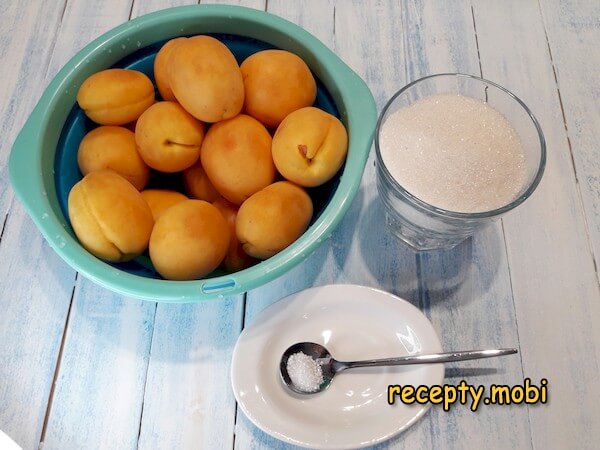
I prepare the ingredients for the apricot compote. Choose apricots that are not overripe and have no rotten spots. Slightly under-ripe fruit works too; if you use it, increase the sugar to 300 g.
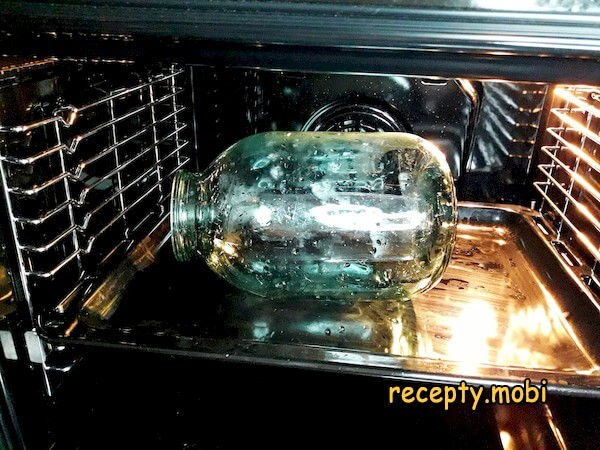
Wash the jar with baking soda and sterilise it in the usual way, for example in the oven. Place the wet jar in a cold oven, heat to 150 °C, and once it reaches that temperature, 10 minutes is enough. Boil the sealing lid on the stovetop for 3 minutes.
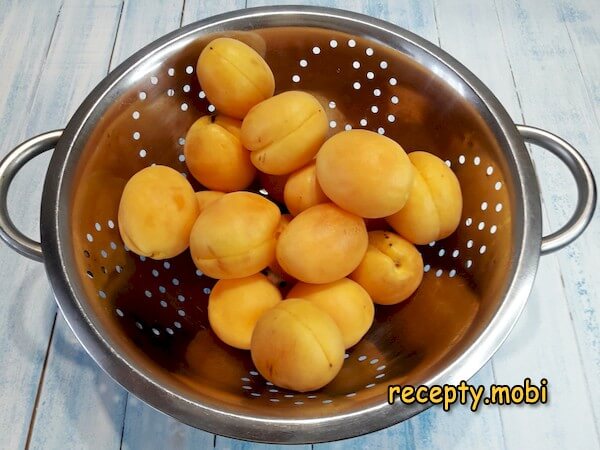
Wash the apricots thoroughly but gently, so as not to damage the skin. Then drain them in a colander to remove the moisture.
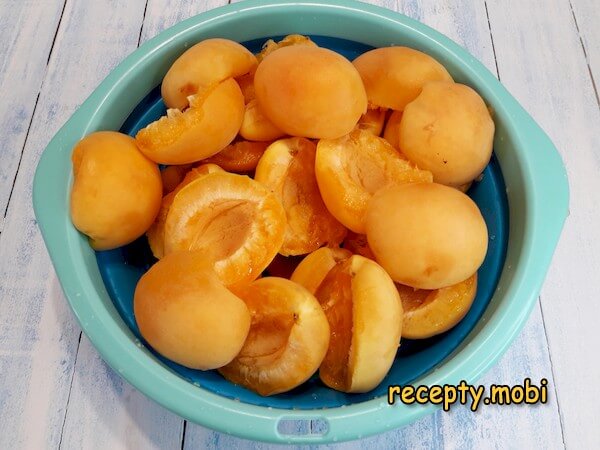
Open the apricots into halves and remove the pit.
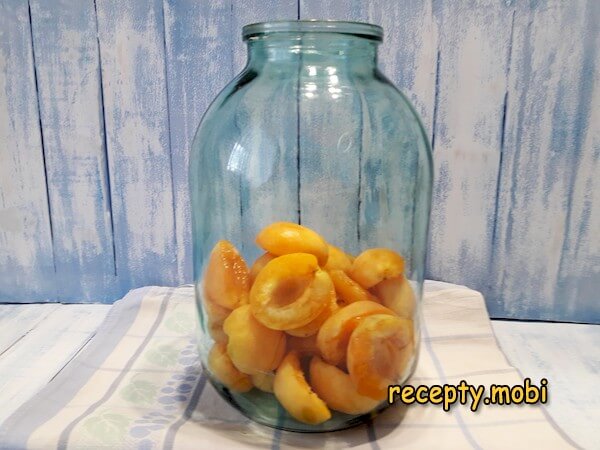
Fill the jar with the apricot halves to about 1/3 of its volume, or slightly more.
Boil the water and pour it into the jar, but only enough to cover the bottom. Because of the temperature difference the jar may crack, so pour the boiling water in gradually, waiting for the upper walls of the jar to warm up.
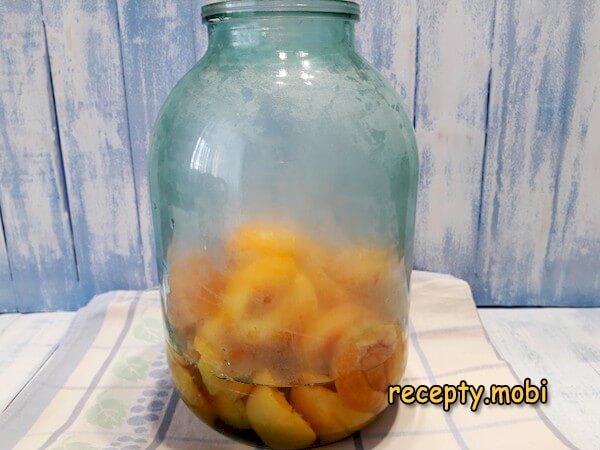
Then add a little more boiling water and wait another minute.
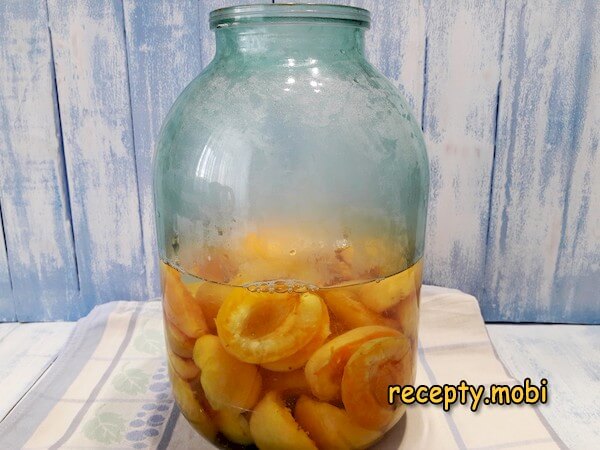
And finally, fill the jar all the way to the top.
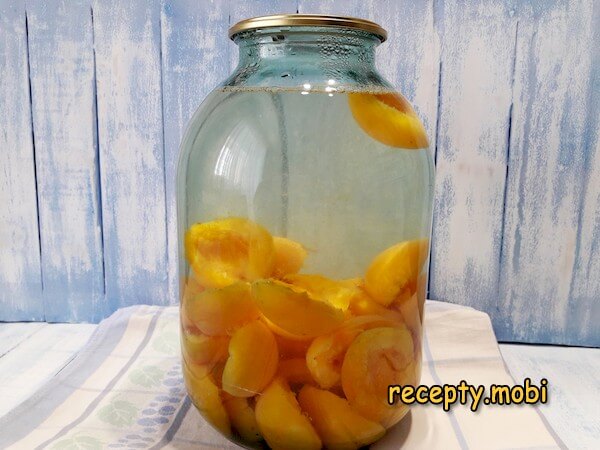
Cover with the sterile lid, then with a towel, and leave it like that for half an hour.
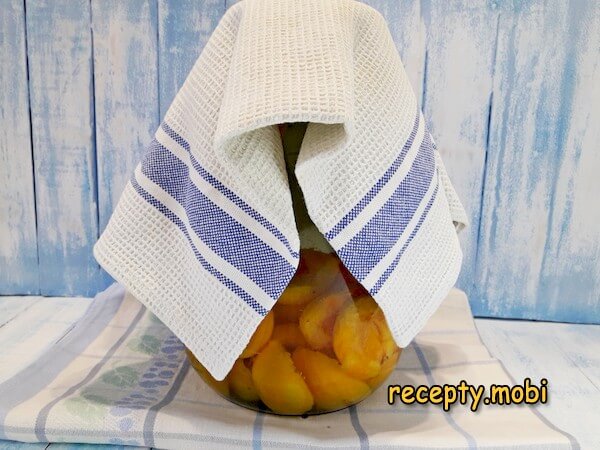
Then drain the water into a saucepan and boil it again. A special draining lid with holes makes it convenient to keep the fruit from falling out.
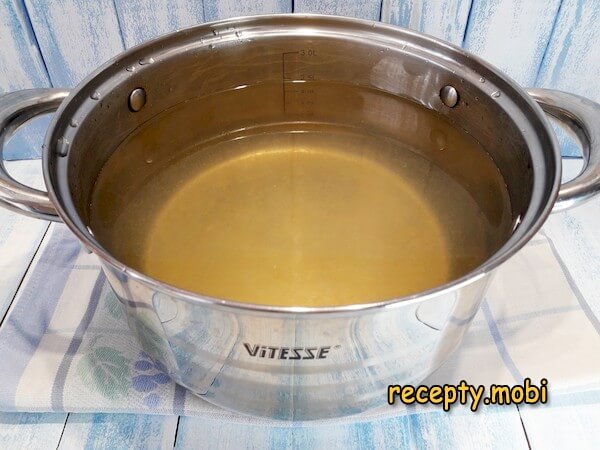
Add the sugar and the citric acid into the jar with the apricots.
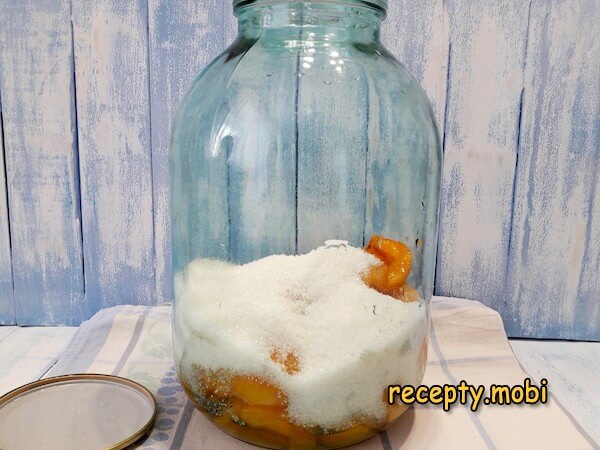
Pour boiling water over them.
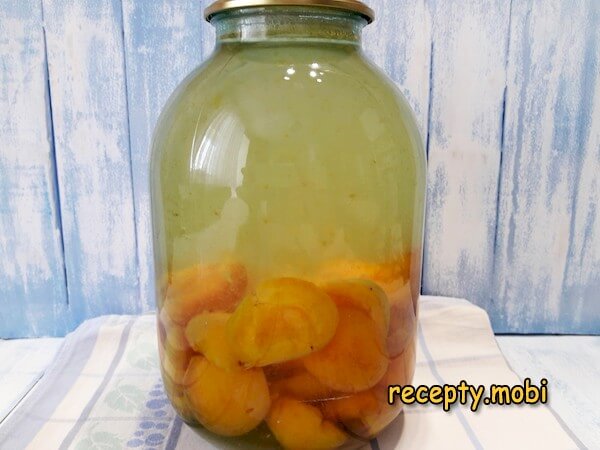
Seal the jar with a can sealer. Check that the seal is secure by turning the jar upside down.
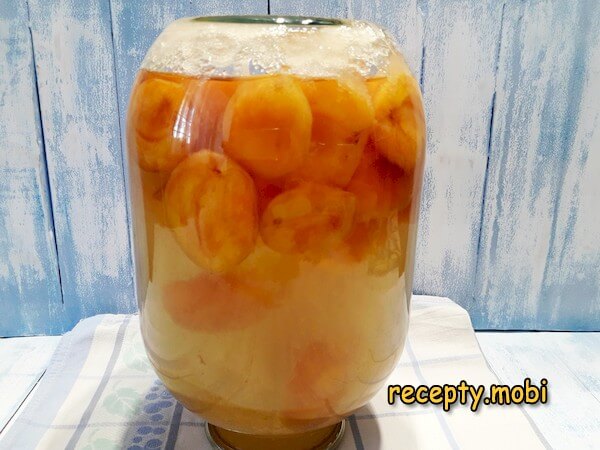
Then lay the jar on its side and roll it across the surface, helping the sugar to dissolve.
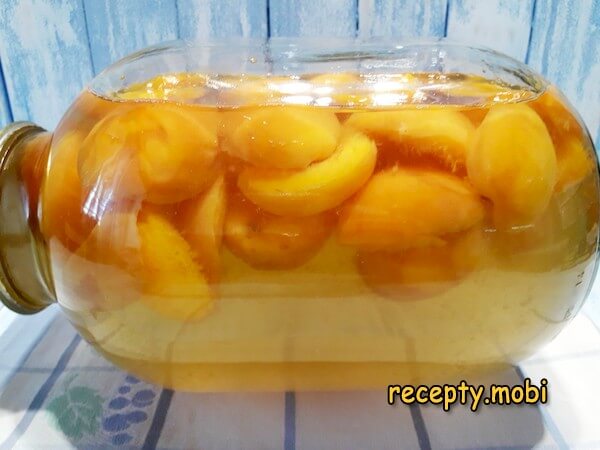
Once all the crystals have dissolved, wrap the sealed jar in a bath towel. You can also put it inside a blanket or a duvet. Leave the preserve like that for 10 hours.Once you know how to scale apricot compote for winter for a 3-litre jar, you can put up any number of jars by multiplying the ingredient weights by the number of jars. After the thermal bath, I move the preserve to a cool place, where it can keep for up to two years. At room temperature the shelf life is one year.



Tips
- 1
The gradual pour is the "secret" to keeping the jar intact. Pouring boiling water into a cold jar all at once will crack it. Warming the walls gradually prevents the glass from shattering.
- 2
The double pour is the "secret" to sterilisation. A single pour risks fermentation. Draining the first water and pouring fresh boiling water back with the sugar gives reliable preservation without an autoclave.
- 3
Citric acid is the "secret" to preservation. Sugar alone will not kill all the bacteria. A third of a teaspoon of citric acid acidifies the syrup, and the compote then keeps for 2 years in a cellar.
- 4
Wrapping in a blanket is the "secret" to warming through. Cooling too quickly will not destroy the microflora. Ten hours under a blanket gives extra pasteurisation without boiling the jars. The same principle works in other kinds of fruit compotes for winter.
Video
FAQ
Which apricots should I choose for compote? +
Firm, fleshy apricots of medium ripeness are ideal. Slightly under-ripe fruit also works, but then increase the sugar. Do not use soft, overripe fruit, which falls apart into mush, fruit that is rotten or spotted, or fruit treated with chemicals. For a dependable result, choose firm, fragrant apricots of medium ripeness.
Can I replace the citric acid? +
Yes. The most natural substitute is fresh lemon juice. You can also use lime juice or the juice of acidic berries such as redcurrants or gooseberries. Whichever you choose, the aim is to acidify the syrup so the compote keeps well. For the classic version, citric acid or fresh lemon juice is the surest choice.
How long does homemade compote keep? +
In a cellar or a cool, dark place at 5–15 °C it keeps for up to 2 years. At room temperature, up to 25 °C, it keeps for 1 year. Once the jar is opened, store it in the fridge and use it within 5–7 days. If the lid bulges or mould appears, the compote must not be drunk: open it, pour it out, and treat the jar with boiling water. Do not leave the jars in sunlight, as the compote turns cloudy.
What do I serve apricot compote with? +
A classic for the winter table, served in a glass with ice and a slice of lemon. A sprig of mint freshens the aroma. It goes well with sweet baking such as biscuits, cupcakes and pies, with pancakes and fritters, and with curd dishes such as syrniki. It also makes a refreshing drink alongside savoury meals for contrast. Apricot compote suits a family lunch, a celebration or a children's menu equally well.
- Comment
or post as a guest
Be the first to comment.