avg —
Ratatouille classic recipe in the oven

Instructions
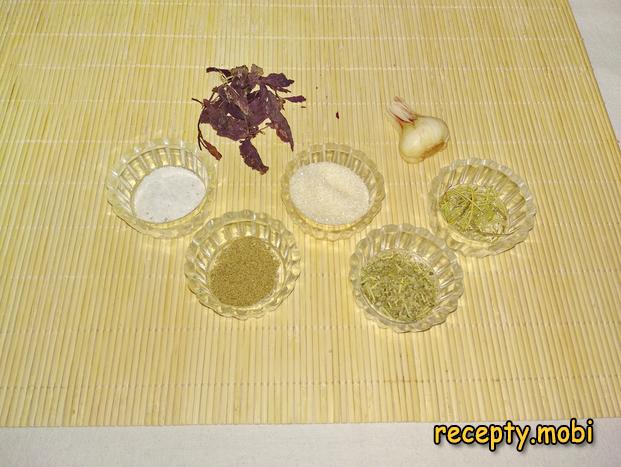
Lay out the ingredients on your work surface. Wash all the vegetables (aubergines, courgettes, tomatoes) thoroughly and choose ones of the same medium diameter, 5–6 cm – this is "secret no. 1" for a striking ratatouille. Use young vegetables with thin skin and leave the skin on – it gives the characteristic "stripes" on the cut rounds. Get the spice mix from the list ready.
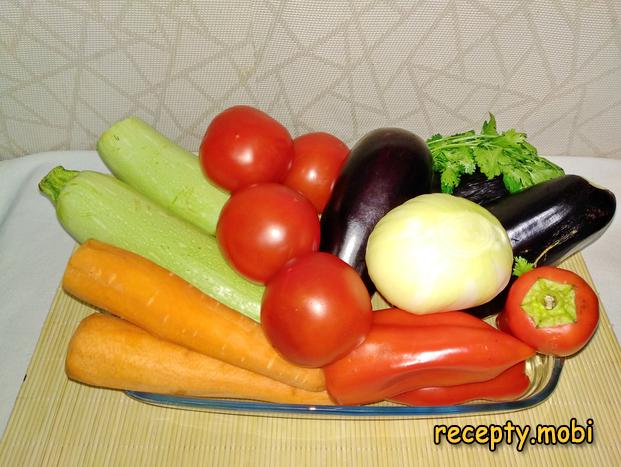
You will also need the spices from the list above.
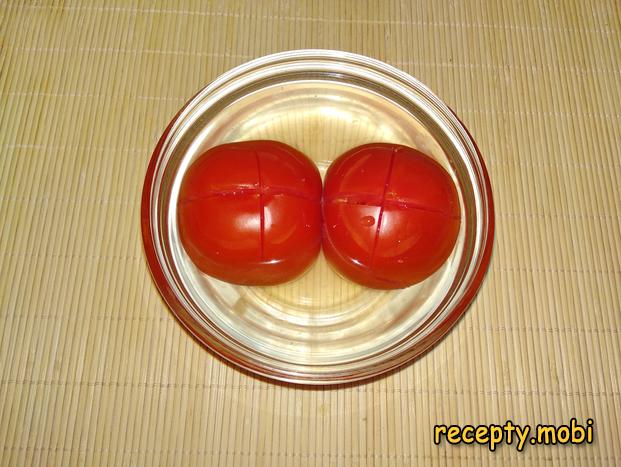
Start with the vegetable sauce – the aromatic base of the ratatouille. Score the tomatoes (400 g) crosswise at the top, place them in a deep bowl and pour over boiling water for 1–2 minutes. This "blanching" makes the skin easy to remove.
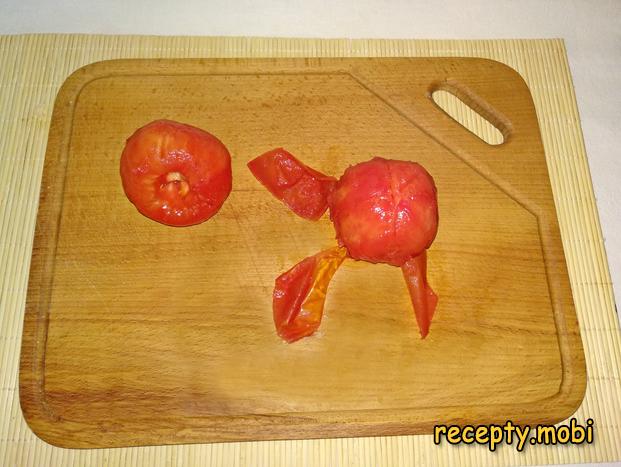
After blanching, drain the boiling water and drop the tomatoes into cold water for 30 seconds (a thermal shock). The skin comes off easily – lift it with a knife and peel it away in strips.
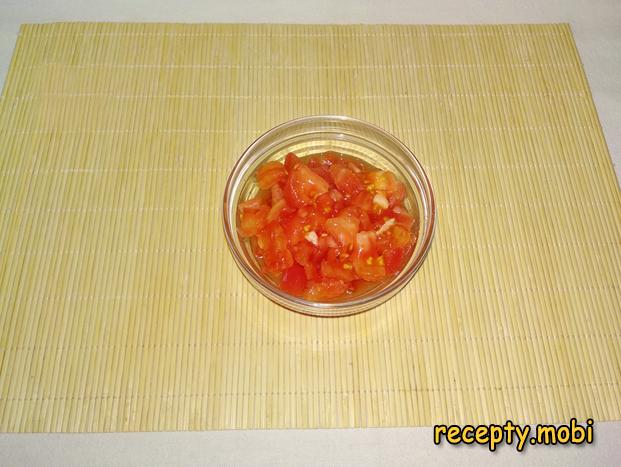
Cut the peeled tomatoes roughly into large 2 cm pieces and transfer them to a deep bowl.
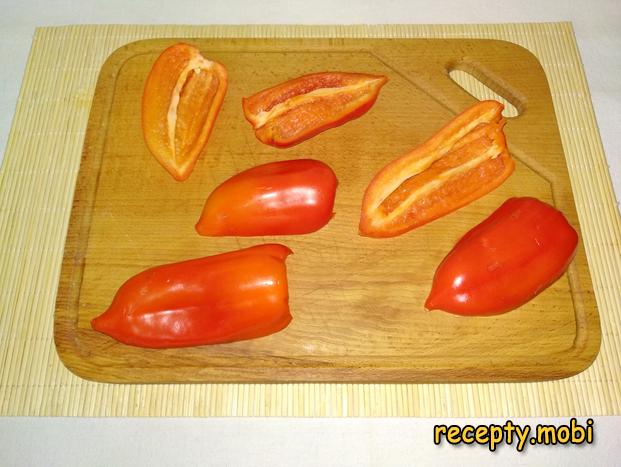
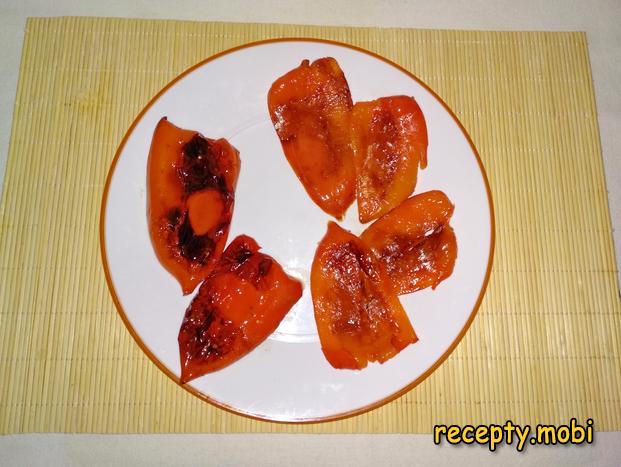
Cut the bell peppers (4) in half, removing the seeds and stems. For better flavour, roast the peppers for 15–20 minutes at 200°C in the oven (wrap them in foil), or fry them in a dry pan for 5 minutes on each side until the skin chars. After roasting, seal them in a plastic bag for 10 minutes and the skin will peel off easily.
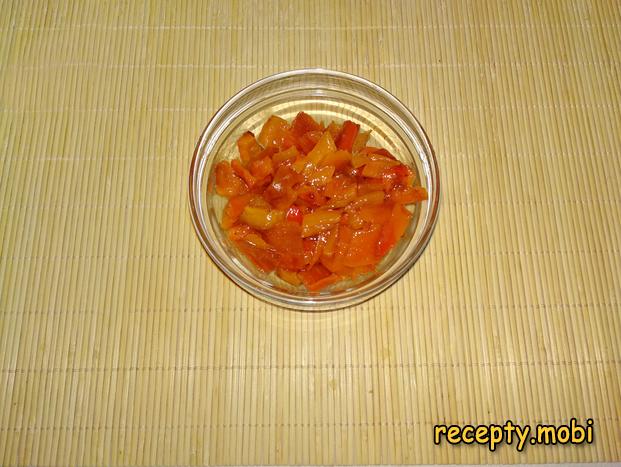
Cut the peeled, roasted bell pepper into rough pieces and add it to the bowl with the tomatoes. Roasted pepper has a more "concentrated", sweetish flavour and a silky texture – ideal for the sauce.
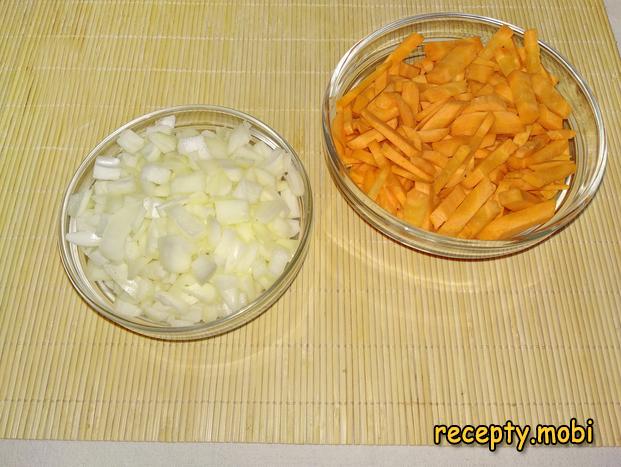
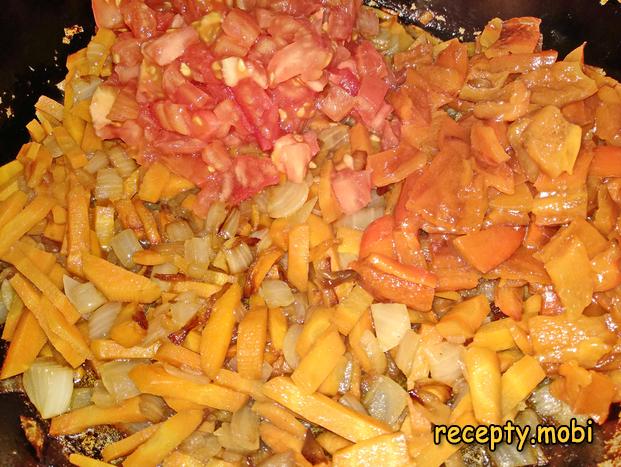
Peel the carrot (300 g) and the onion (1 large) and cut them roughly into large 2 cm pieces. In a pan with vegetable oil (2 tbsp), stew the carrot and onion for 15 minutes until completely soft and lightly golden.
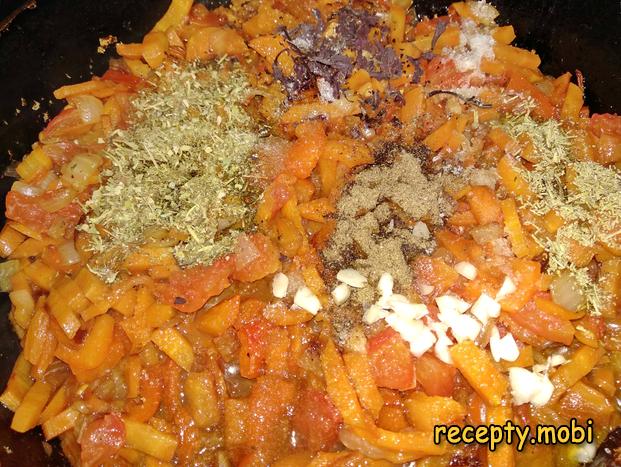
Add the prepared tomatoes and bell pepper from the bowl to the stewed carrot and onion. Stir, then add salt (½ tsp), sugar (1 tsp) and part of the spices (½ tsp thyme, ½ tsp rosemary, chopped basil, ½ tsp ground black pepper).
Cover the pan with a lid, turn off the heat and leave it for 5–10 minutes – the spices will release their aroma into the hot vegetables.
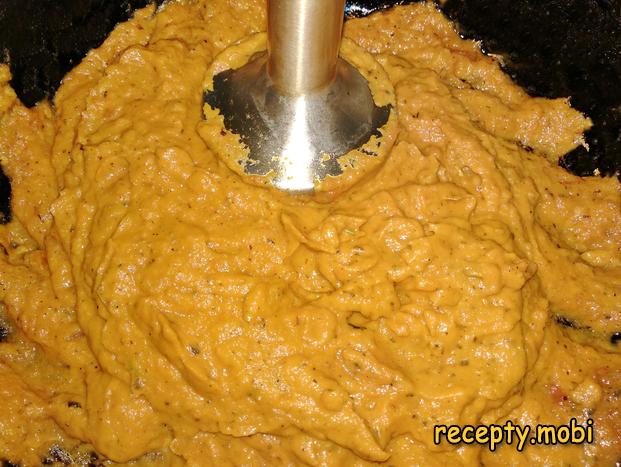
Blend the vegetables straight in the pan with an immersion blender until they have the smooth consistency of a "thick tomato sauce". Without a blender, you can press them through a sieve. The finished sauce is an aromatic, bright orange vegetable sauce with subtle notes of Provençal herbs.
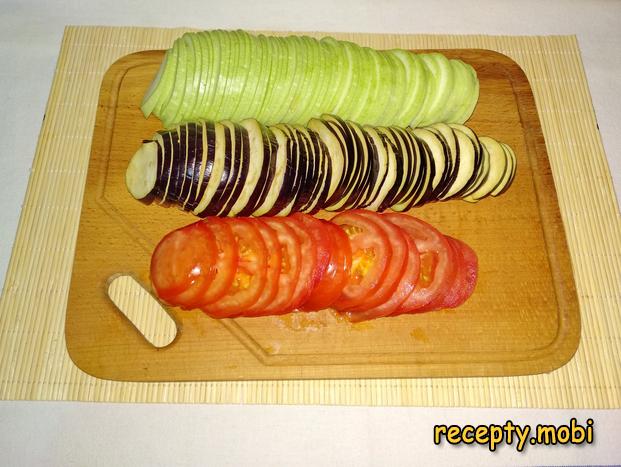
Now prepare the main vegetables for the ratatouille "fan". This is the critical step: slice the aubergines, courgettes and tomatoes into thin, even rounds, 3–4 mm. Use a vegetable slicer (mandoline) or a sharp, long knife – thin, even slicing is essential for a striking presentation. If the rounds are different thicknesses, the dish will bake unevenly.
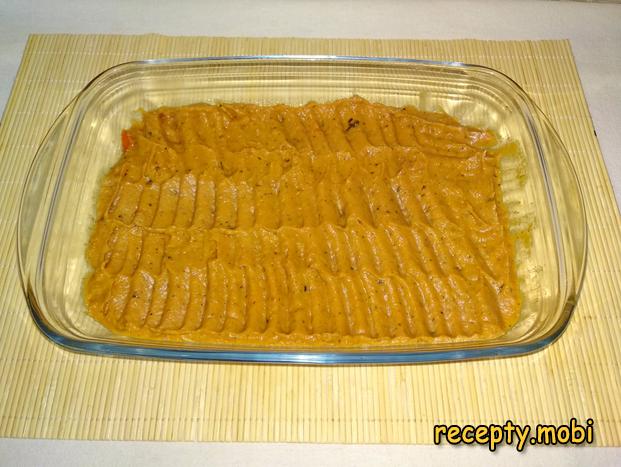
Get a ceramic or glass baking dish ready (28–30 cm round, or 25×35 cm oval). Pour the finished vegetable sauce over the bottom of the dish – it will be a "pillow" for the vegetable "fan" on top and protect it from scorching.
Arrange the vegetable "fan". Alternate them: 1 round of aubergine + 1 round of courgette + 1 round of tomato, and so on around the dish or along the diagonal. The vegetables should overlap each other by about two thirds – this gives the characteristic "French" pattern. Fill the whole dish with a neat vegetable pattern.
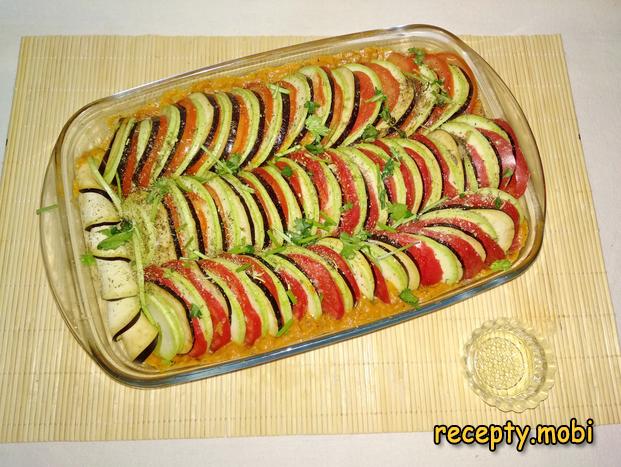
Season the vegetables on top with salt (½ tsp) and pepper (1 tsp ground black). Grate the garlic (4 cloves) finely or crush it through a press and scatter it evenly over the vegetables. Drizzle everything with olive oil (2 tbsp) for colour and aroma during baking.
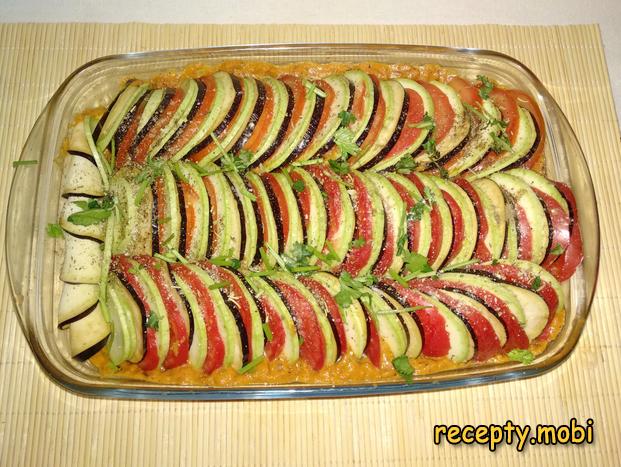
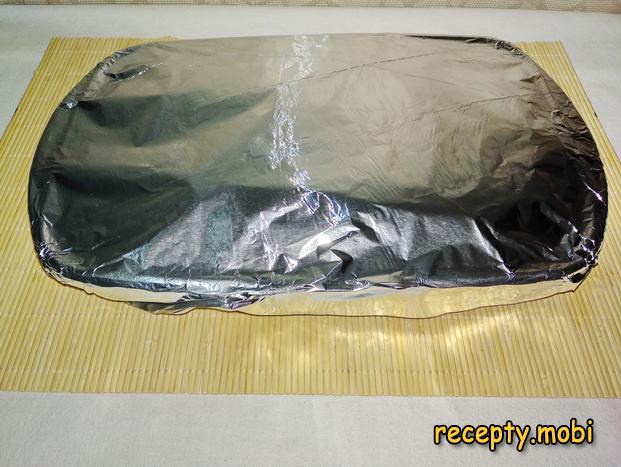
Scatter the remaining spices evenly over the top (½ tsp thyme, ½ tsp rosemary, whole sprigs of fresh basil). Cover the dish with foil – this protects the vegetables from drying out during the first hour of baking.
Preheat the oven to 180°C, top-and-bottom heat. Put the dish of ratatouille in the centre of the oven and bake for 1 hour under the foil – the vegetables will cook through in their own juices until completely soft.
After 1 hour, remove the foil and leave the dish in the oven for another 15 minutes – the tops of the vegetables will brown slightly and the sauce beneath them will thicken into a rich sauce. Check for doneness with a knife – the vegetables should pierce easily, without resistance.
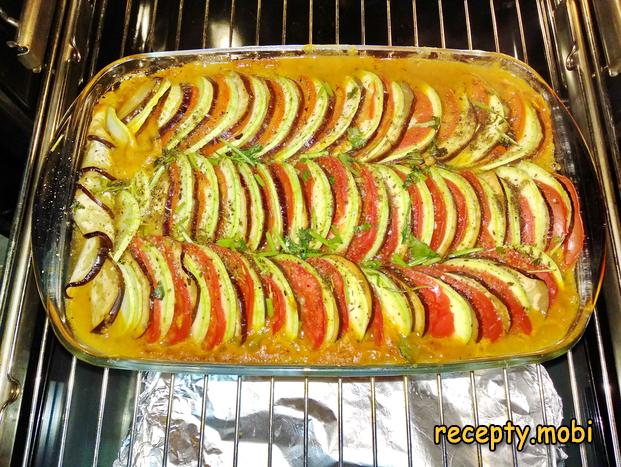
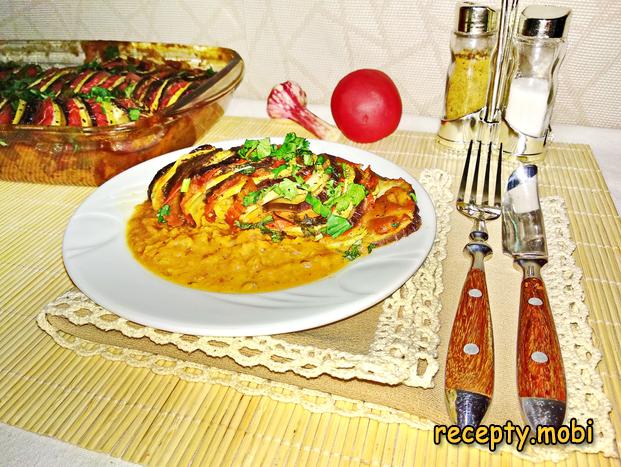
Take out the finished ratatouille and let it "rest" for 5–10 minutes before serving so the vegetables settle. Garnish with fresh chopped basil on top for a pretty "French" presentation. The classic ratatouille in the oven is ready! Serve it in portions with a spatula, spooning some of the vegetable sauce from the bottom of the dish over each serving.


Tips
- 1
Slice the vegetables into equal, thin rounds, 3–4 mm – the "secret" to the striking ratatouille presentation from the Pixar film.
- 2
Roast the bell peppers in advance – roasted pepper gives the sauce a "concentrated" sweet flavour and a silky texture.
- 3
One hour under foil plus 15 minutes uncovered is the "golden" ratatouille technique. I use a similar approach for my Greek moussaka with aubergines.
- 4
Use a blend of Provençal herbs (thyme + rosemary + basil) – it gives the dish its classic "French" character.
FAQ
Do aubergines need to be "soaked" before cooking? +
It depends on the variety and the season. Young, thin-skinned aubergines (July–August) are not bitter, so soaking is not needed. Late, large ones with thick skin (September–October) can be bitter because of solanine. Soak them for 30 minutes: slice into rounds, sprinkle with coarse salt (1 tbsp per 500 g) and leave for 30 minutes – the salt draws out the bitter juice. Rinse off the salt with cold water and pat dry with kitchen paper. You can also soak the rounds in cold water with 2 tbsp of salt for 1 hour. If you are using young aubergines, skip this step to save time.
What can replace the vegetables in a classic ratatouille? +
The classic set of 3 vegetables (aubergine, courgette, tomato) is the "canon" of Provençal ratatouille. Possible alternatives: yellow courgette (for a two-colour presentation), red bell pepper cut into rings (an unusual note), thinly sliced potato (a more "Russian" version, but not the classic), sweet potato (for an "autumn" version), or yellow or green courgette (a universal swap for the marrow). For a "winter" ratatouille, use frozen vegetables, but the texture will be less "firm". Classic ratatouille is a summer dish made with young, seasonal vegetables.
How long does the finished ratatouille keep? +
The finished ratatouille keeps in the fridge for up to 4 days in a tightly sealed container. On the second or third day the flavour is even richer – the vegetables soak up the sauce and spices fully. Before serving, reheat it in the oven for 10–15 minutes at 150°C under foil (this keeps it juicy), or in the microwave for 3 minutes under a cover. You can freeze it in portions for 1 month in airtight containers – before eating, defrost it completely in the fridge for 8 hours and warm it through in the oven. A handy "lunch for work" as a ready homemade meal.
What to serve ratatouille with? +
It is ideal on its own as a light dish for a lean, vegetarian or diet menu. As a side dish – with fried chicken, beef steak, grilled fish or shoulder of lamb (a Provençal classic). With bread – a French baguette, garlic bread, ciabatta or Armenian lavash. With pasta – with thin spaghetti or fettuccine as a "sauce" in the Italian style. Or with basmati or jasmine rice. For drinks – a French dry red (Côtes du Rhône, Burgundy), a dry white (Muscadet, Sancerre) or a rosé (Provence rosé), the classic match for a dish from Provence. For dessert – fresh seasonal berries or a sorbet.
- Comment
or post as a guest
Be the first to comment.