avg —
Potato pancakes without eggs in a skillet

Instructions
I prepare the products for classic Belarusian pancakes. I choose the "right" potatoes – an old starchy variety (such as Sineglazka, Adretta or Impala) for plenty of starch. Young potatoes with little starch are not suitable – the pancakes will "fall apart". I peel the potatoes (500 g) and the onion (1 medium) and wash them thoroughly.
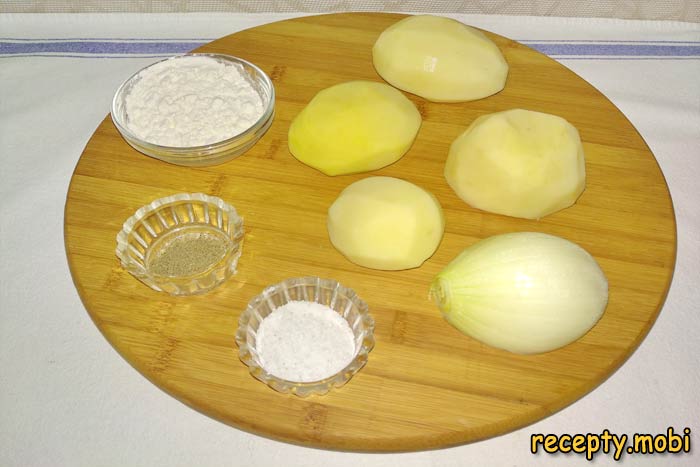
CRITICAL STEP: I grate the potatoes and onion on the FINEST grater – only a fine grated mass gives the pancakes the right texture. A coarse grater gives "patchy" pancakes with pieces of potato. As an alternative, you can blitz the mixture in a blender or food processor "until smooth". I add the onion to the potatoes STRAIGHT AWAY as I grate – the acidity of the onion protects the potatoes from darkening.
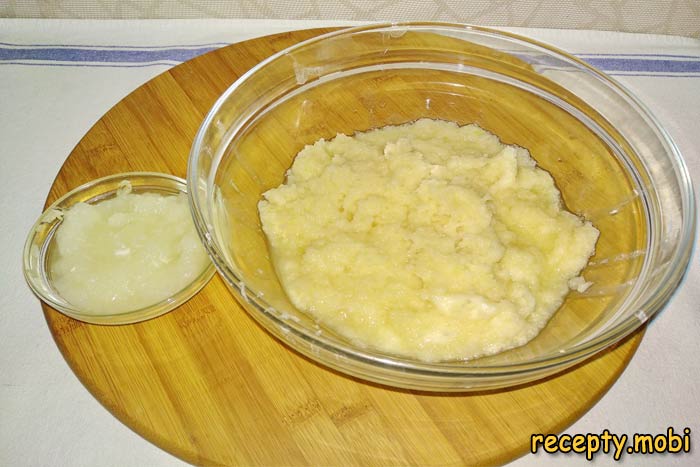
CRITICAL STEP for egg-free pancakes: I transfer the grated potato mass to a sieve or colander and leave it for 5–7 minutes so the juice drains into a bowl placed underneath. Without eggs, it is the potato starch that "glues" the pancakes together – you need to keep all of the starch.
After 5 minutes a white sediment forms at the bottom of the bowl of juice – this is the potato starch, our "natural glue". I carefully pour off the liquid on top (trying not to "stir up" the sediment) and keep only the starch at the bottom. I add the saved starch back to the grated potato mass in the sieve.
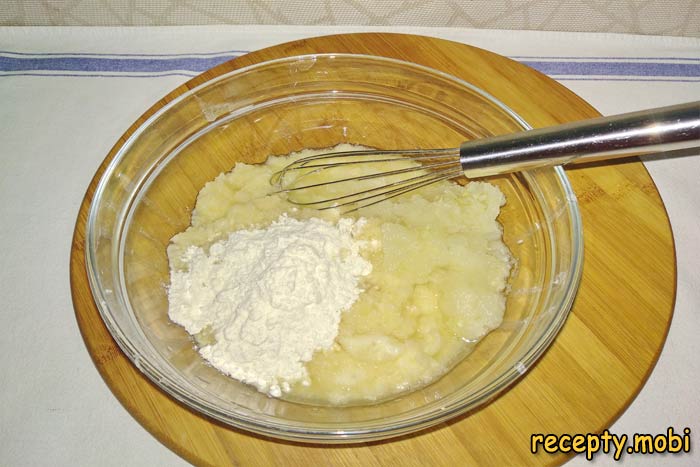
If the potatoes are young and low in starch, you may need some extra "glue". In that case add 1–2 tbsp of flour or potato starch. But you should NOT add eggs – you would get potato fritters rather than pancakes. I mix the mass thoroughly with a whisk or spatula.
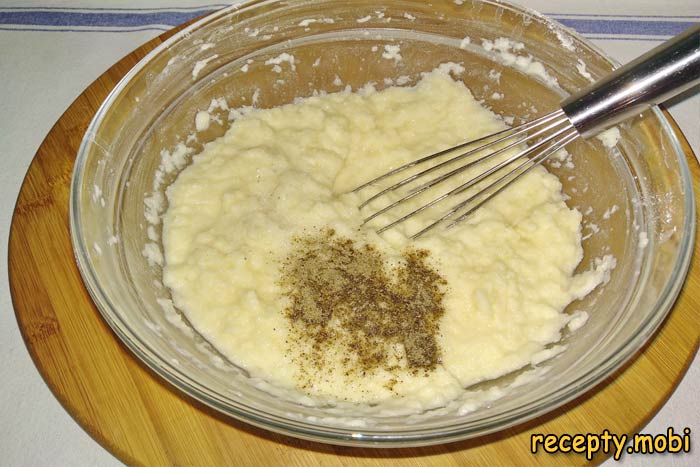
I salt the mass to taste (about 1 tsp of salt per 500 g of potatoes) and add ground black pepper to taste. You can add a little chopped greenery (dill, parsley) for aroma – the "country" version. I mix everything thoroughly once more.
I let the potato mass "rest" for 5 minutes – in this time the starch fully distributes and "sets" the mass. The finished mass should be dense and should not "float" in liquid. If it is runny, drain off the excess juice through a sieve.
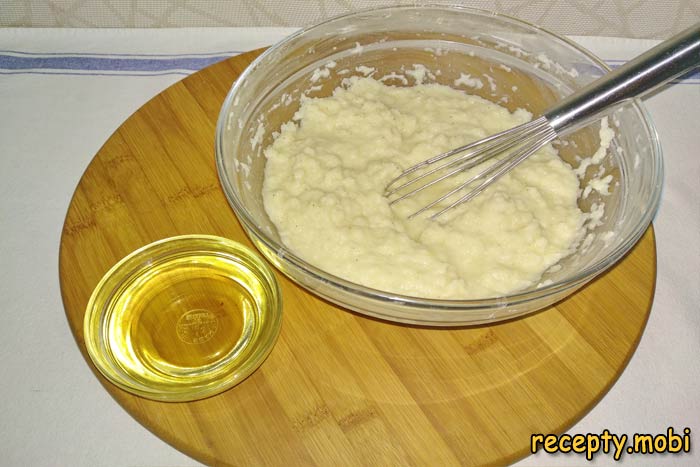
I pour vegetable oil into a thick-bottomed frying pan (24–26 cm) – a layer of 3–5 mm. I set it over high heat and heat it well. I check it is ready: drop a little of the mass into the oil – it should "sizzle" and bubble straight away. If the oil is "quiet" it is not hot enough yet, and the pancakes will "soak up" the oil and turn greasy.
I switch the heat to medium. Using a tablespoon I place the potato mass into the pan in small "patties" 7–8 cm across. Do not make them too thick (1 cm high at most) – otherwise the middle will stay raw. Leave a 2 cm gap between the pancakes for easy turning.
I fry the pancakes for 4–5 minutes on one side until a golden crust forms underneath. Do NOT turn them sooner – the pancakes will "fall apart" if the crust has not yet formed. The crust underneath should be evenly golden across the whole diameter.
With a silicone or wooden spatula I carefully turn each pancake. I fry the other side for another 4–5 minutes until it is the same golden colour. The total cooking time for one batch is 8–10 minutes. I check it is done inside: I pierce it with a knife – it should go in easily, without resistance.
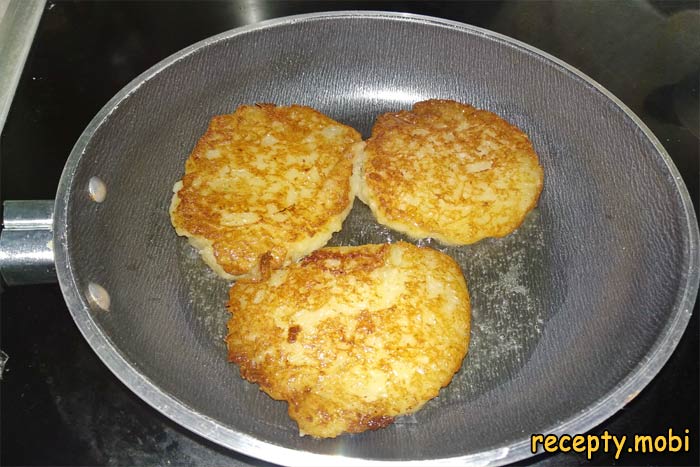
I transfer the finished pancakes to a plate lined with paper towel – it will soak up the excess oil. I fry the whole potato mass this way in batches of 4–5 pancakes. From 500 g of potatoes you get 12–15 pancakes.
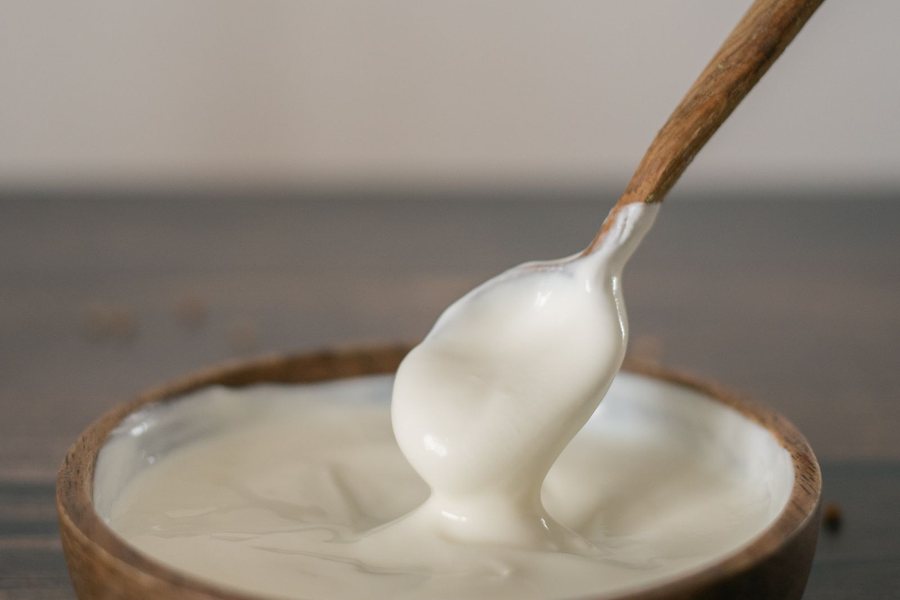
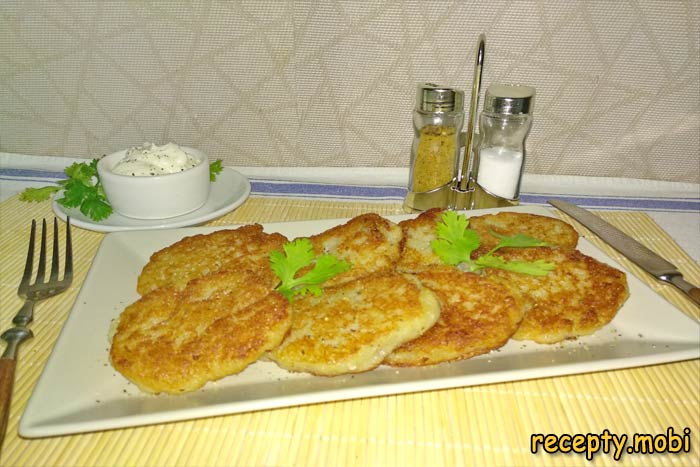
The potato pancakes without eggs in a skillet are ready! I serve them hot on a dish with sour cream 20% in a separate bowl and fresh chopped dill and parsley. The Belarusian classic is with garlic sauce or pork crackling. If you like – with red caviar, smoked salmon, or sour cream with herbs for a festive presentation.


Tips
- 1
SAVE the potato starch from the juice – the "natural glue" instead of eggs. Without it the pancakes will fall apart during frying.
- 2
Use old starchy potatoes (Sineglazka, Adretta) – young ones with little starch will not hold their shape.
- 3
Add the onion STRAIGHT AWAY as you grate – its acidity protects the potatoes from darkening. I make potato cutlets on a similar principle.
- 4
The oil in the pan must be WELL heated – cold oil will "soak into" the pancakes and make them greasy.
FAQ
Why do the pancakes fall apart in the pan? +
The main reasons are: 1) You used young potatoes with little starch – take old starchy varieties (Sineglazka). 2) You poured the potato starch away with the juice – keep the white sediment at the bottom of the bowl. 3) You grated the potatoes coarsely – use the FINEST grater. 4) The mass is too runny – drain it through a sieve or add 1–2 tbsp of flour. 5) Poorly heated oil – the pancakes will "soak up" the oil and fall apart. 6) You turned them too early – wait for a golden crust. 7) The pancake is too thick (more than 1 cm) – make it thinner so it cooks through better.
Can I add other ingredients to the pancakes? +
Yes, the classic additions are: grated carrot (for sweetness and colour), diced bacon or lard (the Belarusian classic), spring onion or parsley (for freshness), grated cheese (for a creamy flavour), chopped garlic (for sharpness), or boiled mushrooms diced (a woodland aroma). Fillings between two pancakes: fried minced meat (pancakes with meat), mushrooms with onion, curd cheese with herbs (for adults), or cheese with garlic. Belarusian "kalduny" are pancakes with a meat filling inside. Each addition gives its own character. The classic is plain pancakes with sour cream.
How long do the finished pancakes keep? +
Fresh pancakes are best eaten straight away – they are tastiest hot with a crispy crust. In the fridge they keep for up to 2 days in an airtight container – before serving, reheat them in a dry frying pan without oil for 2–3 minutes on each side to bring back the crispness. Do not reheat them in the microwave – they will go soft. You can freeze raw shaped pancakes for 1 month in airtight bags with baking paper between the layers – fry them straight from frozen, increasing the time to 8 minutes on each side. You can freeze cooked pancakes too, but the crust goes soft on thawing, so it is not recommended.
What should I serve the pancakes with? +
The classic Belarusian way is with sour cream 20% and herbs. As a main dish – with fried bacon, pork crackling, sausages or hunter's sausages. As a side – with fried meat (pork, chicken), boiled beef or cutlets. For a celebration – with red caviar, smoked salmon or cream cheese (an unusual elegant presentation). For sauces – garlic sauce (mayonnaise + garlic + herbs), mushroom sauce or tomato sauce. For drinks – light beer (the men's choice), homemade kvass, kefir or fruit drink. For a weekend family breakfast – with a fried egg and bacon.
- Comment
or post as a guest
Be the first to comment.