avg —
Greek-Style Eggplants

Instructions
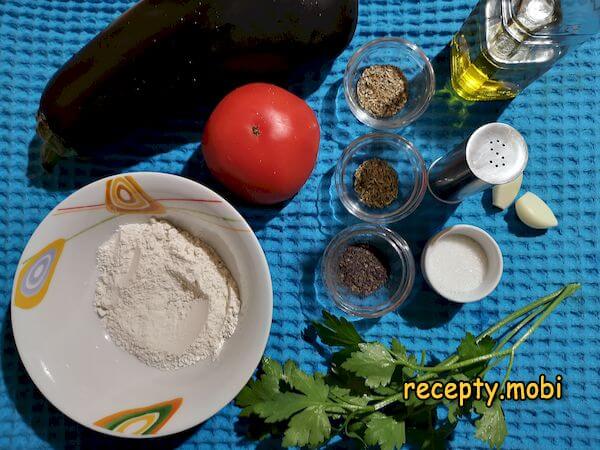
I prepare the ingredients needed for the Greek-style eggplants. I peel the skin off the garlic.
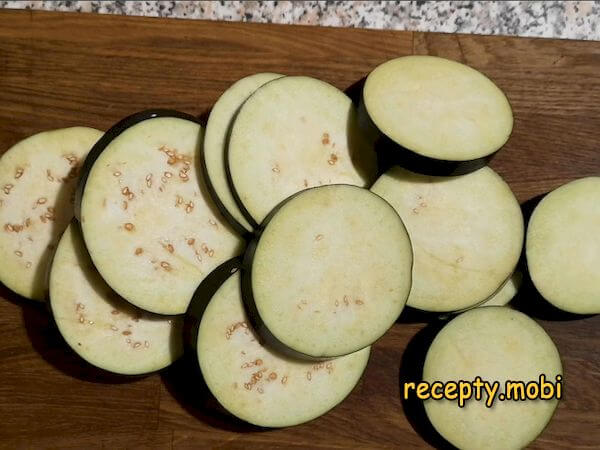
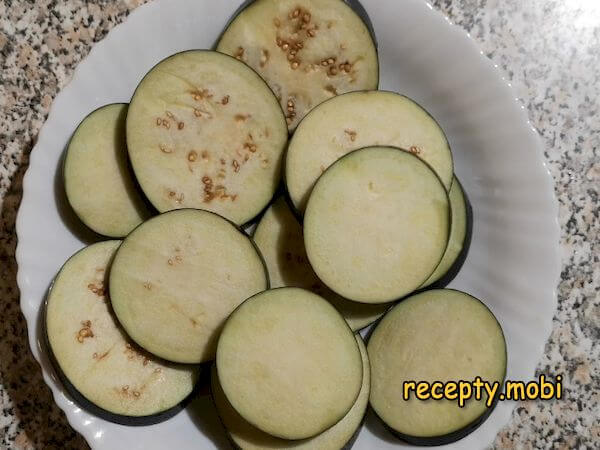
I cut the eggplants into round slices about 5 mm thick. An even thickness matters so that the slices fry evenly.
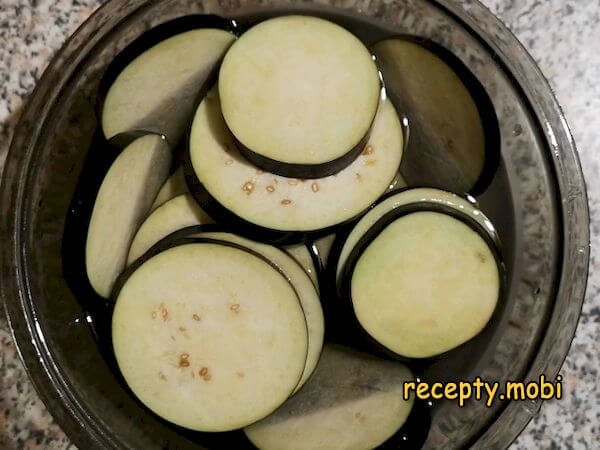
In a separate bowl I dissolve 1 tablespoon of salt in 0.5 litre of water. I put the eggplants in for 20 minutes so the bitterness goes away. Salted water works faster than simply sprinkling the slices with salt.
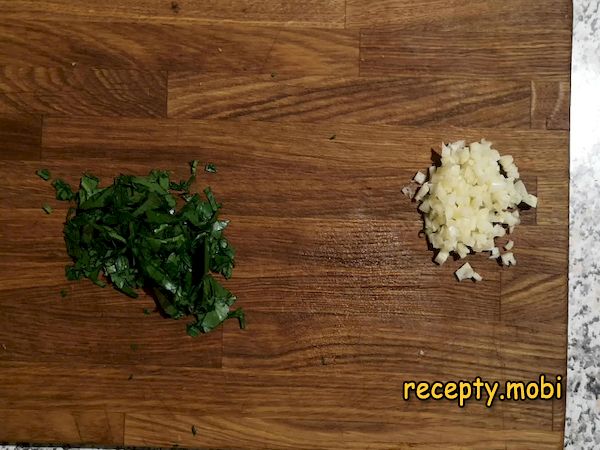
I dice the garlic into cubes and finely chop the parsley.
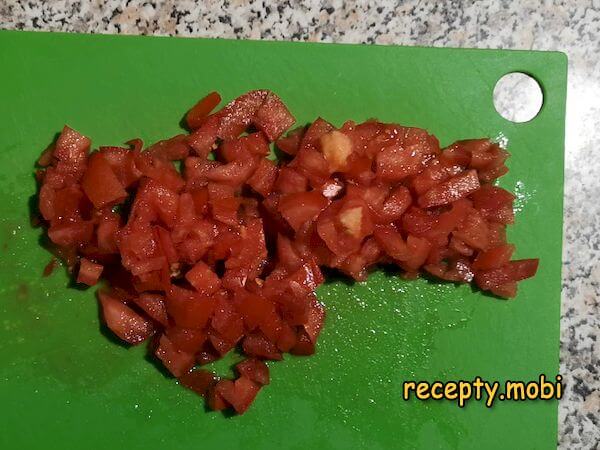
I dice the tomato into cubes, having first cut off the stem.
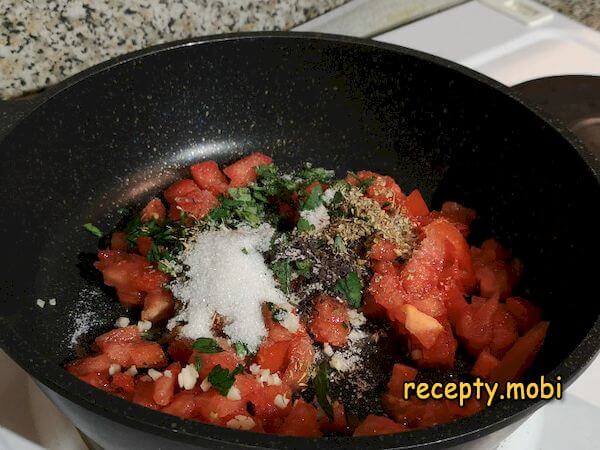
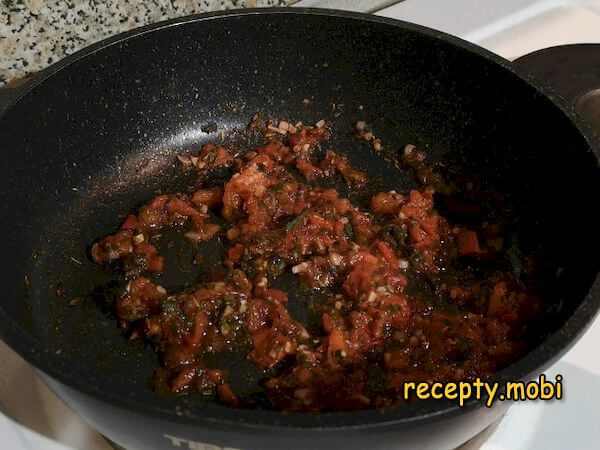
I heat a frying pan and add the diced tomatoes, the garlic, the parsley, the oregano, the basil, the thyme, salt to taste, and the sugar. If the tomatoes are sour, add more sugar. I stir everything together. I simmer the sauce for about 20 minutes over medium heat, stirring occasionally, until the tomato pieces become soft.
I take the finished sauce off the heat.
I take the eggplants out of the water and pat them dry with a paper towel – otherwise the oil will spit during frying.
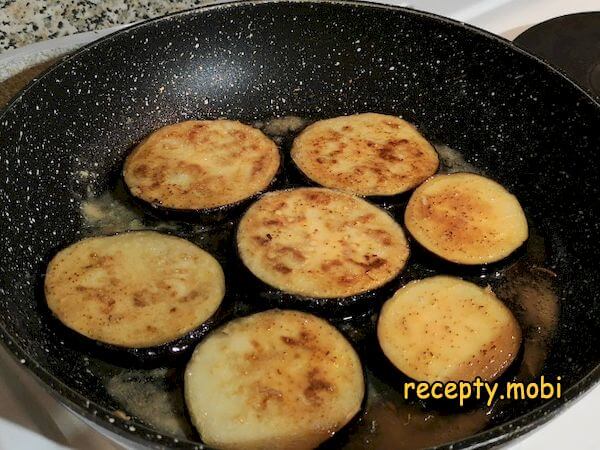
I heat a frying pan and add olive oil. I coat the eggplant slices in flour and fry them on both sides until golden.
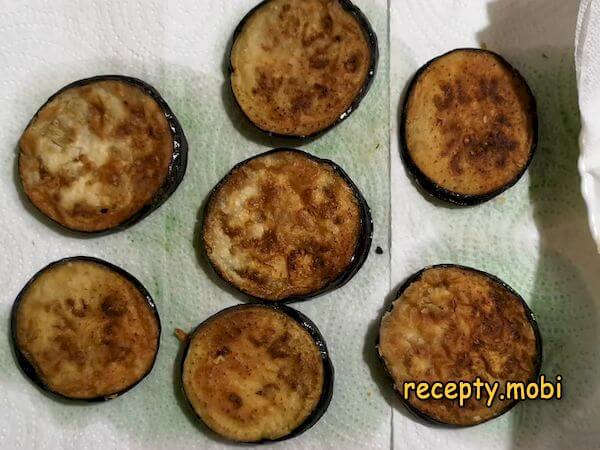
I lay the finished slices on a napkin or paper towel to get rid of the excess oil.
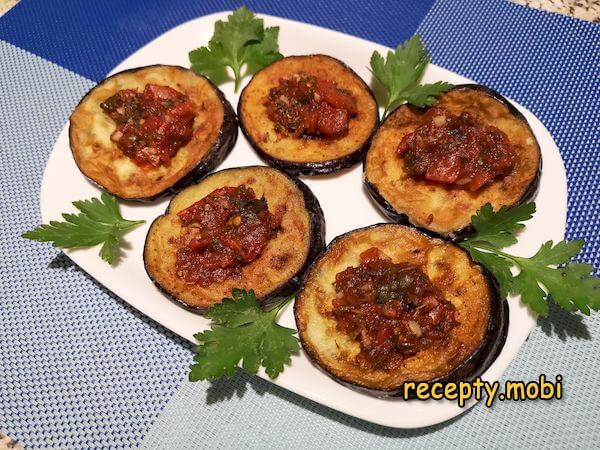
I move the eggplants onto a plate and spread the prepared sauce over them. The Greek-style eggplants are ready. I garnish with fresh herbs and serve. Bon appetit!


Tips
- 1
SALTED WATER removes the bitterness faster than dry salting – 20 minutes is enough. Without this step the eggplants will taste bitter.
- 2
PAT THE EGGPLANTS DRY before frying – wet slices make the oil spit and prevent a golden crust from forming.
- 3
FLOUR FOR THE COATING is the signature Greek touch. It gives a thin crispy crust and helps the sauce cling. Without flour the eggplants are "bare".
- 4
Use OLIVE OIL – it is the canon of Greek cuisine. Sunflower oil will do, but the "Italo-Greek" spirit will be missing. The same principle works in other Mediterranean dishes.
Video
FAQ
Which tomato is best? +
For the sauce, choose meaty varieties: Oxheart, Roma, San Marzano (a classic for Greek-Italian sauces), Pink Giant. Avoid watery "salad" varieties – they release too much liquid and turn the sauce into a "thin soup". In winter, use canned tomatoes in their own juice (one 400 g tin) or tomato paste (2 tbsp + 200 ml water). Fresh summer tomatoes from the garden are ideal. At the market, choose fragrant ones with a rich red colour that feel heavy for their size.
How can I substitute fresh herbs? +
The original calls for fresh thyme, oregano, basil and parsley – you do not always have all of them at once. Substitutes: dried thyme (1/2 tsp = 10 g of fresh), dried oregano (the same proportion), herbes de Provence (2 tsp replace them all at once), Italian herb mix (also 2 tsp). Keep the parsley fresh – dried parsley gives almost no flavour. Fresh basil is better than dried; you can replace it with an "Italian mix" or leave it as in the recipe. If you have a garden, grow all four herbs – it is easy and they are always to hand.
How long does the dish keep? +
In the refrigerator in a covered container – 2-3 days. The next day the sauce soaks into the eggplants more, and the flavour becomes brighter. Reheat in the microwave (the crust will go soft) or in the oven at 180 °C for 7-8 minutes (the crust will "revive"). I do not recommend freezing – after thawing the eggplants turn "rubbery". The dish is also very tasty cold – an excellent starter. For storage, keep the eggplants and the sauce separately and combine them before serving.
What to serve it with? +
Greek classics: with homemade bread, Greek salad, moussaka, fried fish (sea bass, sea bream) or grilled lamb. For wine – a dry red Greek one (Agiorgitiko, Xinomavro) or a homemade one. For a festive table – as a hot starter. For lunch – with rice or a light pasta. For vegans – a perfect dish on its own. For a meze (a Greek appetiser spread) – together with feta, olives, taramasalata and tzatziki. For a weekday dinner – as a side dish to meat or fish.
- Comment
or post as a guest
Be the first to comment.