avg —
Eggplant Sauté in a Skillet

Instructions
I prepare all the vegetables. I peel the carrot and the onion. I remove the stem and seeds from the sweet pepper.
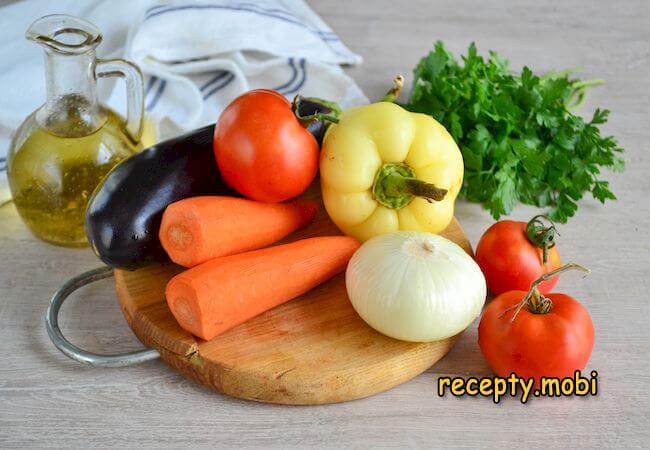
I rinse the eggplants, remove the stem and cut them into rounds slightly less than one centimetre thick.
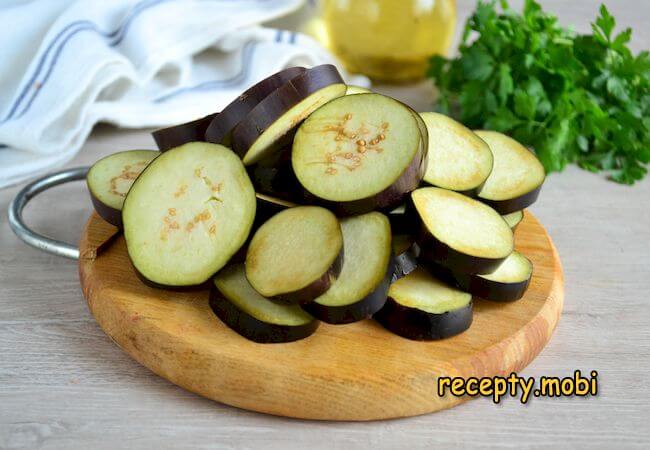
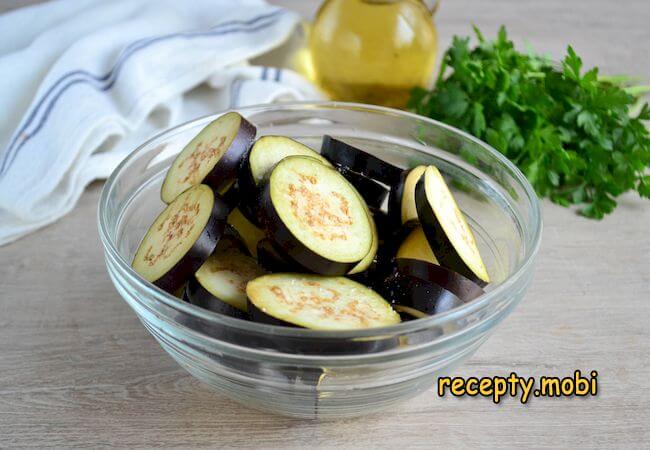
I put the eggplant rounds in a deep bowl, sprinkle them with salt and stir – this removes the bitterness. After 10–15 minutes I gently squeeze out the juice that has been released.
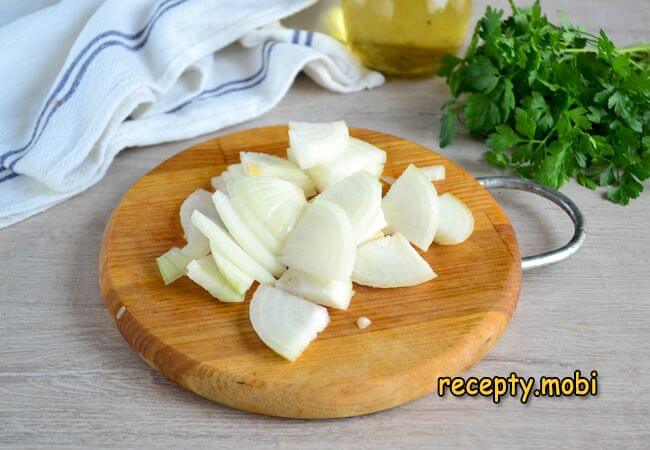
I cut the onion into thin half-rings or quarter-rings.
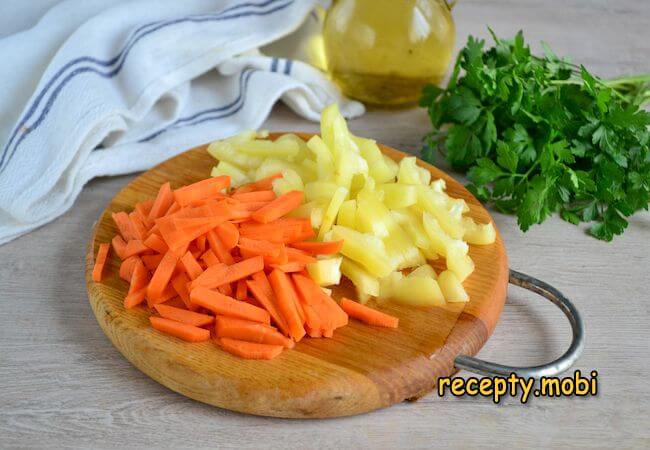
I cut the carrot into thin sticks or grate it on a Korean-carrot grater. I cut the sweet pepper into strips.
First I lightly fry the onion (for a minute), then I add the carrot and the sweet pepper. I fry over medium heat – the vegetables should become soft.
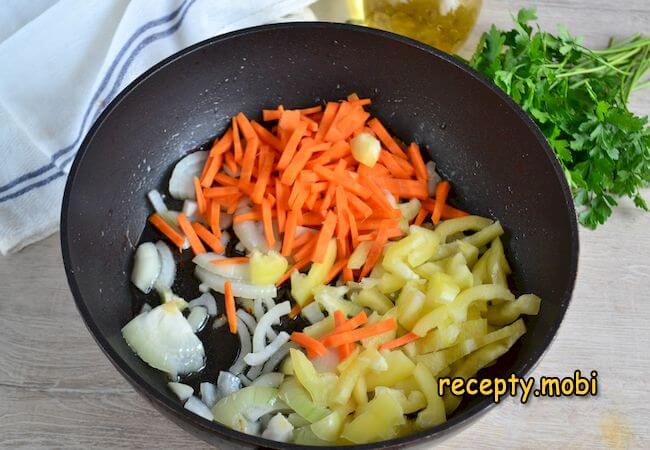
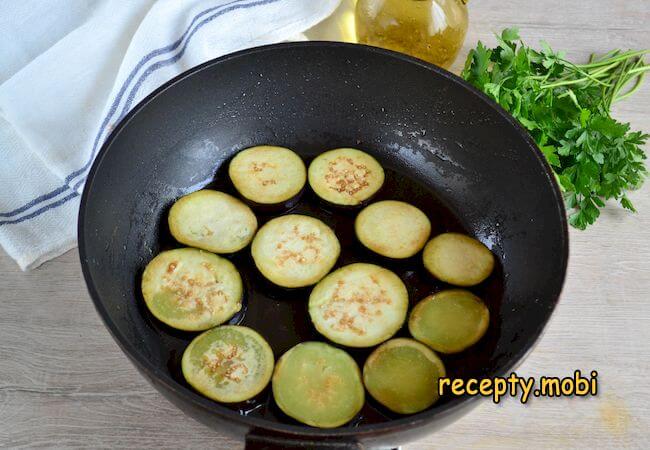
In a separate frying pan I fry the prepared eggplant rounds in vegetable oil. I lay the eggplants out in a single layer – each round should turn golden on both sides.
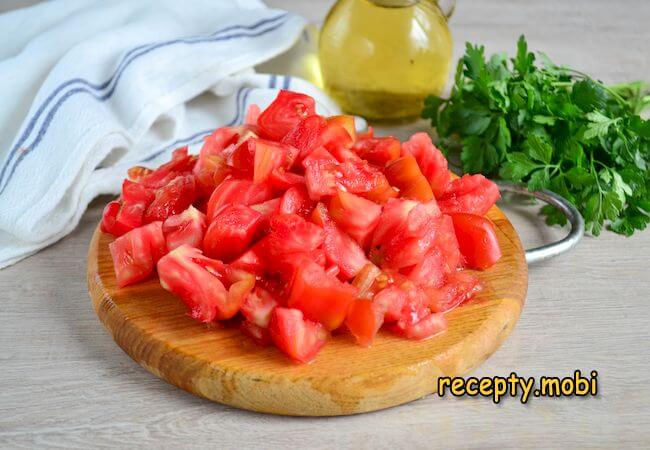
I cut the tomatoes into small, irregular pieces.
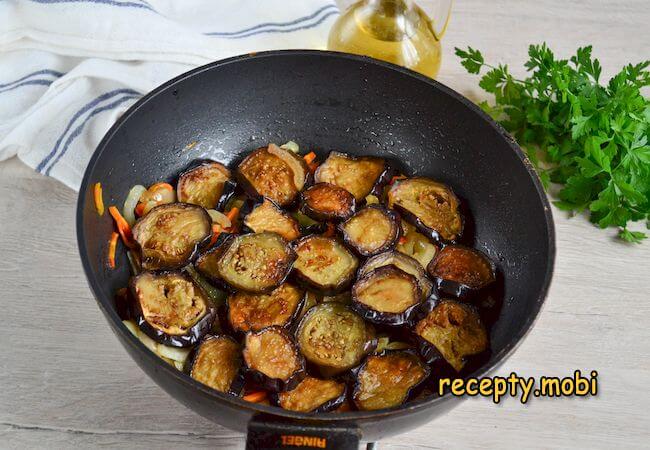
I add the golden eggplant rounds to the fried onion, carrot and pepper.
Next I add the chopped tomatoes and the minced garlic, stir, and simmer everything together for 7–10 minutes. The tomatoes will release their juice, in which the sauté finishes cooking.
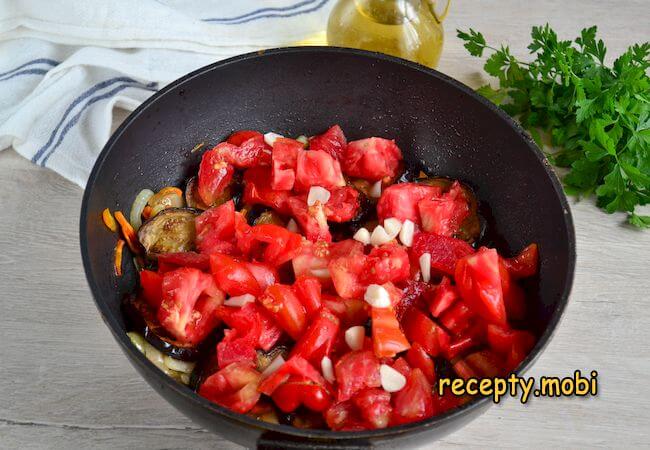
I add the finely chopped parsley, stir, and keep it on the heat for a few more minutes.
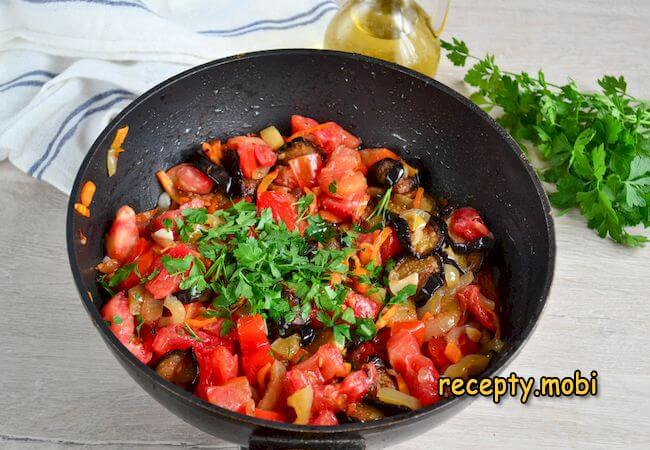
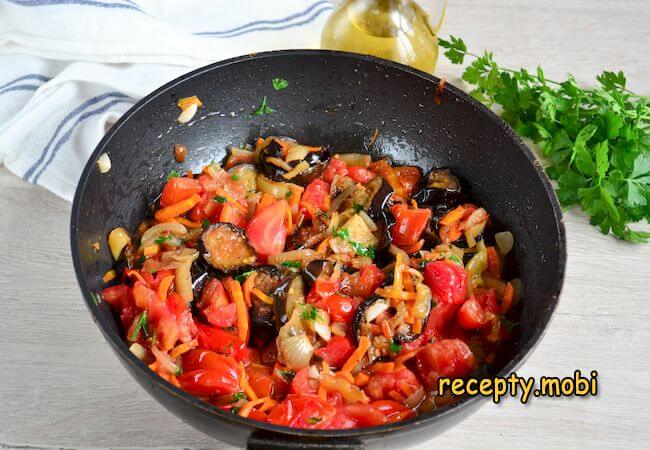
The eggplant sauté in a skillet is ready. It can be served either hot or chilled.Bon appetit!


Tips
- 1
SALT THE EGGPLANTS and leave them for 10–15 minutes – this removes the bitterness. Afterwards be sure to squeeze out the juice.
- 2
FRY the vegetables separately – this is the essence of a sauté. Each ingredient will reveal its own flavour, and bringing them together gives a harmonious dish.
- 3
Lay the eggplants in a SINGLE LAYER – otherwise they will stew in their own juice, whereas we want a golden crust.
- 4
ADD THE GARLIC together with the tomatoes – not at the start, otherwise it will turn bitter. A similar principle works for other Mediterranean dishes.
FAQ
How does a sauté differ from a stew (ragout)? +
The main differences are in the cooking technique. Ragout: all the vegetables are stewed together in one pot gradually (onion → carrot → the other vegetables). Sauté: each vegetable is fried separately until done, then they are all combined. In a ragout the texture is more «uniform», with the vegetables soaking up a shared sauce. In a sauté the flavour of each ingredient is clearly distinct. A sauté is more demanding in technique, but tastier – which is why it is a restaurant-level dish. The name comes from the French «sauter», «to jump, to leap», and is linked to the stirring technique.
Do the eggplants have to be salted in advance? +
For young eggplants (up to 300 g, with thin pale skin) it is not essential – they have no bitterness yet. For ripe and old ones (400 g and above, dark glossy skin) it is essential: solanine «builds up» with age. Alternatives: soak them in salted water for 30 minutes (gentler, but with the same result), fry them without any pre-treatment and eat them straight away (the bitterness will not have time to «develop»), or use white eggplants (a variety without bitterness). For this recipe, always salt them, even young ones: that way the eggplants release excess moisture and fry better.
How long does the sauté keep? +
In the refrigerator in a closed container – 3–4 days. The next day the flavour is brighter – the vegetables have «made friends». Reheat it in a pan under a lid with 1 tbsp of water (the microwave dries it out). It can be frozen for up to 2 months, but courgettes and eggplants become watery after thawing – use them «reworked» into caviar or a paste for bruschetta. Cold sauté is an excellent appetiser with meat or simply with bread. For longer storage, transfer it to a sterile jar and close the lid – 1–2 months in the refrigerator.
What should you serve the sauté with? +
Versatile options. With meat: fried chicken, grilled beef, lamb cutlets. With fish: baked sea bream or salmon. As a dish in its own right: with a piece of homemade bread or lavash. In a salad: add it to a variation of a vegetable salad with rocket. On bruschetta: spread cold sauté over toasts with garlic. Cold sauté is an ideal appetiser with wine or beer. For a lean lunch – with boiled potatoes or rice. An Italian version – with penne pasta and grated parmesan.
- Comment
or post as a guest
Be the first to comment.