avg —
Eggplant Lasagna with Mince

Instructions
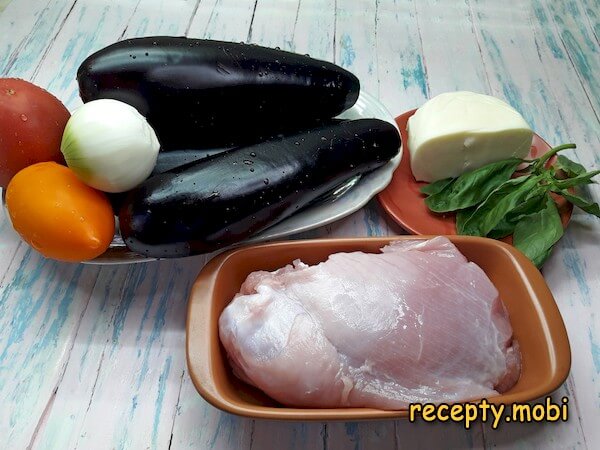
I get the ingredients ready for the eggplant lasagna with minced meat.
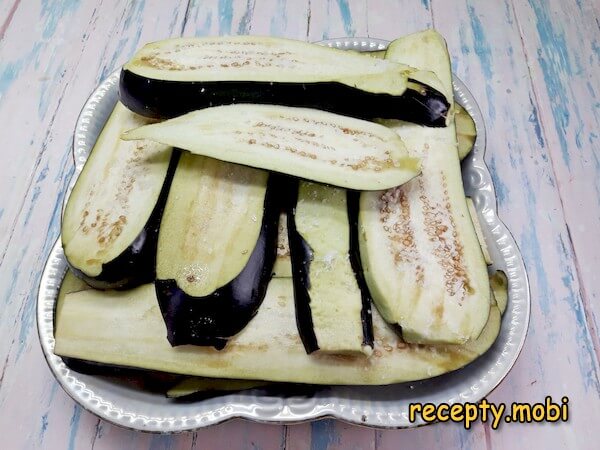
Without peeling them, cut the eggplants lengthwise into long slices 0.8-1 cm thick. Set the smallest and end pieces, along with any odd, unusable bits, aside separately, as they will come in handy later. Stack the good slices on a plate and salt them generously on all sides, then do the same with the offcuts.
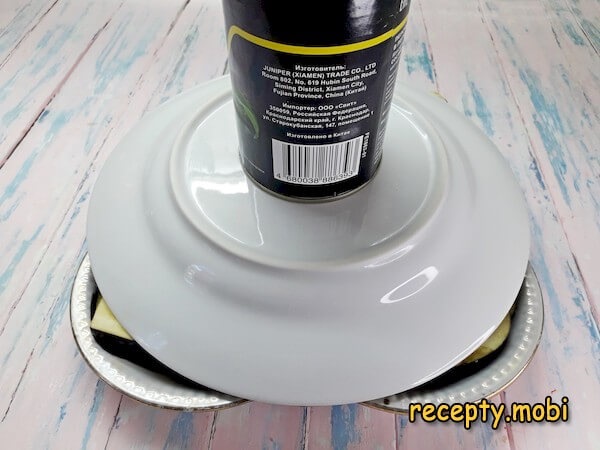
Press them down with another plate, adding a weight of up to 700 g on top. After about 40 minutes the eggplants will release their juice.
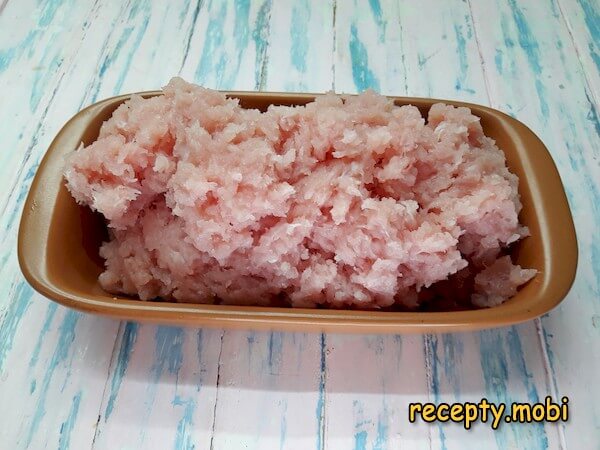
This is just enough time to prepare the filling. To do that, I mince the meat.
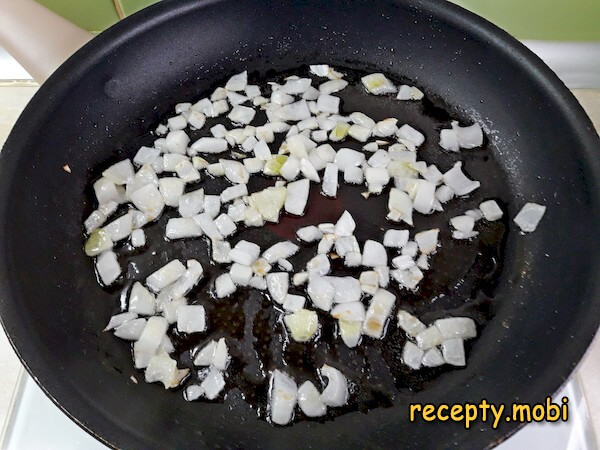
In a little neutral oil with no strong smell, sauté the diced onion – don't brown it, just take it to a light golden colour. Transfer it to a separate dish.
Add a little more oil to the empty pan and put in the mince.
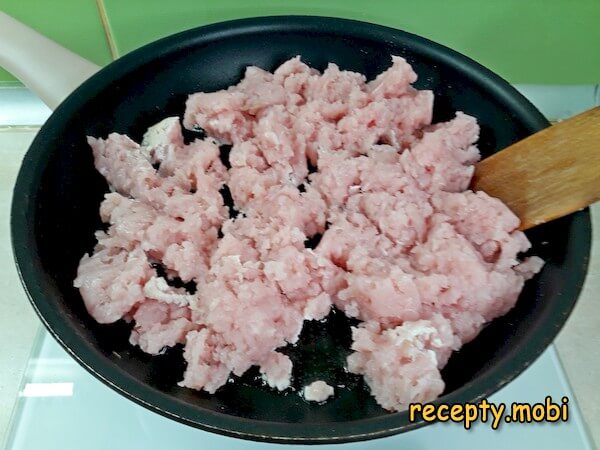
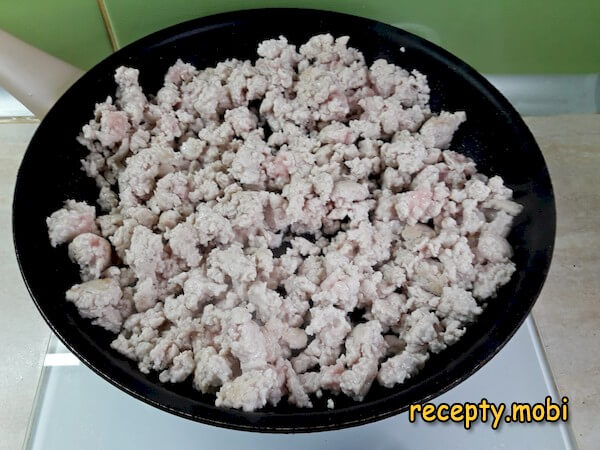
Fry it, breaking up any clumps with a spatula, until the colour changes, then season with salt and pepper.
To skin the tomatoes, first make two crossing cuts in each, then pour boiling water over them.

If the tomato skin is thin, you can leave it on. Dice the tomatoes.

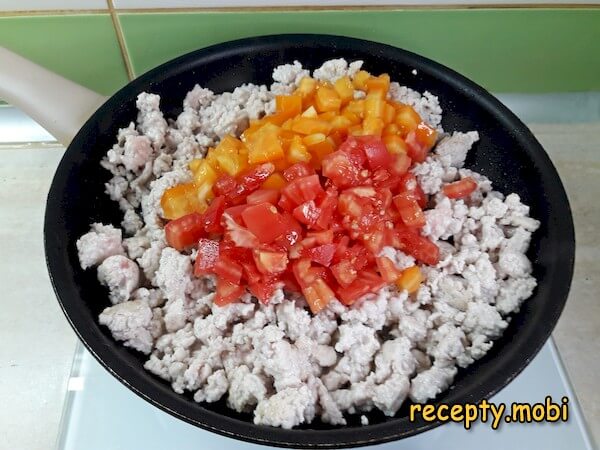
Add the tomatoes to the meat.
Rinse the eggplant offcuts, squeeze out the juice and chop them finely.
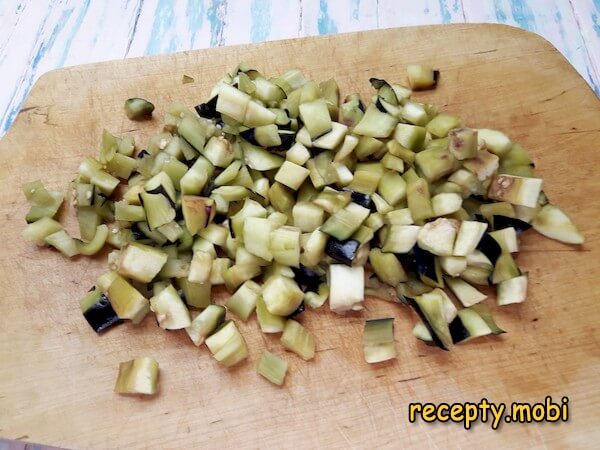
Transfer them to the pan.
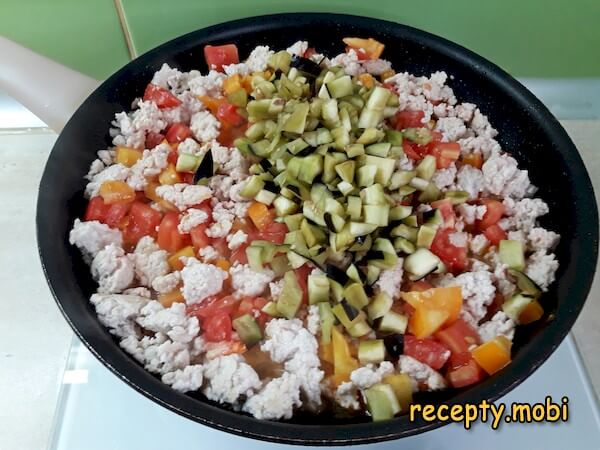
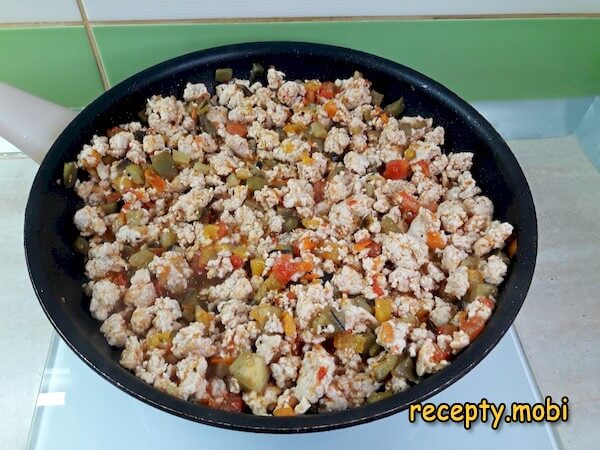
Cover and stew the filling for 20 minutes, adding a pinch of sugar for a more balanced taste. Check the salt. The result should be a mixture that is not dry, but not too liquid either.
Drain the juice from the sliced eggplants and rinse them in fresh water.
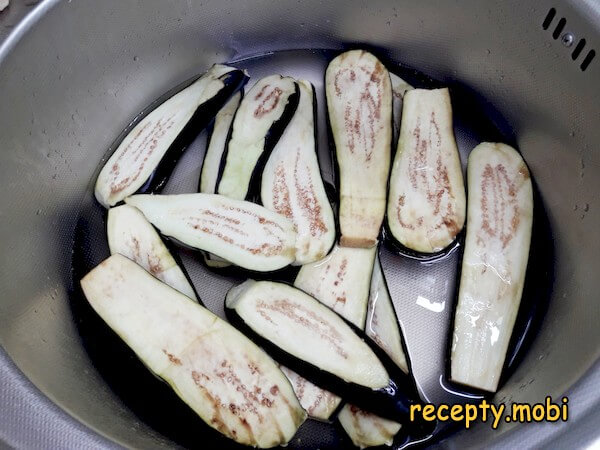
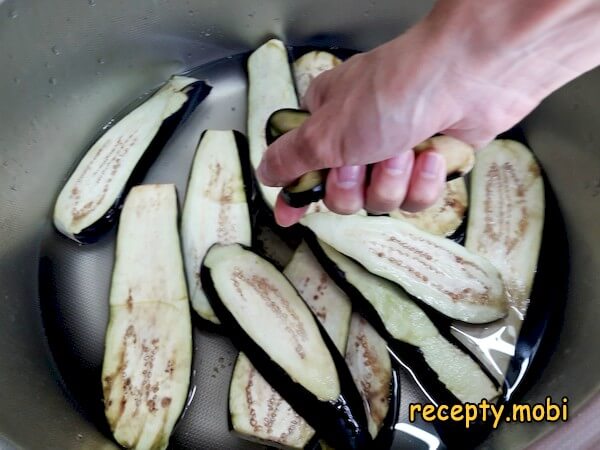
Gently squeeze the slices without forcing them. Meanwhile, turn the oven on to 190 degrees to preheat.
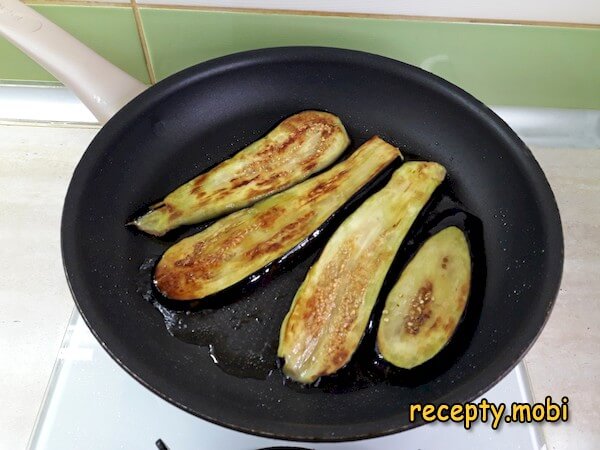
In a little neutral oil, sauté the eggplants on both sides until they take on a pleasant golden colour, but not until they turn brittle.
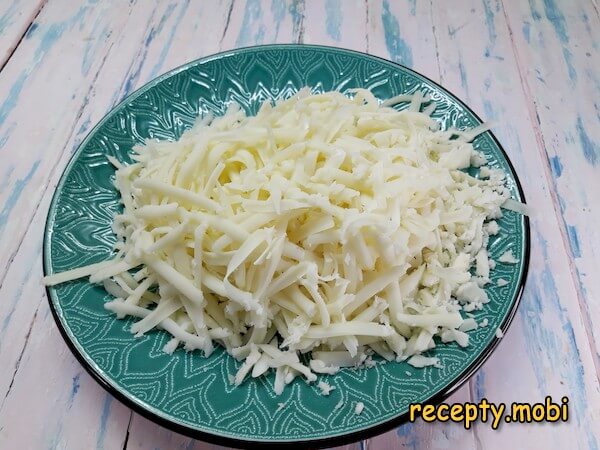
Grate the cheese.
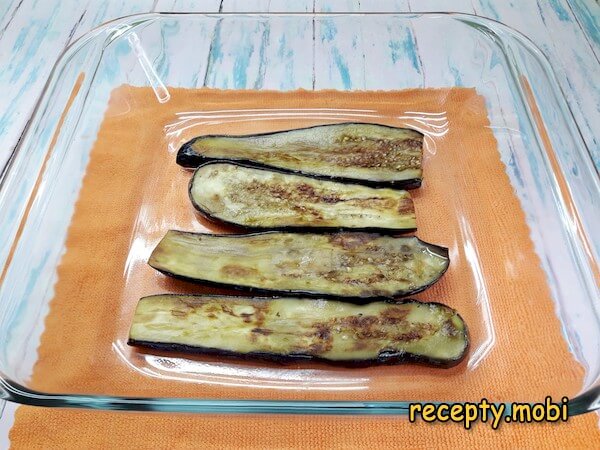
Lay the first layer of eggplants in the baking dish.
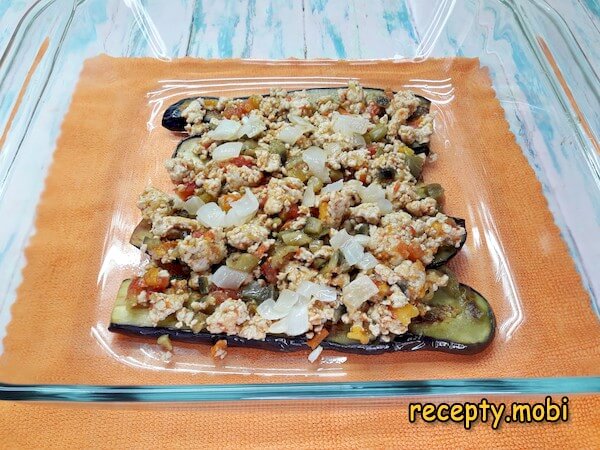
Spread the meat mixture and the onion on top.
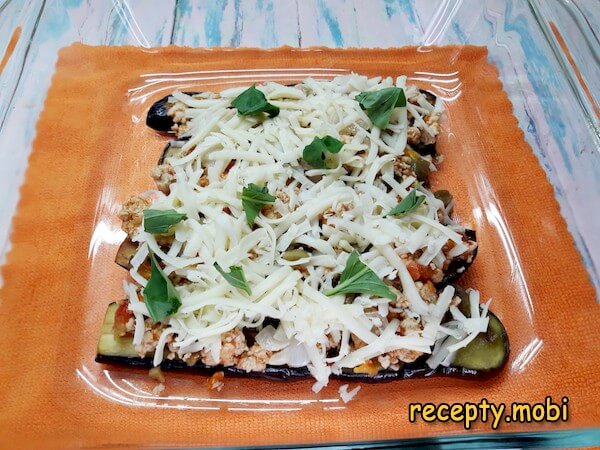
Sprinkle everything with cheese, and for a more pronounced taste add a few basil leaves.
Lay the next layer of eggplants across the first one.
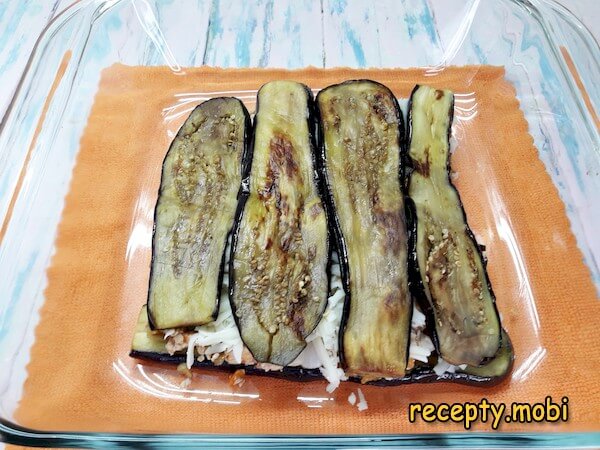
Carry on like this all the way to the top, keeping back enough eggplant to finish the lasagna. Adjust and firm up the stack with your hand.
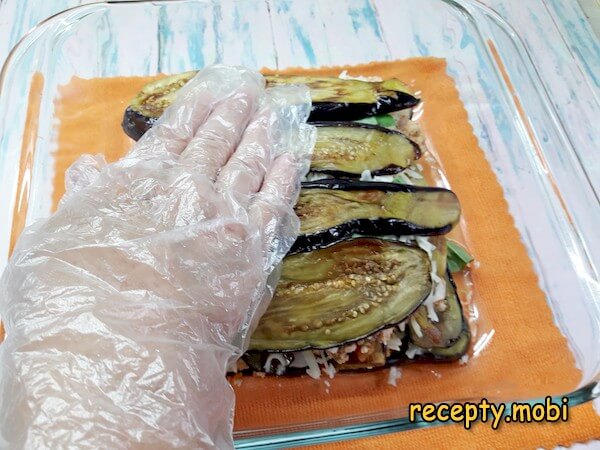
Place the dish in the oven for 20 minutes. Since there are no raw ingredients here, you only need the cheese to melt and bind all the layers together.
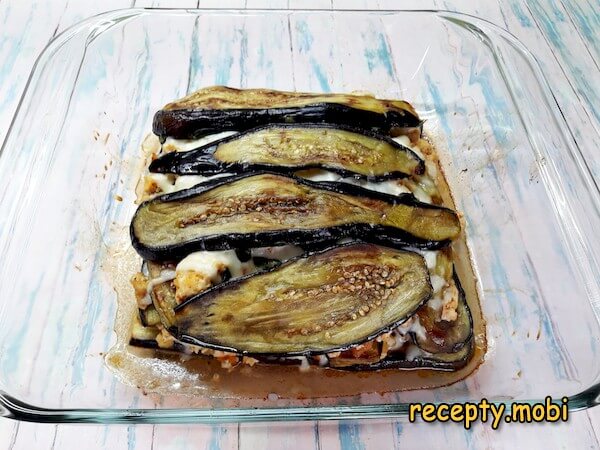
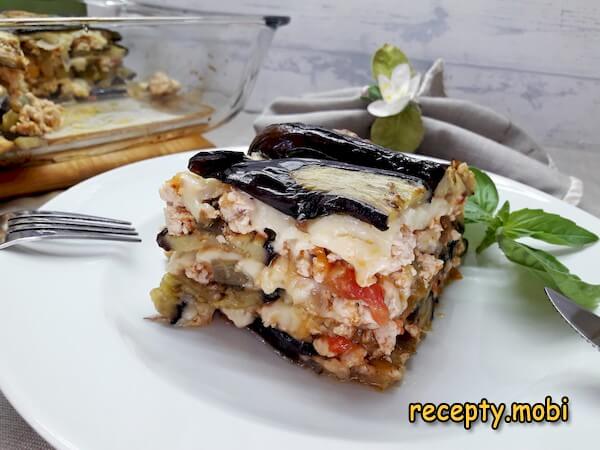
Serve the eggplant lasagna with minced meat already cut into portions with a sharp knife, once it has cooled slightly. All the layers hold their shape beautifully, and the colourful cross-section makes you want to eat the whole piece straight away. The dish can be served on its own or with a side of potatoes, rice or pasta.


Tips
- 1
Salting under a weight – the "secret" against bitterness. Forty minutes with salt under a 700 g press lets the eggplants give up their juice and their bitterness.
- 2
Two colours of tomato – the "secret" to looks. Red and yellow together make for a beautiful cross-section of the lasagna.
- 3
Offcuts into the filling – nothing wasted. The finely chopped eggplant offcuts add juiciness to the meat mixture.
- 4
Layers laid crosswise – the "secret" to strength. Lay each layer of eggplants at right angles to the one before. The same principle works for other kinds of lasagna and multi-layer bakes.
FAQ
Which eggplants should I choose? +
Ideally, dark-purple eggplants of equal length (15-20 cm) with glossy skin. Alternatives are white eggplants (more tender, without bitterness) or striped ones. Fresh eggplants are firm and heavy, with a green stalk. Avoid overgrown ones with large seeds (they taste bitter), as well as any that are soft or have spots. A size of 15-20 cm is best, with few seeds and even slices. Don't peel them – the skin helps the slices keep their shape.
What can I use instead of mozzarella? +
Alternatives include maasdam or gouda (200 g), feta (200 g), cheddar (200 g), parmesan (100 g plus 100 g of mozzarella), suluguni (200 g) or brynza (200 g). Fresh mozzarella is the top choice. Mozzarella braids or mozzarella balls will also do. Adygei cheese suits this dish too, as it is mild and tender. Don't use hard cheeses with holes, as they melt poorly.
How long does the lasagna keep? +
In the fridge, wrapped in film or in a container, it keeps for 3 days. Any longer and the eggplants will go soggy and lose their structure. Before serving, reheat it in the oven for 15 minutes at 170°C (this restores the cheesy crust) or in the microwave for 2-3 minutes. It freezes for up to a month, wrapped in film. Defrost it in the fridge for 8-10 hours. Lasagna is at its best in the first 30-60 minutes after baking, while on the second day it "settles" and the flavour deepens. Don't leave it at room temperature for longer than 2 hours, as the meat sauce will spoil. It is best made for one or two servings at a time.
What should I serve the lasagna with? +
It works as a stand-alone dish or with a side: mashed potato or fried potatoes, rice or buckwheat, or pasta (an unusual but filling choice). With a fresh vegetable salad it makes a full lunch, while a green salad with a lemon dressing gives it a more Italian feel. A glass of dry red wine (Chianti, Barbera) is a fine match, as is a light beer. Garlic sauce or horseradish gives it a Russian touch. For a family lunch, serve it with mashed potato and fresh vegetables, or with a bowl of tomato soup for a European-style meal. It is a versatile meat dish for everyday and festive meals alike.
- Comment
or post as a guest
Be the first to comment.