avg —
Cabbage Cutlets from Raw Cabbage in a Frying Pan

Instructions
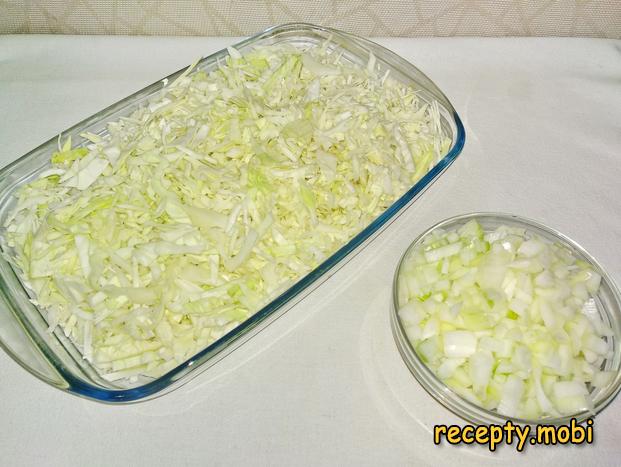
Prepare the white cabbage (750 g) – the base of the cutlets. Choose a firm head of a winter variety; tender summer cabbage boils down to mush. Remove the outer damaged leaves and cut out the stalk. Shred the cabbage as finely as possible with a sharp knife or on a vegetable slicer (mandoline) into thin strips of 2–3 mm. Peel one large onion and cut it into small 5 mm cubes; finely cut onion dissolves into the mixture without leaving noticeable pieces.
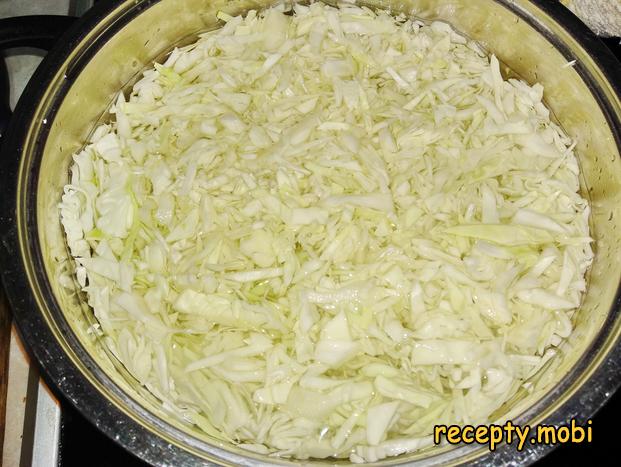
First the cabbage needs to be lightly boiled. Pour 2 litres of water into a pot, add 1 tsp of salt and bring it to the boil. Add the shredded cabbage to the boiling salted water and cook for 7–10 minutes from the moment it returns to the boil – it should become half-cooked, soft but not boiled to mush. If the cabbage is older, increase the boiling time slightly.
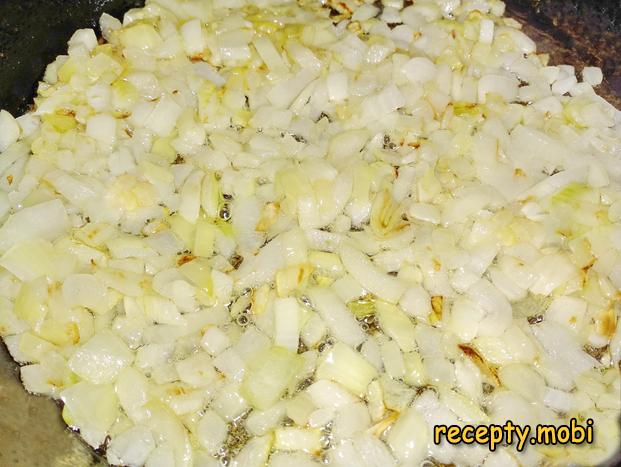
Meanwhile, heat a frying pan with 1 tablespoon of vegetable oil and fry the chopped onion over medium heat for 5–7 minutes until transparent and lightly golden. Do not brown it too much; we want a soft texture without crunchy pieces. Transfer the fried onion to a separate bowl.
Tip the half-cooked cabbage into a colander and let the water drain for 5 minutes. This is the critical step: once the cabbage has cooled a little, squeeze it thoroughly by hand through cheesecloth or simply in your fist to remove the excess moisture. Excess moisture is the number one enemy of proper cabbage cutlets – after squeezing, the cabbage should feel dry to the touch.
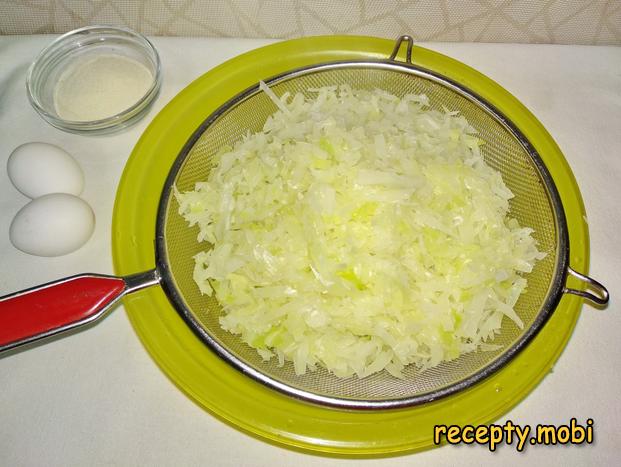
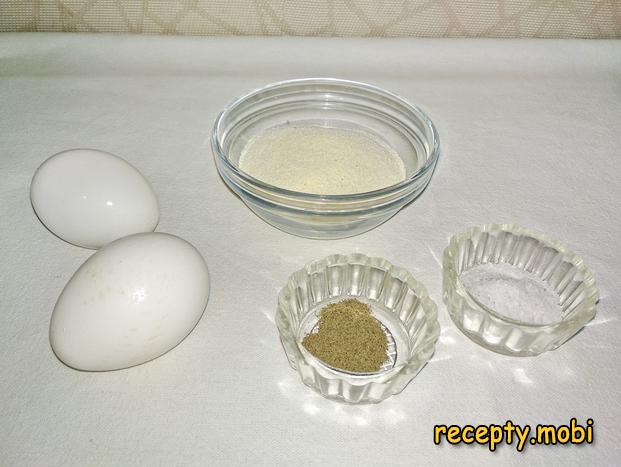
Get the salt, ground black pepper and the semolina ready; you can also add your favourite seasonings for vegetables or cutlets, such as Italian herbs, coriander or caraway. You will also need two fresh eggs for the mixture.
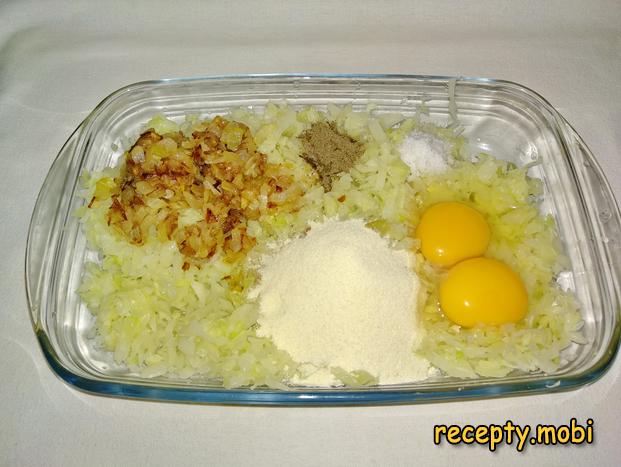
In a large mixing bowl, combine the squeezed cooled cabbage, the fried onion, salt, ground black pepper and the semolina (6 tablespoons). Mix thoroughly by hand, then crack in the 2 eggs and mix again until smooth – the eggs bind the mixture so it shapes well. For a lenten version, replace the eggs with 3 tablespoons of cornflour plus 50 ml of water. Let the mixture stand at room temperature for 10–15 minutes so the semolina swells and binds it; without this step the cutlets spread apart during frying. After 10 minutes, try to shape one cutlet – it should hold together without spreading. If the mixture is too wet, add another 1–2 tablespoons of semolina and let it stand for another 5 minutes.
With damp hands, shape the mixture into oval or round cutlets about 7–8 cm across and 1.5 cm thick; the mixture makes 12 cutlets. Damp hands stop the mixture sticking, so wet them from time to time. Heat a frying pan with 3 tablespoons of vegetable oil to just above medium heat – a 3–4 mm layer of oil is enough. Place the cutlets about 2 cm apart so they fry rather than stew. Fry for 4–5 minutes on one side until a golden crust forms; do not turn them sooner or they will fall apart. Flip them carefully with a silicone spatula, cover the pan with a lid and fry for another 4–5 minutes – under the lid the centre cooks through in its own steam.
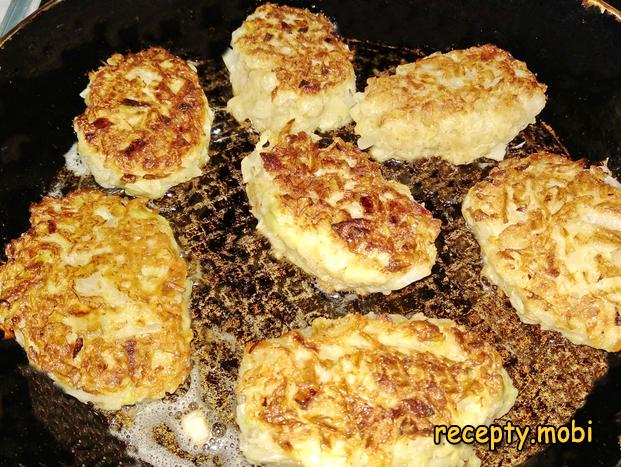
This amount of ingredients makes twelve cutlets in total, with a golden crust outside and a soft, cooked-through texture inside. Transfer them to a plate lined with kitchen paper to absorb the excess oil. Fry the rest of the mixture in batches of 4–5 cutlets.
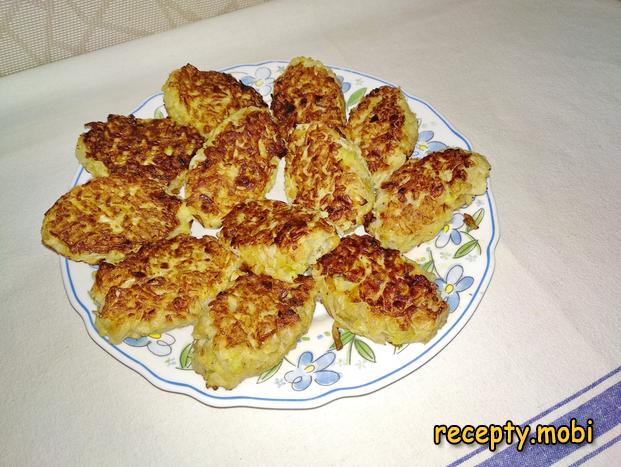
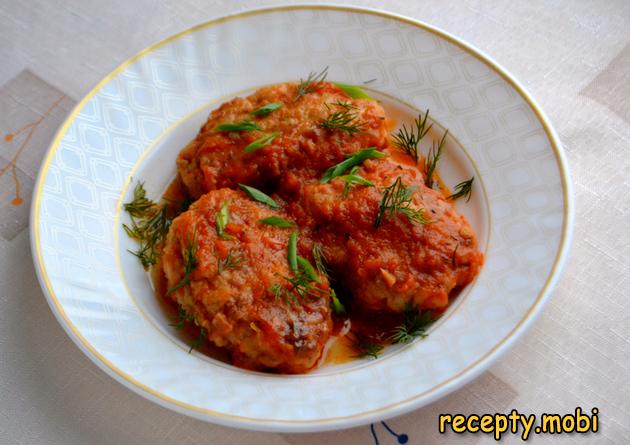
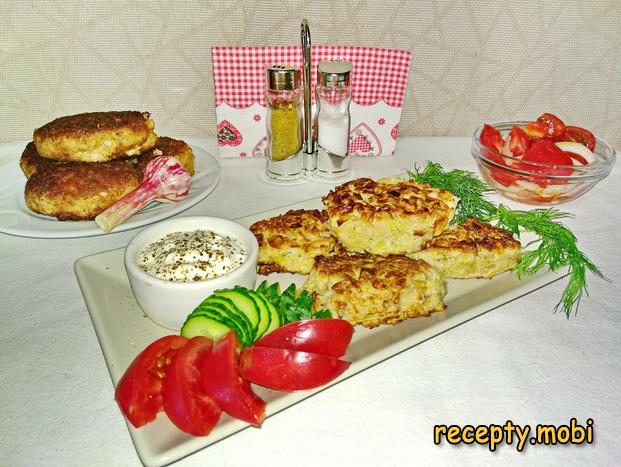
The cabbage cutlets from raw cabbage are ready. Serve them hot, 3 per portion, with 20% sour cream and freshly chopped dill and parsley. They are ideal as a standalone lenten dish or as a side to meat, and they are also good served cold.


Tips
- 1
Always squeeze the cabbage to remove the excess moisture after boiling – wet cabbage will not let the cutlets hold their shape.
- 2
Let the semolina stand in the mixture for 10–15 minutes – this is the secret to binding the cutlets. Without it they will spread apart.
- 3
Use firm winter-variety cabbage – tender summer cabbage boils down to mush. I make carrot cutlets on the same principle.
- 4
Fry under a lid on the second side – it cooks the cutlets through in their own steam without burning the outside.
FAQ
Can I make the cabbage cutlets in the oven instead of the frying pan? +
Yes, the oven version is lighter (no oil) and convenient for a large family. Place the shaped cutlets on a baking tray lined with parchment, or on a rack with a tray underneath to catch the fat. Bake at 200°C for 25–30 minutes, turning once halfway through. You can use the grill setting for the last 5 minutes for a more intense crust. The advantages: 12 cutlets at once, no oil (about 50 kcal less per 100 g) and no need to watch the stove. Ideal for a lenten and diet menu. Serve them the same way – with sour cream and herbs.
What can I use instead of semolina in the mixture? +
Good options are: rolled oats ground in a coffee grinder (a more Russian version, 6 tablespoons), breadcrumbs (a classic for cutlets, 6 tablespoons), wheat or wholemeal flour (4 tablespoons, less because of its dense structure), potato starch (3 tablespoons, a gluten-free option), cornflour (3 tablespoons), rice flour (5 tablespoons, gluten-free) or buckwheat flour (5 tablespoons, a wholesome option). Each substitute gives its own character. Semolina is the classic of Soviet-era vegetable cutlets, with a characteristic soft texture and a good ability to bind the mixture.
How long do the cooked cutlets keep? +
The cooked cutlets keep in the refrigerator for up to 3 days in a tightly sealed container. Before serving, reheat them in a frying pan with 1 tablespoon of water under a lid for 3–5 minutes, or in the microwave for 1 minute under a cover. Do not reheat them in a dry pan or they will dry out. You can freeze the cooked cutlets for 1 month in airtight bags with parchment between them – before eating, defrost them fully in the refrigerator for 6 hours and warm through. The raw shaped mixture can also be frozen for 2 months – do not defrost it before frying, just increase the frying time to 7 minutes on each side.
What should I serve cabbage cutlets with? +
They are ideal as a standalone hot dish with sour cream and fresh herbs. As a side, serve mashed potatoes, boiled rice, buckwheat, boiled potatoes with butter or pasta. For salads, choose fresh vegetables (cucumber, tomato, radish), sauerkraut for contrast or marinated mushrooms. For sauces, try sour cream with garlic and herbs, mushroom sauce, homemade tomato sauce or a garlic-yoghurt sauce. To drink, serve compote, fruit drink, kvass, kefir or mineral water. They suit a lenten lunch or dinner during Lent, a school menu for children or a family supper.
- Comment
or post as a guest
Be the first to comment.