avg —
Braised Cabbage with Tomato Paste, Carrots, and Onions

Instructions
You will need white cabbage. A firm winter-variety head is best, as a tender young cabbage will boil down to mush during stewing.
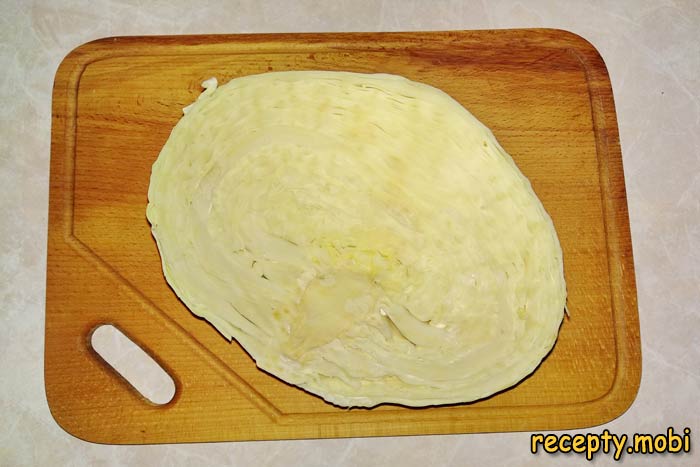
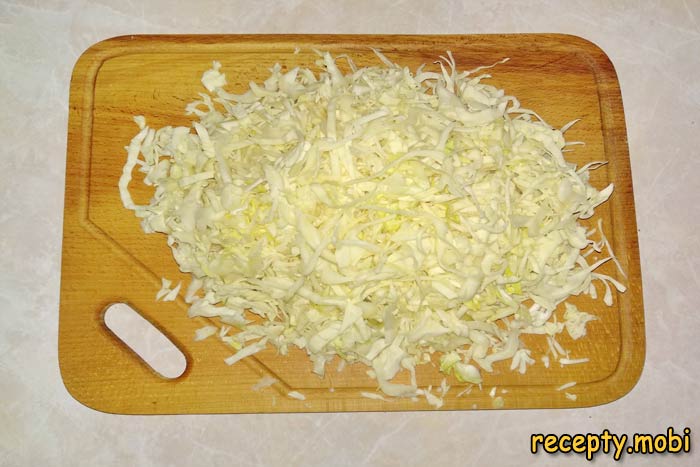
Shred the cabbage into thin strips. Thin shredding gives even stewing and a nice texture.
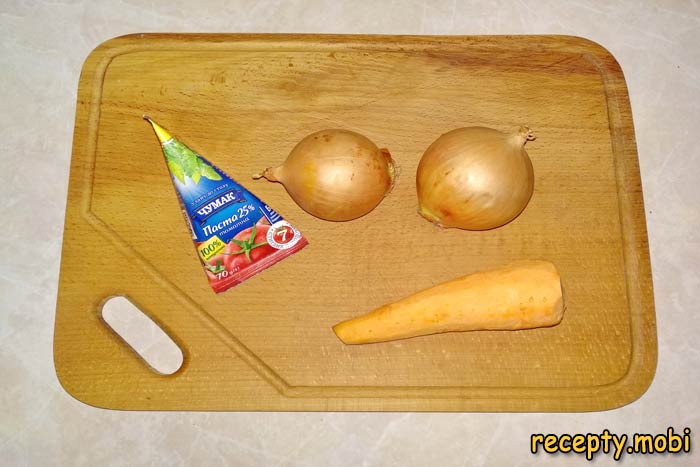
Prepare the onion, as well as the carrot and tomato paste.
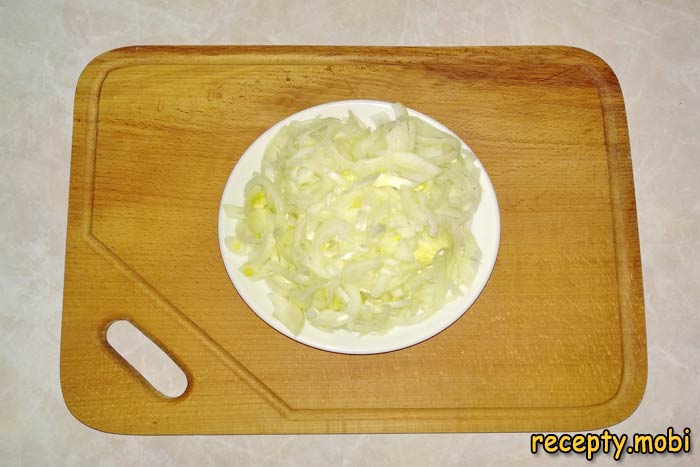
Slice the onion into half rings, about the same thickness as the cabbage.
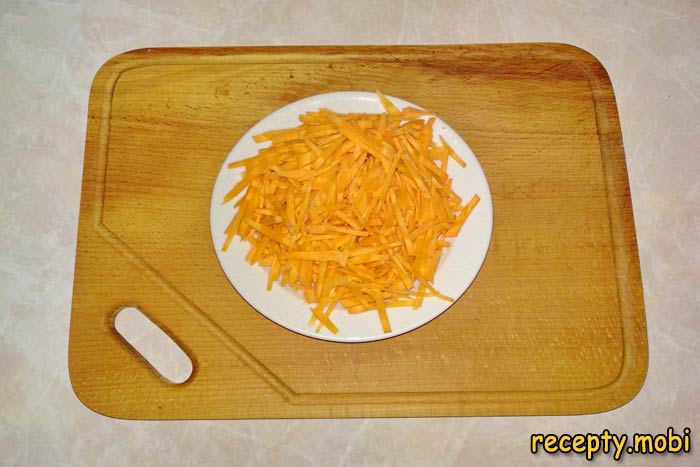
Grate the carrot into thin strips. You can also grate it on a coarse grater or a Korean-style grater; it will look good either way.
Heat a frying pan, saucepan, or pot with a thick bottom and pour in the vegetable oil. A thick base spreads the heat evenly, while a thin one will scorch the cabbage at the edges. Add the prepared onion and fry until golden, but do not let the vegetables dry out. As soon as the onion is browned, add the carrot. Let the vegetables stew together for a while so the carrot softens and gives the oil its orange colour.
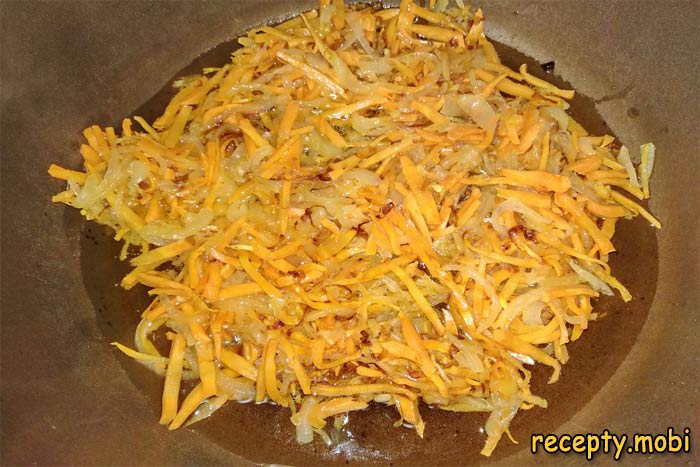
As soon as the carrot becomes softer, which takes about five to seven minutes in total, add the cabbage to the pan. If the cabbage does not all fit at once, there is no need to worry; it will reduce in volume, and then you can add the rest to the saucepan.
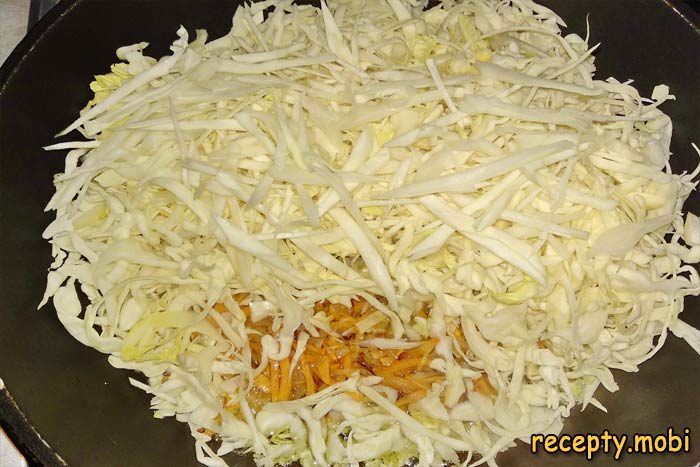
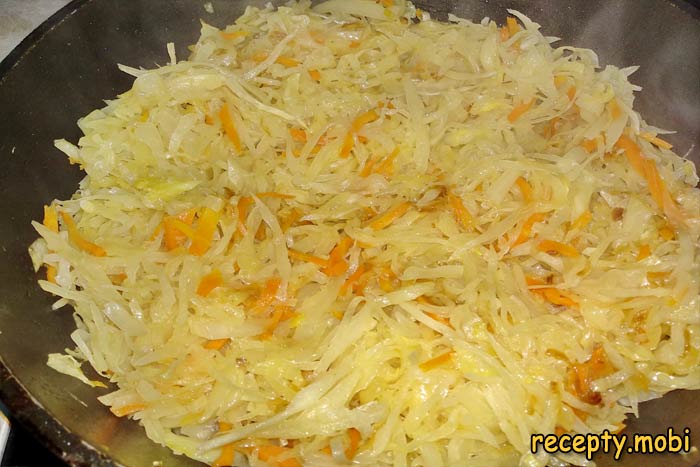
Pour in 200 ml of water, salt the cabbage, and stir, remembering to stir it periodically so the vegetables do not burn. Reduce the heat and cover the saucepan with a lid. Cook the cabbage until semi-soft, about ten minutes, keeping it tender but still holding its shape rather than falling apart.
Prepare the spices, sugar, and lemon juice.
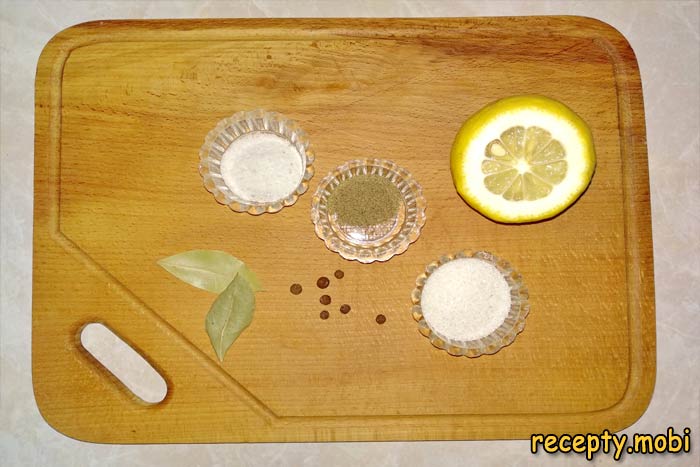
The stewed cabbage can stay white, or you can turn it a nice red colour. For that you will need tomato paste or sauce. In a bowl, combine the tomato paste (70 g) with a little warm boiled water, the sugar (2 tsp), and the lemon juice (1 tsp). The sugar is the secret to the right taste: it does not make the dish sweet but neutralises the sharp acidity of the tomato and the cabbage.
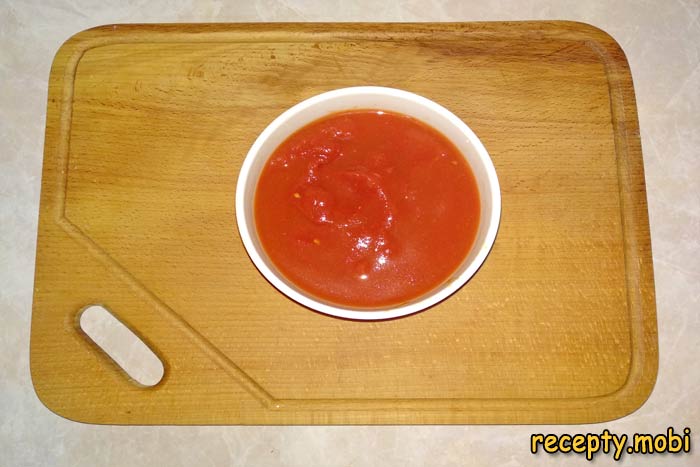
Stir the tomato mixture and add it to the cabbage. Mix the vegetables thoroughly so the tomato is evenly distributed.
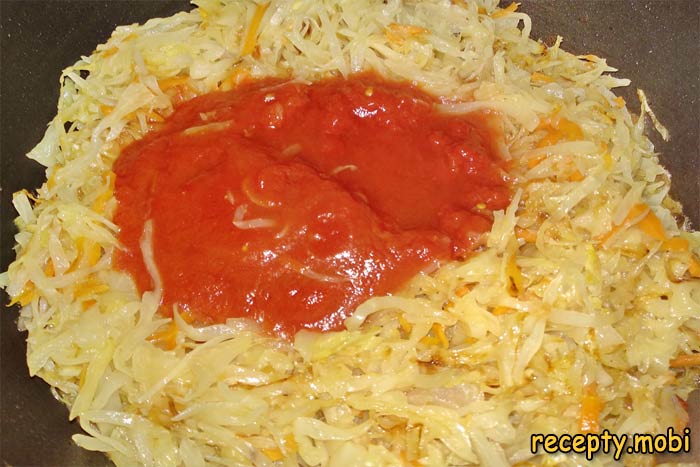
Taste the cabbage and, if needed, adjust the seasoning with more sugar, salt, and acid. Add the bay leaf (2 pcs) and allspice (5 pcs), cover with a lid, and stew for another five minutes.
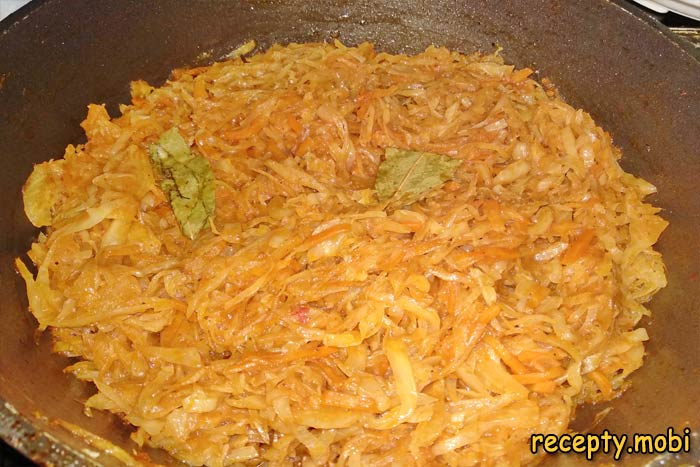
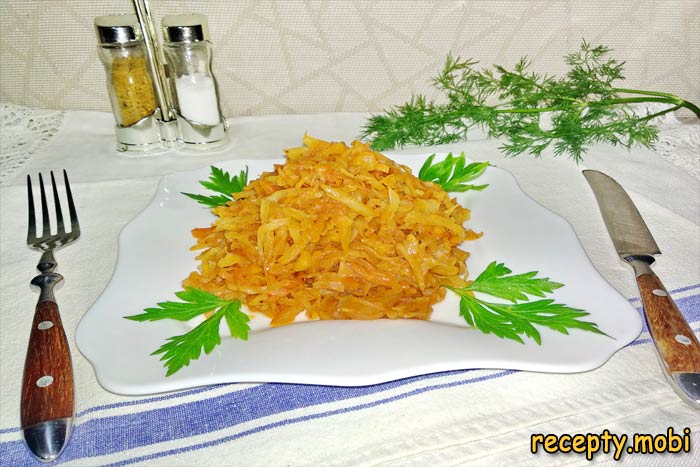
Turn off the heat and let the cabbage rest for ten to fifteen minutes. Remove the bay leaf, as it can turn bitter if left in too long. Then transfer the cabbage to a flat dish and serve hot. It is good as a side for meat or poultry, as a dish on its own with dark bread, or as a filling for small pies, dumplings, and zrazy. On the second day the flavour is even better, as the tastes fully come together.


Tips
- 1
The sugar (2 tsp) is essential: it balances the acidity of the tomato paste and the cabbage and does not make the dish sweet. Without sugar the cabbage will taste sour.
- 2
Do not add too much water — 200 ml at most — otherwise the dish will be boiled rather than stewed. The cabbage releases its own juice as it cooks.
- 3
Use a firm winter-variety cabbage, as a tender young head will boil down to mush. I make my stewed cabbage with meat on the same principle.
- 4
You can vary the dish by adding meat (pork, chicken), mushrooms, cubed potato, or sausages about 10 minutes before the end of cooking.
FAQ
Can I cook it with meat? +
Yes, stewed cabbage with meat is a heartier version of the dish. Use pork (300 g, cubed and browned for 10–15 minutes before the cabbage until golden), chicken or turkey (which cook faster), smoked ribs (for a smoky aroma), or sausages and smoked sausage (200 g, added about 10 minutes before the end). For a lean version, skip the meat and add mushrooms (200 g of button or wild mushrooms). Each type of meat gives the dish its own character, and pork is the classic choice for Russian stewed cabbage.
What can I use instead of tomato paste? +
Several alternatives work: fresh tomatoes (4–5, grated and skinned) for a summery version with a natural taste; tinned tomatoes in their own juice (300 g) as an all-season substitute; ready tomato sauce (200 ml, homemade or shop-bought without spices); or ketchup (50 g, a sweeter ready-made option). Fresh tomatoes are ideal in summer, while in winter tomato paste gives the richest colour and flavour. Each substitute will change the character of the dish slightly.
How long does the finished cabbage keep? +
The finished dish keeps in the refrigerator for up to 4 days in a tightly closed container. On the second and third day the flavour is even richer, as the tastes fully come together. Reheat it in a pan or in the microwave before serving. You can also freeze it in portions for up to 2 months in airtight containers; before eating, defrost it fully in the refrigerator and bring it to the boil. Frozen stewed cabbage also works as a filling for small pies and dumplings, making a handy make-ahead option.
What do you serve stewed cabbage with? +
It is ideal as a side for fried or roasted meat: pork, chicken, duck, boiled beef, cutlets, or sausages. It also goes with fried fish or fish cakes. Serve it as a dish on its own with dark Borodinsky bread and sauerkraut as a starter, or use it as a filling for pies, small pies, dumplings, and zrazy, either baked or fried. To drink, try kvass, fruit drink, or compote. On a fasting table it pairs well with buckwheat or pearl barley. It is a versatile Russian everyday dish.
- Comment
or post as a guest
Be the first to comment.