avg —
Braised Cabbage with Stew in a Skillet

Instructions
I start by preparing the vegetables: I lay them out on the table, peel them and wash them thoroughly under running water. Clean vegetables are the key to a tasty and safe dish.
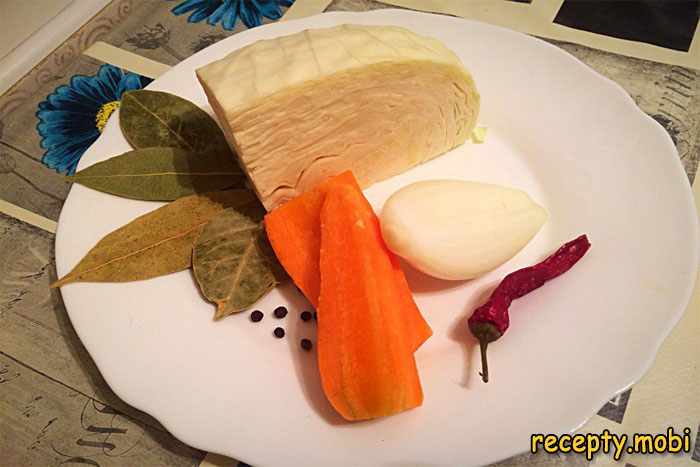
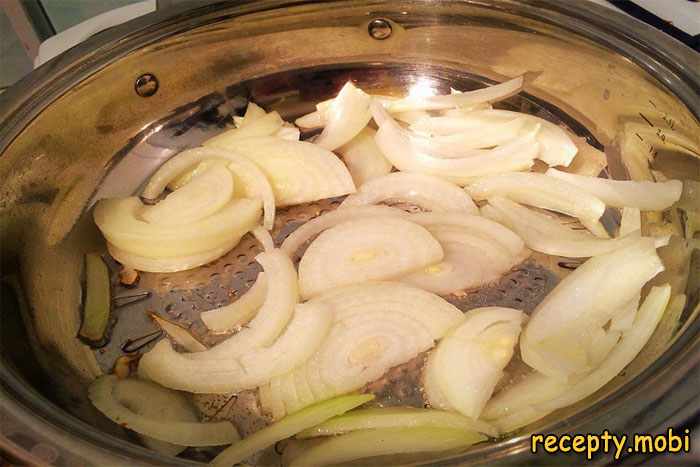
I cut the onion in half, then each half in half again, and chop it into large pieces. Cutting it this way lets the onion keep its shape while stewing and not turn to mush – the pieces stay whole and attractive.
I grate the carrot on a medium grater – it will give the dish a natural sweetness, a lovely orange colour and extra vitamins.
I shred the cabbage into thin strips with a sharp knife or a special shredder. The finer the cabbage is shredded, the faster it cooks and the more tender the final texture.
I heat a large deep frying pan over medium heat and grease it with a culinary brush using the minimum amount of vegetable oil (about 20 ml) – I use as little oil as possible to keep the dish low-calorie.
I put the onion and carrot into the heated pan and sauté them for no more than 5 minutes over medium heat, stirring constantly. This lets the vegetables soften, release their aroma and caramelise slightly without burning.
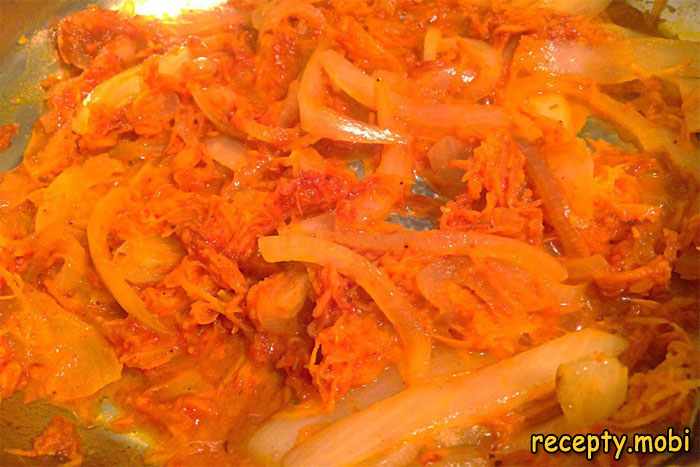
I add the tomato paste (100 g) or 50 ml of homemade tomato sauce to the vegetables. The tomato gives the dish a pleasant tang, a rich reddish colour and depth of flavour. I stir it in, cover with a lid and stew for 15 minutes over low heat – during this time the vegetables are fully infused with the tomato aroma.
To the stewed vegetables I add salt, sugar (a pinch to balance the acidity), coriander, marjoram, ginger and garlic (pressed through a garlic press). I stir, cover with a lid and stew for another 5–7 minutes – the spices open up and flavour the sauté.
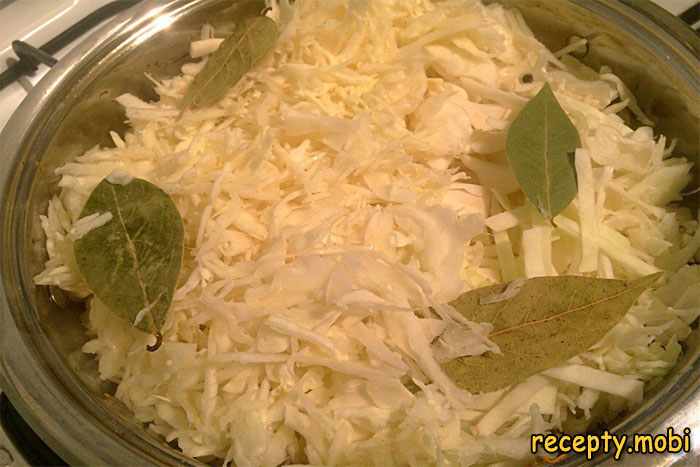
I stir the sauté and add all the shredded cabbage. I fry the cabbage with the vegetables over high heat, stirring occasionally, for about 5 minutes – the cabbage should brown slightly and reduce in volume. High heat is needed so the cabbage takes on its characteristic taste and does not turn to mush.
I add the bay leaf (4–5 leaves) and black peppercorns (5 peppercorns) – these spices give stewed cabbage its classic aroma and taste.
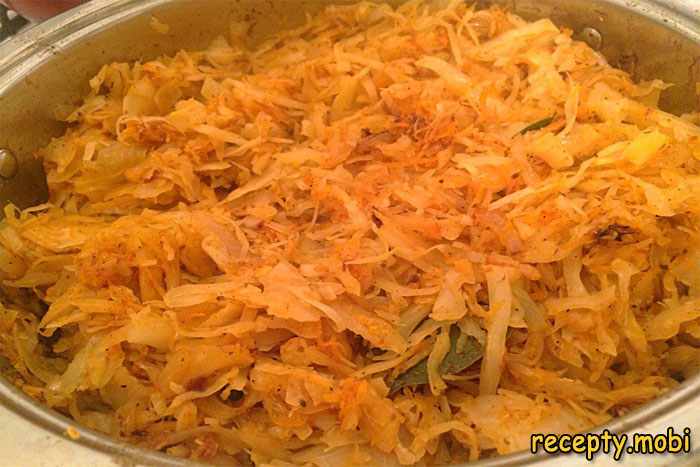
I stir the fried cabbage thoroughly, reduce the heat to the lowest setting, cover with a lid and let it simmer for 10 minutes. Slow simmering under a lid makes the cabbage soft, juicy and tender, and it absorbs all the aromas of the spices.
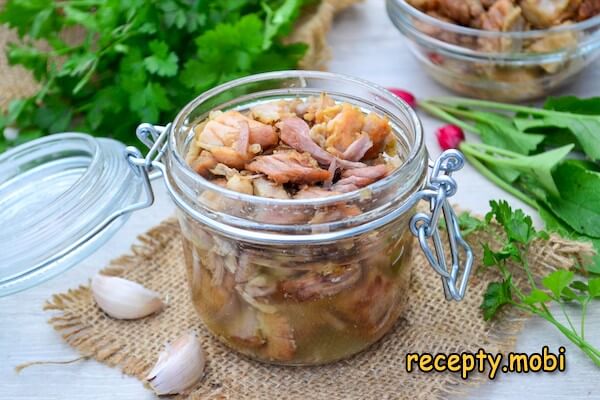
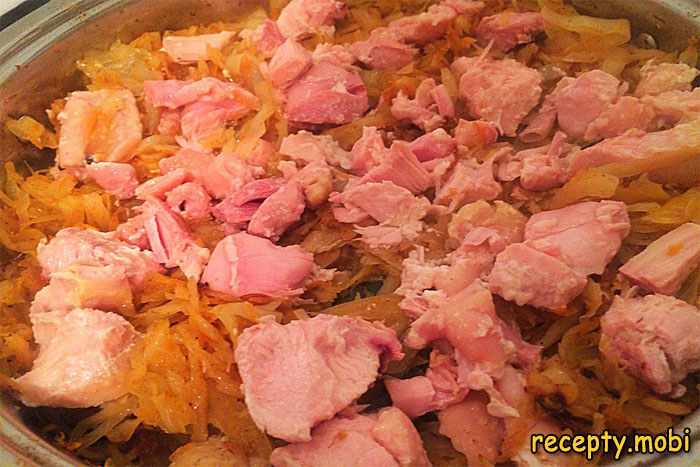
The final step is adding the homemade chicken canned meat (400 g). I prefer the homemade canned meat that I make myself from chicken fillet with vegetables and spices – it is far healthier than shop-bought tinned food, with no preservatives or colourings. I add the canned meat, stir gently and let it rest under the lid for 3–5 minutes over low heat – the meat warms through and gives its flavour to the cabbage. I taste for salt and add more if needed. I serve it hot, garnished with fresh herbs.


Tips
- 1
Homemade canned meat is healthier than shop-bought – I stew chicken fillet with vegetables (carrot, onion) and spices in a slow cooker or pot until fully cooked and tender. I keep it in the fridge for up to 3 days or freeze it in portions.
- 2
If I use young cabbage, I cut the stewing time to 5–7 minutes, because it cooks faster and is more tender than older cabbage. Young cabbage is also sweeter and less fibrous.
- 3
I serve the cabbage as a dish in its own right or with a side (mashed potato, buckwheat, rice). I garnish it with fresh herbs – dill, parsley or spring onion. You can add sour cream or a garlic sauce.
- 4
To reduce the calories even further, I stew the cabbage with no oil at all, adding a little water or vegetable stock for the stewing. You can also use less canned meat or replace it with boiled chicken breast.
FAQ
Can I use shop-bought canned meat instead of homemade? +
Yes, shop-bought canned meat will work too. But I recommend choosing a good-quality one, without preservatives or thickeners and with a high meat content (at least 60%). Read the ingredients on the label – it should list meat, salt, spices and nothing more.
How long does the cabbage need to stew until done? +
I stew the cabbage for about 10 minutes under a lid over low heat after frying. Young cabbage cooks faster – 5–7 minutes is enough. I judge doneness by softness: the cabbage should be tender but not overcooked.
Which spices are best for stewed cabbage? +
I use a classic set: coriander (gives a nutty aroma), marjoram (a herbal note), ginger (a light warmth), bay leaf and black peppercorns. These spices give the dish depth and a layered aroma without being cloying.
Can I make this dish without tomato paste? +
Yes, you can do without tomato paste – the dish will be less tangy and more neutral in flavour, but still tasty. I sometimes replace the paste with fresh tomatoes (2–3, diced) or cook it without tomatoes altogether.
How do I make the dish even lower in calories? +
To reduce the calories as much as possible: I stew the cabbage without oil (adding a little water or vegetable stock), use the minimum of canned meat (200 g instead of 400 g) or replace it with skinless boiled chicken breast. You can also leave out the sugar entirely.
- Comment
or post as a guest
Be the first to comment.