avg —
Vareniki with Potatoes and Fried Onions

Instructions
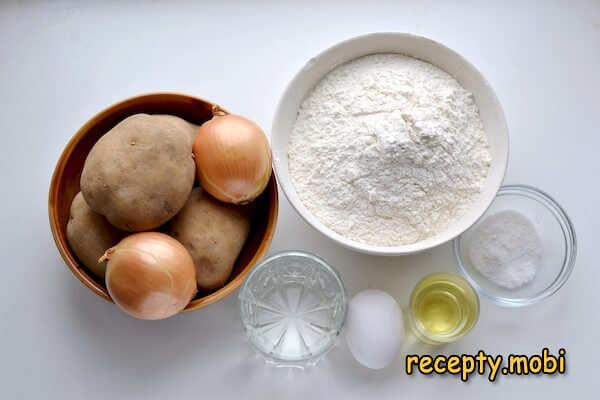
I get the ingredients ready for the vareniki with potatoes and fried onions. For fasting, the vareniki can be made without eggs (just leave the egg out of the dough).
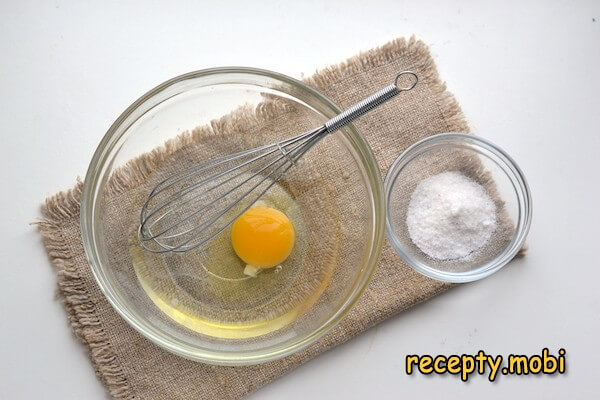
I make the dough. I pour 1 cup of water into a deep bowl. I add a pinch of salt and 1 egg, and whisk until smooth.
To the same bowl I add the sifted flour in small batches. I work the flour into the liquid ingredients and, while kneading, carefully add 1 tablespoon of sunflower oil. I add the oil so that the vareniki won't come apart while boiling – it gives the dough elasticity.
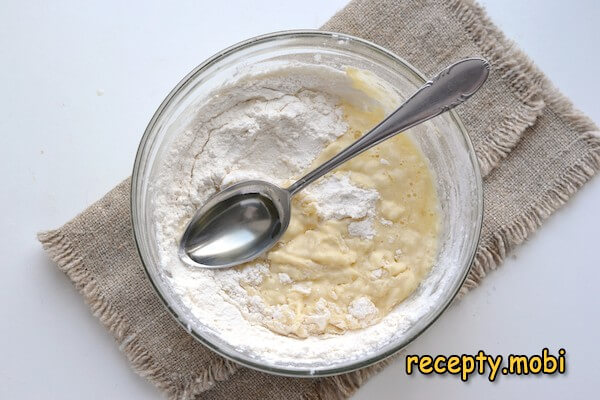
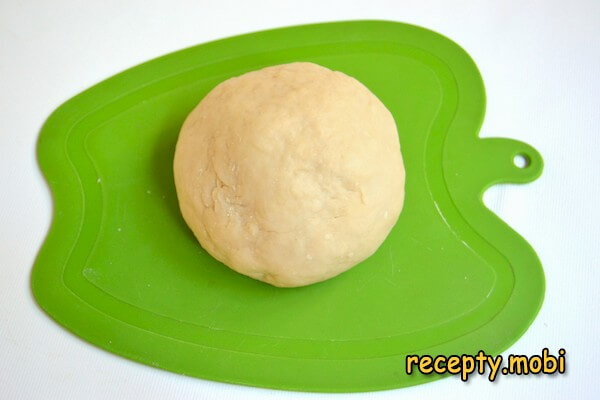
I knead the vareniki dough until soft and pliable, about 10 minutes. I cover the dough in the bowl with a linen cloth and leave it for 30 minutes.
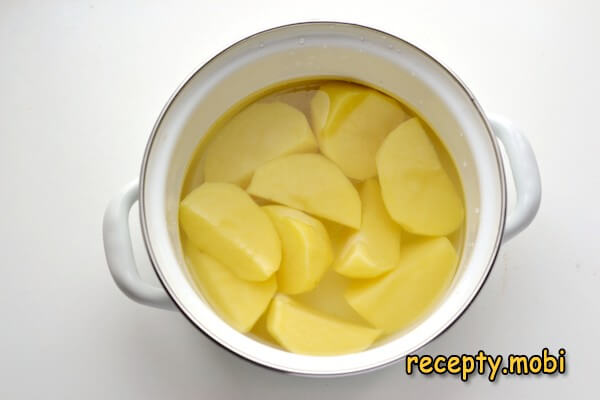
While the dough "rests", I boil the potatoes. I peel the tubers, wash them and cover them with water in a pot so that the water just covers the potatoes. Once it boils, I salt the water. I boil the potatoes until soft, about 20 minutes.
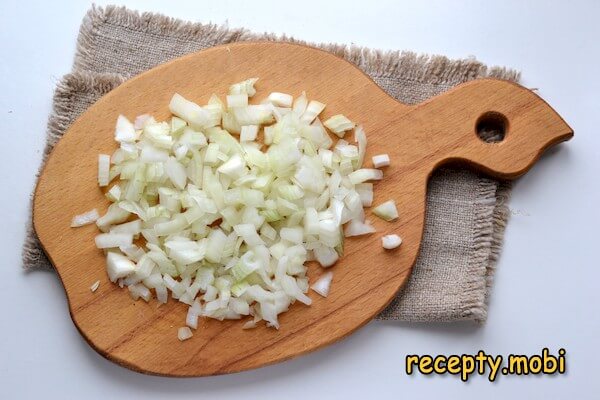
I peel the onions and cut them into small cubes.
I fry the onion in vegetable oil until soft and lightly browned, about 3–4 minutes.
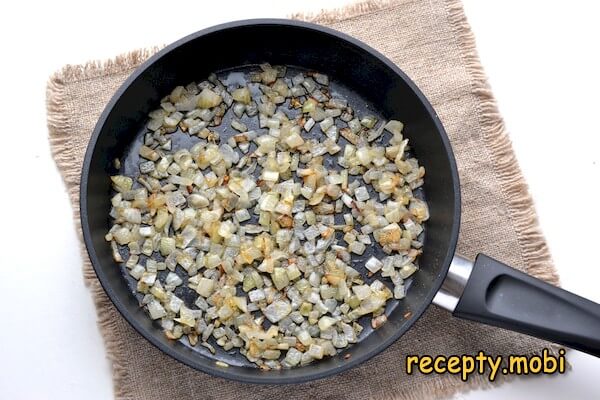
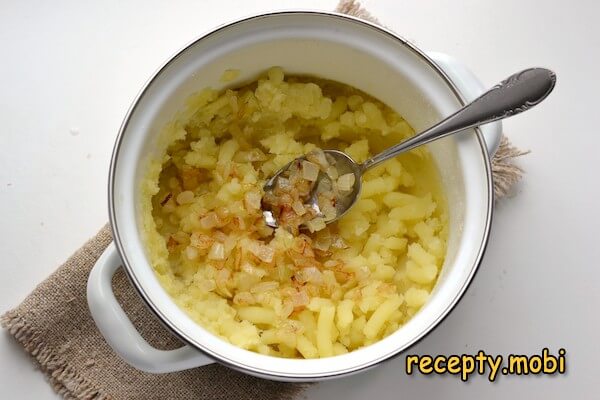
When the potatoes are cooked, I drain off all the water and mash the potatoes well. I add part of the fried onion to the potatoes and mix. I taste for salt and add more if needed. The vareniki filling is ready; I set it aside to cool until barely warm. I keep the second part of the onion aside – the fried onion will be useful for serving.
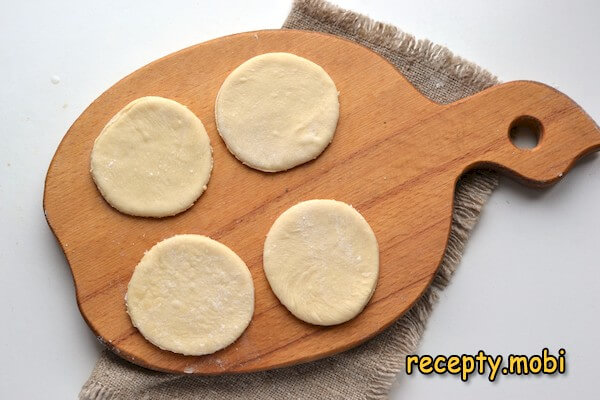
I roll out part of the dough into a layer 3 mm thick. With a cutter (or a glass) I cut out circles about 7 cm in diameter.
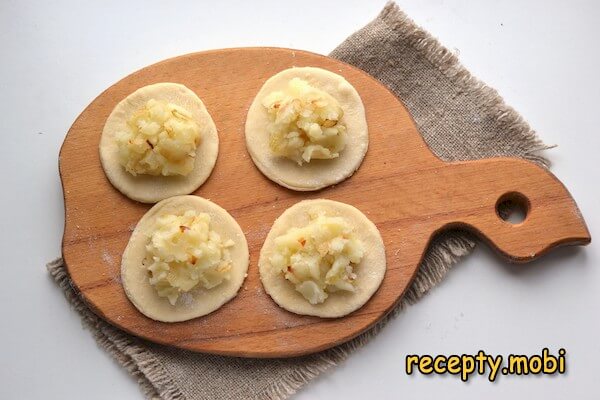
I place the right amount of filling on each circle. Before scooping up the mashed potato, I mash it with a spoon to the softness I want.
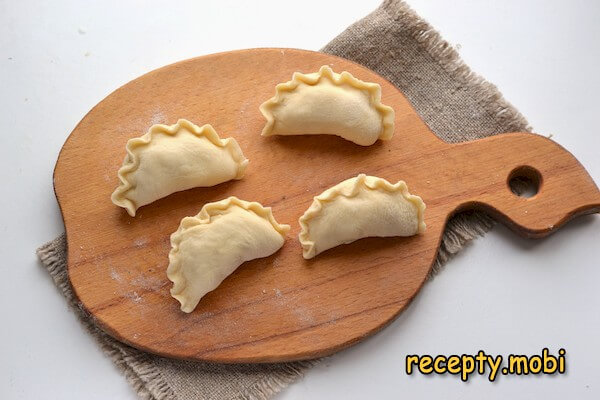
I pinch the edges of the varenik together over the filling, sealing them tightly. I go all the way in one direction and then back the other way. I lay the formed pieces on a surface dusted with flour beforehand. You can shape a pretty edge on the varenik – pinching the sealed edge with your fingers, I pull it slightly and fold it over.
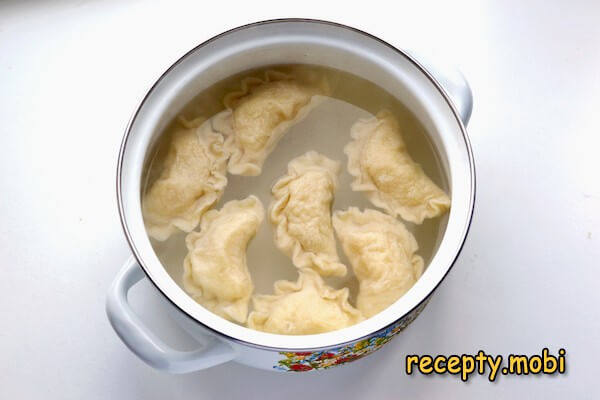
In a wide pot I bring the water to the boil and add a little salt. I drop part of the vareniki into the boiling water one by one. With a slotted spoon I gently stir so the vareniki don't stick to the bottom. I boil the vareniki for 5–6 minutes.
The vareniki with potatoes and fried onions are ready. I take them out of the water and transfer them to a plate.
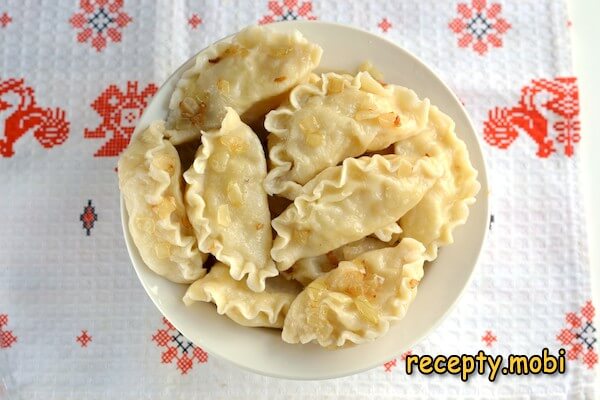
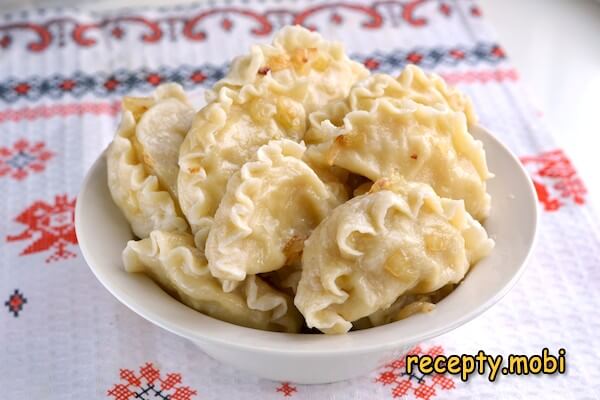
I serve the vareniki hot, drizzling them with the sunflower oil and fried onion.Bon appétit!


Tips
- 1
OIL IN THE DOUGH – the "secret to elasticity". Without oil the dough will tear during shaping and crack during boiling.
- 2
30 MINUTES OF REST – the gluten will "mature" and the dough will become pliable. Without resting, the dough is "tough" and the edges seal poorly.
- 3
3 MM THICKNESS is optimal. Thicker – the dough is "coarse"; thinner – it tears during boiling.
- 4
ONION IN TWO PORTIONS – part into the filling, part for serving. This is the Ukrainian "secret" – a double onion aroma. The same principle works in other kinds of vareniki and pelmeni.
FAQ
Which potatoes should I choose? +
Ideal are floury varieties (Sineglazka, Gala, Adretta, Nevsky). Alternatives: waxy varieties (Red Scarlett) also work, but you need to mash them more thoroughly. New potatoes are not the best choice (they mash poorly). Old, "wrinkled" ones are not suitable – the filling will be "watery". The brands "Meristema", "Belaya Dacha" and "Fermersky" are good quality. A size of 80–120 g is convenient for cutting. Light-yellow flesh is tastier than white. Before boiling, cut them into 2–4 pieces (they cook faster). Drain off all the water – without a drop of moisture, otherwise the filling will "fall apart". Mash them while still hot – it will be more tender.
Can I substitute the filling? +
Alternatives: potato with mushrooms (a classic), potato with cottage cheese (the Ukrainian version), cottage cheese with herbs, stewed cabbage, mushrooms fried with onion. Sweet ones: cherry, blueberry, strawberry, sweet cottage cheese. Brands for cottage cheese: "Prostokvashino", "Domik v Derevne" – tried and tested. Champignon mushrooms are the most versatile. Wild mushrooms (porcini, birch boletes) are the "premium" option. For fasting vareniki – no eggs in the dough, with a vegetable or mushroom filling. Sprinkle cherries with sugar for 30 minutes and drain off the juice – then they won't "leak" during boiling. A filling-to-dough ratio of 50/50 is the balance.
How long do the vareniki keep? +
Cooked, in the fridge in a container – 2 days. Reheat in the microwave for 1–2 minutes under a lid. In a pan with oil – 3–4 minutes, and you get a "fried crust" (I love it!). Raw, shaped vareniki – in the freezer for up to 3 months. Freeze them spread out on a board, then pour them into a bag – they won't stick together. Cook them straight from frozen, without thawing (drop them into boiling water for 7–8 minutes). Don't leave raw ones at room temperature longer than 30 minutes – the dough will start to "leak". Cooked ones, boil in water for 5–6 minutes after they float up. If they stick together, they weren't boiled in enough water.
What do you serve the vareniki with? +
The classics: with sour cream (thick, not runny), with butter or sunflower oil with fried onion. With fresh herbs (dill, parsley). With black or rye bread – a "country" serving. With a shot of cold vodka – the "Ukrainian" serving. With borscht – a classic duo. With herbal tea – a warming dinner. For a "family lunch" – with a sauerkraut salad. For the "fasting version" – with vegetable oil and onion. Don't serve them with mayonnaise – it's not authentic and overpowers the flavour. With a cup of cocoa or coffee – not ideal; tea or kompot is better. A universal dish for winter evenings.
- Comment
or post as a guest
Be the first to comment.