avg —
Dumplings with fresh cabbage

Instructions
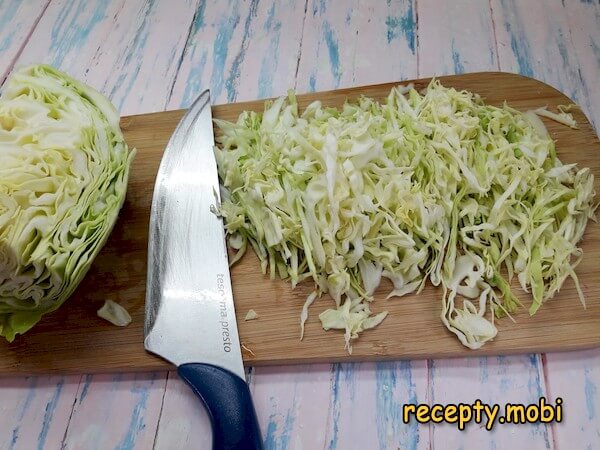
Before shaping the dumplings with fresh cabbage, you need to wait for the filling to cool, so I start with it. I shred the cabbage.
I cut the onion however is convenient – it can be cubes or strips (after frying these differences will even out). I grate the carrot.
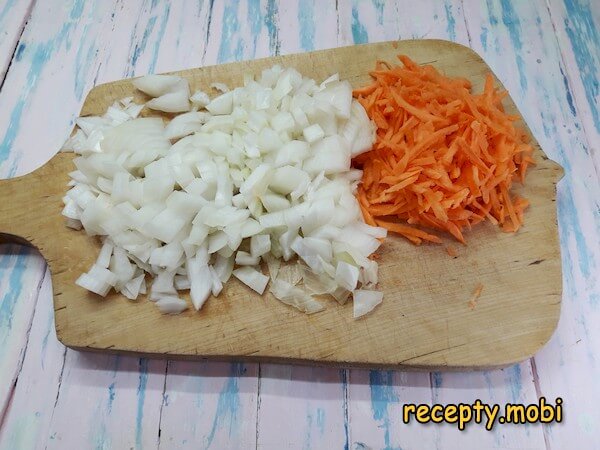
I heat the frying pan with oil. I don't over-dry the onion while frying – it is enough to get a pleasant golden colour.
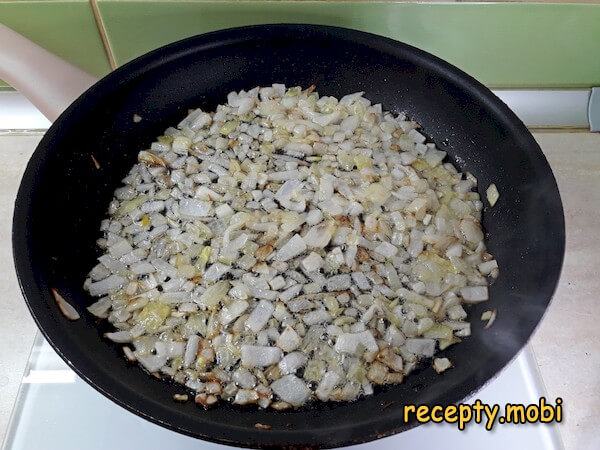
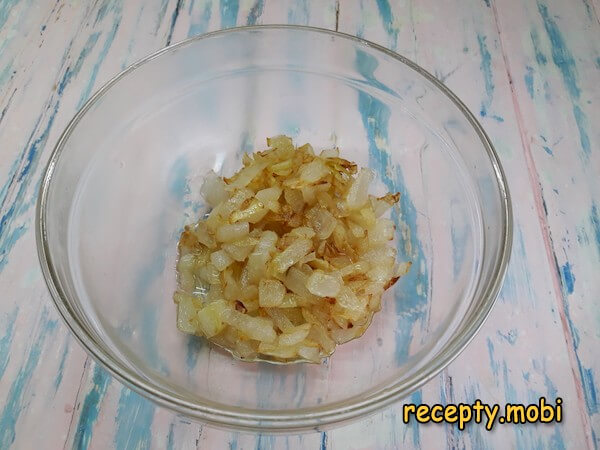
I set aside a third of the fried mixture to sprinkle over the finished dish.
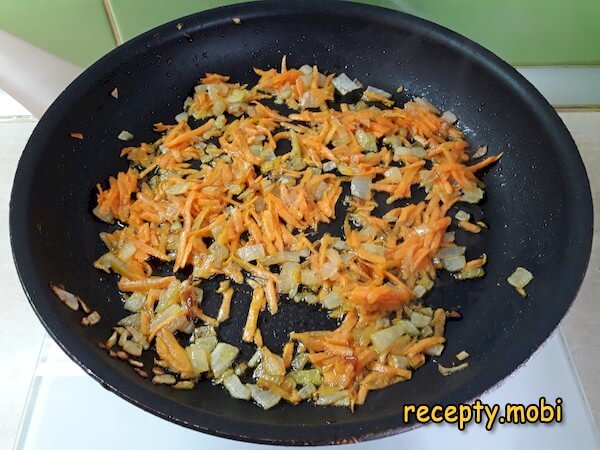
I move the carrot into the pan with the remaining onion. I fry everything for another minute.
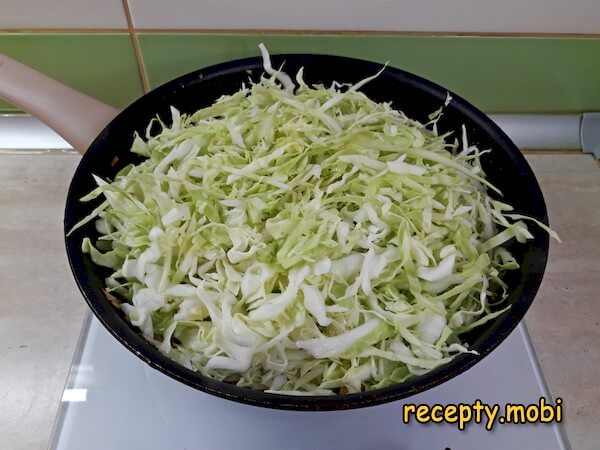
I add the cabbage to the same pan. I cover the pan tightly with a lid, lower the heat and stew the filling for about 3 minutes.
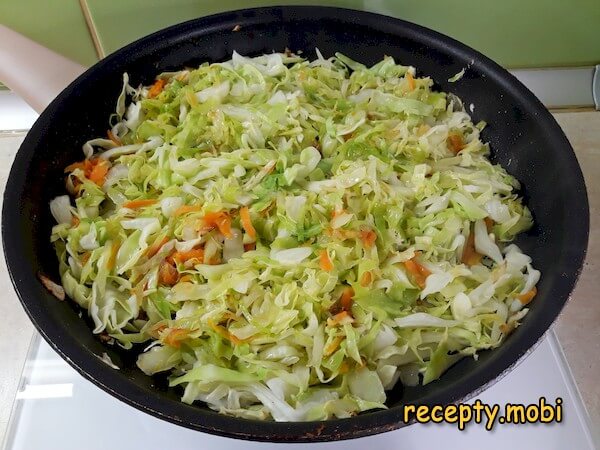
The cabbage will shrink considerably and reduce in volume. I stir it, cover again with the lid and keep it on the heat for another 3 minutes. I transfer the filling to a plate so it cools faster.
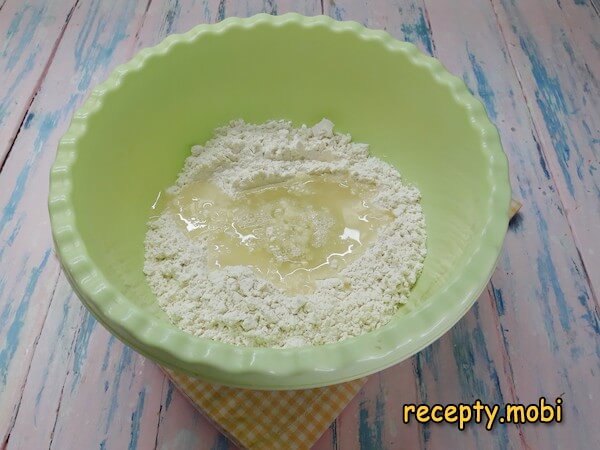
I sift the flour into a bowl. I stir the salt into the water. I pour it into the centre of the mound of flour.
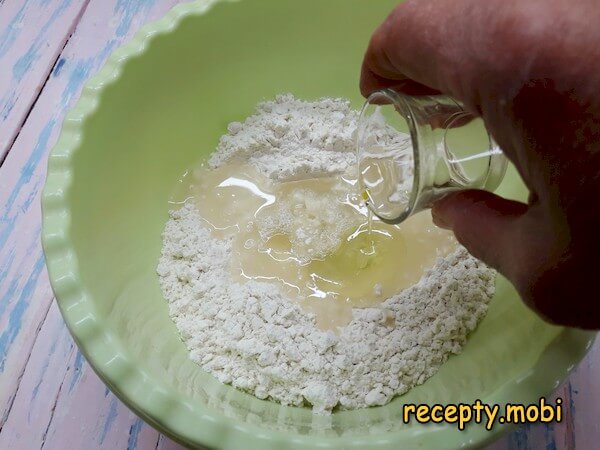
I pour in the oil here too.
I stir the hot clumps together with a spoon.
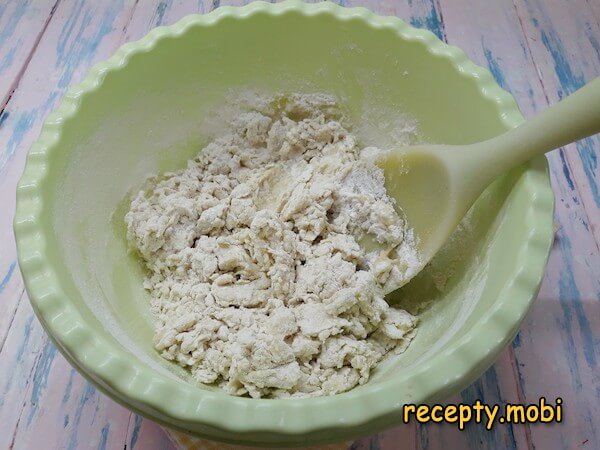
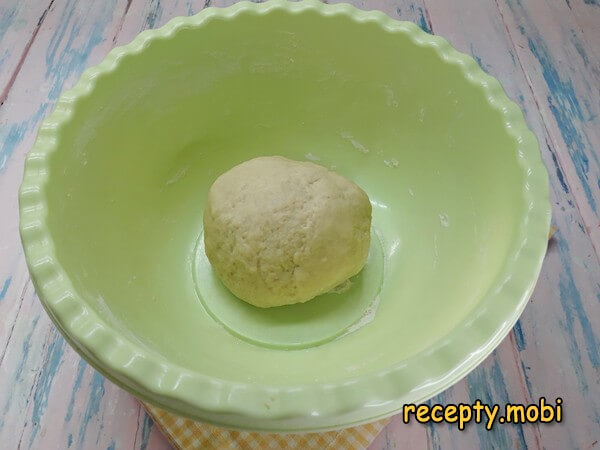
Right in the bowl I knead a dough that is firm and at the same time soft (don't add any more flour). I let it rest under cling film or a towel for about 5 minutes.
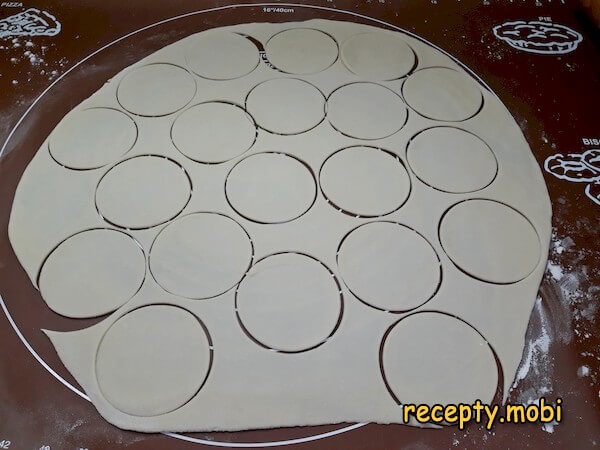
I roll out a thin sheet of dough (about 1.5 mm). I cut out circles (6 cm in diameter). I gather the scraps, crumple them together and roll them out again.
I fill the circles with the filling, not touching the edges, otherwise they will seal badly and open up during boiling. I dust my fingers with flour and press the edges together.
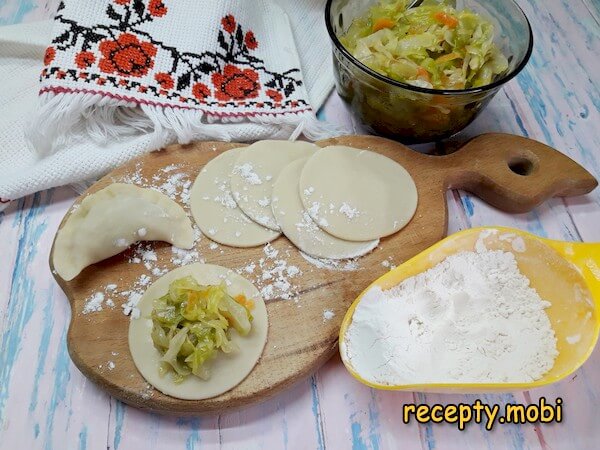
To give the dumplings a more attractive look, I go along the seam once more, twisting it into a cord.
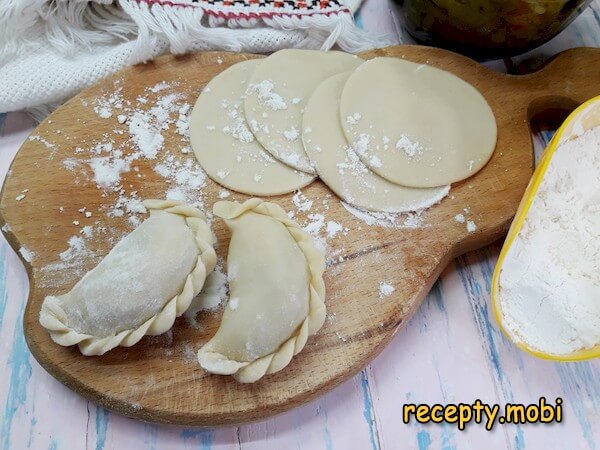
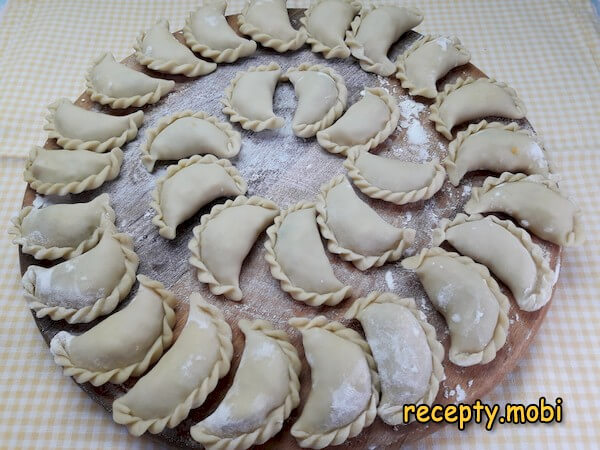
I place the finished dumplings on a flour-dusted board. Some of the pieces can be frozen and boiled later, whenever the need arises.
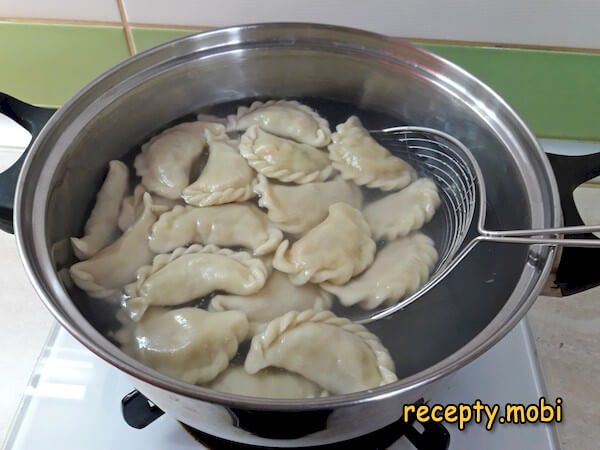
Once the water is boiling and has been salted, I drop in a batch of dumplings. They should float freely there so they don't stick together. After they rise to the surface, I boil the dumplings for 3 minutes.To serve, I sprinkle the dumplings with fresh cabbage with the reserved onion and place sour cream alongside. Such a treat will disappear from the plate in an instant, so it's best to take care of a second helping straight away.Do give them a try – bon appétit!


Tips
- 1
Choux-style dough at 70°C is the "secret" of elasticity. Water that is too hot will set the starch and the dough will turn "rubbery". Water that is too cold and it will tear.
- 2
Set aside a third of the fried mixture – for serving. This is a Ukrainian "secret" – fresh fried onion on top gives a second layer of aroma.
- 3
Young cabbage stews quickly – 6–8 minutes is enough. Old cabbage needs 15–20 minutes to soften.
- 4
A thickness of 1.5 mm gives thin dough. The elasticity of the dough lets you roll it this thin without any risk. The same principle works for other kinds of dumplings with vegetables.
FAQ
Which cabbage to choose? +
Ideally young cabbage (as in the recipe – tender, juicy, stews quickly). Alternatives: ordinary white cabbage (it needs longer stewing, 15–20 minutes), Chinese cabbage (more tender, with an Asian note), Savoy cabbage (the premium option). Fresh cabbage is firm, with no limp edges, white or greenish in colour. Don't use: sauerkraut (it changes the character of the dish – that is a different recipe), red cabbage (it changes the colour of the filling). For a "spring" version, try a mix of young cabbage with spinach or spring onion. A head of 0.5–1 kg is optimal for a couple of servings. Shred it finely – it goes through the dough more easily.
Can the dumplings be frozen? +
Yes – raw shaped dumplings freeze well. Lay them out on a board in a single layer (not on top of one another), put them in the freezer for 1–2 hours until completely frozen, then tip them into a bag – they won't stick together. They keep for up to 3 months. Cook them straight from frozen, without thawing – drop them into boiling water for 4–5 minutes (3 minutes after they rise to the surface). Don't leave raw ones at room temperature longer than 30 minutes – the dough will start to "run". Write the date on the bag of frozen dumplings. They are ideal as a "family batch" – a double portion will be enough for several dinners.
How long do cooked dumplings keep? +
Cooked ones keep in a container in the fridge for 1–2 days. Reheat in the microwave for 1 minute under a lid. In a frying pan with 1 tbsp of oil for 3–4 minutes, you'll get a "fried crust" (tastier than freshly boiled). Boil ready ones in water for 3 minutes after they rise to the surface. Don't leave them at room temperature longer than 4 hours – the cabbage and dough spoil. Freshly made, they are at their "star" best in the first 30 minutes. For a "packed lunch", keep them in a container with oil and herbs. It is ideal to cook them "for one sitting" – fresh dough is always tastier.
What to serve the dumplings with? +
The Ukrainian classic: with sour cream (thick, not runny), with butter or vegetable oil with fried onion (as the author advises). With fresh herbs (dill, parsley). With black or rye bread – a "rustic" serving. With borscht or shchi – a "Ukrainian dinner". With a glass of cold vodka – a "Ukrainian" serving. With herbal tea – a warming dinner. For a "family dinner" – with a sauerkraut salad. For a "lean version" – without sour cream, with vegetable oil and onion. With dried-fruit compote – a winter dinner. A versatile dish for spring and winter meals.
- Comment
or post as a guest
Be the first to comment.