avg —
Dumplings with Custard Dough and Potatoes

Instructions
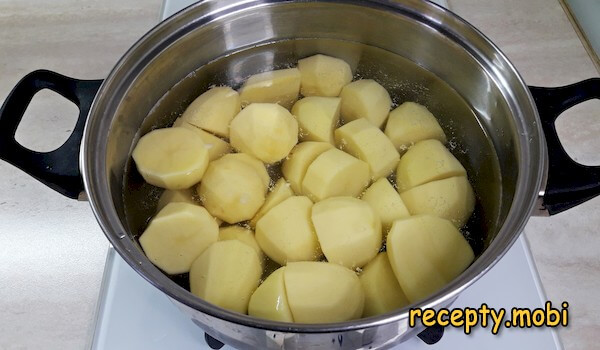
I start with the filling: boil the potatoes.
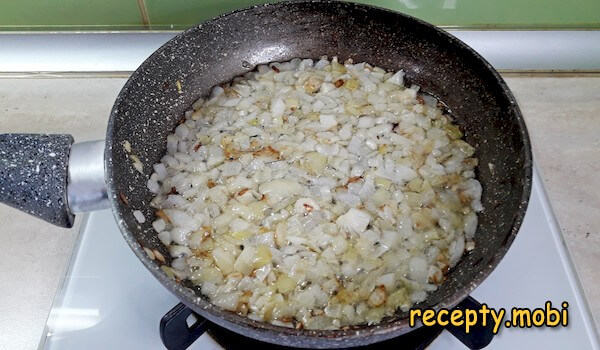
Sauté the onion in vegetable oil.
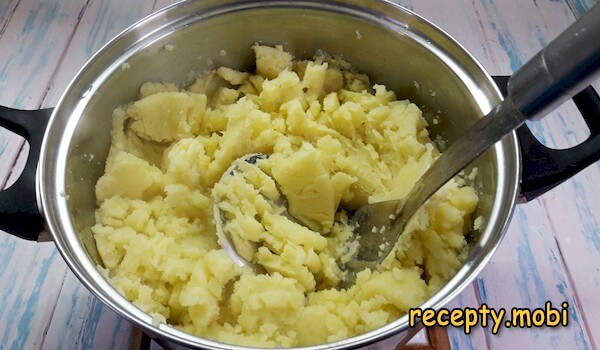
When the potatoes are soft, drain the water and mash them.
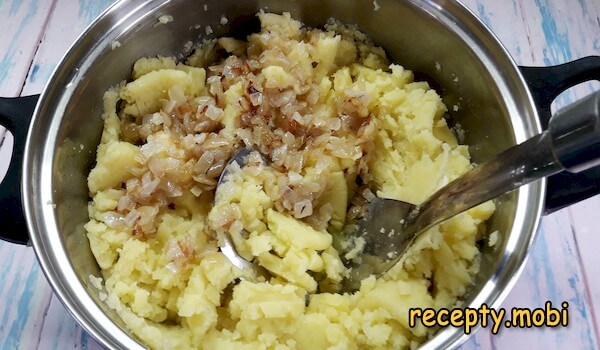
Add the sautéed onion and mix.
At the same time, start the dough. Put the salt in a large bowl and sift in the flour. Make a well in the centre and pour in the freshly boiled water.
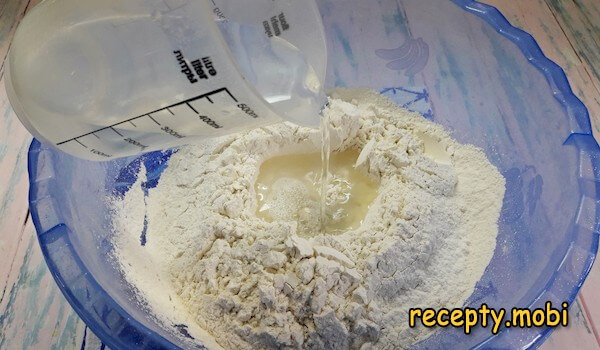
Add the oil here too.
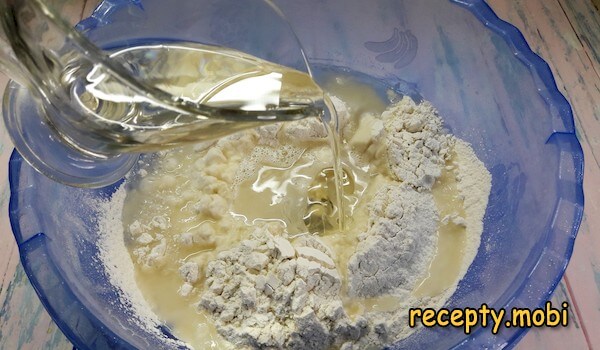
Stir everything with a spoon, trying to moisten all the flour with the boiling water.
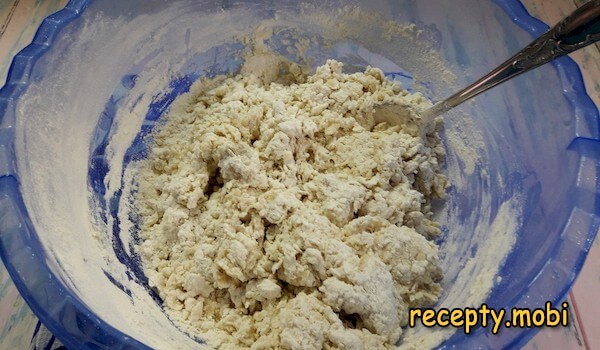
After this the mixture is no longer so hot, and you can gather it into a ball by hand.
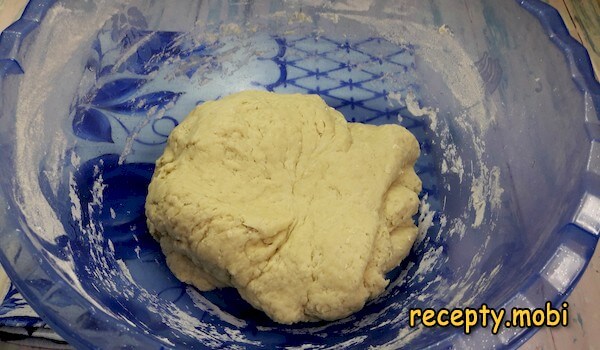
Turn the ball out onto the table and knead it well by hand, dusting with flour if needed, but don't add more than the stated amount. Too stiff a dough makes the dumplings less tender.
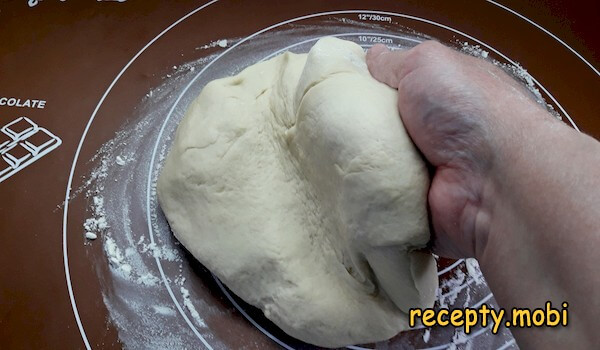
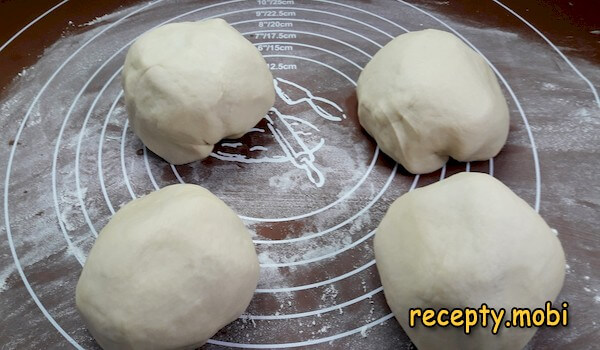
For convenience, divide the dough into 4 balls. Put them in a bag and let them rest for 15 minutes.
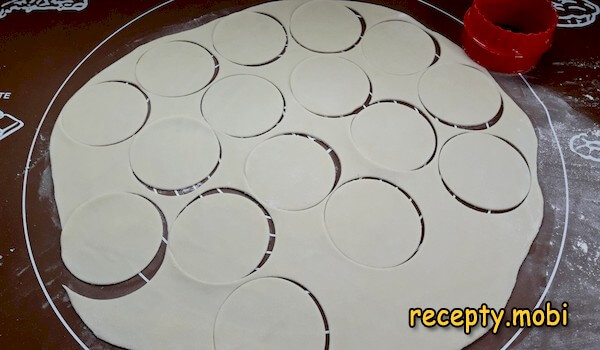
Lightly dust the table with flour. Roll out a sheet to 1.5 mm (this is very easy – the dough yields obediently to the rolling pin without any visible effort). Cut out circles (about 6 cm in diameter), and knead the scraps back into the pieces of dough you haven't used yet.
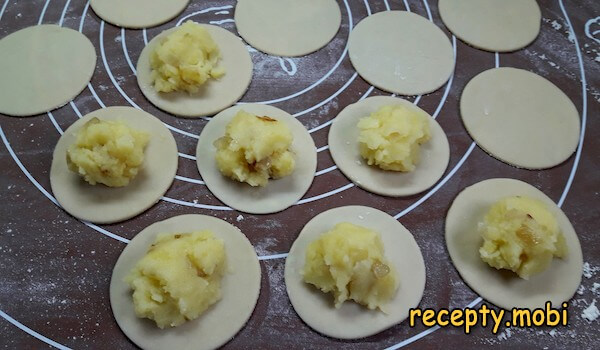
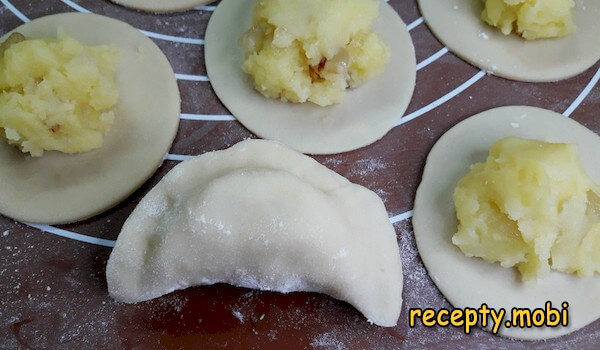
Add plenty of filling without holding back (the custard dough seals it easily and won't tear).
Join the edges of the dumpling in the usual way. To be sure, run your fingers along the edge once more.
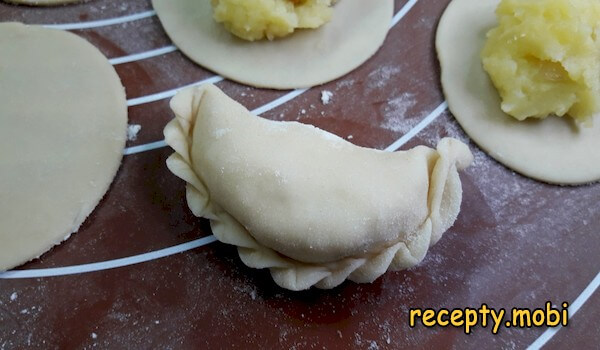
To give them a more elegant look, twist the ends into a cord.
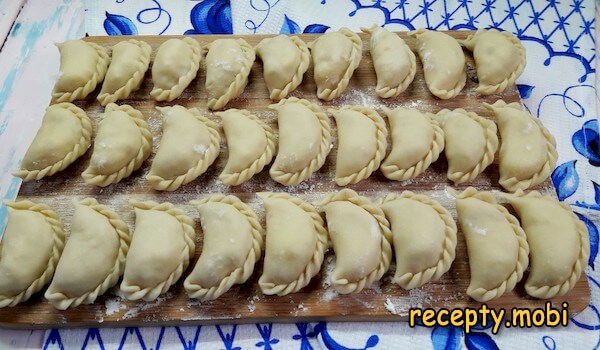
Place the finished dumplings on a floured board. You can boil them straight away, or send them to the freezer right on the board and, once they have frozen, transfer them to an ordinary bag.
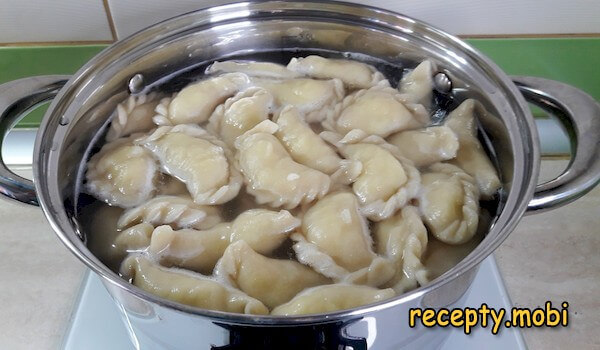
Bring water to the boil and salt it. Carefully lower in as many dumplings as you need and turn them with a slotted spoon so they don't stick to the bottom. Boil for 4 minutes.I put the finished potato dumplings on custard dough onto a plate, layering them with chunks of butter. It is good to add fresh herbs and essential to add sour cream. I boil frozen dumplings exactly the same way; no thawing is needed beforehand.Bon appétit!


Tips
- 1
Freshly boiled water is the key to the custard method. Water that has cooled even a little gives an "ordinary" dough; water taken straight off the heat activates the starch in the flour.
- 2
A thickness of 1.5 mm is just right – about twice as thin as ordinary dumpling dough. The elasticity lets you roll it this thin without any risk of tearing.
- 3
Four minutes of boiling is enough. Thin dough cooks faster; any longer and it will start to fall apart because it is so soft.
- 4
Freezing the dumplings on the board is the "secret" against sticking. Once they are frozen you can tip them into a bag and they won't stick together. The same principle works for other kinds of vareniki and pelmeni.
FAQ
Which potatoes should I choose? +
Ideally, floury varieties (Sineglazka, Adretta, Nevsky, Gala). Alternatives: waxy ones (Red Scarlet) also work, but you need to mash them more thoroughly. New potatoes are not the best choice (they mash poorly). The brands "Meristema", "Belaya Dacha" and "Fermersky" are good quality. A size of 80–120 g is convenient for cutting. Light-yellow flesh is tastier than white. Before boiling, cut the potatoes into 2–4 pieces (they cook faster). Drain off all the water – not a drop of moisture should remain, or the filling will spread. Mash them while still hot – they will be more tender. There is no need to make the purée with milk, because there will be butter from the sautéed onion in the filling.
What is the advantage of custard dough? +
Custard dough made with boiling water has several advantages over an ordinary cold mix: elasticity (it rolls out to 1.5 mm without tearing), it doesn't tear during boiling (even after freezing), the edges seal easily (without flour on the seams), and the result looks "factory-made" (neat, thin dumplings). The technique is widespread in Ukrainian and Polish cuisine. The downside: you have to mix the dough right after boiling the water, otherwise it cools down and loses its properties. It is not suitable for yeast baking. It is used only for pelmeni, vareniki and sometimes noodles.
How long do the dumplings keep? +
Boiled, in a container in the fridge – 2 days. Reheat in the microwave for 1–2 minutes under a lid. In a frying pan with oil – 3–4 minutes, and you get a "fried crust". Raw shaped dumplings keep in the freezer for up to 3 months. Freeze them loose on a board, then tip them into a bag – they won't stick together. Cook them straight from frozen, without thawing (drop them into boiling water for 6–7 minutes). Don't leave raw ones at room temperature for longer than 30 minutes, or the dough will start to run. Boil cooked-from-fresh ones for 4 minutes after they float to the surface. For a packed lunch, keep them in a container with butter and herbs.
What do you serve dumplings with? +
The classics: with sour cream (thick), butter, and onions fried in butter. With fresh herbs (dill, parsley). With black or rye bread for a rustic serving. With a shot of cold vodka for a Ukrainian-style serving. With borscht or shchi for a Ukrainian dinner. With herbal tea for a warming supper. For a family dinner, with a sauerkraut salad. For a lenten version, with vegetable oil and onions. With dried-fruit compote for a winter dinner. With hot milk for a "grandmother's" version. It is a universal dish for winter evenings.
- Comment
or post as a guest
Be the first to comment.