avg —
Lenten dumplings with potatoes – how to cook quickly and easily

Instructions
Tip the flaxseed meal into a deep bowl and pour over warm water at 40–45 °C. Warm water activates the meal faster than cold. After 10–15 minutes the meal releases its characteristic slimy colloidal solution – this is the egg substitute in Lenten dough. Without this effect the dough will turn out brittle.
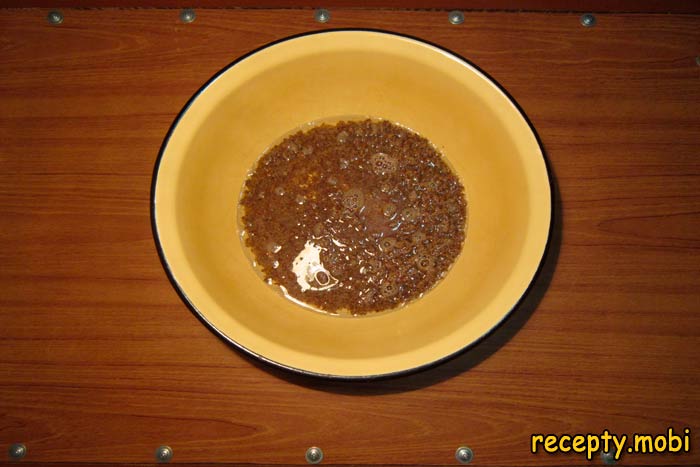
Add salt and vegetable oil to the swollen meal and mix thoroughly with a whisk. The oil makes the dough more elastic and stops it sticking to your hands when rolling. Wait another 5 minutes for all the components to come together into a single mass.
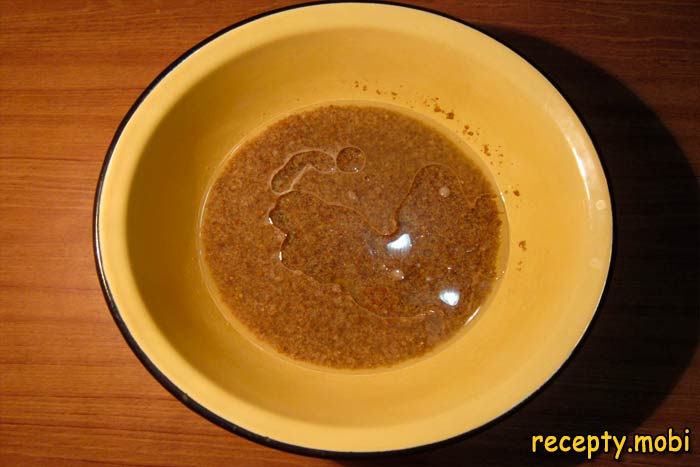
Pour half of the whole grain flour into the liquid base. Whole grain flour (instead of ordinary white) gives more fibre and useful minerals – important during a fast, when the diet is limited. It also gives the finished dumplings a characteristic rustic flavour.
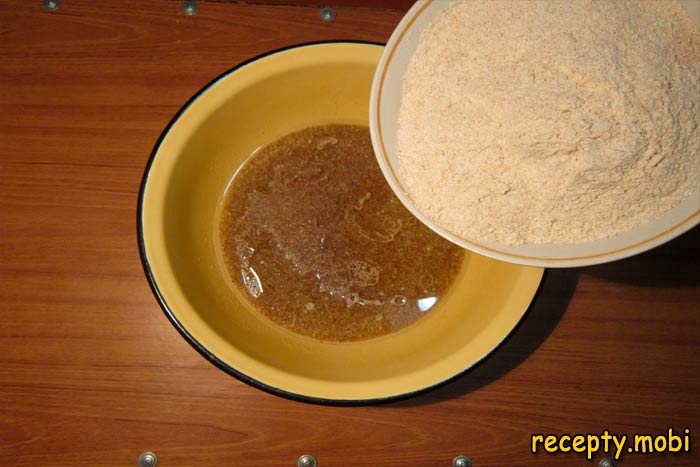
Mix the dough thoroughly with a spoon until all the flour has been absorbed into the liquid. At this stage the mass will be runny – that is normal; the second half of the flour will make it firm.
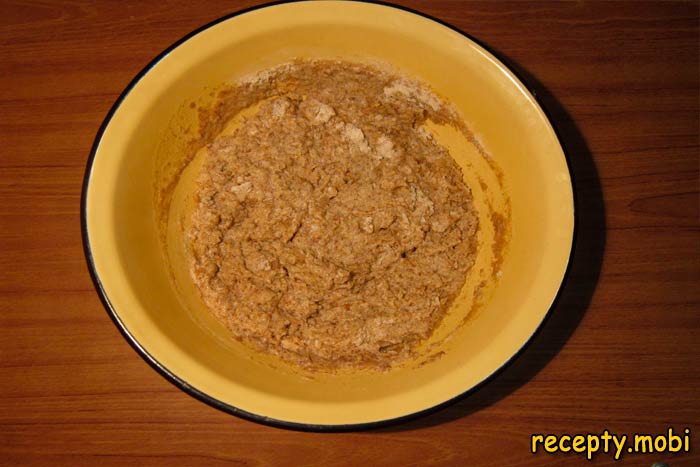
Add the remaining flour gradually, kneading by hand until springy and uniform. The dough should not stick to your hands or the sides of the bowl – that is the right consistency. Knead for at least 5–7 minutes to develop the gluten and elasticity.
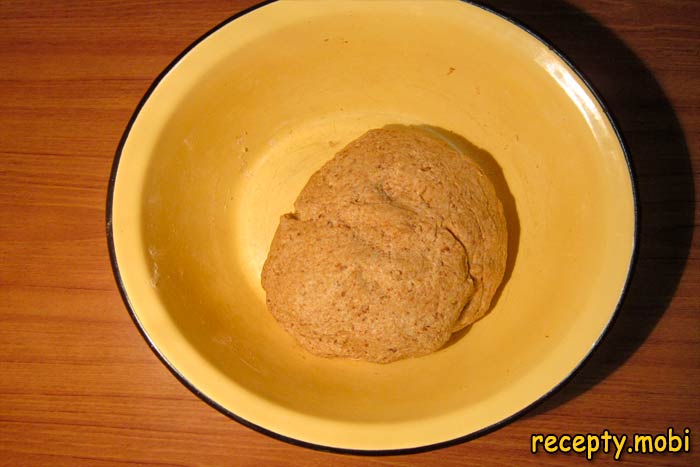
Get everything ready for shaping the dumplings: a rolling pin, a glass or a special cutter for cutting out circles, the prepared filling of mashed potatoes with herbs, and a small bowl of flour for dusting.
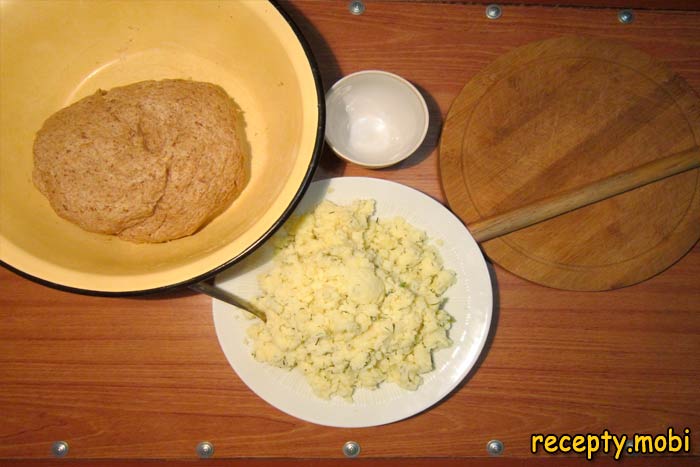
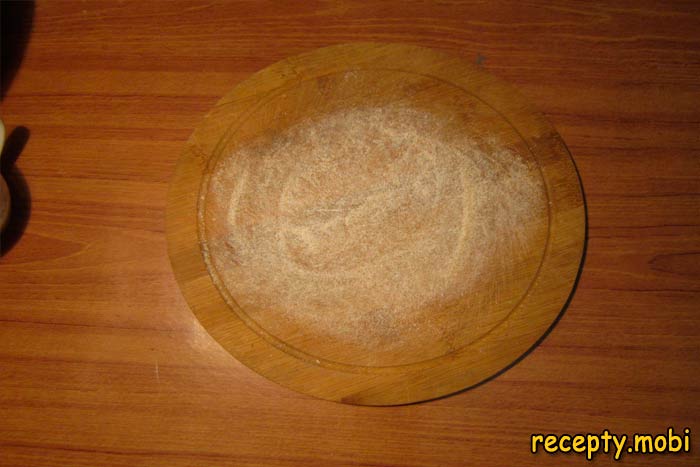
Dust the work surface with flour – this prevents the dough from sticking and makes rolling easier. Do not be sparing with the flour – it is better to brush off the excess than to struggle with stuck dough.
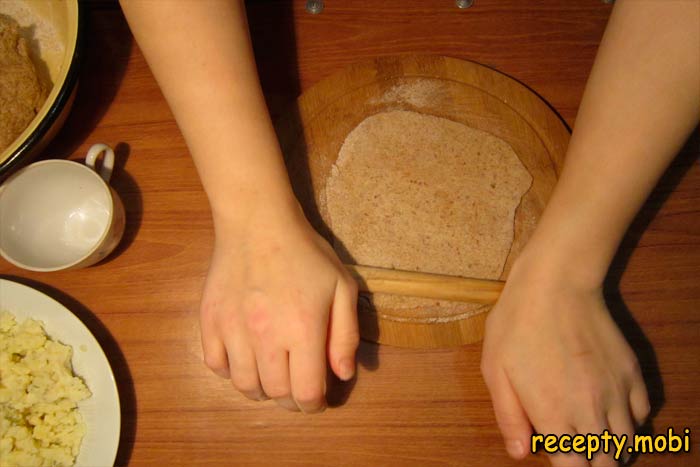
Pinch off a small piece of dough (about the size of a large apple) and roll it out into a thin sheet 2–3 mm thick. Any thinner and the dumplings will burst during boiling; any thicker and the dough will dominate the filling.
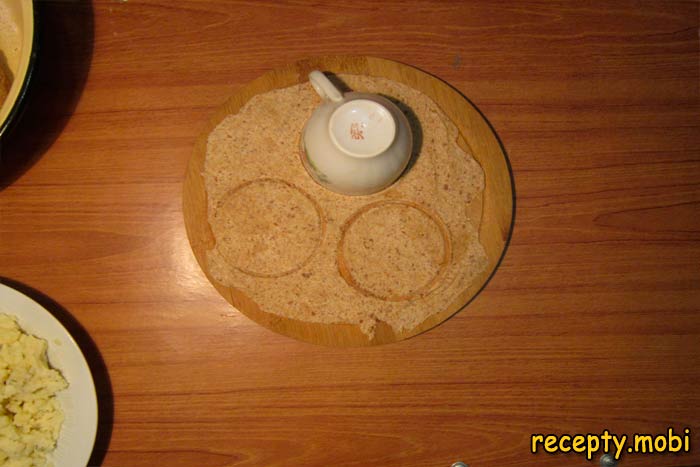
Cut out circles 7–8 cm in diameter using an ordinary glass or a special cutter. Gather the dough trimmings into a ball and roll them out again – do not throw them away; I use the dough down to the last piece.
Place a teaspoon of potato filling in the centre of each circle. Do not overdo the filling – too much will stop you sealing the edges, and the dumplings will fall apart during boiling.
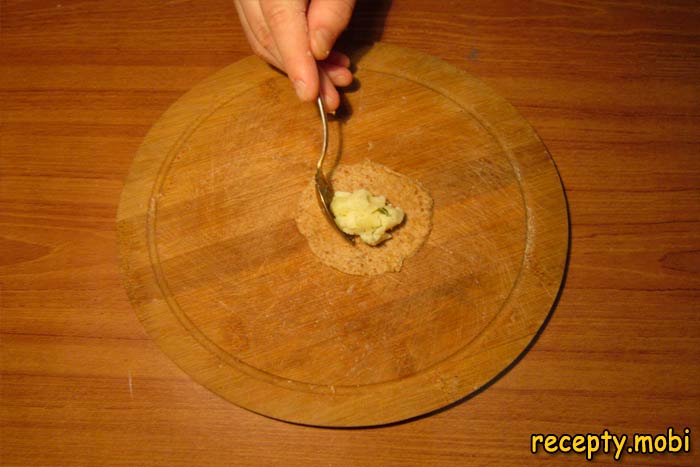
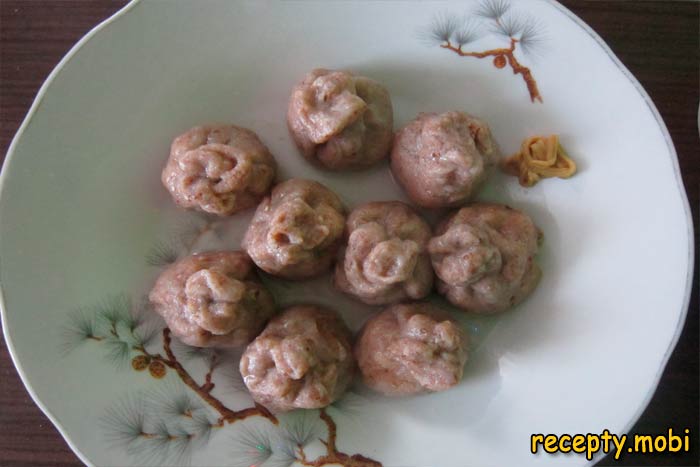
Shape the dumplings, carefully pinching the edges with your fingers – from the centre to the edges with semicircular movements. You can make an attractive plaited seam, like on khinkali – it gives a nice presentation.

I keep the leftover dough in the fridge wrapped in cling film – it works for noodles, pizza, or another batch of dumplings with a different filling. In the fridge, Lenten dough keeps for up to a week.

Arrange the shaped dumplings on a board with a small gap between them (1–2 cm) and freeze in the freezer for 1–2 hours. Then tip them into a sturdy bag for long-term storage.

I boil the dumplings fresh or straight from frozen – without thawing before cooking. Frozen ones must go straight into boiling water – otherwise they will stick together into a lump as they thaw and fall apart. This is an important rule for any frozen dumplings.
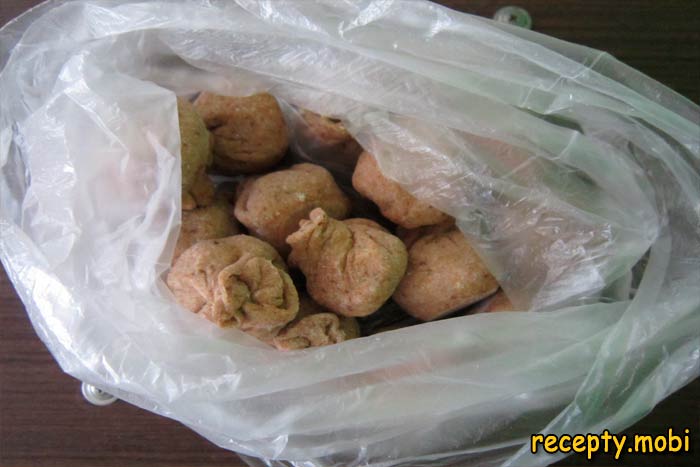
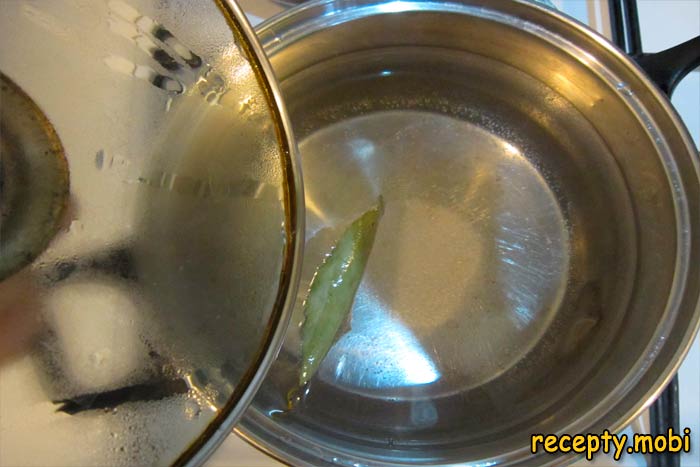
Pour water into a large pot (3 litres for 30–40 dumplings), add salt and a bay leaf for aroma. Bring to a vigorous boil over high heat – a gentle simmer will cause the dumplings to stick together.
Lower the dumplings one by one into the boiling water, immediately stirring gently with a slotted spoon so they do not stick to the bottom. Cook until they float to the surface (the sign of doneness) plus another 2–3 minutes to be sure the filling is heated through.
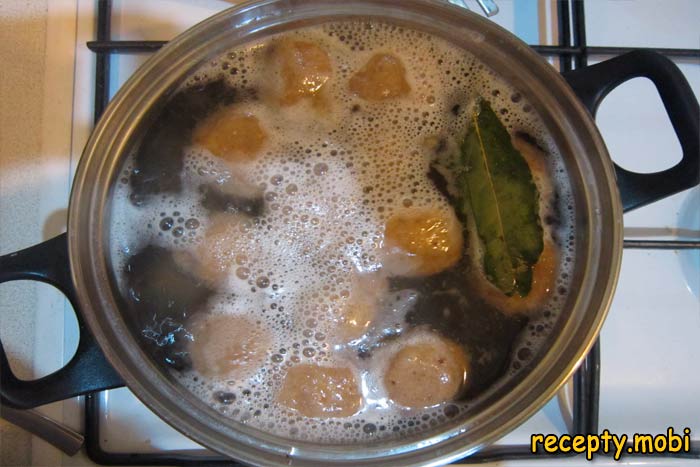
The Lenten dumplings with potatoes are ready! Lift them out with a slotted spoon and serve hot with Lenten sour cream, fried onion, or fresh herbs. During a fast you can drizzle them with olive oil and garlic – it gives a hearty Mediterranean accent.


Tips
- 1
Flaxseed meal replaces eggs in Lenten dough – it makes the dough elastic and wholesome and enriches it with omega-3 acids.
- 2
The dough should not be too soft – such dumplings will overcook in the broth. Add flour until it is springy.
- 3
Do not thaw frozen dumplings – drop them straight into boiling water. I use a similar principle for cherry dumplings.
- 4
This amount of dough makes about 36 dumplings – enough for a large family or two meals.
FAQ
What can replace flaxseed meal in Lenten dough? +
Chia seeds soaked in water work well (1 tbsp seeds + 3 tbsp water for 10 minutes – it gives a similar colloidal solution), soaked flaxseed (without the meal – grind and cover with water), or just water (without the chia effect – the dough will be less elastic and need more flour). You can use aquafaba (the liquid from cooking chickpeas) – an excellent vegan alternative to eggs. A ready-made egg substitute from the shop is the simplest option.
What other fillings suit Lenten dumplings? +
Classic options: fried cabbage with mushrooms, sauerkraut with onion, boiled mushrooms with fried onion, berries (cherry, currant, strawberry – sweet versions), apples with cinnamon and sugar, soy mince with onion (for a protein-friendly fast). Pumpkin filling with sugar and ginger is also popular. There are dozens of variations across different regions of Ukraine and Russia – experiment by season and taste.
How should Lenten dumplings be stored? +
Raw, shaped dumplings – in the freezer for up to 3 months in a sturdy airtight bag. Boil them straight from frozen, without thawing. Cooked, boiled dumplings – in the fridge for up to 2 days in a tightly closed container. Reheat in the microwave or by steaming – I do not recommend frying, as the dough turns rubbery. Ready dough keeps in the fridge, wrapped in cling film, for up to a week – use it for new batches of dumplings with a different filling.
What should Lenten dumplings be served with? +
Classic Lenten accompaniments: onion fried in vegetable oil (golden and fragrant), Lenten sour cream made from soy, or simply olive oil with garlic, and fresh herbs (dill, parsley, spring onion). For heartiness – salted cucumbers, sauerkraut, marinated mushrooms. During a fast you can serve them with Lenten cabbage cutlets or fish ones (if the fast is not strict). For variety – with a berry sauce (for sweet dumplings).
- Comment
or post as a guest
Be the first to comment.