avg —
Navy-style pasta with stew in a skillet

Instructions
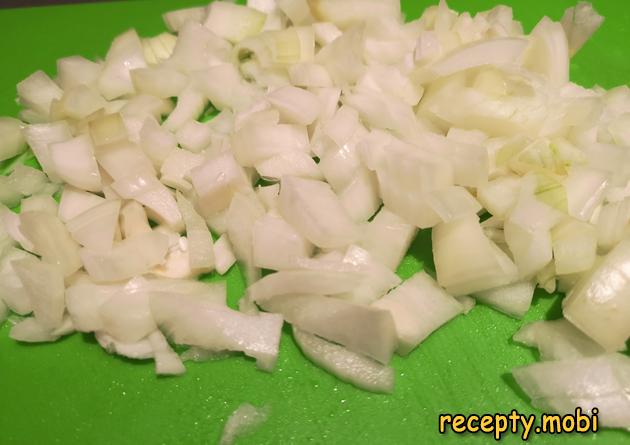
Peel the large onion and cut it into small cubes. A fine dice matters here: large pieces give a raw crunch, while small ones dissolve into the butter within 3–4 minutes of frying and release their sweetness. First I cut off the root end, then halve the onion and chop it lengthways and crossways, so the cubes come out even.
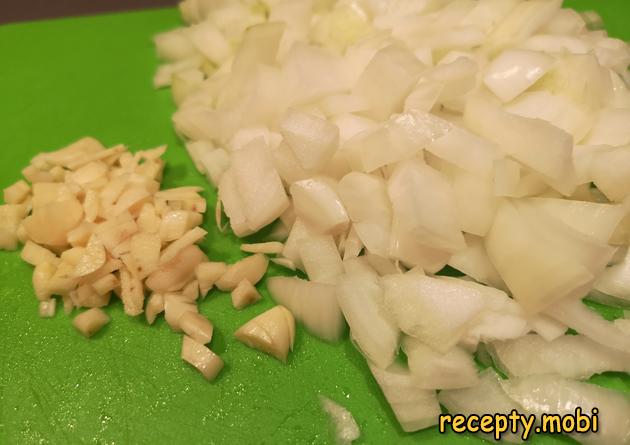
Peel 3 large cloves of garlic and finely chop them into cubes. Fresh garlic is far more aromatic than the pressed kind and does not leave a "metallic" aftertaste in the finished dish. Chopping it into cubes (rather than slices) lets the aroma spread evenly through the whole mixture, instead of staying in large pieces on a few separate pasta shapes.
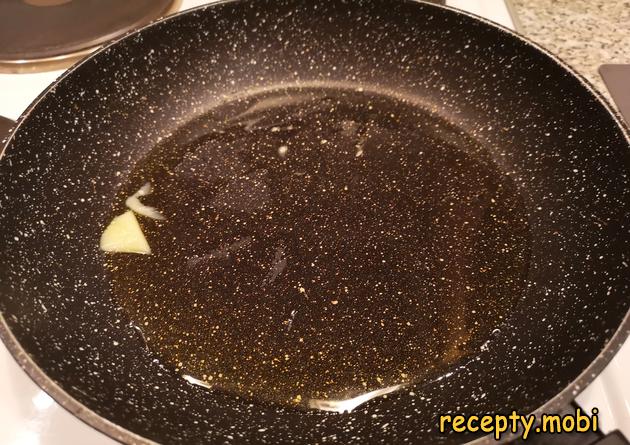
Melt the clarified butter in a frying pan over medium heat. Clarified butter stands up to high temperature and does not burn or foam – unlike ordinary butter. If you have none, sunflower or olive oil will do, but it is the clarified butter that gives the whole dish its characteristic "creamy" note of aroma.
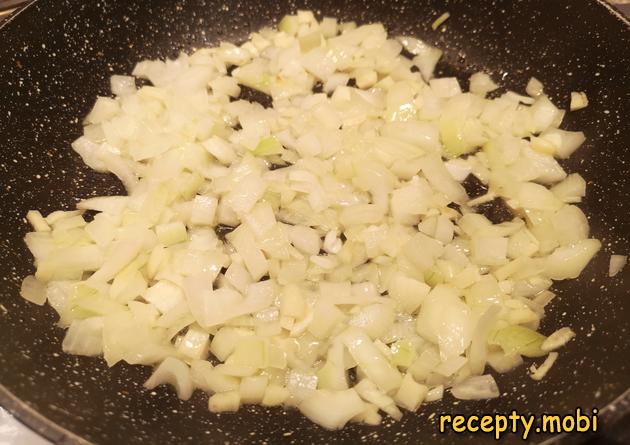
Fry the onion and garlic in the frying pan for 3–4 minutes until soft. The onion should turn translucent but not brown – over-fried, it starts to taste bitter. I add the garlic closer to the end of the frying: it darkens quickly and turns bitter when overheated, so it is better to throw it in once the onion has already warmed through.
Add the canned stew to the onion and garlic. The quality of the stew is critical for the final result – I choose a meaty one with the least possible fat and no soya in the list of ingredients. Stew in a glass jar is usually better than in a tin: you can see the contents before buying and judge the quality of the meat more easily.
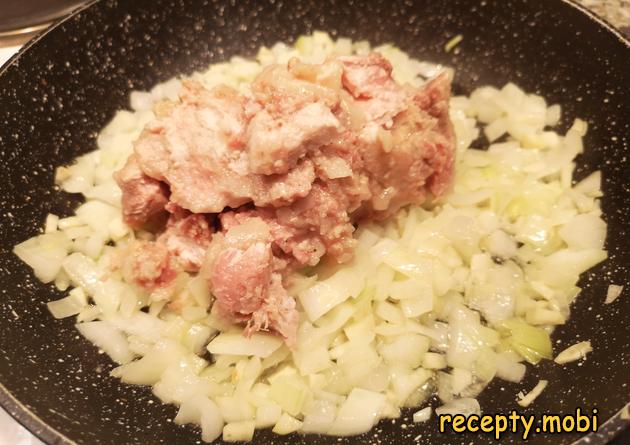
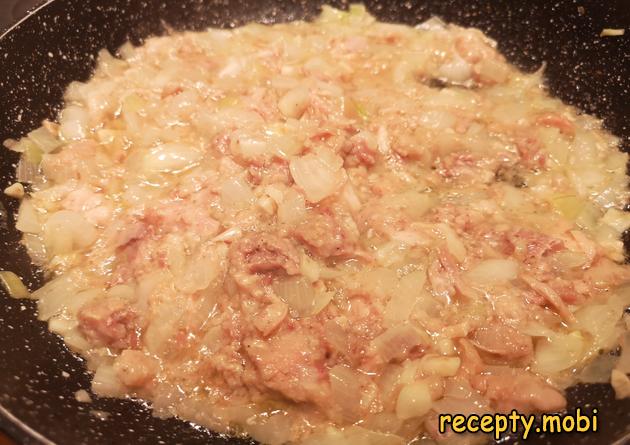
Mix the stew with the onion and garlic and simmer for 10 minutes over low heat. In this time the juices of the stew and the vegetables blend into a single sauce, and the fat from the stew soaks into the meat fibres – the result is a juicy meat base. I stir rarely, so the meat does not break down into a purée.
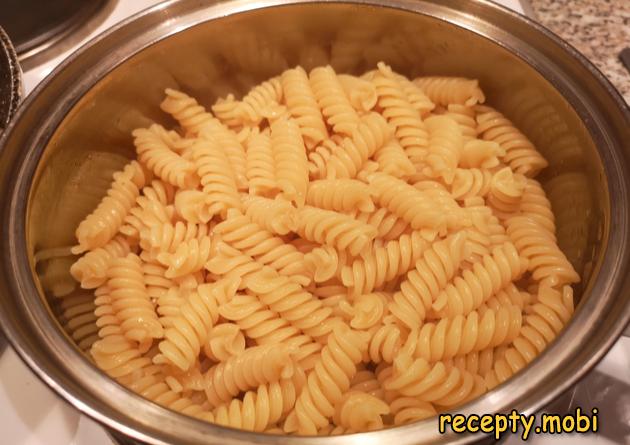
Boil the pasta according to the instructions on the package – usually 8–10 minutes, to "al dente". Drain it in a colander and do not rinse it with cold water: this keeps the starchy film that helps the sauce "cling" to the pasta. Transfer it to a pot.
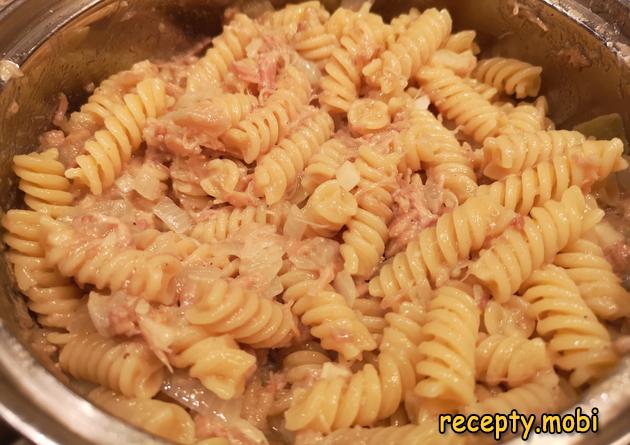
Add the prepared stew with onion to the pasta and mix thoroughly. Transfer it to a plate and serve hot straight away, before the dish cools down. Navy-style pasta with stew is ready!Transfer the pasta to a plate and serve it at the table.


Tips
- 1
Mix the pasta with the stew straight after boiling, while the pasta is still hot – it absorbs the flavour of the meat sauce best at this moment.
- 2
Do not drain off all the pasta water – 2–3 tablespoons of pasta water add starch to the dish and make the sauce more "silky" and uniform.
- 3
If the stew is too fatty, skim off some of the fat before adding the vegetables. I use the same trick in other meat dishes.
- 4
Thicker pasta works better for this dish: penne, elbows, shells. Thin vermicelli and spaghetti "drown" in the stew and turn into mush.
FAQ
What can replace the stew in navy-style pasta? +
Traditionally it is made with pork or beef stew, but you can take chicken – the dish becomes lighter. Fresh mince also works: fry it for 10–15 minutes in the pan until fully cooked before combining it with the onion. The taste will differ: fresh mince gives a more "meaty" note, stew a fattier and more aromatic one. Another option is boiled beef, cut into small cubes and added to the vegetables.
How long does the dish keep in the fridge? +
Navy-style pasta with stew keeps for 2–3 days in the fridge in a tightly closed container. When reheating, add 1–2 tablespoons of water or stock: overnight the pasta "soaks up" the sauce and the dish becomes a little dry. You can reheat it in the microwave (2–3 minutes) or in the pan (5 minutes). I do not recommend freezing it – after thawing the pasta turns rubbery.
Which pasta is best for the dish? +
Pasta made from durum wheat, group A, is preferable – it holds its shape during boiling and does not overcook. By shape, penne, elbows and shells are best – they hold the sauce well in their hollows. Thick spirals (fusilli) also work very well. Thin vermicelli or spaghetti are not suitable – they go soggy in the stew and lose their texture.
How can I make the dish less fatty? +
Skim off the visible layer of fat from the top of the stew before adding it to the pan – this reduces the calorie content by 15–20 per cent. Use the minimum of clarified butter (10 g instead of 20 g is fine). Add chopped fresh tomatoes or 1 tablespoon of tomato paste to the stew – the acidity "cuts through" the fat and the dish turns out lighter and fresher.
Cook navy-style pasta using our recipe with pleasure. Enjoy your meal.
- Comment
or post as a guest
Be the first to comment.