avg —
Carbonara Pasta with Bacon and Cream

Instructions
Lay out the ingredients on the work surface. To make a "proper" Italian carbonara I use DURUM WHEAT SPAGHETTI (Barilla, De Cecco, Granoro). Cheap "noodles" made from soft-wheat flour fall apart into mush during cooking.
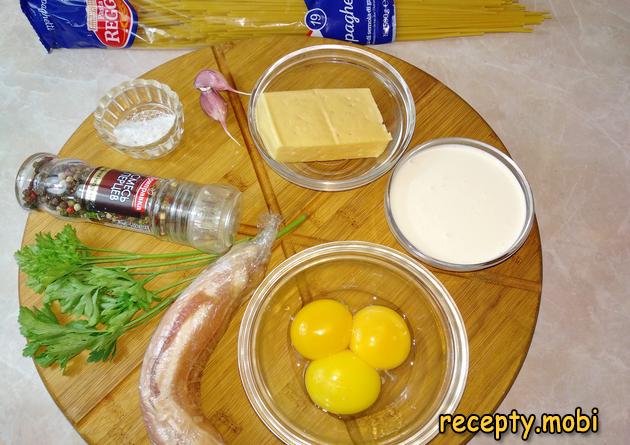
The dish cooks quickly, so all the ingredients should be prepared in advance. Straight away put a large 4–5 litre pot of water on the stove – you need plenty of water to cook the pasta properly (1 litre of water per 100 g of dry pasta). Bring it to the boil.
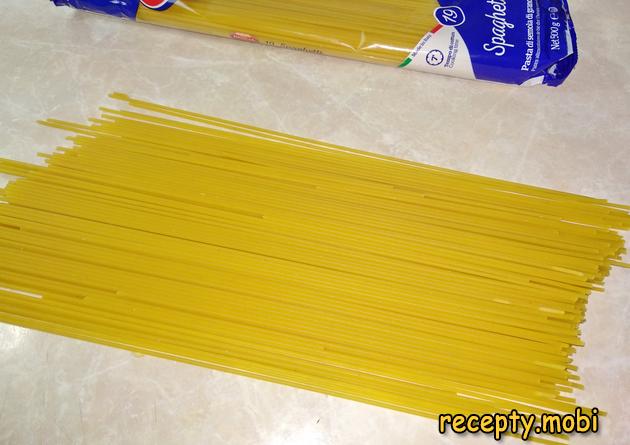
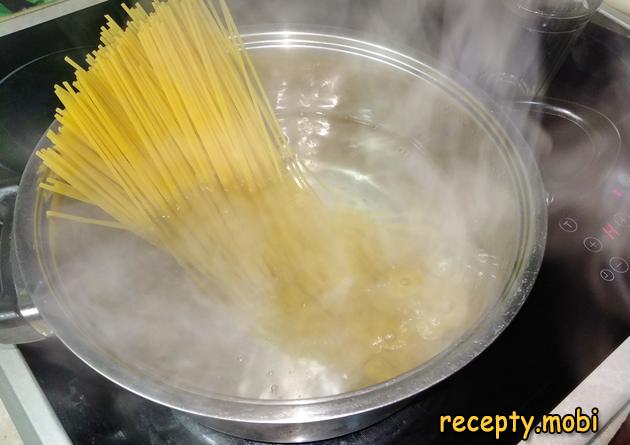
Once the water boils, SALT it generously (1 tablespoon of salt per 1 litre of water) – an Italian-cooking "secret". The "sea-water" saltiness seasons the pasta from the inside. Drop in the spaghetti and cook it until "AL DENTE" (1–2 minutes less than the time stated on the packet). Al dente – "to the tooth" – means the pasta is firm inside, not overcooked. It will "finish cooking" in the pan with the sauce.
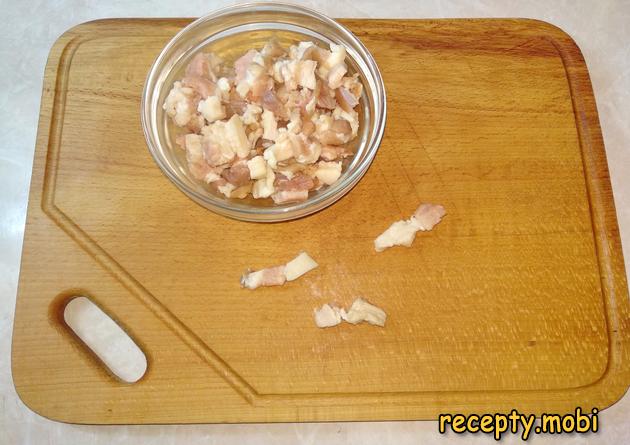
Meanwhile, prepare the rest of the ingredients for the sauce – quickly, while the pasta is boiling. Cut the bacon (150 g) into thin 3–5 mm slices, then chop it into strips 5–7 mm wide. The pieces should NOT be too small, so that during frying the bacon stays SOFT inside and does not render down completely into crispy bits.
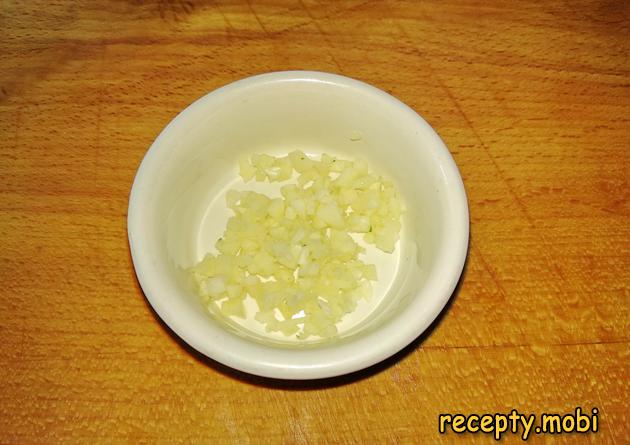
Peel the garlic (3 cloves). It is better to CHOP it with a knife – this gives a more "delicate" aroma. If you put it through a press, the garlic turns "sharp" and "pungent". Finely chopped garlic "melts" into the hot fat without that "burnt" note.
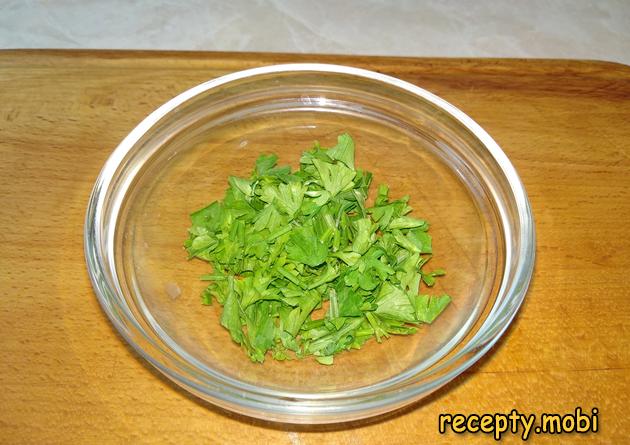
Wash the parsley (½ bunch) thoroughly under cold running water and pat it dry with a paper towel. Finely chop it with a sharp knife on a board – it gives the finished dish a "fresh" green note and a pretty splash of colour. Fresh parsley is more aromatic than dried, so use only fresh for an authentic Italian carbonara flavour.
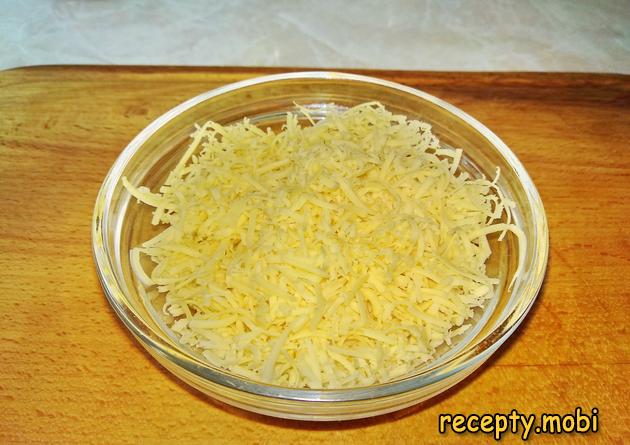
Grate the hard Parmesan cheese (50 g) on the FINE side of the grater – so it "melts" quickly into the hot pasta. An alternative is pecorino romano (the "authentic" carbonara cheese) or grana padano (a budget-friendly Italian equivalent of Parmesan).
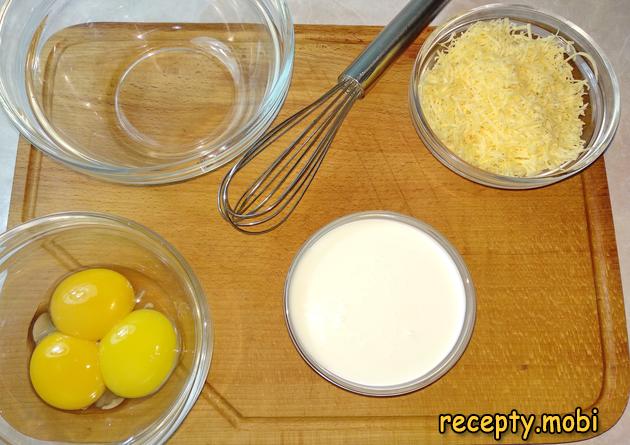
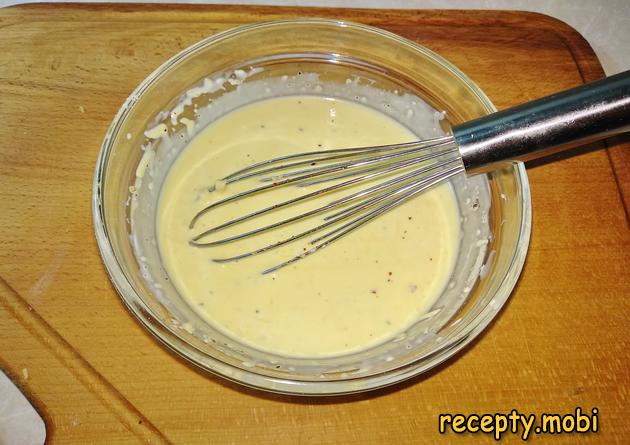
Prepare the base of the creamy egg mixture. Into a separate bowl put the yolks (4 pcs.), the 35% cream (100 ml) and right away 2/3 of the grated Parmesan (about 35 g). Whisk until smooth. Season with salt and pepper to taste. Adding the cheese at the start gives the mixture a richer creamy-cheese flavour.
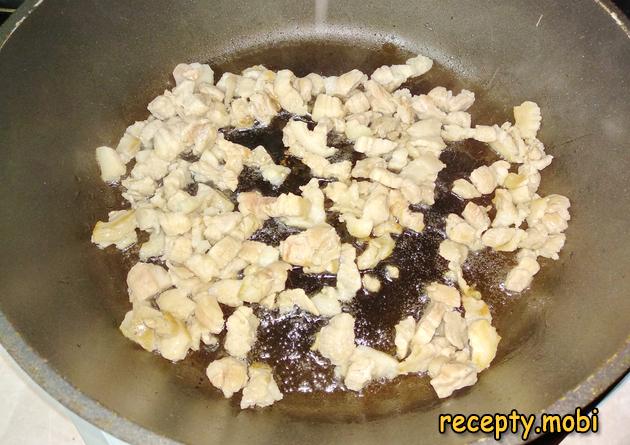
Put a large frying pan (28–30 cm in diameter) over medium heat – WITHOUT oil! The bacon will release enough fat of its own as it fries. Add the chopped bacon to the dry pan and fry it for 5–7 minutes over medium heat until golden. Watch that the bacon stays SOFT in the middle – do not "dry it out" into crispy bits. Ideally it should be golden and crisp on the outside, tender inside.
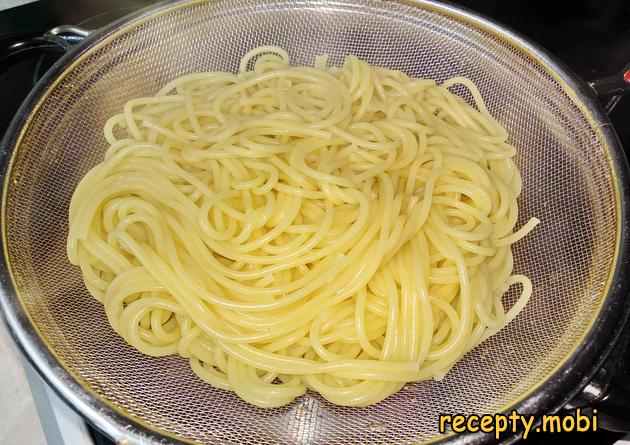
At the same time, check the spaghetti – it should be "al dente" (8–9 minutes of cooking for most types). Drain the cooked spaghetti in a colander. IMPORTANT: keep 100 ml of the pasta cooking water – it is useful for adjusting the thickness of the sauce (it contains starch, which "binds" the sauce).
Add the finely chopped garlic to the fried bacon in the pan. Cook for another 1–2 minutes over medium heat – the garlic will "open up" and "combine" with the bacon in aroma, but will NOT OVER-FRY into bitterness.
Add the finely chopped parsley to the pan with the bacon and garlic. CRITICAL STEP: IMMEDIATELY AFTER this, TURN OFF THE STOVE – no more heat is needed; the residual heat of the pan and the hot pasta will "cook" the sauce themselves.
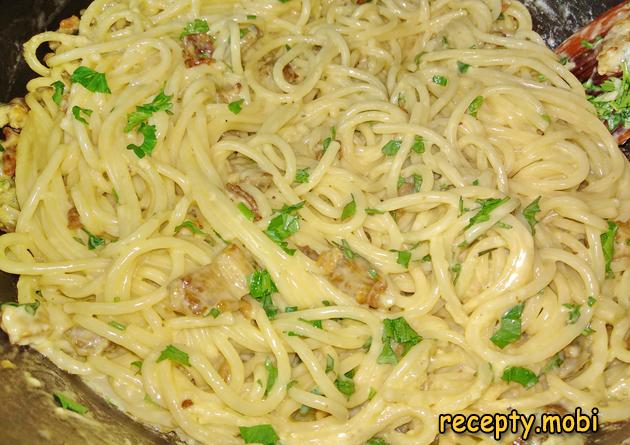
Add the hot cooked spaghetti to the pan with the bacon, garlic and parsley. Mix thoroughly with silicone tongs or a large fork – the pasta should be evenly distributed with the bacon.
CRITICAL STEP: while the bacon and spaghetti are still VERY HOT (but the stove is already off!), add the prepared creamy egg mixture. Mix quickly and vigorously – as you stir, the cream will "set", and the yolks will warm through from the hot ingredients and cook to a creamy consistency.
If the sauce is too thick, add 1–2 tablespoons of the reserved pasta cooking water (it contains starch, which "binds" the sauce). If it is too thin, sprinkle in a little more grated Parmesan to thicken it.
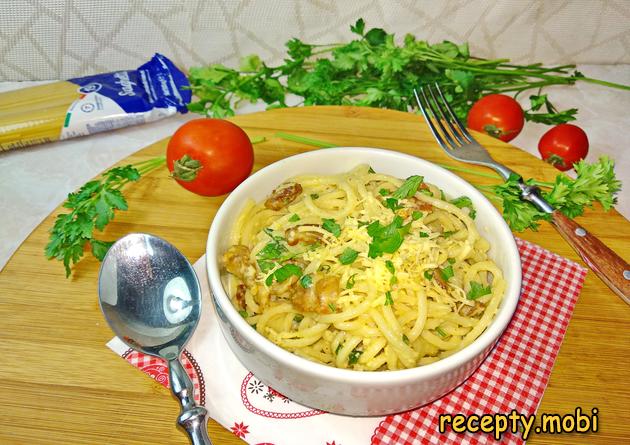
The carbonara pasta with bacon and cream is ready! Transfer a portion to a nice deep plate. Sprinkle over the remaining grated Parmesan (15 g) and a pinch of fresh parsley. Serve at once while hot – after 5 minutes the pasta "cools down" and the sauce "sets". It is ideal with a glass of dry white wine.


Tips
- 1
Be sure to TURN OFF the stove before adding the creamy egg mixture – this is the "secret" of a tender sauce without curdled yolks.
- 2
Use only DURUM wheat spaghetti – soft-wheat pasta will "fall apart" into mush during cooking.
- 3
Keep 100 ml of the pasta cooking water – it contains starch that "binds" the sauce. I make fettuccine alfredo on a similar principle.
- 4
Cook the pasta until "AL DENTE" – it will "finish cooking" in the pan with the sauce and should not be "completely overcooked".
Video
FAQ
What can replace the bacon in carbonara? +
The authentic Italian choice is GUANCIALE (cured pork jowl). It is hard to find outside Italy, so the following work well: Italian pancetta (cured pork belly, the closest equivalent to guanciale), raw-smoked pork belly, ordinary smoked bacon (as in this recipe), smoked gammon (a budget option), or boiled or smoked ham (for a "lighter" version). For a meat-free version, leave out the meat and fry 200 g of button mushrooms for a "meaty" effect. Each option gives its own character, and bacon is a versatile, readily available substitute.
Can it be made without cream (the Italian way)? +
Yes, classic Italian carbonara is MADE WITHOUT CREAM – Italians consider adding cream a "crime" against the recipe. The authentic sauce is: 4 yolks + 80–100 g grated pecorino romano + ground pepper + 50 ml of pasta cooking water. Whisk until it has the thickness of cream and add it to the hot pasta with fried guanciale or pancetta. Cream is a European adaptation for a more "tender" texture. Without cream the sauce comes out richer in cheese flavour and less "fatty". Try both versions – each has its own character.
How long does carbonara pasta keep? +
Carbonara pasta is best eaten STRAIGHT AWAY after cooking – it tastes best hot, with the tender creamy sauce. It keeps in the fridge for up to 24 hours in an airtight container – before serving, reheat it in a pan with 2 tablespoons of milk or cream for 5–7 minutes over low heat (without milk the pasta "sticks together"). Do not reheat it in the microwave – the egg sauce can "curdle" into lumps. Do not freeze it – the creamy sauce will "split" when thawed. Cook it portion by portion for a single meal – that way it tastes its best.
What to serve with carbonara pasta? +
It is ideal as a stand-alone Italian main course. For starters – "Caprese" (mozzarella + tomatoes + basil), bruschetta with tomatoes and basil, olives, an Italian cold-cut platter (prosciutto, salami). For salads – a green mix with rocket, chicken Caesar, or a simple vegetable salad with olive oil. For drinks – dry white wine (Pinot Grigio, Sauvignon Blanc, unoaked Chardonnay), dry sparkling wine (Prosecco), or, for connoisseurs, a light Italian red (Chianti, Bardolino). For children's table – with a fruit drink or juice. For dessert after carbonara – tiramisu, panna cotta, or lemon sorbet.
- Comment
or post as a guest
Be the first to comment.