avg —
Zeppelins

Instructions
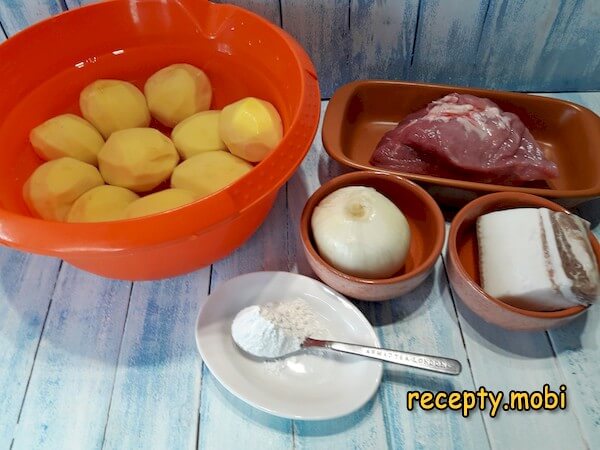
I prepare the ingredients. The potatoes need to be split into two parts – 500 grams will be needed raw, and 350 grams are for boiling. This "double" potato technique is the basis of the zeppelin dough.
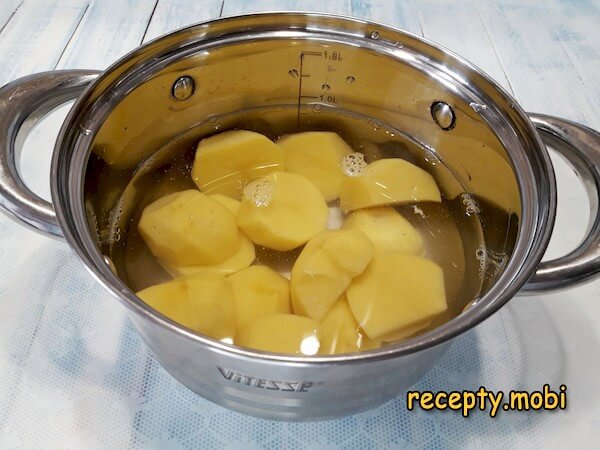
I cut the 350 grams of potato into smaller pieces so they cook faster. I put them in a pan, cover with water and boil them until the potato is easily pierced with a fork.
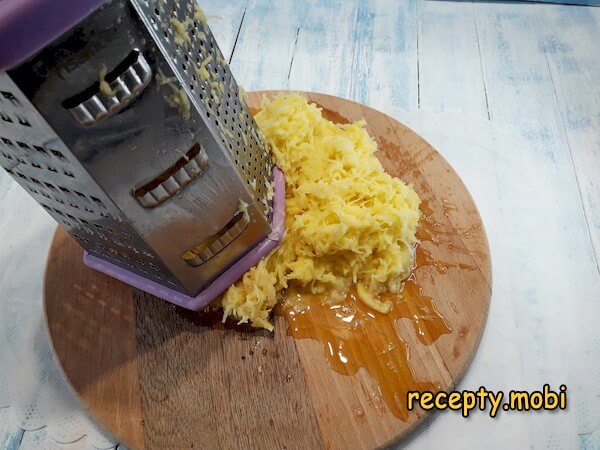
I grate the remaining 500 grams of potatoes on a medium grater – shreds of about 3 mm are ideal for zeppelins.
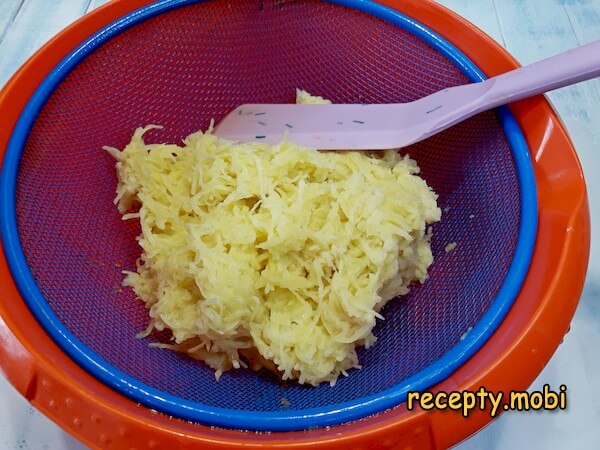
Now the juice needs to be removed from the resulting mass. To make this easier, I first place the grated potato pulp in a sieve and, pressing with a spoon or spatula, squeeze out some of the liquid.
Then I transfer the now less wet mass into cheesecloth folded into 3-4 layers (you can use a linen towel). It takes considerable effort to remove as much juice from the potato as possible – the drier the mass, the firmer the zeppelin will be.

The result should be a very dry, straw-like grated potato – the base for the zeppelins is ready.
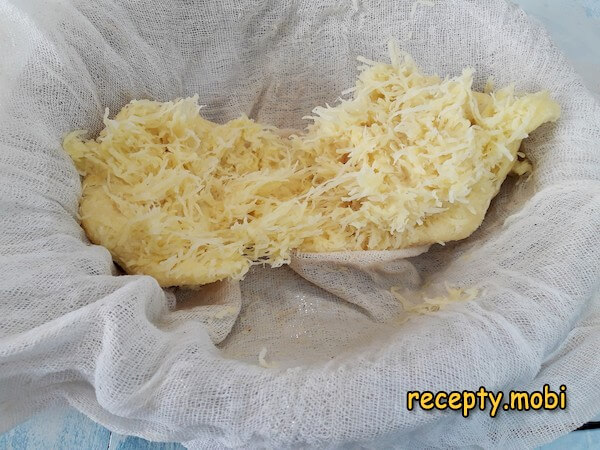
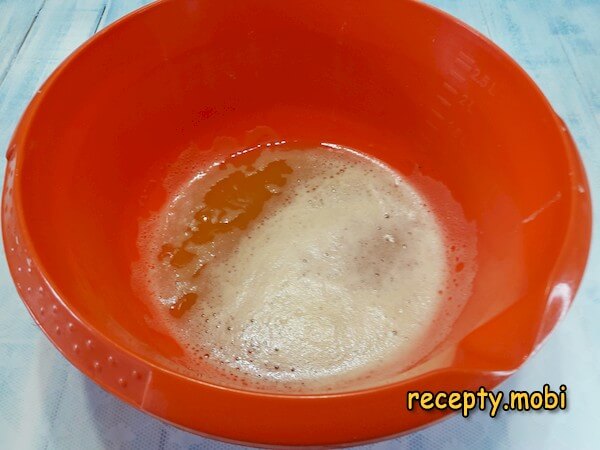
I do not pour away the potato juice I managed to collect – it will still come in handy. From it I will extract the starch that goes into the water for boiling the zeppelins.
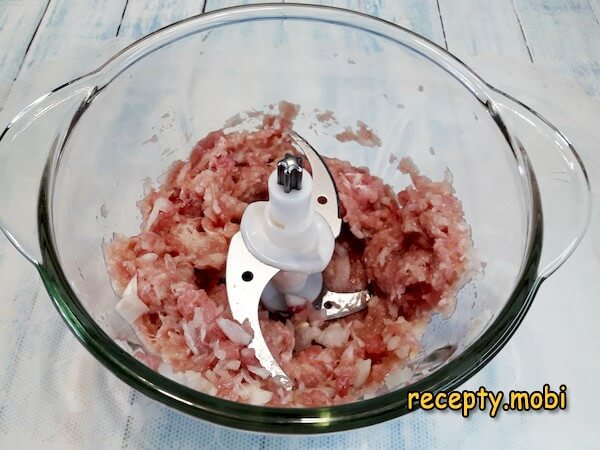
I prepare the filling for the zeppelins. For this I grind the meat pieces in a meat grinder together with half an onion – meat with fresh onion gives a juicy filling.
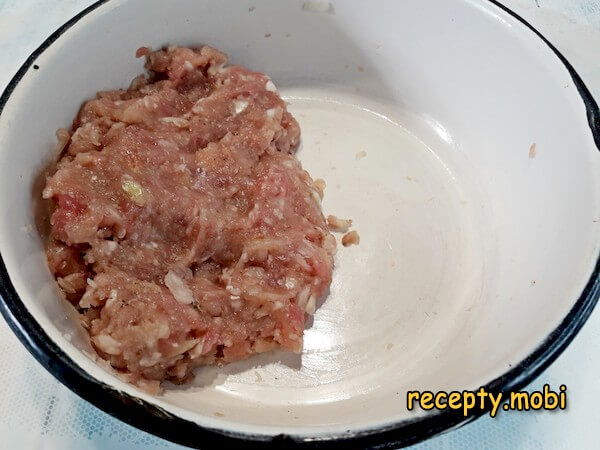
I knead the mince well and season it with salt and freshly ground pepper. This is the future meaty centre of the zeppelin.
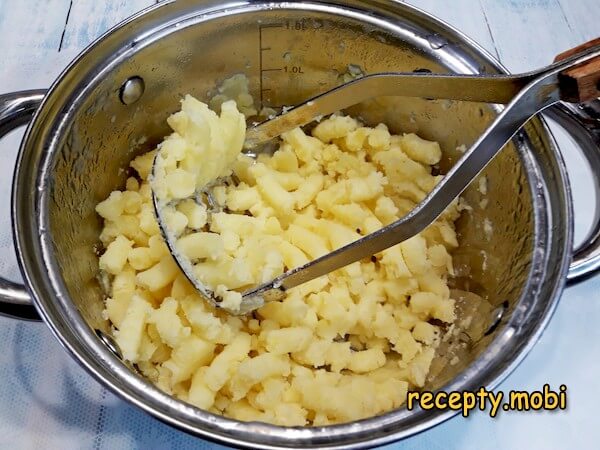
By this time the potatoes have just finished boiling. I drain off the water and mash them into a puree – without milk or butter, just potato puree.
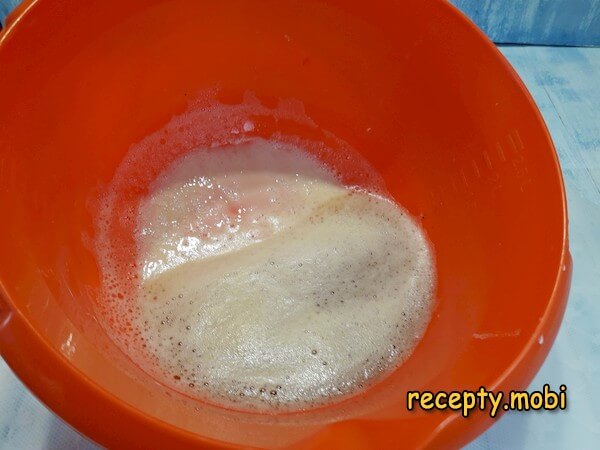
The potato juice has settled, and the starch has sunk to the bottom. I pour the liquid fraction into another container – the starch remaining at the bottom is what I will use.
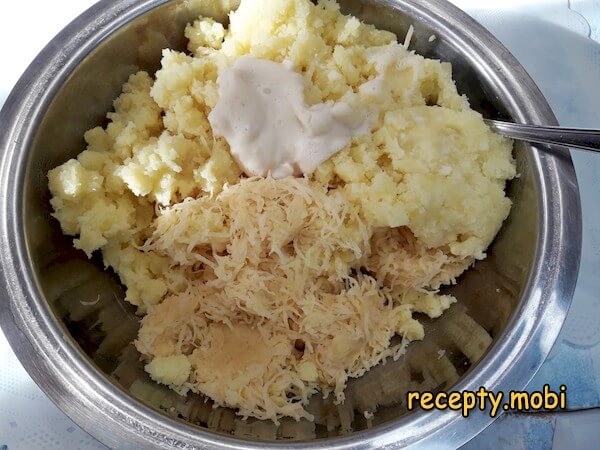
I add the starch to the bowl with the grated raw potato and the boiled potato (as puree) – this makes a "double" potato mass.
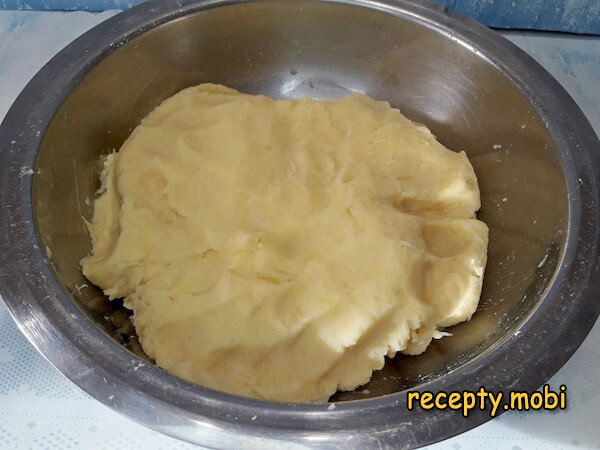
I salt the mass and knead it very thoroughly so that the starch is distributed evenly throughout. This is the "secret" of the zeppelin – a uniform, dense mass without lumps.
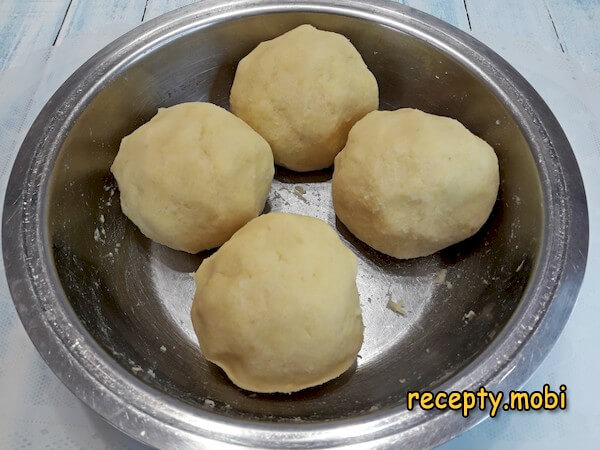
I divide the potato dough into 4 parts and roll them into balls – these are the future zeppelins.
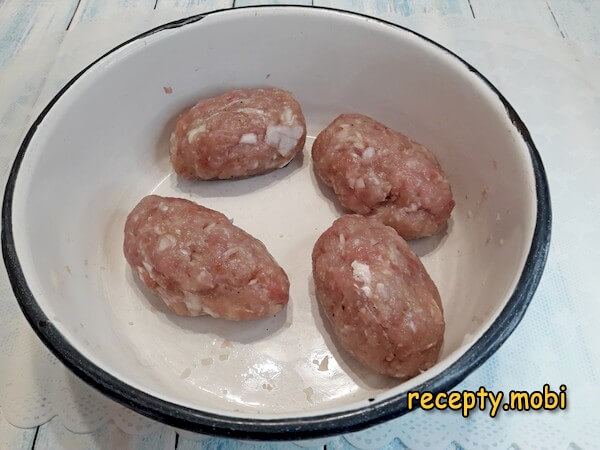
From the mince I prepare 4 oval patties – one for each zeppelin.
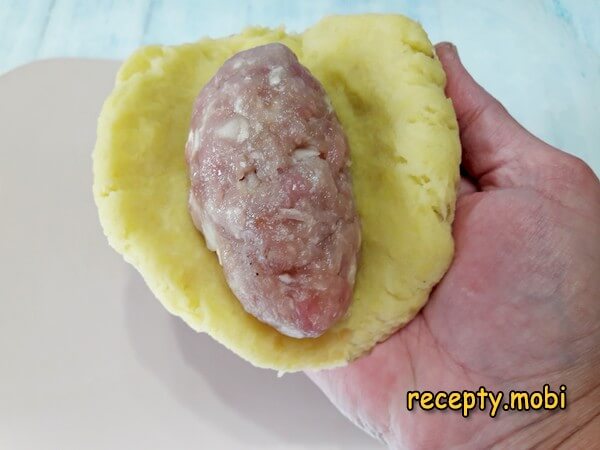
With wet hands I flatten the dough to a thickness of about 1.5 centimetres and place the meat filling in the centre. Wet hands are the "secret" against the sticky potato dough sticking to you.
I pinch the edges of the patty closed like a pie – the meat must be completely hidden inside the potato shell.
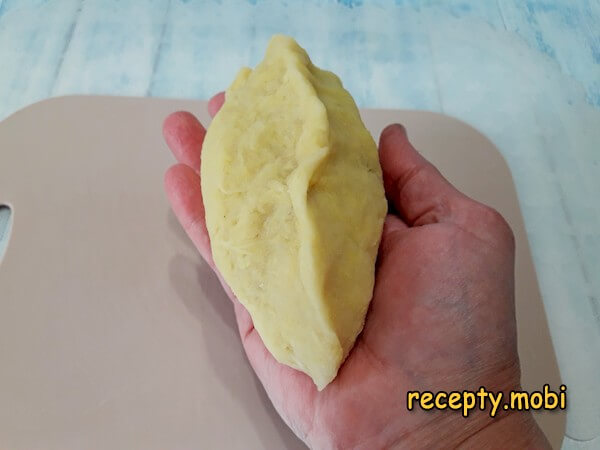
I roll the parcel between my palms, patting it occasionally, until it takes the required shape with a smooth surface – exactly that oval shape that gave the zeppelins their "airship" name.
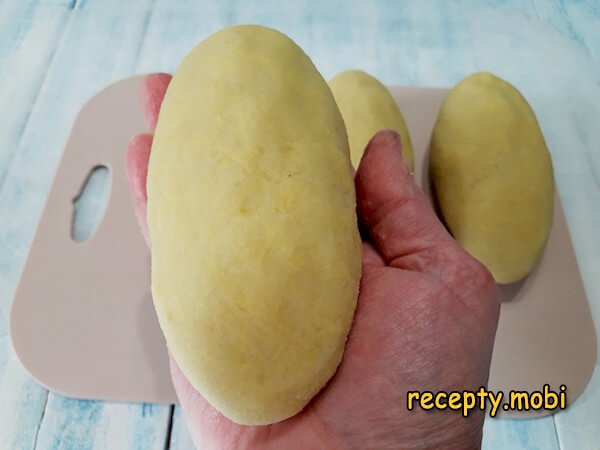
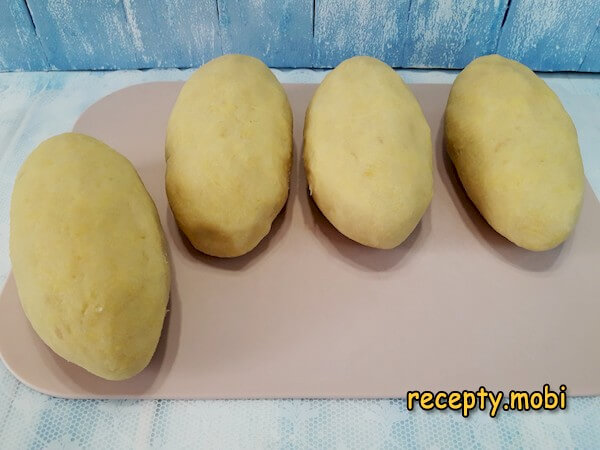
I place the zeppelins on a board – all 4 are ready to be boiled.
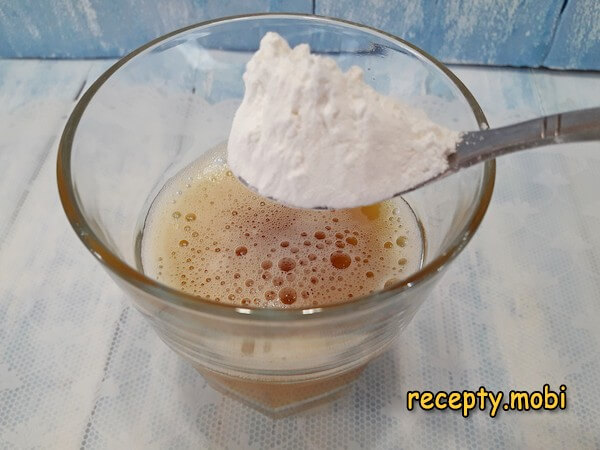
I pour 70-100 millilitres of potato juice into a glass and dissolve the starch in it. This is the "thickener" for the water in which the zeppelins will be boiled.
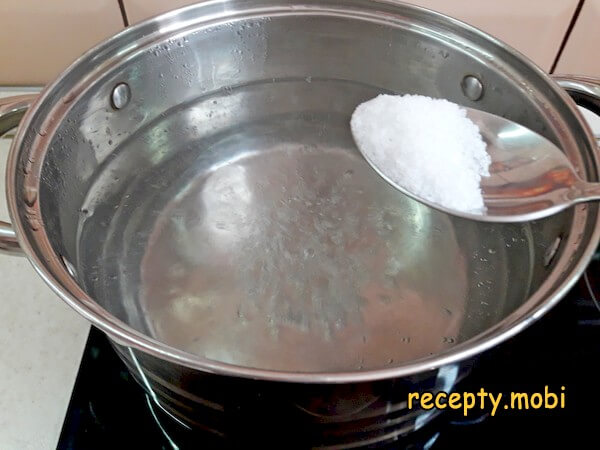
I bring 3 litres of water to a boil and add 0.5 tsp of salt – the base for boiling the zeppelins is ready.
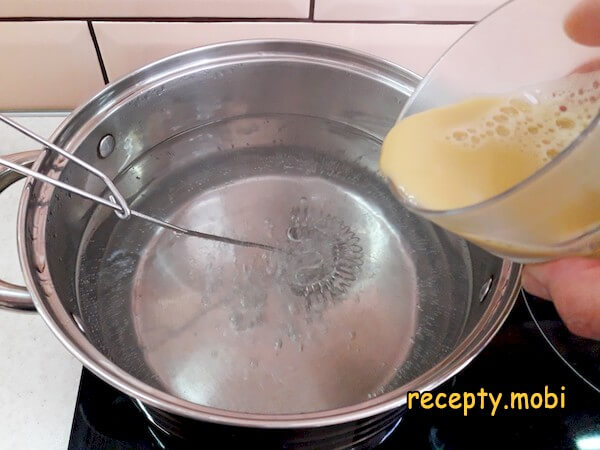
Stirring constantly, I pour the dissolved starch into the boiling water – the water should thicken slightly; this is the "secret" against the zeppelins boiling apart.
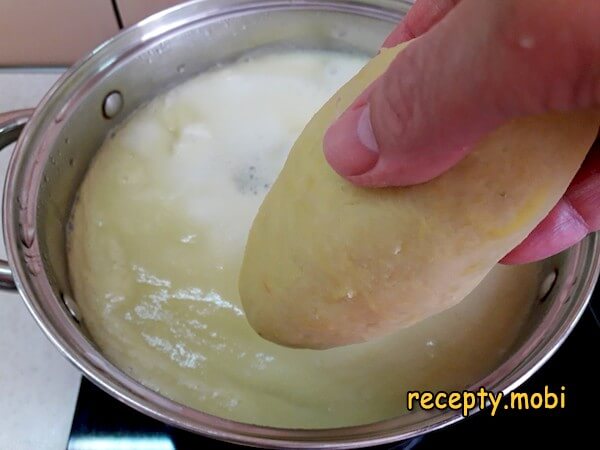
When the liquid comes to a boil, I carefully lower the parcels into it – one at a time, slowly letting them down to the bottom with a slotted spoon.
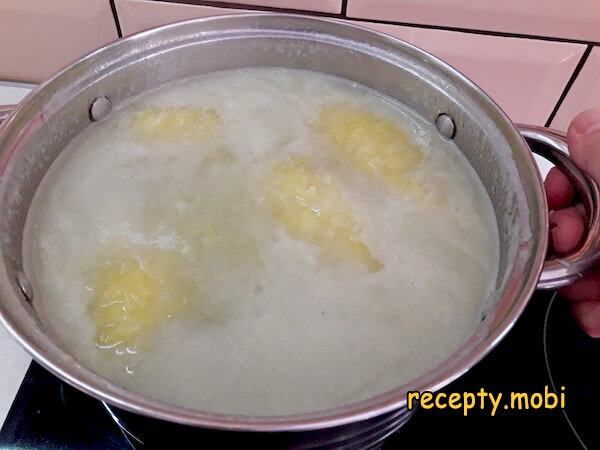
Under no circumstances should the zeppelins be stirred – they could fall apart that way. The pan simply needs to be shaken from time to time, holding it by both handles, helping the parcels to turn over. When they float up, I boil them for 15-17 minutes.
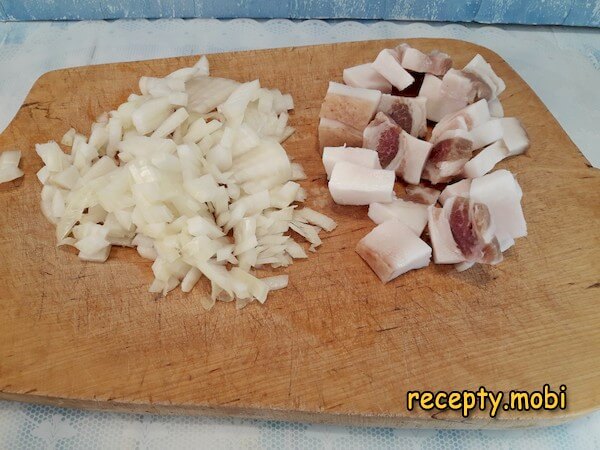
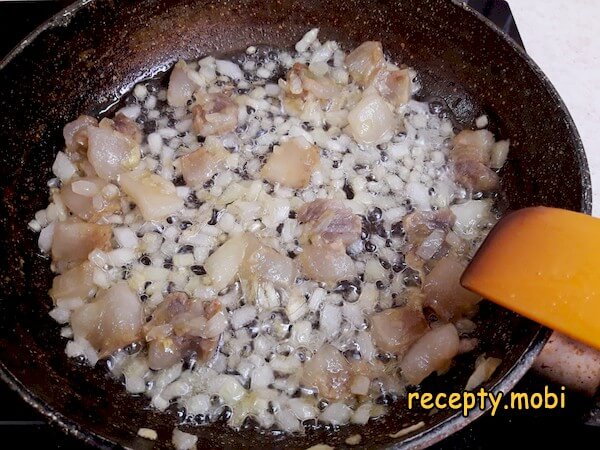
I prepare the garnish. For this I cut the fat and onion into a medium dice – about 5×5 mm for even frying.
In a dry skillet I first render the fat, then add the onion and lightly fry it – the result is classic Lithuanian cracklings with onion.
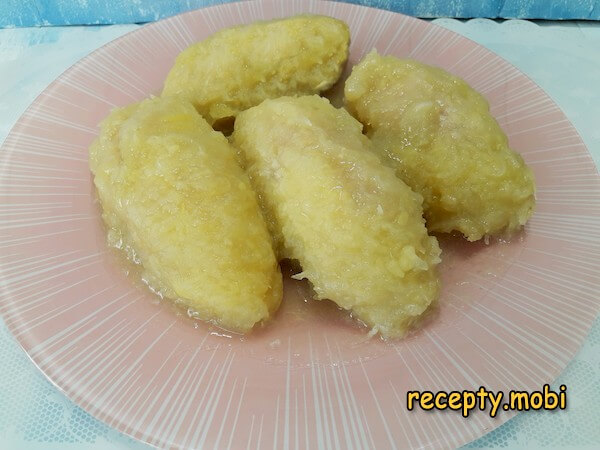
I carefully fish the zeppelins out with a slotted spoon and transfer them to a plate – gently, so as not to damage the potato shell.I serve the zeppelins with sour cream. The garnish can be placed on top or in a separate dish. Sometimes the sour cream is simply mixed with the cracklings – that is a matter of taste. This is how an unusual and hearty Lithuanian dish is made from ordinary ingredients. Zeppelins are also made with cottage cheese, using it instead of the meat filling – in that case the dish is considered a dessert.


Tips
- 1
SQUEEZING THE POTATO is the "secret" against the zeppelins falling apart. Raw grated potato contains a lot of water – without squeezing, the mass turns out runny and the zeppelin falls apart in boiling water. I squeeze it in cheesecloth or a linen towel firmly with both hands – the drier the grated potato, the firmer the shell will be. "Dry" potato + the settled starch from the juice = the classic Lithuanian technique.
- 2
STARCH IN THE WATER is the "secret" to keeping the shape. In plain boiling water the zeppelins would spread out and fall apart – the shell is too delicate for a vigorous boil. Water thickened with starch (the very starch that settled out of the potato juice) holds the zeppelin half-submerged without aggressive movement, and it keeps a neat oval shape. This is an original Lithuanian trick, without which the zeppelin will not work out.
- 3
THE "TWO-POTATO" MASS is the "secret" of the right texture. Raw potato alone gives a rubbery, grey mass. Boiled potato alone gives a crumbly, soft one. The combination of raw grated (500 g) and boiled puree (350 g) + starch = a dense, pliable mass that holds its shape evenly during boiling while staying tender inside. The principle of a "combined" potato mass is also used in other dishes – for example, for potato zrazy with mince in the oven.
- 4
THE CRACKLINGS GARNISH is the "secret" of the classic presentation. Plain sour cream or sauce will not give that authentic Lithuanian aroma. The cracklings – rendered fat with meaty streaks – are melted down in their own fat, after which the onion is fried in the same fat. The result is a fragrant garnish, which is placed on top or served separately. A similar principle of a "hot onion garnish" is used in mashed potato fritters in a pan.
FAQ
What variety of potato is best for zeppelins? +
Starchy potatoes are ideal – varieties such as "Adretta", "Sineglazka" and "Nevsky". They release plenty of starch, which is needed for the pliability of the dough. "New" potatoes will not do – too little starch, and the mass will be runny and "spreading". "Old", long-stored potatoes are also not the best option – the starch in them has already been partly converted into sugars, and the shell darkens. The ideal option is potato from the same season's harvest, firm and heavy. Before grating, be sure to wash and peel it thoroughly.
Can pork be replaced with another meat? +
Yes, the filling for zeppelins is very flexible. The classic is pork (tenderloin or shoulder) with its juiciness. Alternatives: beef (a leaner filling), a 50/50 mix of pork and beef (a "balanced" one), chicken mince (a diet option), turkey (tender and without any strong character). For a "premium" version – lamb with cumin and coriander. For a lean version – mushrooms (button or porcini) with onion, fried in oil. The main thing is that the mince should be fresh, well salted and a little "fatty" for juiciness.
Why do zeppelins fall apart during boiling? +
There are three typical causes. The first – the raw potato was not squeezed enough, there is a lot of water in the mass, and the zeppelin spreads out in the boiling water. The solution: squeeze firmly, to a "dry straw" state. The second – starch was not added to the cooking water, and the shell could not withstand the vigorous boil. The solution: be sure to thicken it with starch. The third – the zeppelins were stirred with a spoon in the pan. The solution: only rock the pan by the handles, never stir with a spoon.
What to serve with zeppelins besides sour cream? +
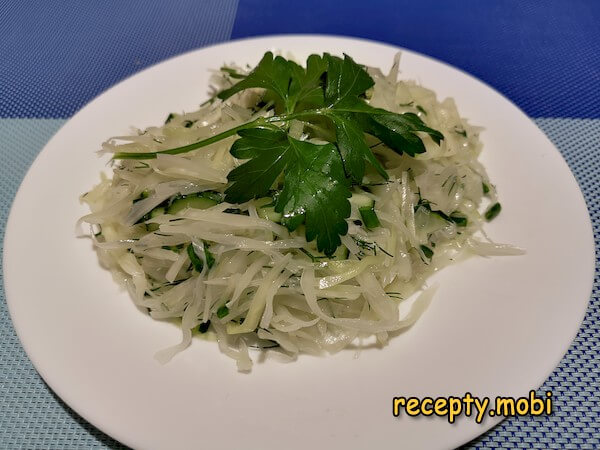
The classic is sour cream with cracklings, or separately. Alternative sauces: a "Lithuanian" sauce (sour cream + mustard + dill), a mushroom sauce of button mushrooms in cream, a garlic-and-sour-cream one with herbs, a tomato one with sweet pepper. As for drinks: with cold kvass, dark beer, or lingonberry fruit drink. On the table: with pickled cucumbers, sauerkraut, or pickled mushrooms – sour accents set off the richness of the dish. For a lighter option, they are served with a fresh vegetable salad of cabbage with apple.
- Comment
or post as a guest
Be the first to comment.