avg —
Stuffed Cabbage Rolls in a Pot

Instructions
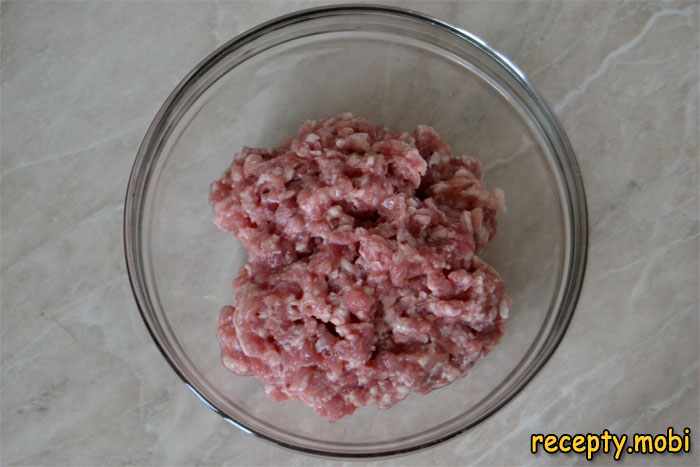
Prepare the pork mince – you can use ready-made shop-bought mince or grind it yourself from medium-fat pork (neck or shoulder). Home-made mince is always tastier: I pass the meat through a meat grinder with a coarse plate to keep some texture. For juicier rolls you can use a mixed mince: pork plus beef in a 2:1 ratio.
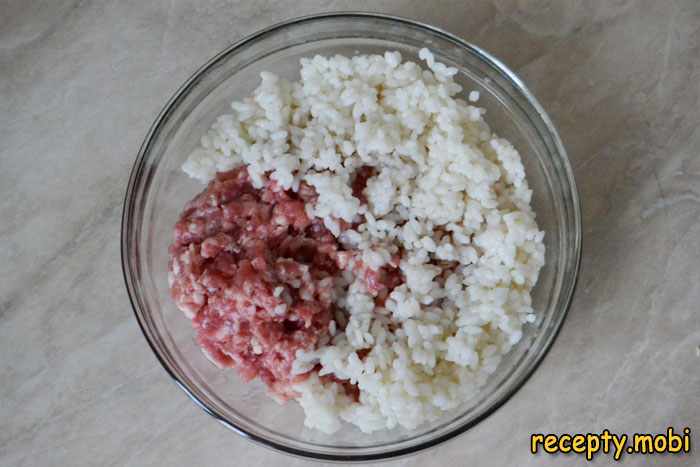
Rinse the rice (85 g) under cold water until it runs clear – this removes excess starch so the rice will not stick together. It is best to take round-grain rice as it is stickier and holds its shape well in the filling. Cover the rice with water in a 1:2 ratio and boil until half-cooked for 8–10 minutes – it should stay slightly firm inside, as it will finish cooking while the rolls stew. Drain and leave to cool.
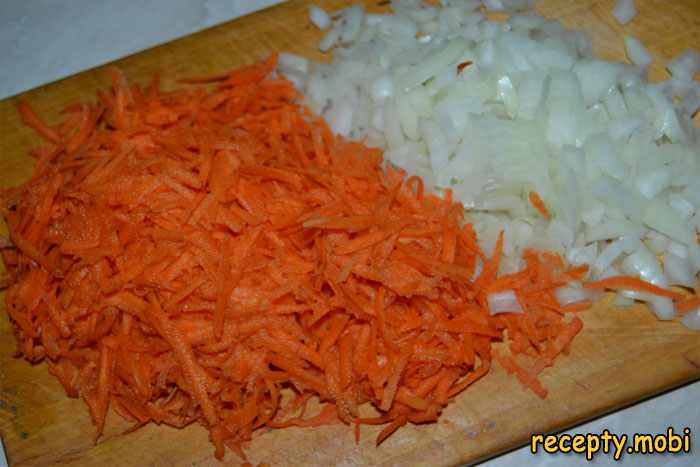
Peel the onion (150 g, about 2 medium onions) and finely chop it with a knife. Peel the carrot (150 g) and grate it on a coarse grater. Heat 2 tablespoons of vegetable oil in a frying pan over medium heat, add the onion and sauté for 3–4 minutes until translucent. Add the carrot and cook for another 4–5 minutes until soft, stirring – the fried vegetables should turn golden and fragrant.
Transfer half of the cooked vegetables (onion with carrot) into the bowl with the mince – they will add juiciness and aroma to the filling. Leave the other half in the frying pan for the tomato gravy – this way the flavour of the rolls and the sauce will be in harmony. Add the half-cooked rice to the mince.
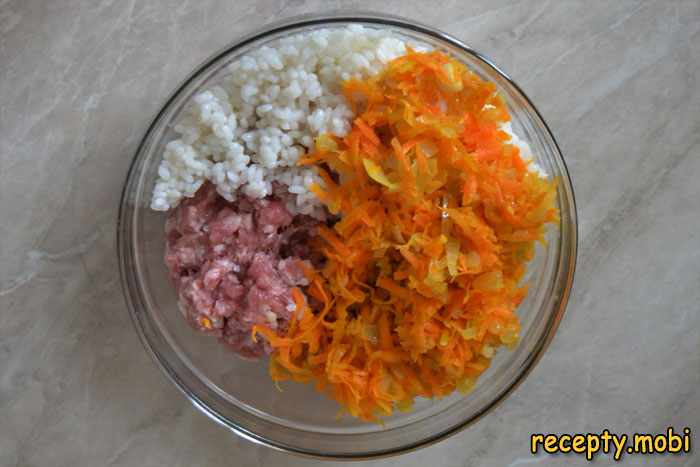
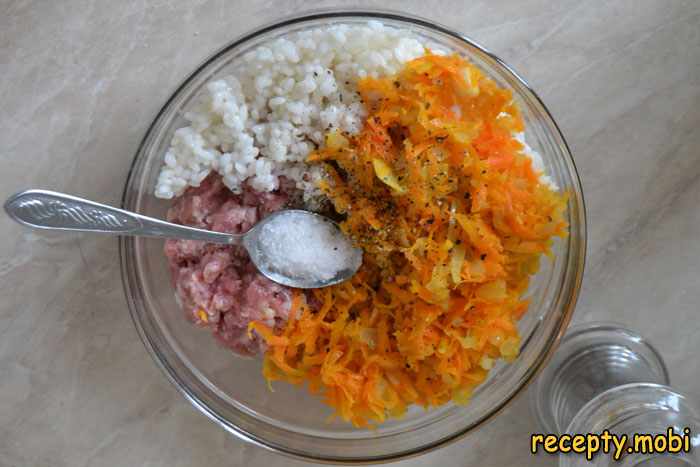
Salt the filling (about 1 teaspoon), add ground black pepper to taste and mix thoroughly by hand for 2–3 minutes – all the ingredients should be evenly distributed. The mince should become uniform and slightly sticky – a sign that the proteins have bound the mass together. Taste for salt – the filling should be well salted, since the cabbage is not salted.
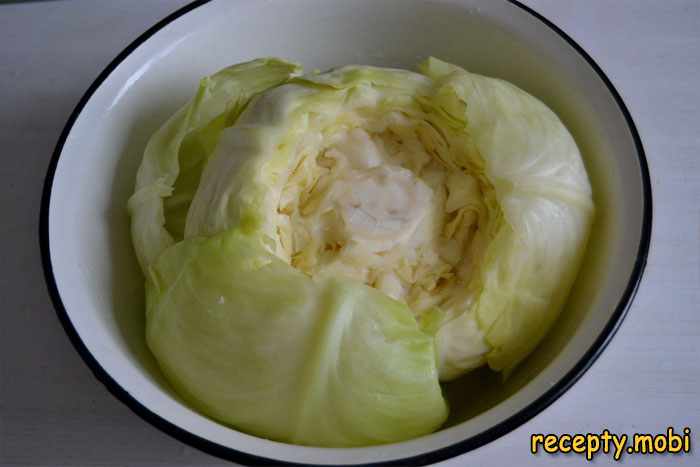
Prepare the cabbage leaves: rinse the head of cabbage (about 1.5 kg) and remove the damaged outer leaves. With a sharp knife, make deep cuts around the core and carefully remove the leaves, loosening them with your hands. If the leaves do not come off, press down on the head and twist it – the leaves separate more easily under their own weight.
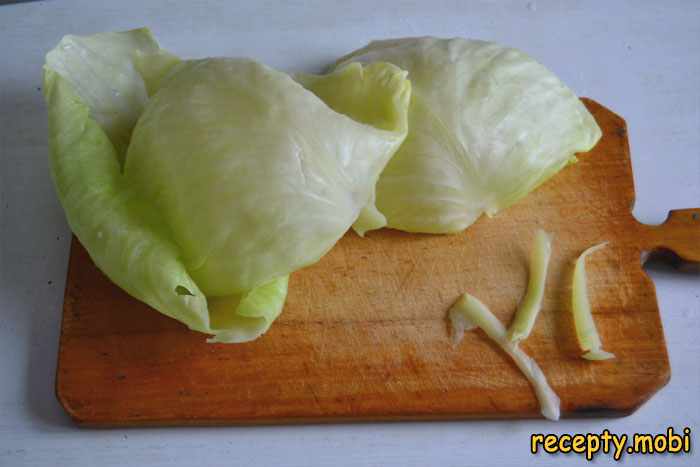
If the leaves come off poorly or are too tough, there is a proven method: put a large pot of water on the heat and bring it to the boil. Lower the whole head into the boiling water for 3–4 minutes, then take it out and let it cool. Now the softened leaves come off easily. Repeat the procedure until you have removed all the leaves you need. Trim the thick parts at the base with a knife or flatten them with a rolling pin.
At the base of the cabbage leaf (where the thickening was), place 1.5–2 heaping tablespoons of filling – the amount depends on the size of the leaf. There should be enough filling for juiciness, but not too much, or the roll will fall apart. Spread the filling across the leaf.
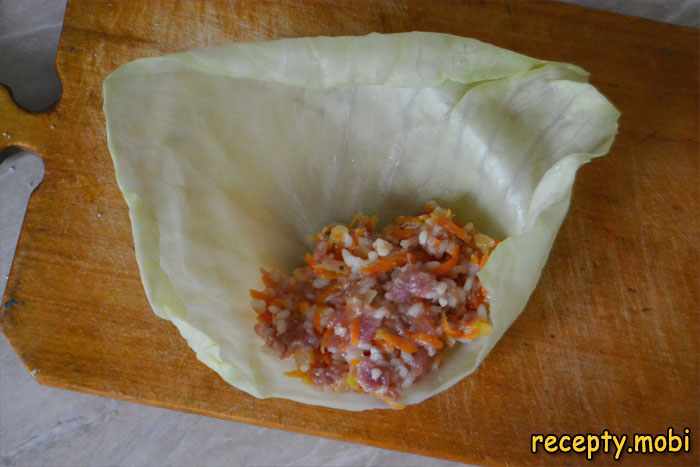
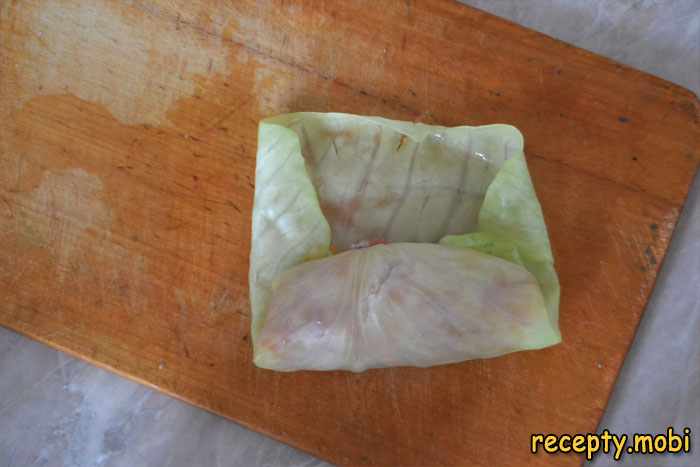
Roll up the cabbage roll: cover the filling with the lower part of the leaf, then tuck the side edges inwards like an envelope and roll it into a tight little tube. The seam should be on the bottom – this way the roll will not unwrap while stewing. The given amount of ingredients makes 12–15 medium-sized rolls.
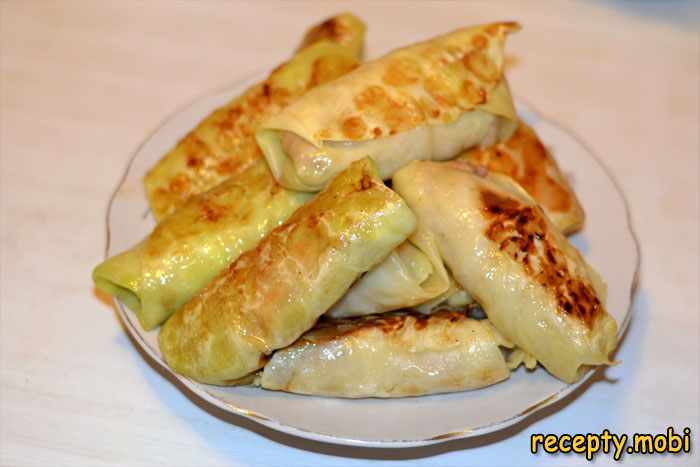
Heat 2 tablespoons of vegetable oil in a frying pan over medium heat. Place the rolls seam side down and fry for 2–3 minutes until golden, then carefully turn them over and fry the other side. The crust will "seal" the rolls so they do not fall apart while stewing. Transfer the fried rolls to a plate.
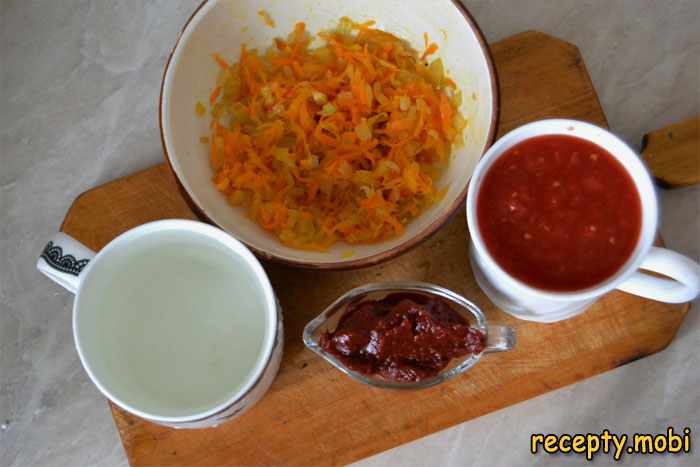
Make the tomato gravy: to the remaining fried vegetables (onion with carrot) add 1 tablespoon of tomato paste, stir and fry for 1 minute. Pour in 200 ml of tomato juice and 250 ml of water, and stir. Season with salt and pepper to taste. If the gravy seems too sour, add 1/4 tablespoon of sugar – it will balance the flavour. Bring to the boil.
Pour a thin layer of gravy (about 100 ml) onto the bottom of a thick-bottomed pot – this will keep the rolls from burning. Pack the first layer of rolls tightly, seam side down, as close together as possible. If there are many rolls, arrange them in several layers, lightly pouring gravy over each layer.
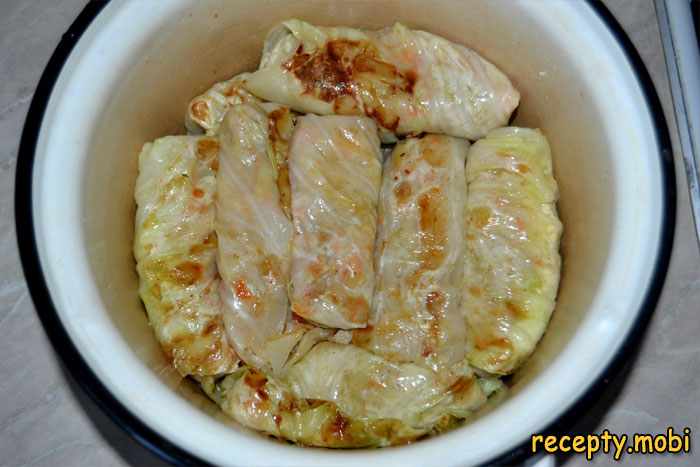
Pour the remaining tomato gravy over the rolls – it should almost completely cover the top layer. Add 1 bay leaf for aroma. Cover the pot with a lid, bring to the boil over medium heat, then reduce to the lowest setting and stew for 40 minutes at a slow simmer. About 10 minutes before the end, add the finely chopped garlic (1 clove) – it gives a wonderful aroma.
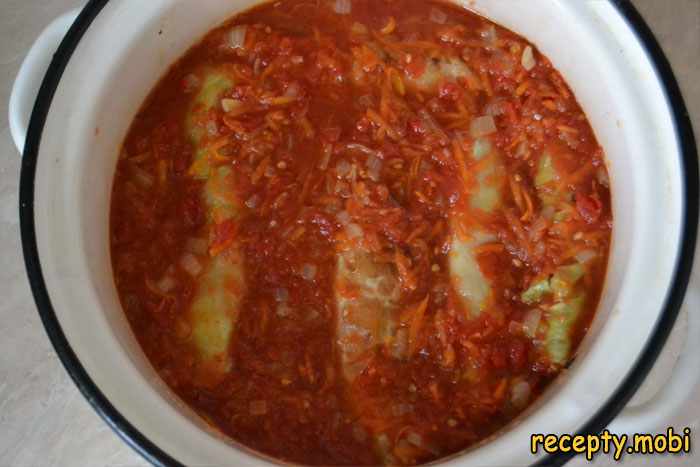
Let the finished rolls stand under the lid for another 10–15 minutes with the heat off – during this time the flavours come together and the cabbage soaks up more of the sauce. Arrange the rolls on plates and pour the tomato gravy generously over them. The cabbage rolls from fresh cabbage are ready! I serve them with sour cream and fresh bread.



Tips
- 1
Choose young cabbage with thin, flexible leaves – they roll up more easily and soften faster while stewing. Winter cabbage varieties need longer blanching.
- 2
The rice in the filling can be replaced with buckwheat, bulgur or pearl barley – each grain gives its own interesting flavour. The pre-cooking time for the grain is also 8–10 minutes until half-cooked.
- 3
Add 100 ml of sour cream to the tomato gravy – the rolls will turn out more tender, with a creamy taste. Add the sour cream at the end, 5 minutes before they are done.
- 4
The cabbage rolls are even tastier the next day – they soak up the sauce completely and the flavours become richer and deeper.
FAQ
Can I freeze cabbage rolls in advance? +
Yes, raw or fried (but not stewed) rolls freeze very well. Lay them out on a board in a single layer, freeze them, then transfer to a bag – this way they will not stick together. Stew them straight from the freezer without thawing, increasing the stewing time by 15–20 minutes. Finished stewed rolls can also be frozen together with the gravy.
What can I use instead of pork mince in cabbage rolls? +
Use a mixed mince (pork + beef) for a richer flavour, or chicken/turkey mince for a lighter, diet-friendly version. With chicken mince the rolls turn out less fatty, but add 1 tablespoon of vegetable oil to the filling for juiciness.
Why do cabbage rolls fall apart while cooking? +
The main causes: the cabbage leaves are not soft enough and break when rolling; the rolls are poorly wrapped or placed seam side up; the boil is too vigorous during stewing. Place the rolls seam side down, tightly against each other, and stew on the lowest heat at a barely noticeable simmer.
- Comment
or post as a guest
Be the first to comment.