avg —
Pork Roll in the Oven with Pear Filling

Instructions
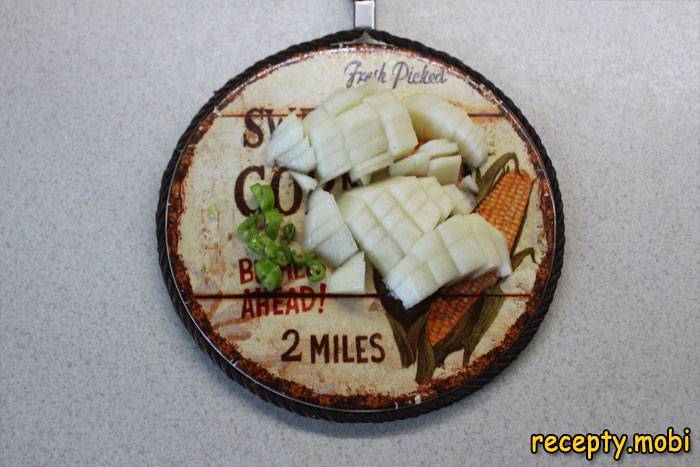
I start by cutting the pear. I peel the fruit, remove the core and cut it into neat 1–1.5 cm cubes. Cubes that are too small dissolve into the filling, while ones that are too large fall out when you slice the roll. I use firm pears such as Conference or Duchesse – soft varieties go to mush.
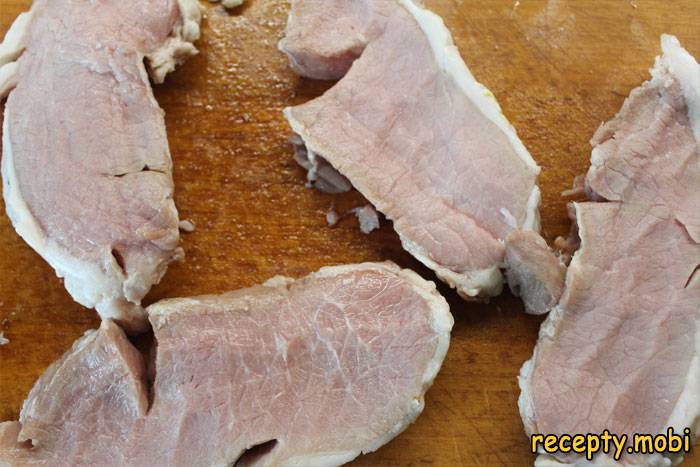
I cut the loin into medium-thick slices, 1–1.5 cm. The meat must be at room temperature – straight from the fridge the fibres are tense and the loin can tear when beaten.
I cover the pieces of meat with cling film. Without it, splashes of meat fly around the kitchen and the fibres get damaged more, so the roll can fall apart when you wrap it.
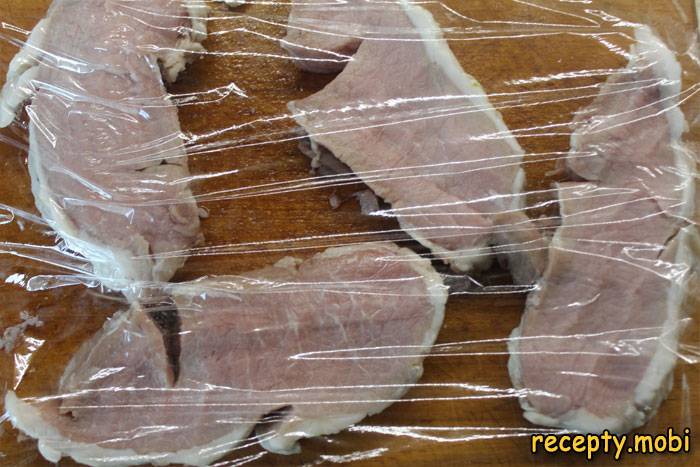
I beat the meat well to a thickness of exactly 0.5 cm. I use the smooth side of the mallet – the toothed side damages the fibres and the meat tears. A thickness of 0.5 cm is ideal for rolling and baking through at the same time.
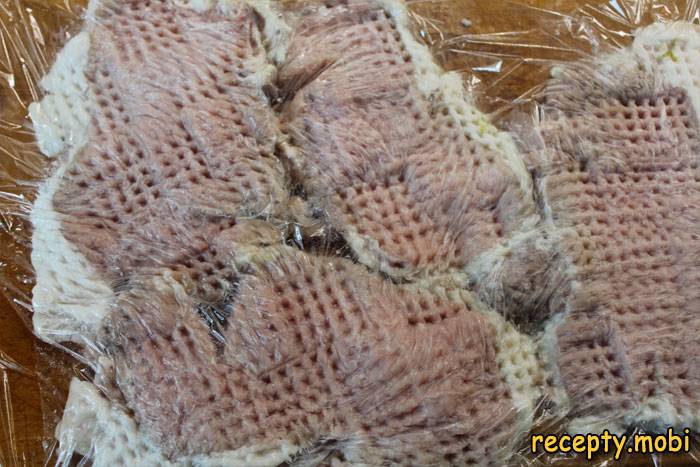
I pepper and salt the meat on both sides. I rub the salt and pepper thoroughly into the meat fibres by hand, so the seasoning gets deep inside rather than staying on the surface. This matters: salt rubbed in works better than salt simply scattered on top.
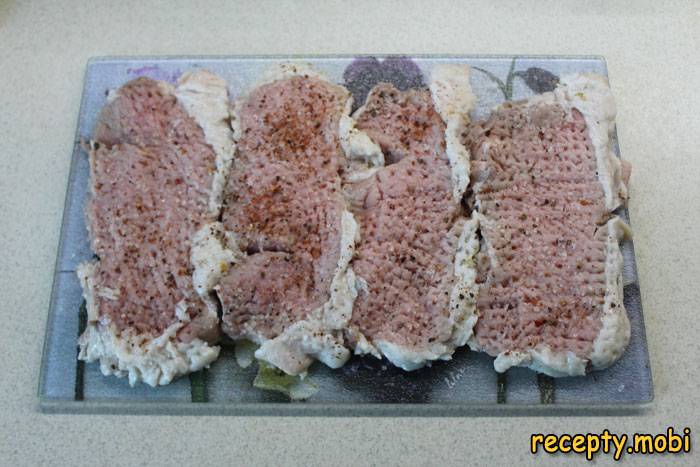
I lay the beaten pieces of meat tightly on a cutting board, overlapping them by 1–2 cm. This way the roll won't come apart at the seams when you wrap it. Along the edge closest to me I place a layer of pear and chopped chilli.
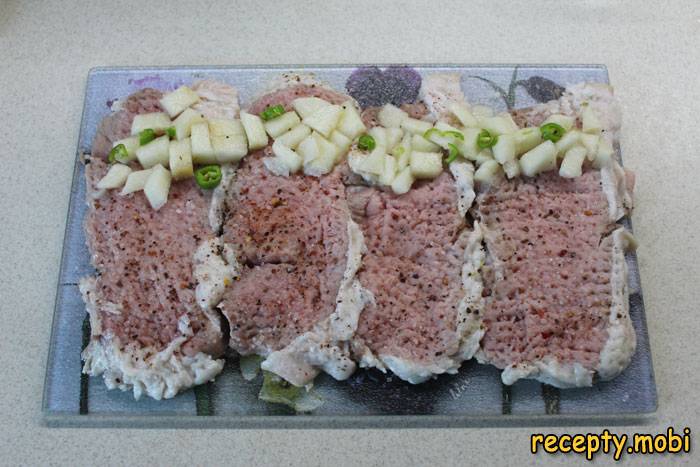
I cover the pear layer with tartar or sour cream sauce – it gives the finished dish creaminess and stops the filling drying out during baking.
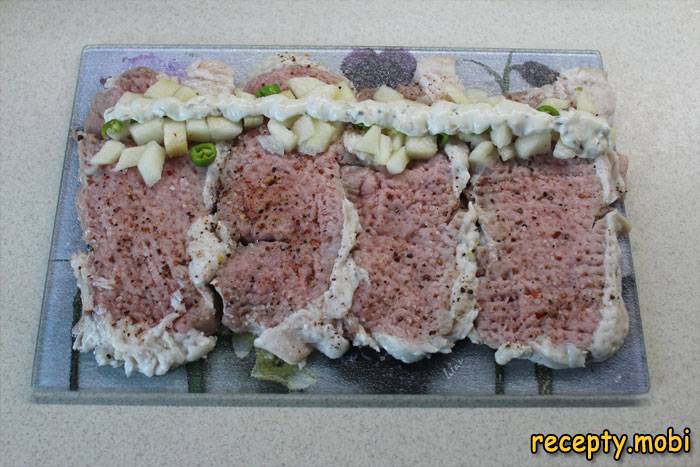
I carefully roll up the roll with wet hands, working away from me. Damp hands don't stick to the meat, so the shape comes out neat. If the roll is loose, tie it with kitchen twine in 3–4 places so it doesn't unroll during baking.
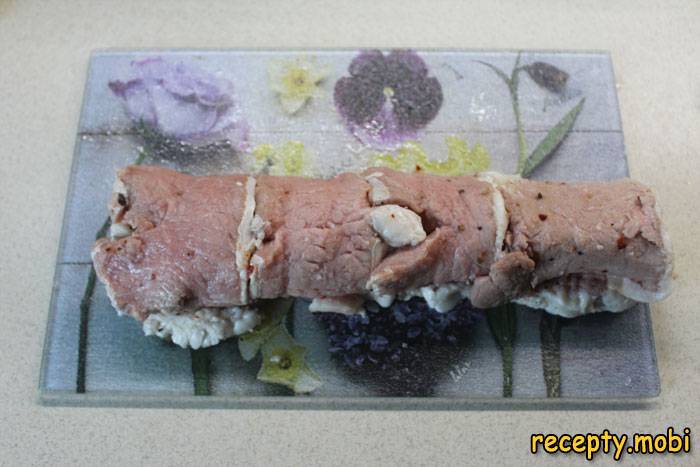
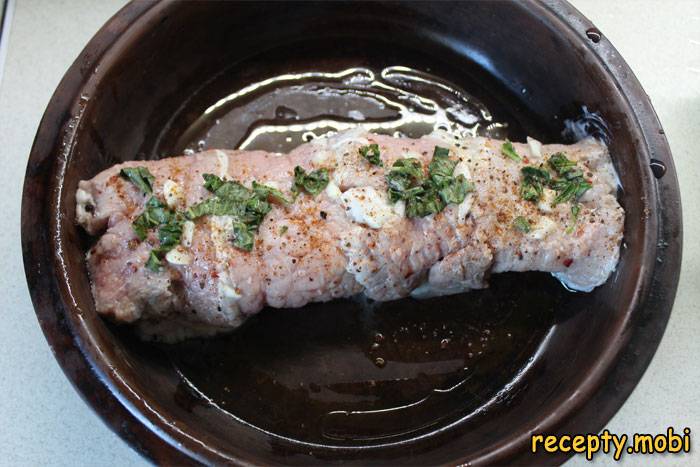
I grease the pork roll with vegetable oil on all sides – it creates a golden crust. I sprinkle chopped garlic and basil on top. I put it in the oven for about 30 minutes at 180–200 °C. I check it is done by cutting into it – the cut should be light, with no pink juices.
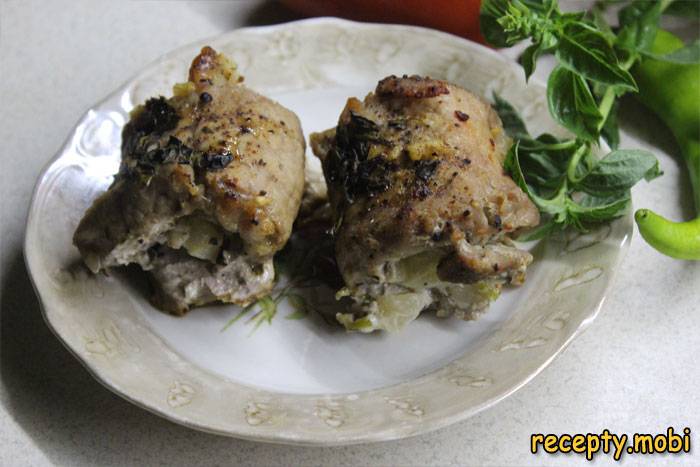
The finished roll separates easily into small individual rolls – during baking the filling sets and doesn't fall out. I arrange the segments on a serving dish cut side up, so the lovely filling is on show.


Tips
- 1
Always beat the meat through cling film – this keeps splashes of meat from flying around the kitchen and damages the fibres less.
- 2
Pear adds juiciness – choose ripe but firm fruit such as Conference or Duchesse. Soft varieties go to mush.
- 3
Roll the roll up with wet hands – this stops the meat sticking and gives a neat shape. A similar trick works for meat roll with egg.
- 4
Serve with boiled rice, country-style potatoes or roasted root vegetables – a simple side dish sets off the refined flavour of the roll.
FAQ
Can I replace the pear with other fruit? +
Yes, ripe apples such as Antonovka or Gala (which give a light tartness), prunes (a sweet, smoky note), dried apricots (a sweet, oriental character) or quince (firm and aromatic) all work well. Each fruit gives its own shade of flavour. Fresh peaches, apricots and figs work well too. Soak dried fruit beforehand for 15 minutes in warm water so it softens. You can combine them – for example, pear with prunes, or quince with dried apricots.
At what temperature should I bake the pork roll? +
180–200 °C for about 30 minutes is ideal. At a higher temperature (220 °C) the crust will burn while the meat inside stays raw. At a lower one (160 °C) the roll comes out pale and less juicy. Check it is done by cutting into it – the juices should run clear, with no pink. You can use a cooking thermometer: the internal temperature of the pork should be 71 °C. If the crust browns too early, cover it with foil and continue baking.
What can I use instead of tartar sauce in the filling? +
Thick sour cream (20–25%), homemade mayonnaise, a creamy sauce (béchamel or Alfredo) or a cream cheese such as Philadelphia with herbs all work. Each sauce gives its own character: sour cream is refreshing, mayonnaise is rich, cream cheese is delicate. You can use a mix of sour cream with mustard and herbs for a piquant accent. Greek yoghurt with chopped dill is the lightest option. The main thing is that the sauce should be thick enough not to leak out during baking.
- Comment
or post as a guest
Be the first to comment.