avg —
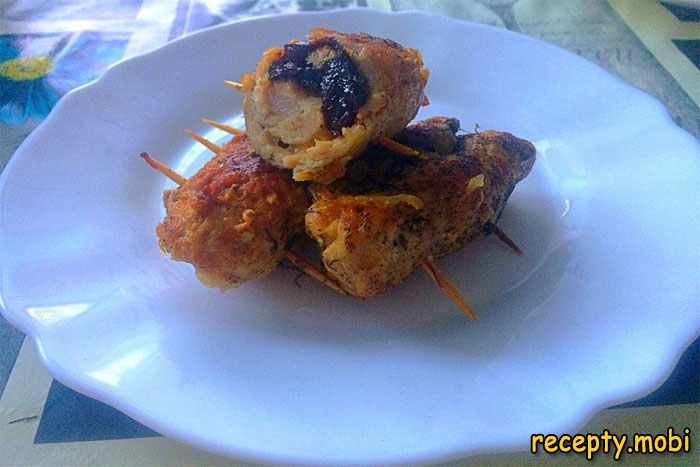
Pork meat rolls with filling in a frying pan

Instructions
Wash the pork meat (cutlet) thoroughly under running water and dry it with paper towels. Dry meat slices better, fries more evenly and does not spatter the oil during frying.
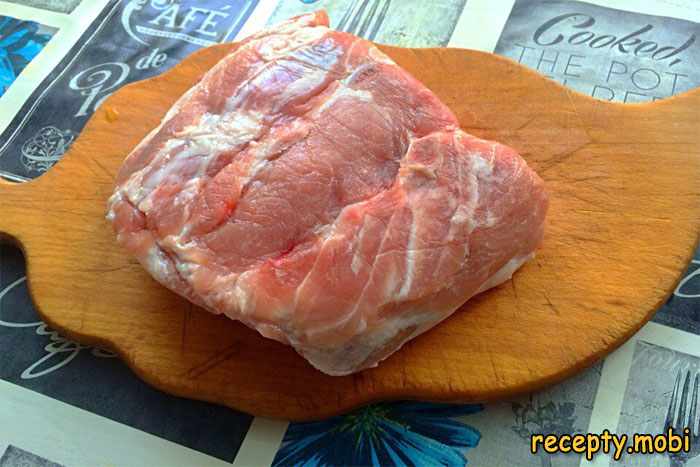
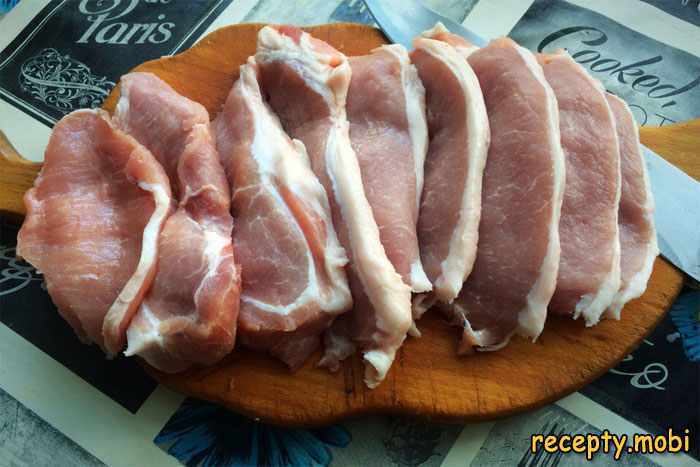
With a sharp knife, divide the meat into portion-sized pieces 4–5 cm thick each. This thickness lets you pound the sheet thin enough (down to 0.5 cm) but without tearing – pieces that are too thin will tear while pounding.
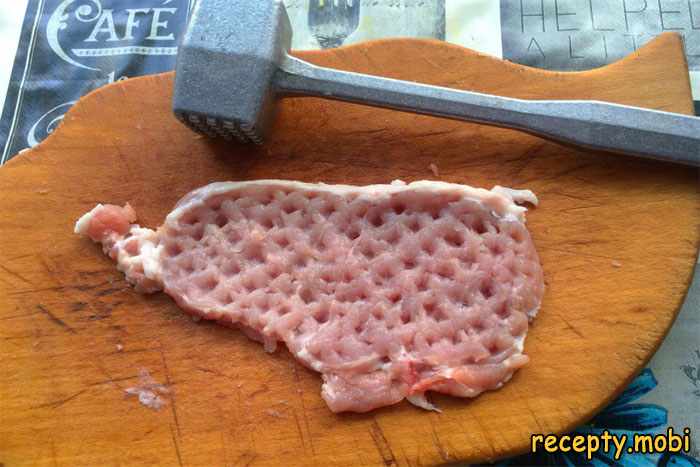
Using a kitchen mallet, pound each piece on both sides to a thickness of about 0.5 cm. To protect the meat from tearing and to prevent spattering, I use cling film – I cover the meat with it and pound through it.
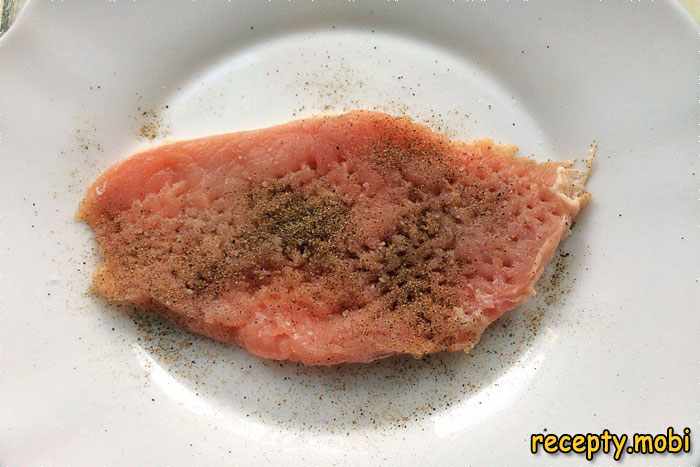
Salt each side of the pounded sheet, sprinkle with spices and herbs and rub them thoroughly into the meat by hand. I use black ground pepper, paprika, coriander, a little ginger, rosemary and definitely basil. The spices need to be rubbed in rather than just sprinkled on – that way they penetrate the fibres of the meat and release their aroma during frying.
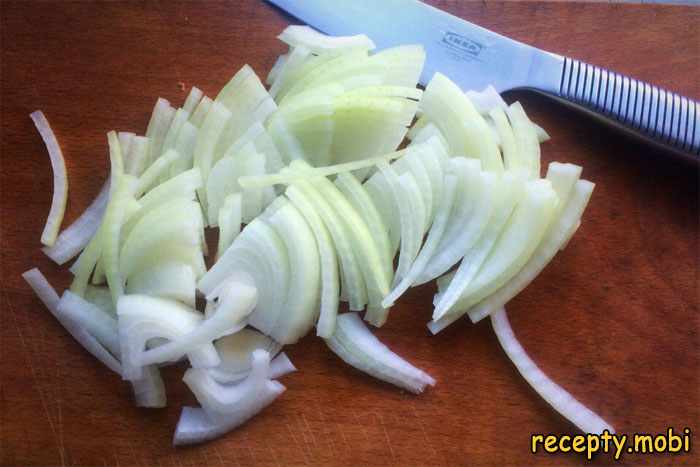
Peel the onion, wash it and cut it into thin half rings. During simmering the onion gives sweetness and creates an aromatic gravy in which the rolls become even softer and juicier.
Cut the mozzarella into any shape you like – I prefer thin strips, so the cheese is distributed evenly inside the roll and stretches nicely when heated.
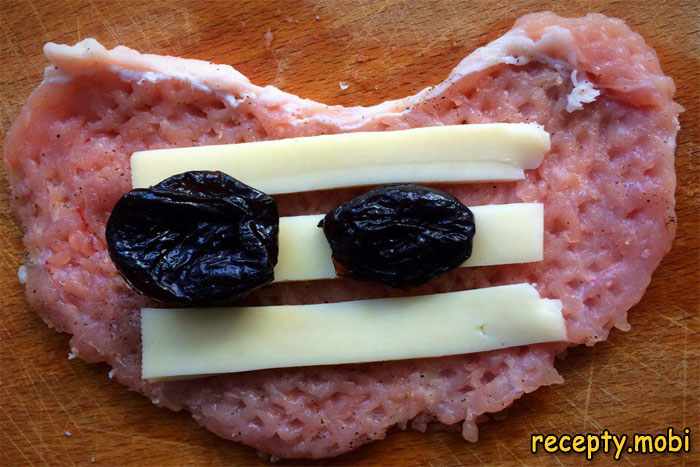
On each pounded sheet of pork place 2–3 pitted prunes and a few strips of mozzarella. Carefully but tightly roll the meat into a roll and secure it with a toothpick straight through all the layers so the roll does not unfold during frying. Repeat with all the remaining sheets. The prunes give the meat a piquant sweetness and aroma, and the mozzarella gives creamy tenderness and stretchiness.
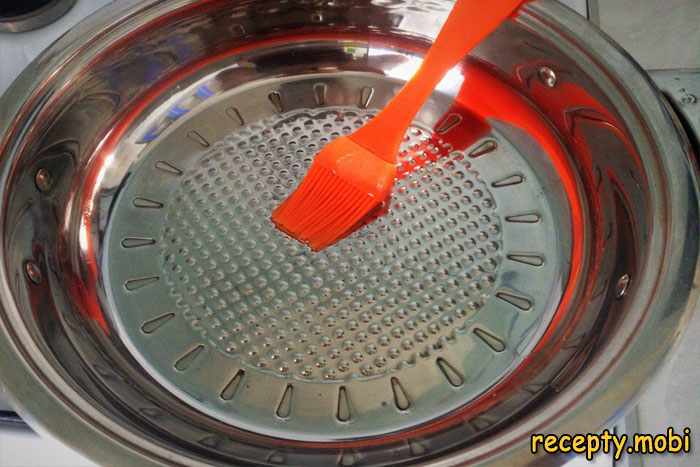
Heat a deep frying pan with vegetable oil (100 ml) over high heat. The oil should be well heated – this is important so that the rolls set with a crust straight away, the juices are sealed inside and the filling does not leak out.
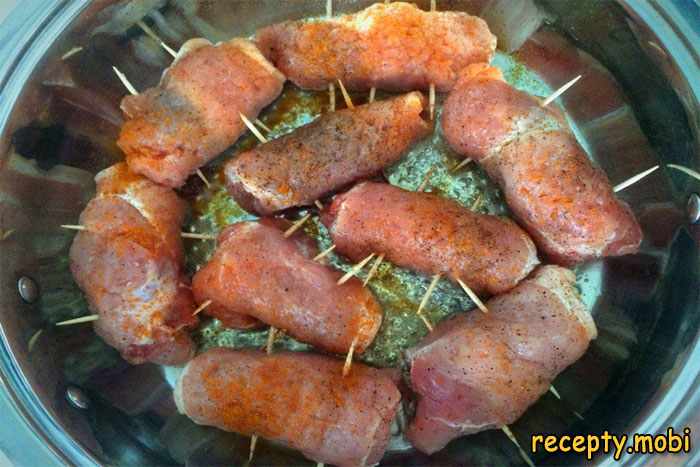
Fry the rolls over high heat on both sides (turning every 3–4 minutes) until an appetising golden crust forms. High heat seals the meat juices inside and keeps the filling from leaking out.
To the fried rolls add the chopped onion, fresh chopped dill and a little dried garlic (optional), pour in 0.5 litres of water and cover with a lid. The water with onion and herbs creates an aromatic broth in which the meat simmers until completely tender and absorbs all the aromas.
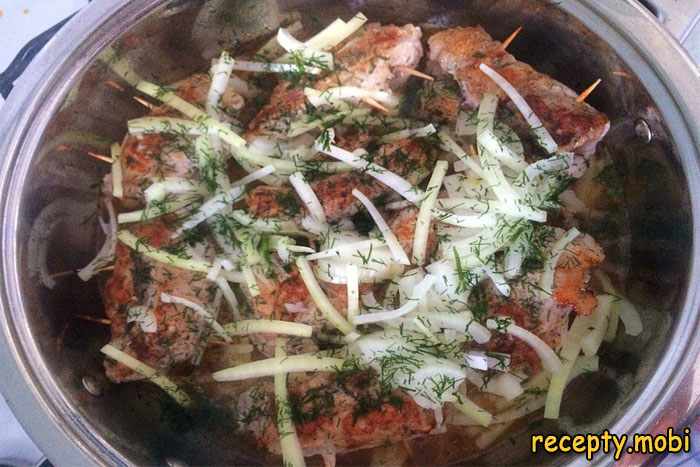
Lower the heat to a minimum and leave to simmer under the lid for 60 minutes. After an hour the meat becomes incredibly tender and soft, and comes apart easily with a fork. Remove the toothpicks only after the rolls have completely cooled – hot meat can unfold. Long simmering over low heat makes the pork soft, and the filling fully permeates the meat from the inside, creating a harmonious flavour.


Tips
- 1
For the rolls, choose pork from the hind leg (ham) or loin (carbonade) – these are the most suitable cuts for cutlets and rolls: they are soft, lean and pound well.
- 2
It is better to take prunes that are pitted, soft and large. If they are a little dry, soak them for 15 minutes in warm water, then pat them dry – they will become softer and juicier.
- 3
Instead of mozzarella you can use any cheese that melts and stretches well: suluguni, gouda, cheddar or Russian cheese. The main thing is that the cheese is good quality and not a cheese product.
- 4
Do not remove the toothpicks from the hot rolls straight after cooking – the meat may unfold and the filling will leak out. Wait until the rolls have cooled to room temperature, then they will hold their shape well.
FAQ
Can I cook the rolls in the oven instead of a frying pan? +
Yes. After frying in the pan until a crust forms, transfer the rolls to a baking dish, add the onion and herbs and pour in water or broth (0.5 l). Cover with foil and bake at 180°C for about 40–50 minutes. For the last 10 minutes remove the foil so a golden crust appears.
What other fillings are suitable for pork meat rolls? +
There are many options: mushrooms (button or oyster) with onion and cheese, spinach with cream cheese or brynza, bell pepper with garlic and herbs, walnuts with dried fruit, ham with cheese and herbs. The basic technique stays the same – pound, fill, roll, secure, fry and simmer.
Why do the rolls open up during frying? +
Most often the reason is insufficient securing – the toothpick needs to be inserted straight through all the layers of meat, not just on top. The meat may also be too thick or not pounded enough. Another reason is too much filling: use no more than 1 tablespoon of filling per roll, otherwise it will be squeezed out.
How long can the finished rolls be stored? +
I keep the finished rolls in the refrigerator in a closed container for up to 3 days. What is more, they become even tastier when cold – the meat fully absorbs the sauce and the aromas of the filling. Before serving I reheat them in the microwave or in a pan under a lid.
Can I freeze the raw or finished rolls? +
Yes, you can freeze both raw rolls (after forming and securing them with a toothpick) and finished ones. I freeze raw rolls on a board, then transfer them to a bag – I keep them for up to 2 months. I cool finished rolls, remove the toothpicks and freeze them in portions – I keep them for up to 1 month. I defrost them gradually in the refrigerator.
- Comment
or post as a guest
Be the first to comment.