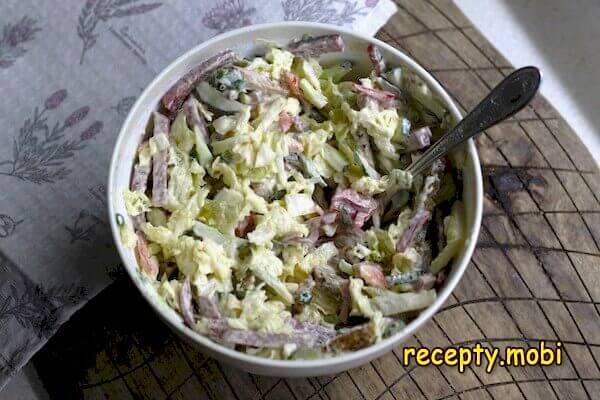
avg —
Pork in Sweet and Sour Sauce Chinese Style with Pineapple

Instructions
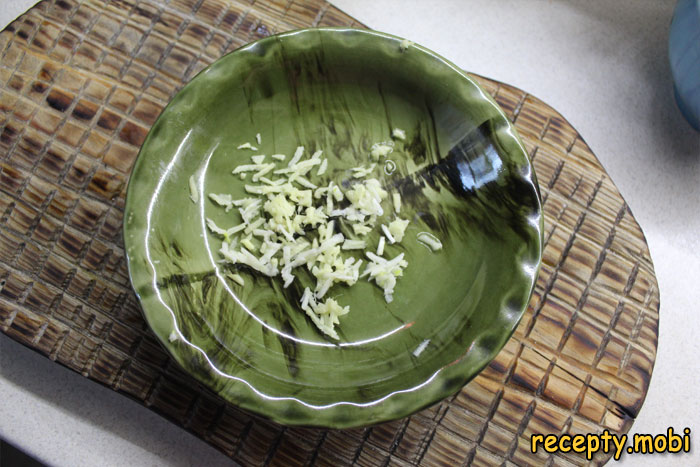
Grate the fresh garlic and ginger on a fine grater to a puree. The ginger must be fresh – dried ginger gives a completely different and sharper taste. Fresh ginger gives a bright, lemony-spicy aroma that forms the characteristic "Chinese" profile of the dish. Without it there will be no real Asian note.
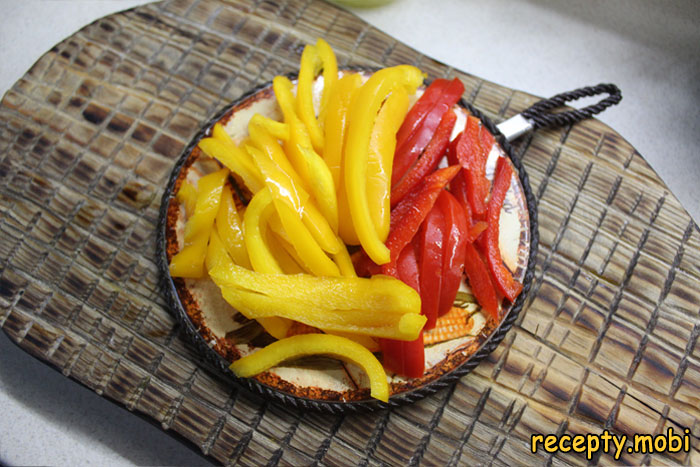
Cut the bell pepper into thin strips 5–7 mm wide. I use red or yellow pepper – they look brighter and are sweeter than green. Thin strips are important: with quick frying in a wok (or pan) the pepper stays crisp and keeps its colour. Thick pieces turn soft and lose their characteristic crunch.
Cut the pork into thin strips 1 cm thick, across the grain. Use a lean cut – tenderloin or shoulder without fat. Cutting across the grain makes the meat more tender. To make it easier to slice thinly, freeze the pork slightly for 20–30 minutes – the knife will cut more evenly.
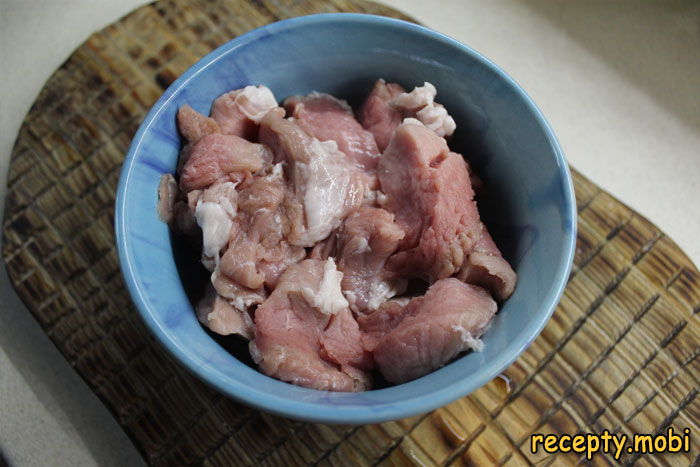
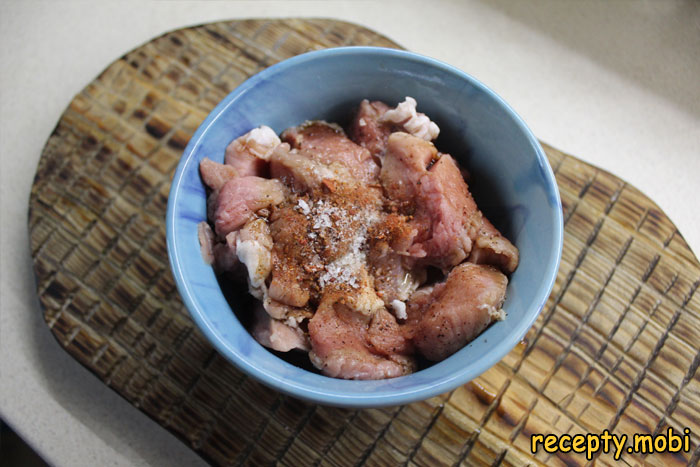
Marinate the meat in soy sauce with freshly ground pepper for 30 minutes at room temperature. The soy sauce replaces salt and soaks the meat with umami flavour, while the pepper adds a little kick. Do not over-salt – soy sauce is very salty on its own. 30 minutes is optimal – any longer and the marinade starts to "cook" the meat.
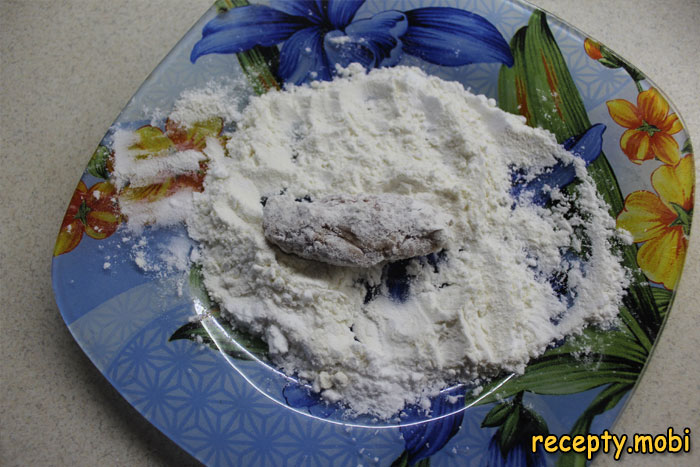
Mix the flour and starch 50/50 on a flat plate. Coat each piece of marinated meat in this mixture. The starch is the key to a crispy crust: when frying it creates that characteristic "restaurant" effect. Flour alone gives an ordinary soft crust. Potato or corn starch work equally well.
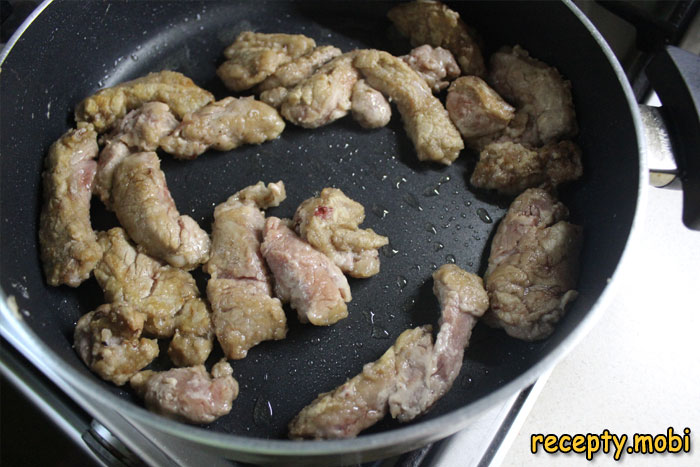
Fry the pork in well-heated oil for 3–4 minutes until golden and crisp. The heat should be above medium – on low heat the crust will not form and the meat will "weep". Transfer the cooked pork from the pan onto a plate lined with paper towel so the excess fat can drain off.
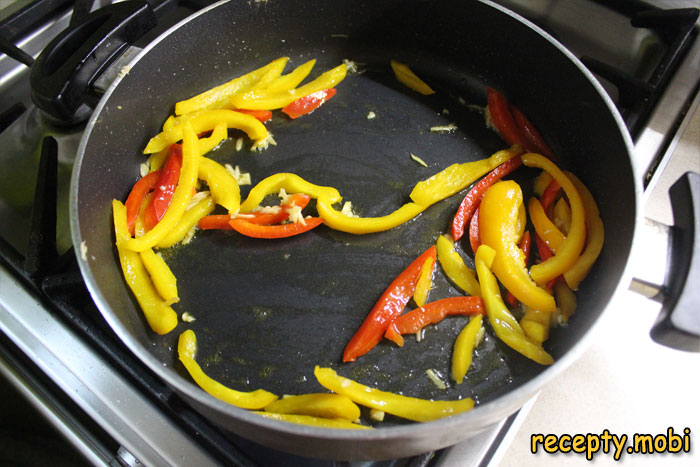
In the same oil and the same pan, fry the bell pepper for 2–3 minutes – it should soften slightly but keep its crunch and bright colour. Using the same oil is an important point: it holds the meat juices and gives the vegetables a deep meaty flavour.
Add the grated ginger and garlic, the remaining soy sauce, the pineapple syrup and the pineapple pieces. Simmer for 10 minutes over medium heat until it thickens, then add the tomato paste for a nice red colour and a richer sauce. The sauce should become thick and glossy.
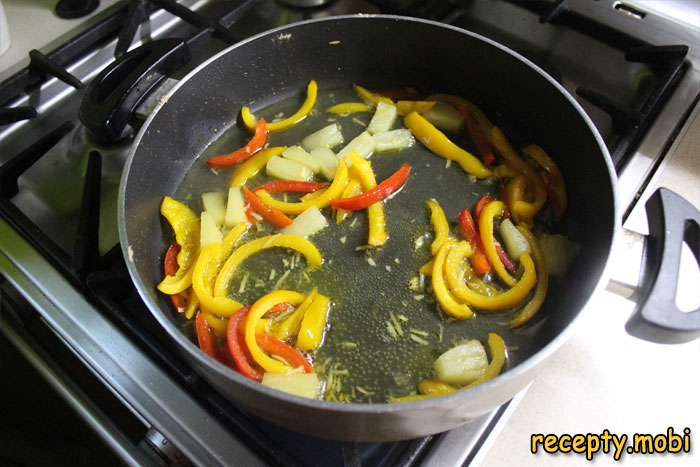
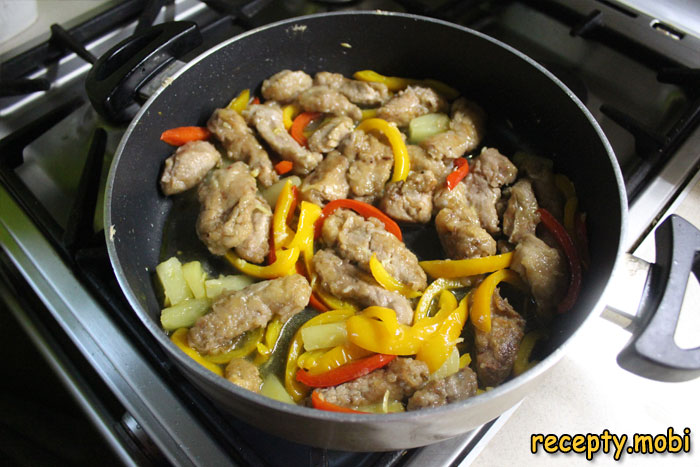
Return the fried pork to the pan with the sauce and heat for another 3–5 minutes so the meat soaks up the flavour of the sauce. Do not cook it for long – the pork will absorb too much sauce and lose the crispy crust we achieved with the starch.
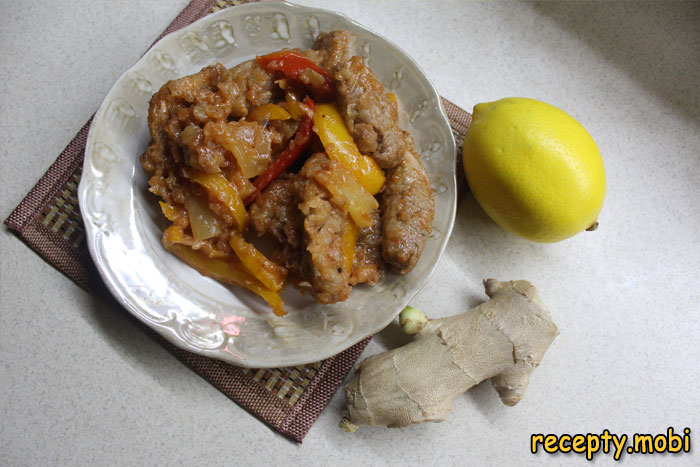
The Chinese-style pork in sweet and sour sauce is ready! I serve it on boiled basmati rice with spring onion on top – the classic Chinese way of serving. The dish has 183 kcal per 100 g.


Tips
- 1
Always serve it with rice or egg noodles – the sauce soaks into the side perfectly and completes the Chinese character of the dish.
- 2
Use two colours of bell pepper (red and yellow) for a bright, restaurant-style presentation.
- 3
Fresh ginger gives a much brighter aroma than dried – do not substitute it. I use a similar principle for my chicken teriyaki.
- 4
You can replace the pork with chicken fillet for a lighter version – the cooking principles are the same, but reduce the frying time to 2–3 minutes.
FAQ
What can I use instead of pineapple in this dish? +
Mango works well (a more exotic sweet option), as do peaches or nectarines (a delicate sweet-and-sour note), sweet pears (a soft, gentle flavour) or apples (a familiar homely accent). Each fruit gives the dish its own character. Among canned alternatives, try peaches in syrup or mandarins. Do not skip the sugar – it is needed for the classic sweet-and-sour balance. Without fruit you simply get pork stewed in soy sauce – also tasty, but not "Chinese style".
Can I make it without starch in the coating? +
Yes, use flour alone, but the crust will be less crisp and softer. Starch is an essential ingredient for that characteristic "restaurant" crispy crust. If you really have no starch, use cornflakes crushed into crumbs (they give a similar crunch) or breadcrumbs (a classic European crust). Potato starch is the most common in Russia, corn starch in Asia. Both work equally well in this recipe.
How long does the finished dish keep? +
In the refrigerator in a tightly closed container – up to 2 days without loss of quality. On the second day the flavour becomes richer, but the crust softens. Reheat in a pan over high heat for 3–4 minutes – some of the crispness will return. A microwave is not suitable for reheating – the meat becomes "boiled" and loses all its appeal. Cook in portions for just 1–2 servings at a time. I do not recommend freezing – pork in sauce loses its texture after thawing.
Which soy sauce is best to use? +
Classic dark soy sauce (Kikkoman, Heinz, Sen Soy) gives a deep, rich flavour and a nice brown colour to the dish. Light soy sauce is saltier and less aromatic – it suits marinades but not braising. Sweet Japanese soy sauce softens the balance of the dish. Do not use cheap sauces made from flavourings – they give a flat, characterless taste. A quality sauce made by natural fermentation is the foundation of a successful Asian dish.
- Comment
or post as a guest
Be the first to comment.