avg —
Odjakhuri in Georgian style

Instructions
I prepare the ingredients for the marinade – the whole recipe begins with marinating, 6–8 hours before the main cooking.
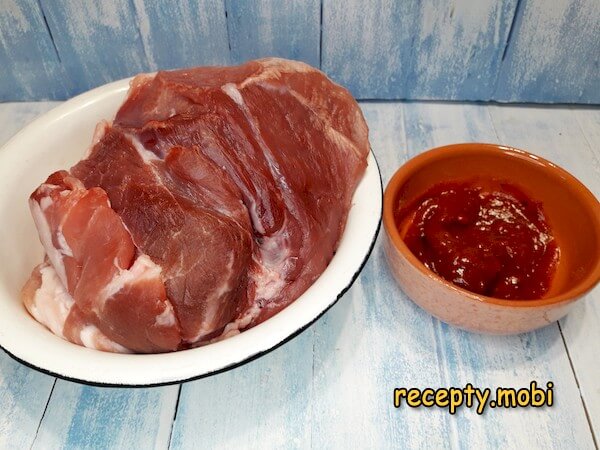
I prepare the rest of the ingredients for odjakhuri Georgian style – all the spices and vegetables should be at hand by the time the potatoes are ready to be seasoned.
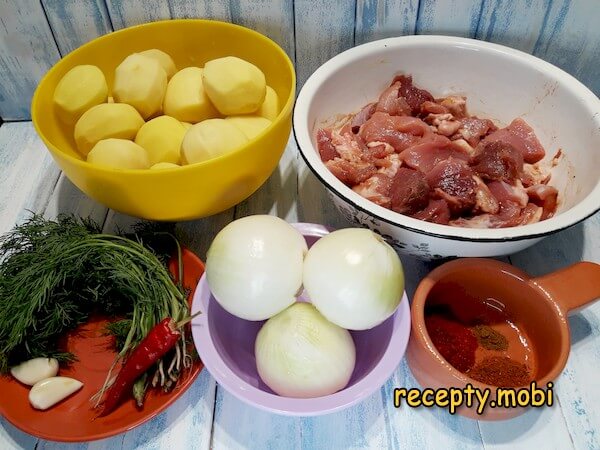
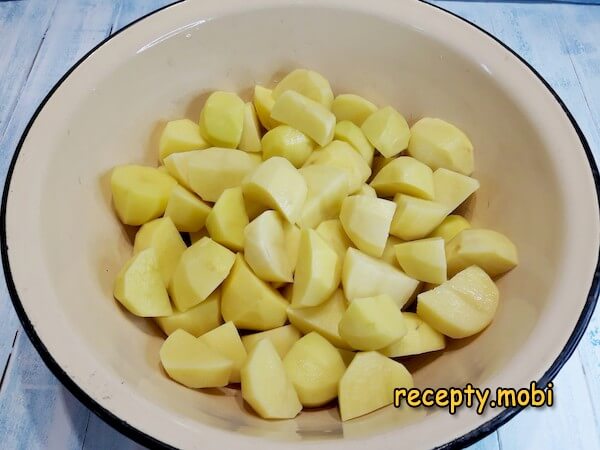
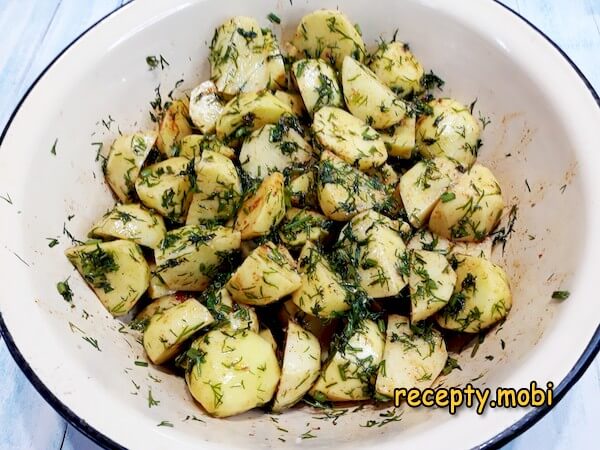
The meat cooks much faster than the potatoes, so I start the process with them. I cut the tubers into even cubes and put them in a deep bowl – a uniform size means they bake evenly.
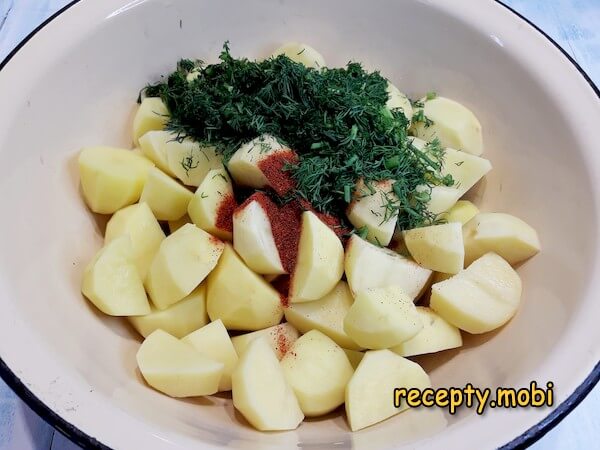
To the same bowl I add all the dry seasonings and the finely chopped herbs – the Georgian accent comes precisely from the khmeli-suneli and cilantro. If you like, finely chop the chili pepper and add it to the mixture.
I add the salt and pour in the vegetable oil – the oil distributes the spices evenly over the surface of the potatoes and keeps them from burning in the oven.
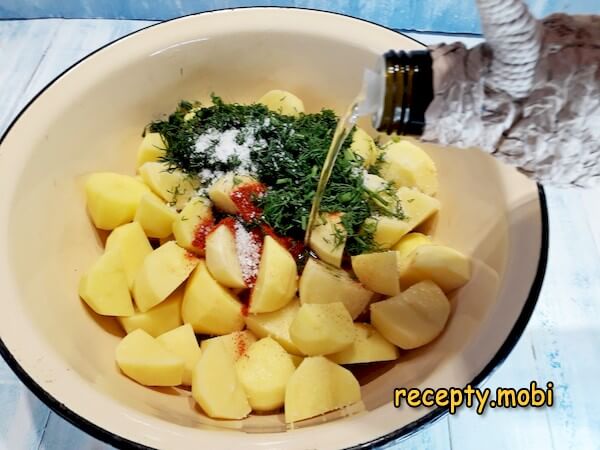
I mix everything together so that each piece is coated with oil and seasonings – this gives every potato cube its characteristic spiced flavour.
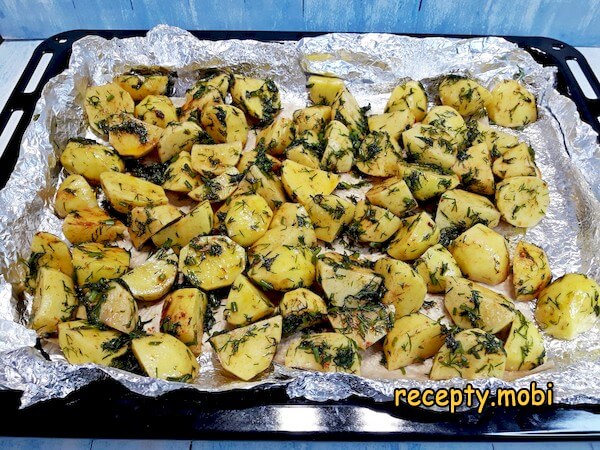
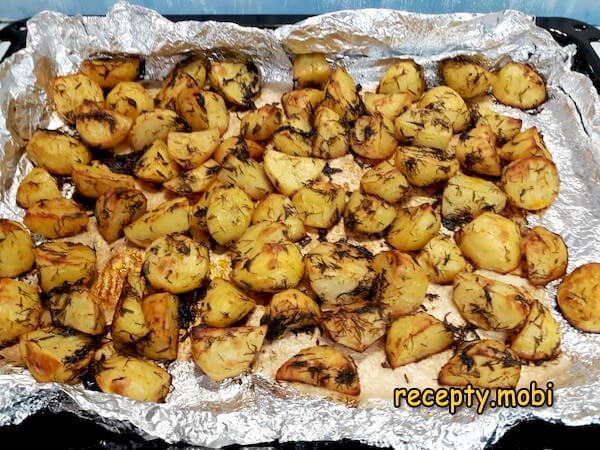
I set the oven to 190 degrees. I line a baking tray with foil and then parchment – the foil underneath keeps the juices from burning through the tray, and the parchment on top separates the potatoes from the foil. I spread all the potatoes on it and pour over any oil left in the bowl. I bake the tubers for about an hour, checking with a fork, which should pierce the potato easily.
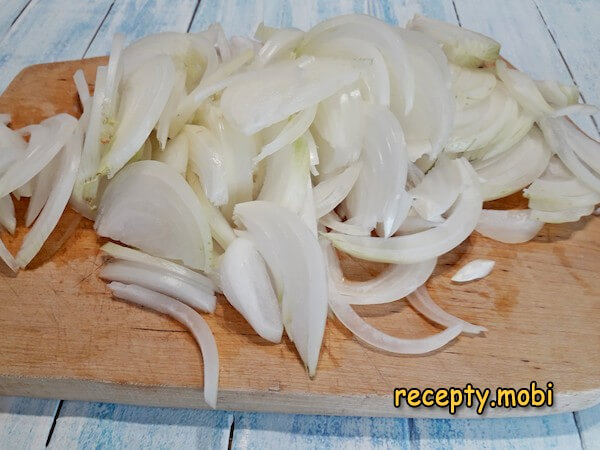
After about half an hour I can start on the meat. First I prepare the slicing – I thinly cut the onion into half-rings. Thin slicing makes the finished dish tender and the onion fries faster.
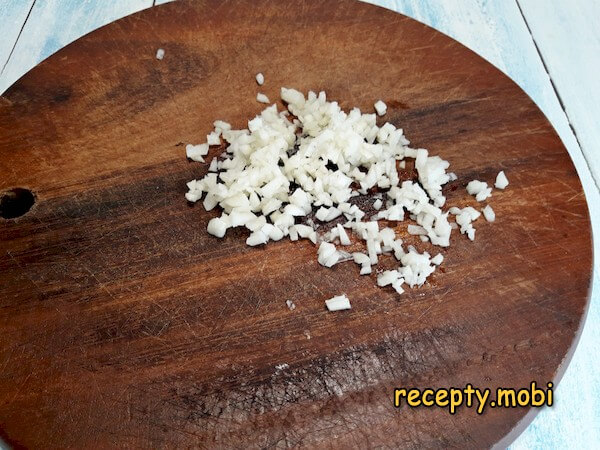
I finely chop the garlic with a knife – with a knife, not a press: a press squeezes out a bitter juice that would spoil the whole flavour of the dish.
In heated oil with a small pinch of salt added (so the meat does not spit its juice), I fry the pieces of pork over medium heat until a golden crust forms. The crust seals the juices inside the piece, so the meat stays succulent.
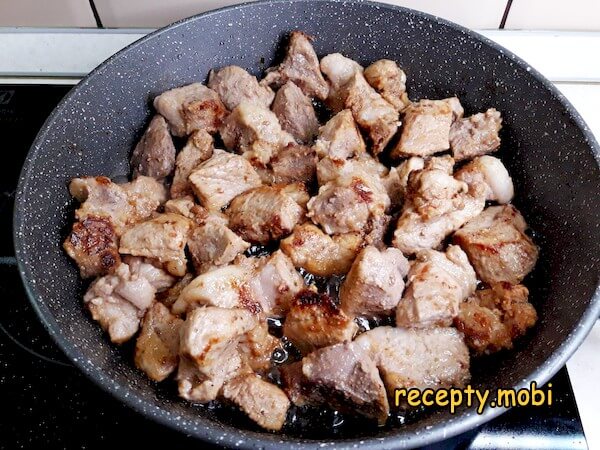
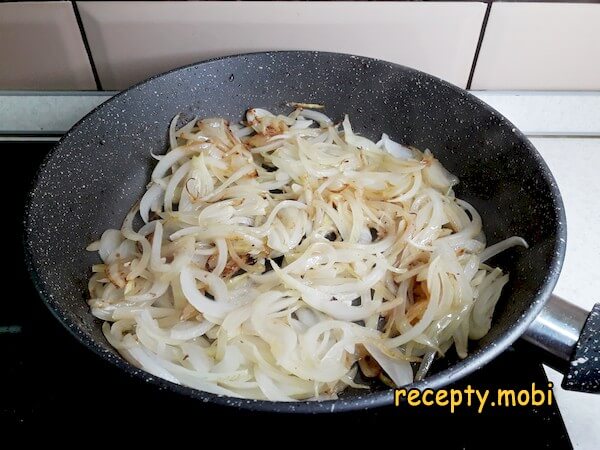
I transfer the meat to a plate and, in the same fat, fry the onion until it just changes colour – the meat fat fills the onion with flavour and gives the dish its characteristic depth. I leave a small part of the onion raw – it will come in handy for serving the finished dish on top.
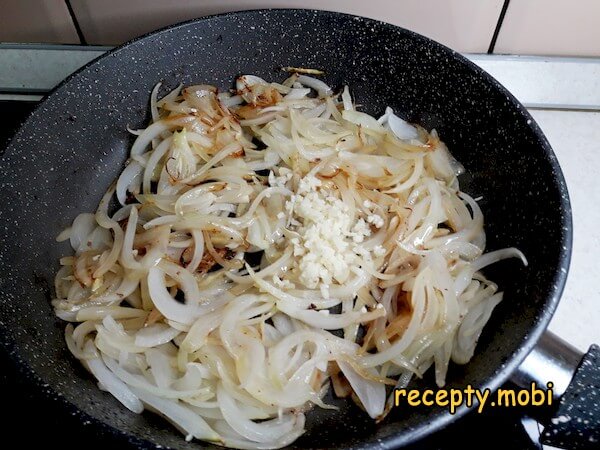
Next I add the garlic to the skillet and let everything simmer together for about two minutes, until a warm garlic aroma appears, then I take the fried mixture off the heat. Garlic right at the end – this keeps its aroma at its strongest.
I check the potatoes for doneness – by this point they should already be ready: golden on the outside, soft on the inside.
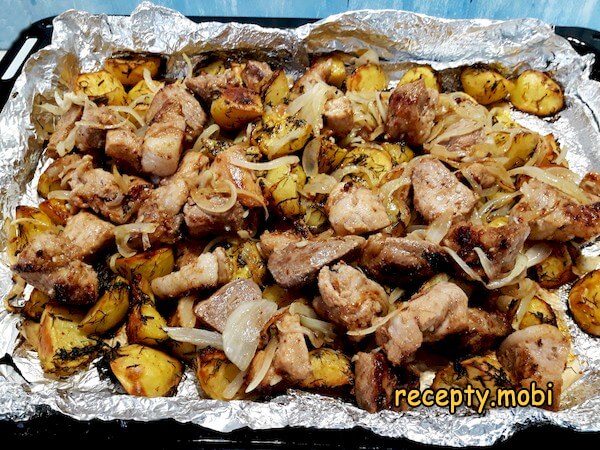
I mix the potatoes with the meat and the onion – at this moment all the flavours come together into the characteristic odjakhuri.To serve, I transfer the odjakhuri Georgian style to a heated clay "keci" so the dish stays hot for a long time. If you do not have this national vessel, you can serve it in heated thick-walled skillets – they hold heat quite well too. On top I scatter the meat with thin strips of raw onion and fresh herbs. This delicious, hearty dish will look wonderful on a festive table.


Tips
- 1
A 6–8 hour marinade is the "secret" to flavourful pork. Less than 4 hours and the adjika does not have time to penetrate the fibres, so the meat stays bland inside. Six to eight hours in the fridge lets the adjika soak evenly into every piece, and the meat takes on its characteristic Caucasian flavour.
- 2
Potatoes in the oven, meat in the skillet is the "secret" to good texture. Cooking everything together in a skillet means the potatoes never form a golden crust and turn to mush. Cooking them separately gives each ingredient its own ideal texture. The same approach works in Georgian-style beef in the oven.
- 3
Meat fat for the onion is the "secret" to depth of flavour. Onion in fresh oil gives an "ordinary" taste. Onion fried in the fat from the pork picks up the meaty aroma and creates the depth that is characteristic of odjakhuri.
- 4
Raw onion at serving is the "secret" to freshness. With only fried onion the dish feels "heavy", without a fresh accent. Thin strips of raw onion on top add a sharp, fresh note that balances the richness of the meat. The same principle is used in chicken chakhokhbili Georgian style.
FAQ
Which cut of pork should I choose for odjakhuri? +
The "classic" choice is the neck or collar (1.5 kg; the medium layer of fat keeps the meat juicy after frying). Alternatives: boneless hind leg (1.5 kg, leaner), pork loin (1.5 kg, premium, the most tender part), tenderloin (1.5 kg, needs a shorter fry or it will dry out). Do not use: pork shoulder with a lot of membranes (the meat will fall apart while frying), bacon or brisket (too fatty, not suitable for odjakhuri). Ideally use fresh chilled meat that has not been thawed more than once. Meat on the bone takes longer to cook, so it is better to take it boneless.
What can replace khmeli-suneli in odjakhuri? +
The direct equivalent is utskho-suneli (1 teaspoon – a purely Georgian spice, a little stronger in aroma). Alternatives: a mix of dried dill, basil, coriander and fenugreek, 0.2 teaspoon of each (a homemade substitute), a ready-made "Georgian blend" (1 teaspoon), or Svan salt (1 teaspoon – it replaces both the salt and the spices). Do not use "Provençal herbs" – that is an Italian accent, not suited to a Georgian dish. Curry does not suit it either – that is Indian cuisine. At a pinch you can go without khmeli-suneli altogether – the dish will be less authentic, but still tasty thanks to the paprika, cilantro and adjika.
How long does cooked odjakhuri keep? +
In the fridge in a tightly closed container – up to 3 days without losing quality. On the second day the flavour becomes richer – the potatoes and onion absorb the meat juices more deeply. Before serving I reheat it in a skillet under a lid for 5–7 minutes over low heat, or in the oven for 10 minutes under foil. In the microwave – 3–4 minutes under a lid. I do not put it in the freezer: after thawing the potatoes turn watery and lose their structure. Fresh, straight from the "keci", it is at its "star" best (maximum aroma). It is ideal to cook in portions for one or two servings.
What to serve with odjakhuri? +
A classic of the Georgian table is hot lavash or mchadi (a corn flatbread). For drinks: Georgian wine such as "Saperavi" or "Khvanchkara", chacha, or dark beer. Sauces: tkemali (made from sloe plums), satsebeli (tomato with nuts), adjika, or a light garlic sauce of sour cream and herbs. On the side: pickled cucumbers or jonjoli (pickled shoots), fresh tomatoes with green onion, suluguni cheese. In winter – satsivi or lobio of green beans as a starter. For a family dinner it is versatile, needs no elaborate presentation, and naturally creates the atmosphere of a Georgian feast.
- Comment
or post as a guest
Be the first to comment.