avg —
Homemade Pork Aspic

Instructions
I chill the rinsed and dried pork (600 g) in the fridge, or freeze it slightly in the freezer for 30 minutes – ice-cold meat is much easier to cut into thin strips, and the knife does not slide along the fibres. With a sharp long knife I cut the meat into thin strips of about 3×2 cm – this shape gives a beautiful pattern on the cut of the finished aspic.
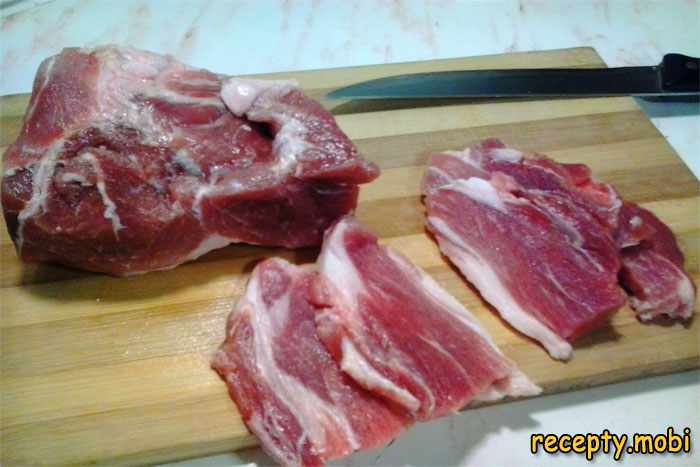
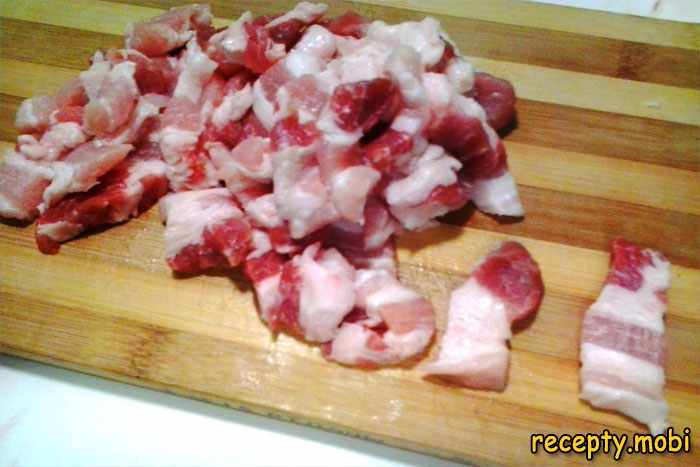
From the fat (250 g) I remove the tough rind with a sharp knife and cut the flesh into the same 3×2 cm slices as the meat. The fat should be fresh, with a layer of meat – it gives the finished aspic juiciness and the characteristic sheen on the cut. Without fat the dish turns out dry and bland.
In a separate deep bowl I mix the fragrant dressing: 3–5 cloves of garlic grated on a fine grater, ½ tbsp salt, 1 tsp sugar, 1 tsp coriander, ½ tsp nutmeg, ½ tsp black pepper, 1 tsp paprika, 1 tsp mustard and 3–4 tbsp vermouth (or cognac, or white wine). This blend of spices gives the aspic a restaurant-quality aroma.
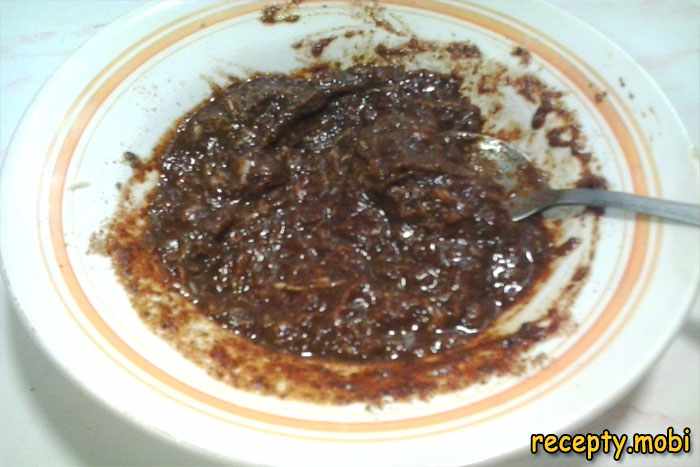
I pour the fragrant marinade over the sliced meat and fat and knead it thoroughly by hand for 2–3 minutes – the spices should coat every piece and soak into the fibres. Kneading by hand works better than a spoon or whisk – the warmth of your hands releases the aromas, while the pressure helps the meat take up the marinade faster.
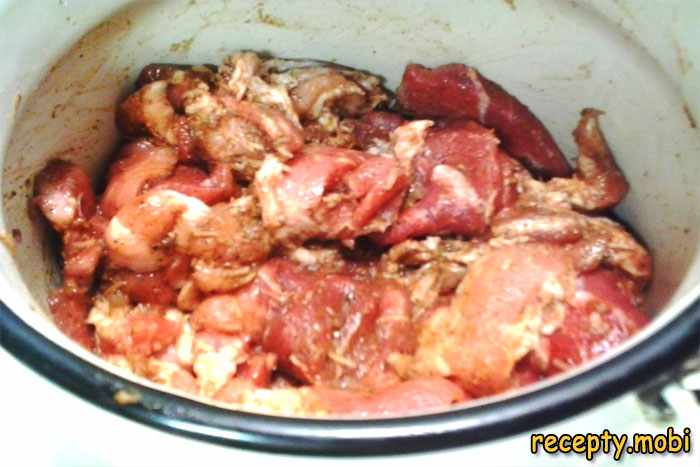
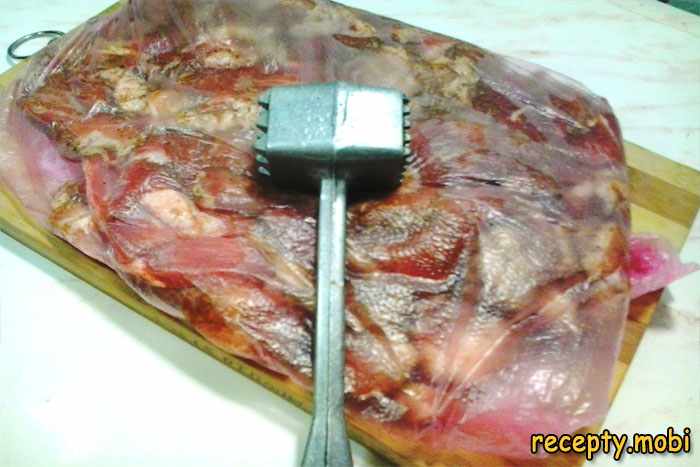
I spread the meat and fat in a tight layer inside a strong food-grade bag and pound it with the flat side of a meat mallet for 10 minutes – this is a critically important stage that softens the fibres and makes them release the protein that binds the pieces together during cooking. The bag stops the juices from splattering.
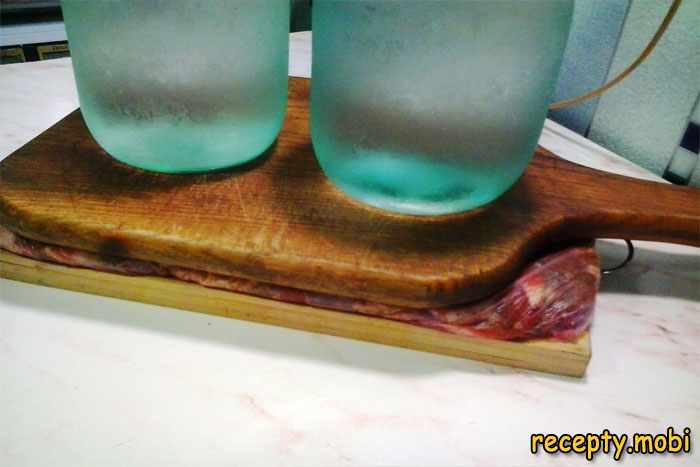
I spread the pounded meat in an even layer in the bag, place it on a cutting board and cover it with another board on top. I put a weight on top (a pot of water, 1.5–2 kg) and place it in the fridge for at least 3–4 hours, or better overnight – under the press the meat soaks up the spices and becomes denser for easier slicing.
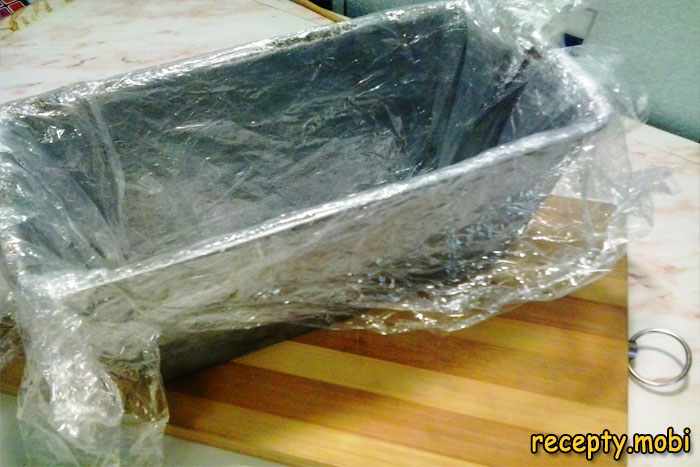
I line the aspic mould (a rectangular loaf tin or 0.5 l metal cans from canned food) with plastic wrap in 2–3 layers – the wrap acts as a natural casing and stops the meat from sticking to the mould. I leave the ends of the wrap long – they make it easy to cover the top.
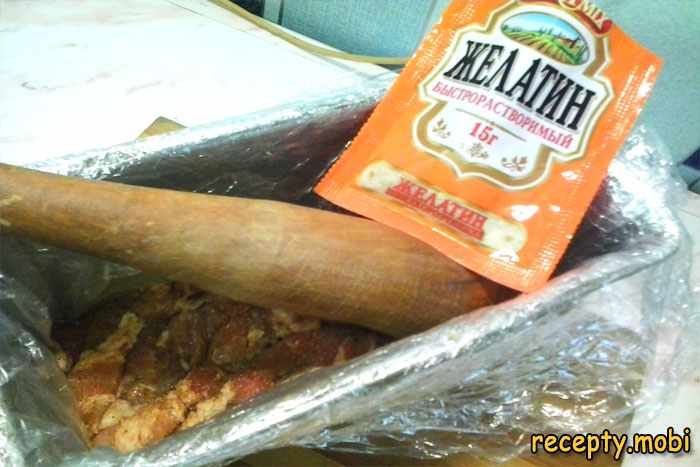
I fill the mould with the marinated meat in layers about 1.5 cm thick, evenly sprinkling each layer with quick-dissolving gelatin (10 g for the whole mould – distribute it in a thin layer). I press each layer down firmly with a mallet or the back of a spoon. The gelatin binds the juices and creates a dense structure. I cover the top tightly with wrap and put a small weight on it.
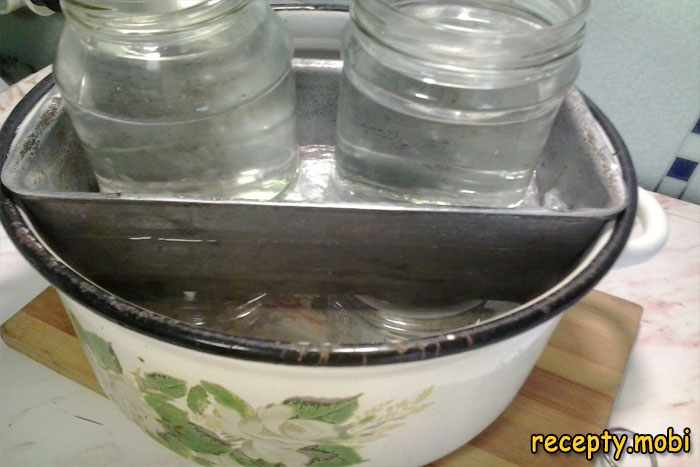
I place the mould of meat in a large heavy-bottomed pot and pour in cold water up to the level of the meat in the mould – it is important that no water gets inside through the wrap. The water level will drop during cooking due to evaporation – keep an eye on it and top up with boiling water.
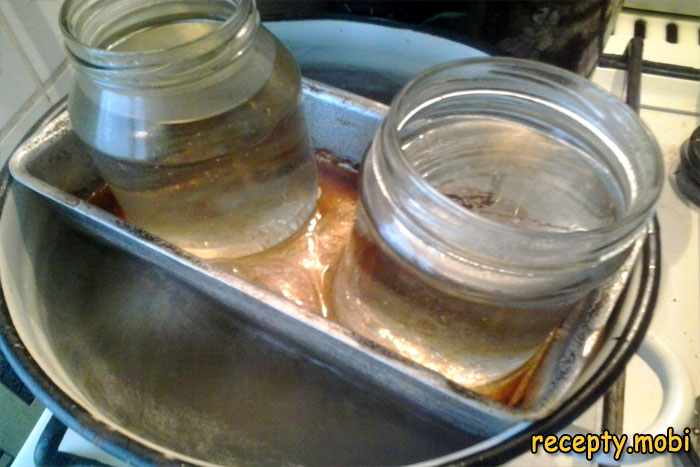
I bring the water to the boil over high heat, then reduce to medium and cook the homemade aspic for 3–3.5 hours under a lid. I periodically add hot water so the level does not drop below the meat. Long, gentle simmering turns the meat into a tender texture and draws out the natural gelling substances.
I take the finished aspic out of the pot and let it cool at room temperature for 1 hour. I carefully remove it from the mould, freeing it from the wrap, and chill it in the fridge for 6–8 hours or overnight – this is critical for the gelatin to set and form a dense structure. I scoop off the fatty broth that forms on top with a spoon – it can be used as a homemade meat jelly.
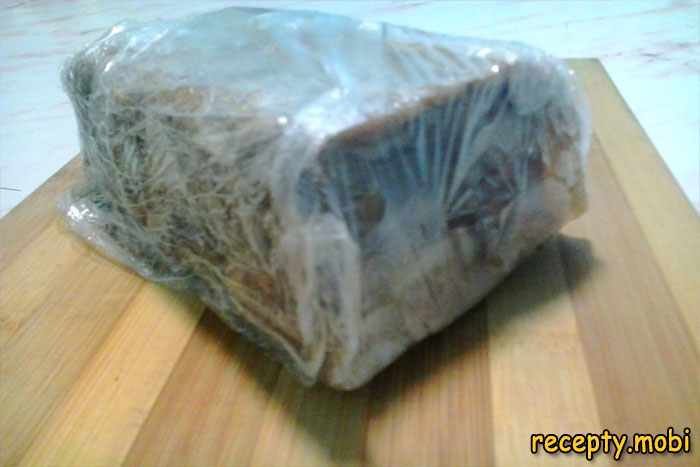
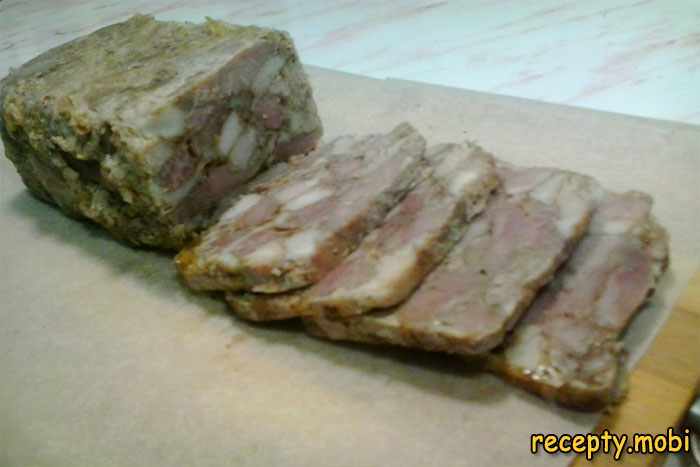
I cut the fully chilled aspic into very thin slices of 2–3 mm with a sharp knife – the thinner the slice, the more beautiful the meat pattern. I serve it as a cold meat starter with fresh bread, mustard, horseradish or adjika. It is ideal with cucumbers and fresh onion.


Tips
- 1
The meat is much easier to cut into thin strips if it has been slightly frozen for 30–40 minutes in the freezer. The icy fibres hold their shape, and the knife goes straight without slipping.
- 2
Press each layer of meat firmly into the mould – this way the aspic holds its shape well when sliced and does not fall apart. Loose packing leaves holes in the structure and spoils the cut.
- 3
The vermouth in the recipe can be replaced with cognac, dry white wine or sherry in the same proportion (3–4 tbsp). The alcohol cannot be tasted in the finished dish, but it brings out the aroma of the spices and meat.
- 4
Serve the homemade aspic with hot mustard, horseradish or adjika – spicy sauces set off the tender taste of the meat. The classic serving: thin slices + dark bread + a pickled cucumber + spring onion.
FAQ
Can aspic be made without gelatin? +
Yes, if you use pig’s ears, hock or pig’s head – they contain a huge amount of natural collagen, which turns into gelatin during long cooking. For 600 g of pork, add 1 pig’s ear or 500 g of hock with the bone. The cooking time increases to 4–5 hours, but the result is more natural and firmer, without adding industrial gelatin. The version without gelatin is considered more traditional – this is exactly how aspic was made in the villages.
How long does homemade aspic keep? +
In the fridge, wrapped in plastic wrap or in an airtight container, the aspic keeps for up to 7 days without loss of quality. At room temperature, no more than 4 hours – meat dishes spoil quickly in the warmth. It can be frozen for up to 2–3 months, but after thawing the texture becomes a little looser – gelatin partly loses its properties when frozen. Thaw only in the fridge for 12–15 hours, not at room temperature.
Why does the aspic fall apart when sliced? +
The main reasons: not enough gelatin (use 12–15 g instead of 10 g), under-cooking (increase the time to 4 hours), meat that was not pounded properly (pound for at least 10 minutes to release the protein), poorly compressed layers (press each layer with a mallet). It is also important to chill for at least 6 hours in the fridge – in that time the gelatin sets completely. A blunt knife tears the meat when slicing – use only a sharply sharpened long knife with a thin blade.
What can replace the vermouth or cognac in the aspic recipe? +
If you want to make an alcohol-free version, use 3–4 tbsp of strong meat broth with ½ tsp of lemon juice – the acid works as a tenderiser instead of the alcohol. Apple cider vinegar 6% (2 tsp) or grape juice (3 tbsp) also work. For aroma, add 1 tsp of smoked paprika. In the traditional recipe, the cognac or wine play the role of a flavouring and tenderiser – a substitution is possible, but the taste will be slightly different. For a children’s version, be sure to replace the alcohol.
- Comment
or post as a guest
Be the first to comment.