avg —
Gyoza (Japanese Fried Dumplings)

Instructions
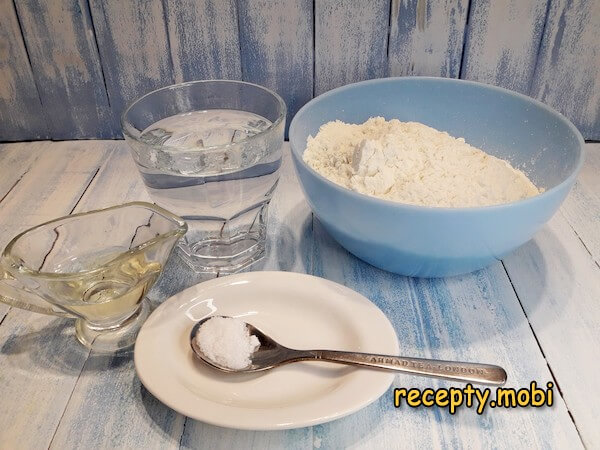
I prepare the ingredients for the dough. For the mix I use very hot water – this makes the dough supple and elastic so it won't tear during cooking.
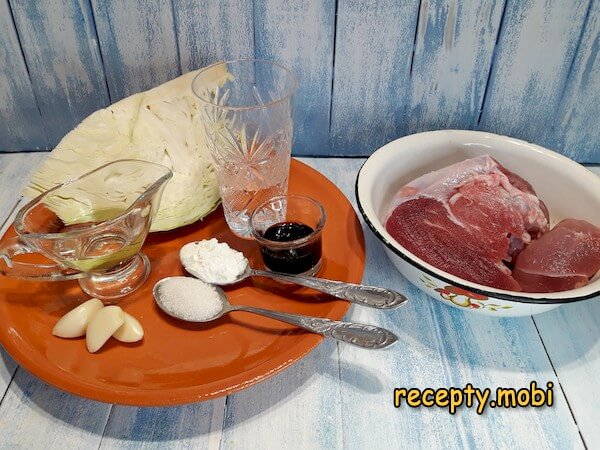
I gather the ingredients for the filling. The pork can be replaced with any meat. For gyoza, both young white cabbage and napa (Chinese) cabbage are suitable. Where possible, it is better to use sesame oil for the vegetable oil.
For the dough, I sift the flour into a large bowl, make a well in it, and fill the well with the ingredients listed above.
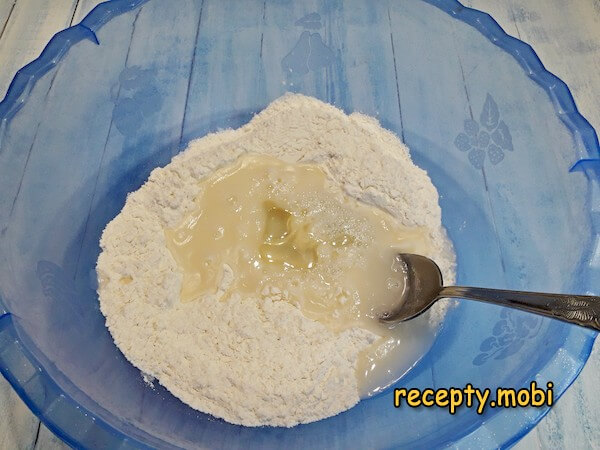
First I stir everything with a spoon, since the water is hot.
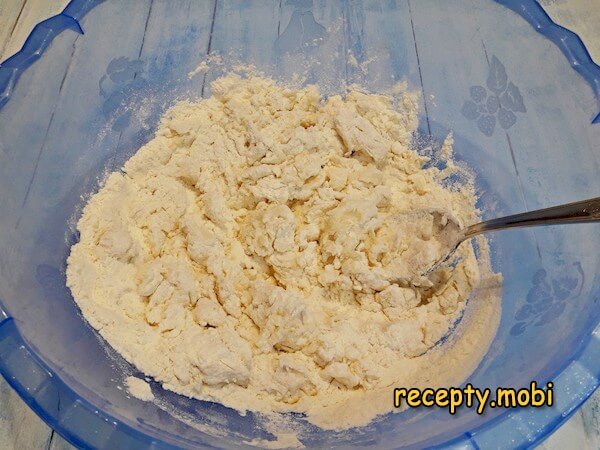
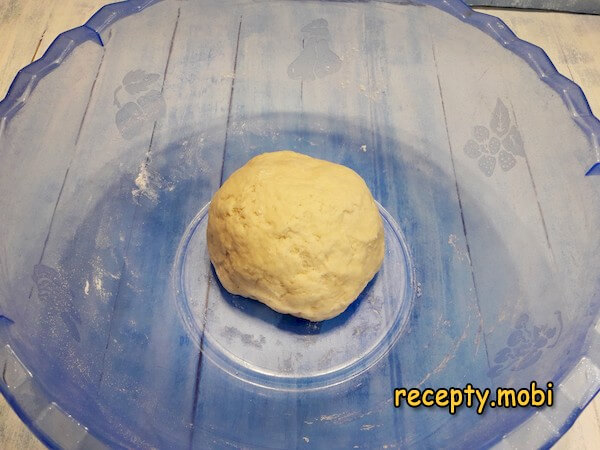
As it cools, I switch to kneading by hand. The dough is warm, obedient, and easy to work with. I gather the mixture into a ball, put it in a bag, and place it in the fridge for the time it takes to make the filling.
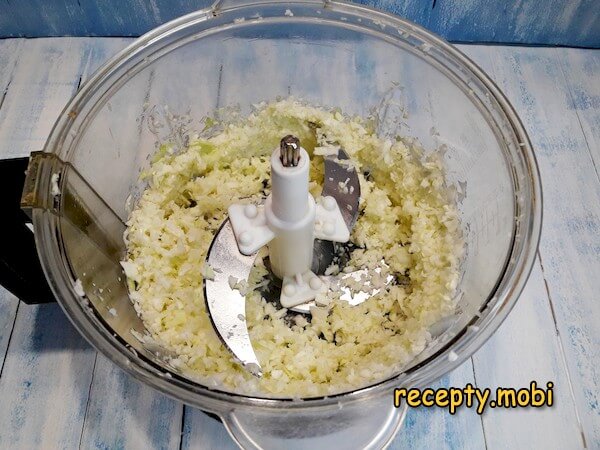
From the cabbage I cut off the stalk and the tough outer leaves. Then it needs to be chopped very finely (the pieces of cabbage shouldn't be noticeable in the filling). This can be done with a knife, but it is more convenient to use a chopper with round blades.
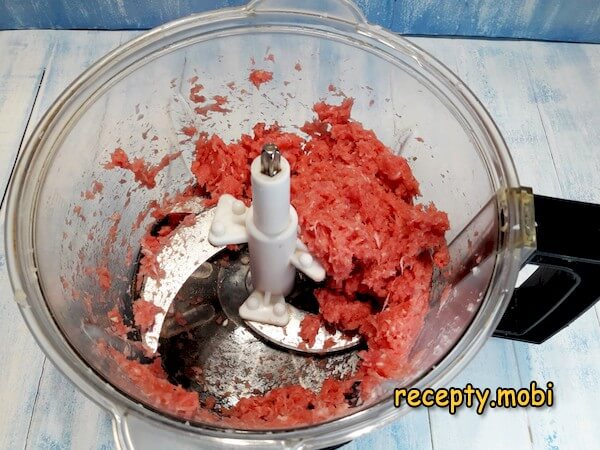
I grind the meat.
In one bowl I combine the minced meat, the chopped cabbage, the finely chopped herbs, and the garlic put through a press.
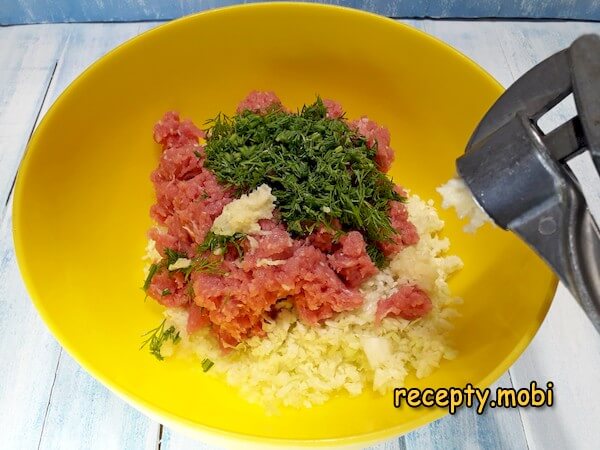
I pour in the soy sauce as well.
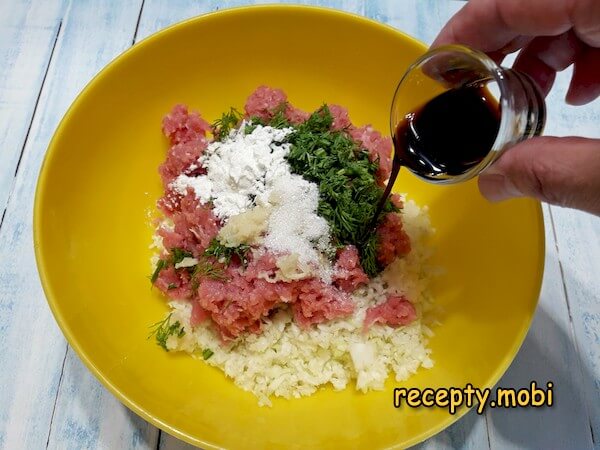
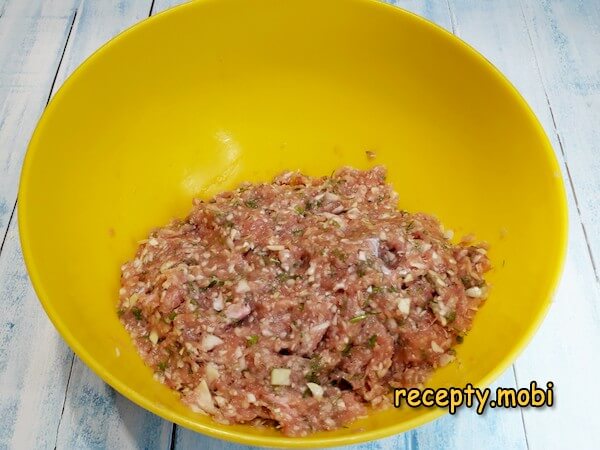
I mix everything thoroughly, adding the remaining ingredients.
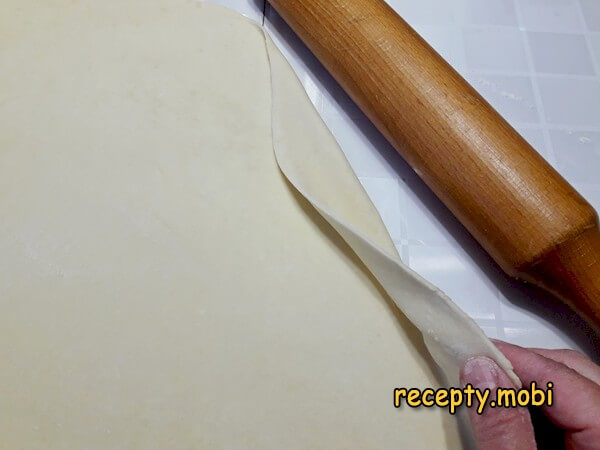
I take the dough out of the fridge. I dust the work surface with flour and roll out a thin sheet 2 millimetres thick.
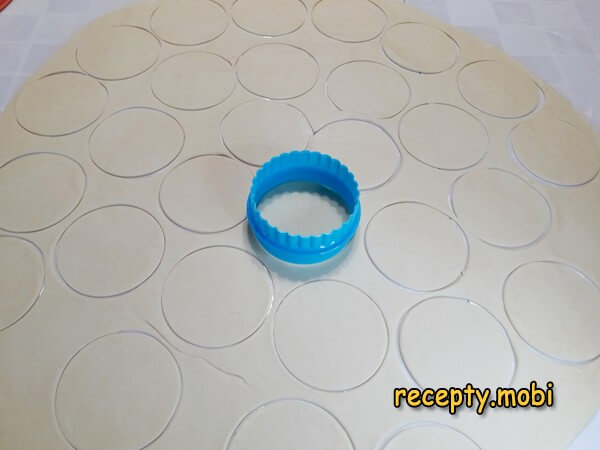
Using a special cutter 7.5 centimetres in diameter, I cut out circles. I gather the scraps together and roll them out again for more pieces.
To shape the gyoza, I place a tablespoon of filling in the middle of a dough circle.
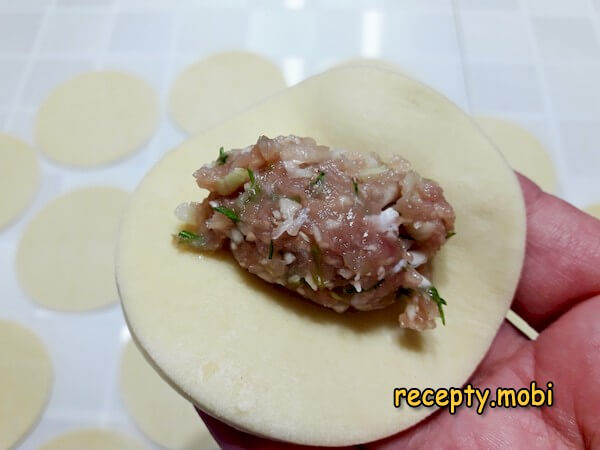
I seal the centre of the piece with a single pinch.
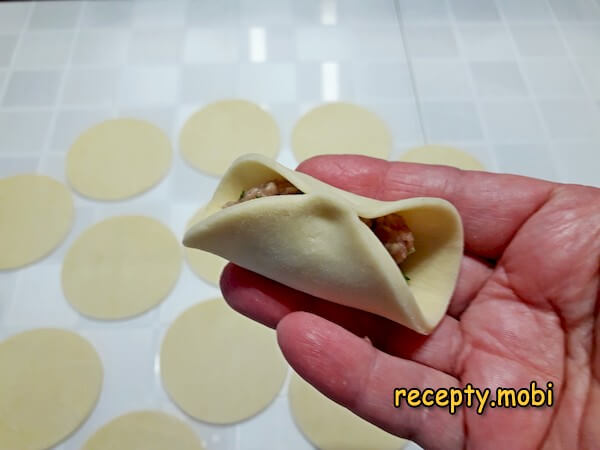
Next I join the right side from the centre, folding the pleats only on the front of the wrapper, while leaving the back side flat.
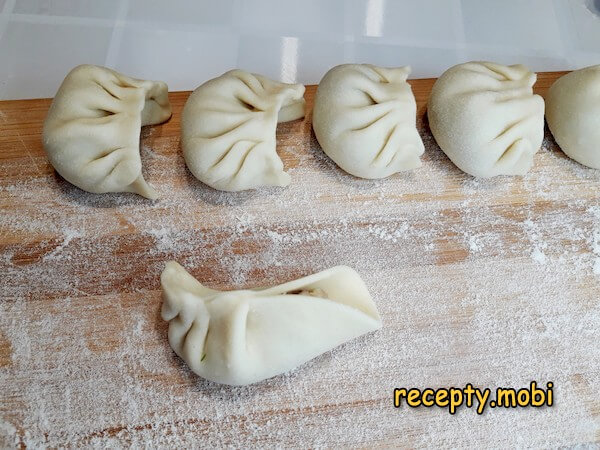
I continue pinching the dumpling on the left side from the centre, folding the pleats only on the front in exactly the same way. When finished, I go over the pinches once more.
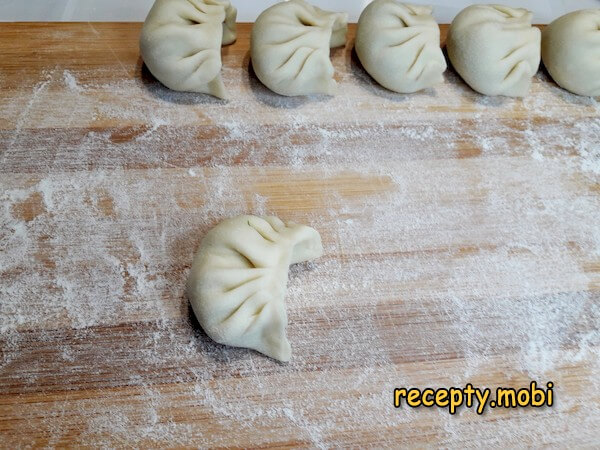
I lay the pieces out a little apart from one another on a flour-dusted board.
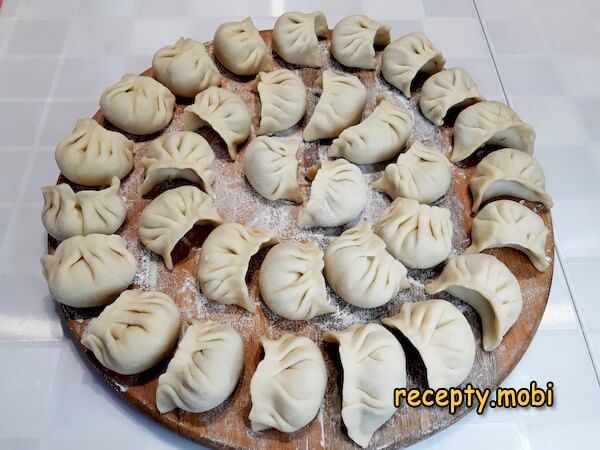
Japanese dumplings, like ordinary ones, can be prepared in advance. To do this, they need to be frozen right on the board, and once they set, touching one another will no longer be a problem.
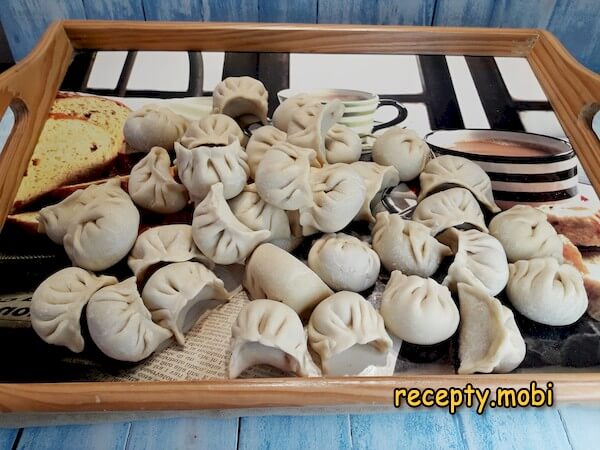
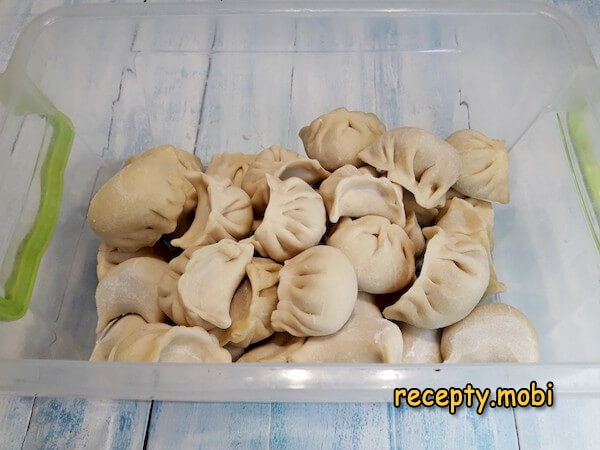
I transfer the hardened frozen dumplings into a lidded container or a bag. They can be kept in the freezer for up to two months, and no thawing is needed before cooking.
To cook the gyoza, I lay them in a skillet with heated oil. I fry only the bottom to the desired degree of crispness.
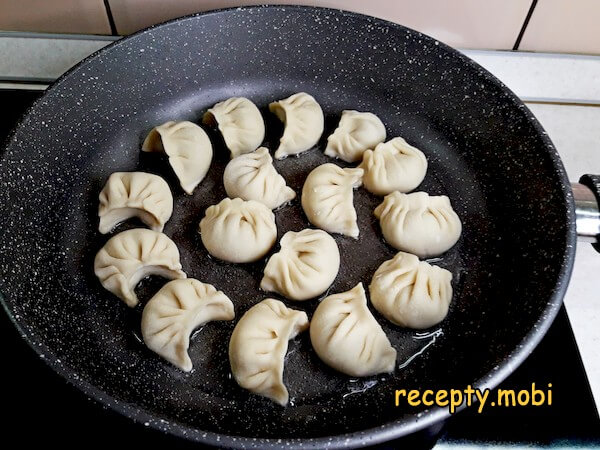
When the bottom is well browned, I lower the heat and pour in hot water so that it covers about 1/3 of the dumpling.
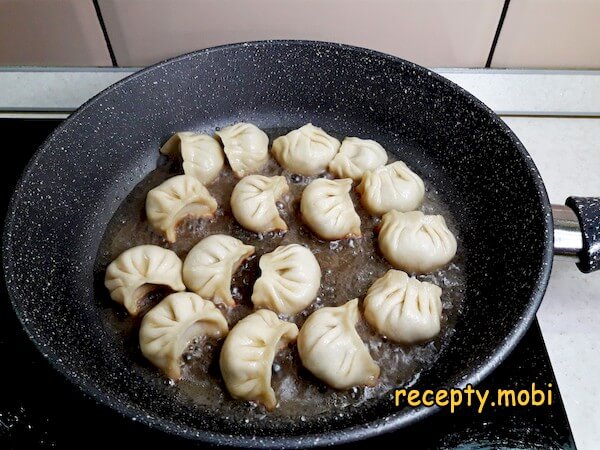
I cover the skillet with a lid straight away and steam the pieces over low heat for 7 minutes.
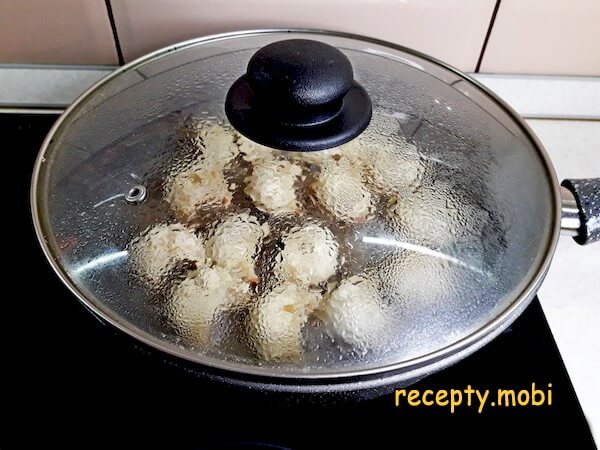
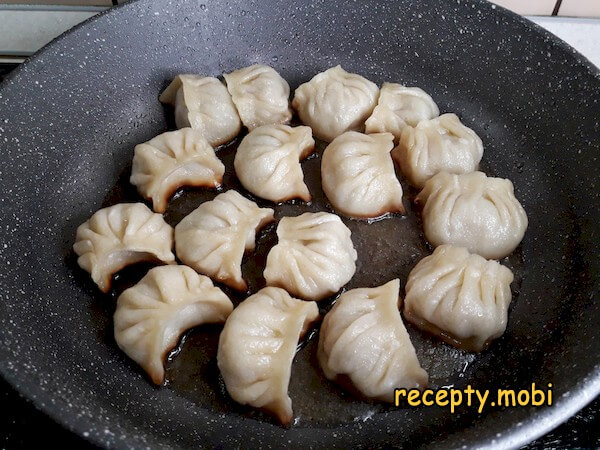
Then I take off the lid and keep the skillet on the heat until all the moisture evaporates. After this the dumplings are completely done.I serve the gyoza hot with some kind of Japanese sauce. The contrast of the tender top made of thin dough, the crisp golden bottom, and the juicy, fragrant filling leaves no one indifferent. Give it a try, and enjoy your meal!


Tips
- 1
HOT WATER IN THE DOUGH – the "secret" to elasticity. Cold water gives a stiff dough. The 170 ml of hot water sets the starch, so the dough is pliable and won't tear.
- 2
FRYING ONLY THE BOTTOM – the "secret" of gyoza. Frying all over makes the dumplings dry. Only the bottom plus steam from above gives the contrast of a crisp base and a tender dome.
- 3
WATER TO 1/3 OF THE DUMPLING – the "secret" of the steam. Too little water and they will burn. Too much and the dough will go soggy. Exactly 1/3 of the height lets the steam cook the filling evenly.
- 4
EVAPORATION AT THE END – the "secret" of a crisp base. If you leave the water in, the base will go soft. Take off the lid and let the water evaporate, and the bottom stays crisp. The same principle works in other kinds of fried Asian dumplings.
FAQ
Which cabbage should I choose? +
Ideal is napa cabbage (200 g – the "Japanese classic"). Alternatives: young white cabbage (200 g – "classic"), savoy cabbage (200 g – "premium"), Chinese bok choy (200 g – "premium, Asian"), napa cabbage (200 g – "premium, for gyoza"), a mix of napa and white cabbage (100 g of each – "premium mix"), very finely chopped cauliflower (200 g – "a different flavour"), or fresh spinach instead of cabbage (200 g – "premium"). For the best cabbage, buy at an Asian market. Fresh farm cabbage is the "premium" option. Do not use: overgrown cabbage with tough leaves, or frozen cabbage (it will release a lot of moisture). For the "classic" version, young, tender cabbage is essential (napa is ideal).
What can replace soy sauce? +
Alternatives: teriyaki sauce (15 g – "premium"), mirin (15 ml – "Japanese"), Nuoc Mam fish sauce (10 ml – "a Vietnamese accent"), Worcestershire sauce (10 ml – "European"), hoisin sauce (15 g – "premium, Chinese"), a mix of soy and sesame oil (10 + 5 g – "premium"), soy sauce with mushrooms (15 ml – "premium"), or diluted balsamic vinegar (10 ml – "European"). Kikkoman, Sen Soy, and Yamasa are reliable brands. A naturally fermented Japanese sauce is the "premium" option. Do not use: sauce with monosodium glutamate or artificial colouring. For the "classic" version, natural soy sauce is essential.
How long do gyoza keep? +
Cooked gyoza keep in the fridge in a tightly sealed container for 1–2 days. Before serving, reheat them in a skillet with 1 tablespoon of water under a lid for 3–5 minutes (this restores the crisp base). In a microwave the dough base will go soggy. Raw, scattered on a board in the freezer, they keep for up to 2 months, after which they go into a bag. You can cook them straight from the freezer, increasing the cooking time by 2 minutes. Fresh and hot straight from the skillet, they are at their "star" best right away (maximum contrast of crispness and juiciness). Do not leave them at room temperature longer than 4 hours. It is ideal to shape them "in advance" and freeze them.
What to serve gyoza with? +
The Japanese classic: with soy sauce. With "gyoza no tare" sauce (soy + rice vinegar + sesame oil). With wasabi and ginger. With chilli oil. With Japanese Kewpie mayonnaise. With pickled ginger. With spring onion. With sesame seeds. With miso soup. With a green wasabi-na salad. With boiled gohan rice. With a cup of Sencha green tea. With Japanese Asahi beer. With sake (for adults). With chopsticks. For a "Japanese dinner" – they suit anything. Gyoza are great for a home lunch, a Japanese party, or a quick snack.
- Comment
or post as a guest
Be the first to comment.