avg —
Serbian Pljeskavica

Instructions
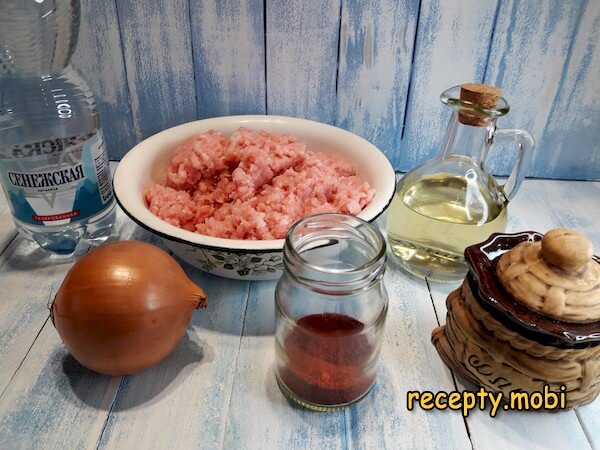
I prepare the ingredients for Serbian pljeskavica. The proportion of pork to beef in the mince is traditionally 1:1 — the pork gives fattiness and juiciness, the beef gives the "meaty" flavour and density.
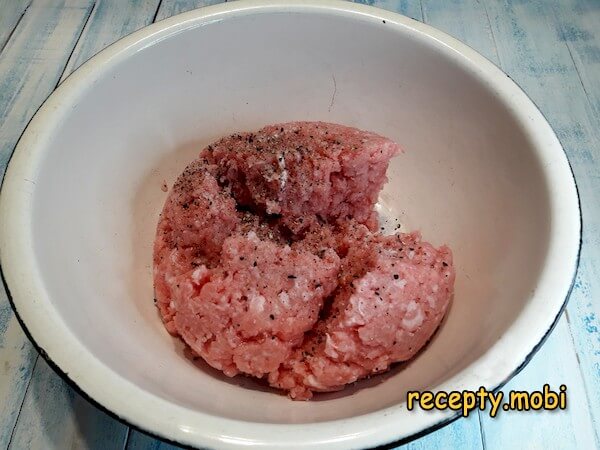
I transfer the meat into a bowl that is convenient for kneading. I add the salt and pepper — at this stage the salt and pepper will spread evenly through the mince during the kneading and the day-long marinating.
I work the mince thoroughly with my hands for 5 minutes, after which I add the carbonated water — specifically carbonated, not plain: the bubbles make the flesh "airy".
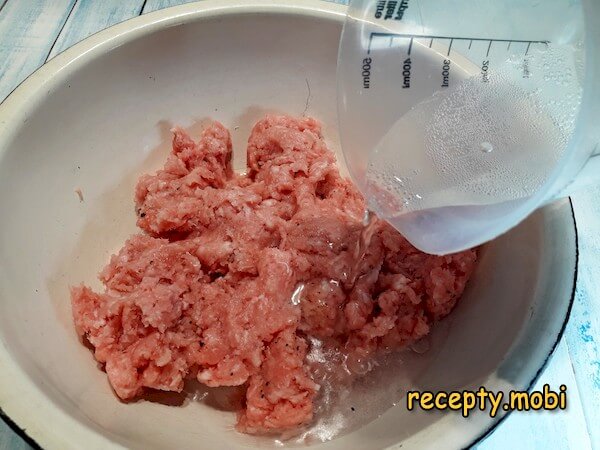
I knead the mince again until all the water has been absorbed. Then I beat the mixture, lifting it up and throwing it back into the bowl with force — this is the "secret" throwing technique that makes the mince dense and elastic.
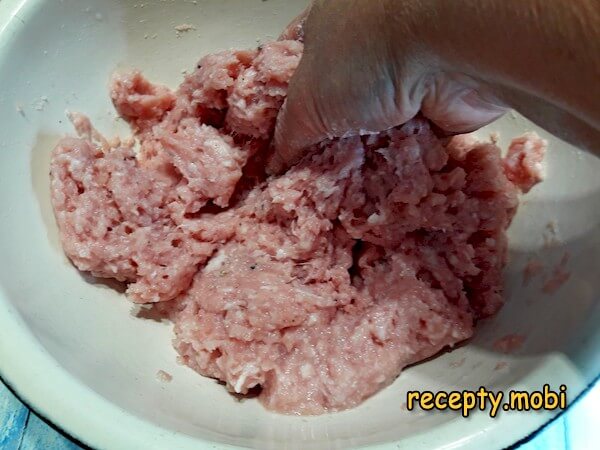
The texture of the meat should become completely uniform and smooth — without fibres or lumps, like a smooth, even paste.
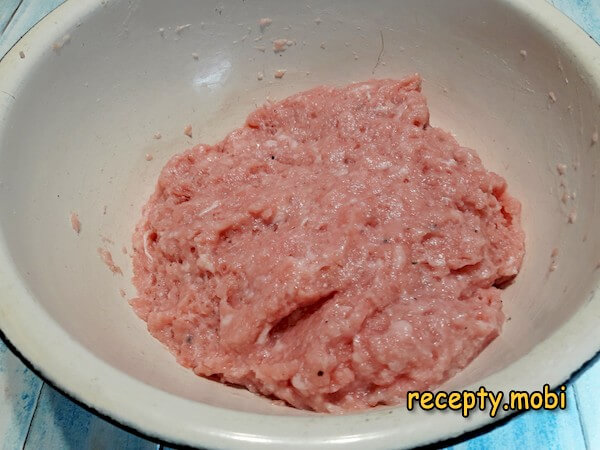
I transfer the mince into a smaller container, packing it down carefully so that not a single air bubble is left inside — air bubbles can cause oxidation and a change in flavour during long storage.
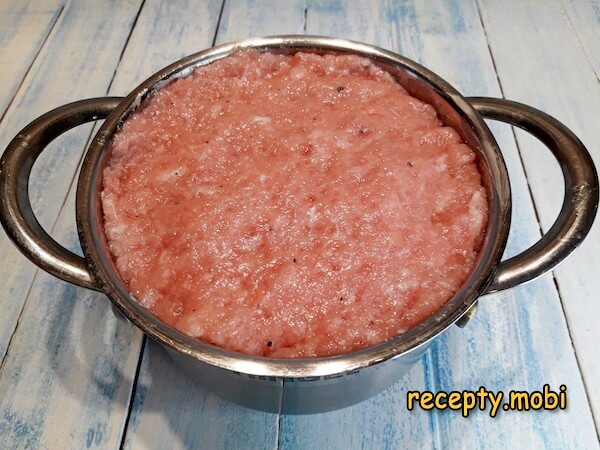
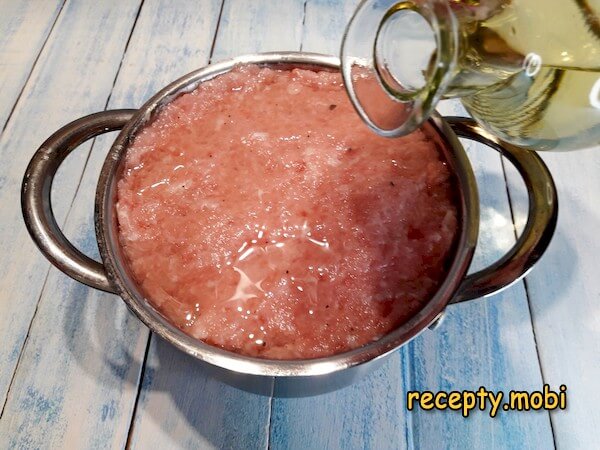
On top I pour a little oil, whose thin film will protect the mixture from contact with oxygen — another layer of protection against oxidation during the day-long marinating.
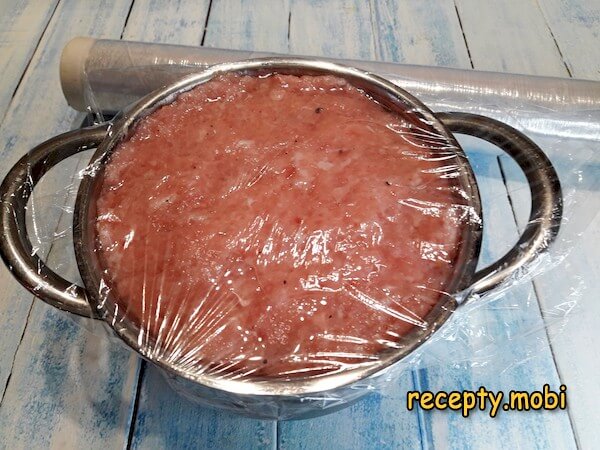
I cover the container with cling film and put it in the fridge for a whole day — it is exactly one day that classic pljeskavica needs; the mince "matures" and takes on its unique Balkan character.
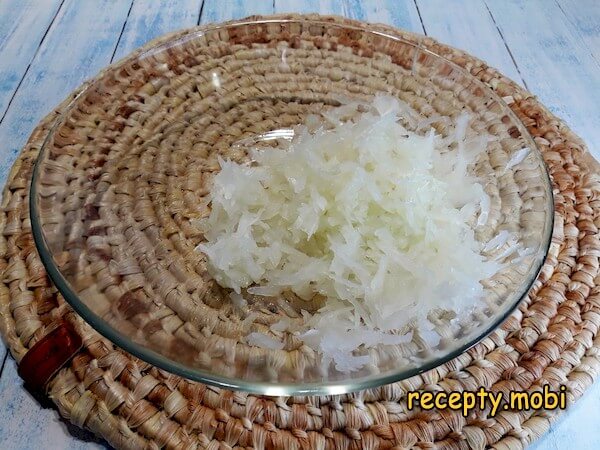
After the stated time has passed, I grate or very finely chop the onion — the onion is added at the very end, not into the initial mixture. This is the difference from ordinary patties, where the onion is mixed in straight away.
I add it together with the paprika to the mince, which I move into a wide bowl — the paprika gives the patties a characteristic Balkan accent and a reddish tint.
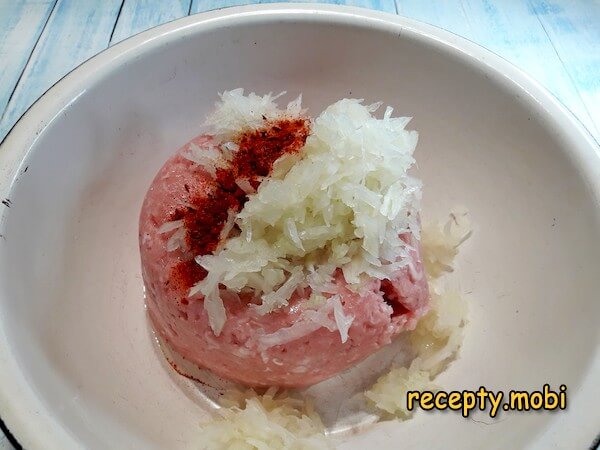
I mix everything well — the onion and paprika should be evenly distributed throughout the whole mass of the mince.
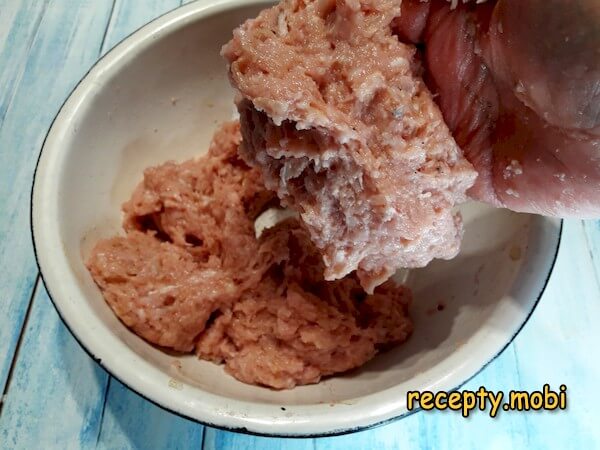
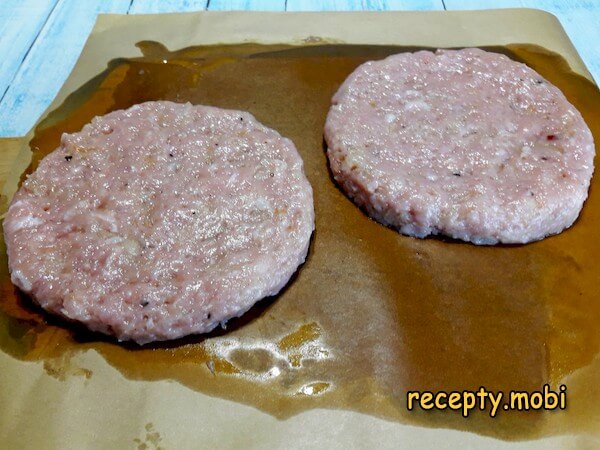
I start shaping the pljeskavicas. For this I grease parchment paper or a cutting board with vegetable oil. I divide the total amount of mince visually into 5 parts. Taking the first lump, I first roll it into a ball, place it on the paper and flatten it to a thickness of 1.5–2 centimetres. I even up the edges.
I heat a frying pan with oil. I set a moderate heat — moderate exactly, not high. On high heat the crust will burn before the meat inside is cooked through.
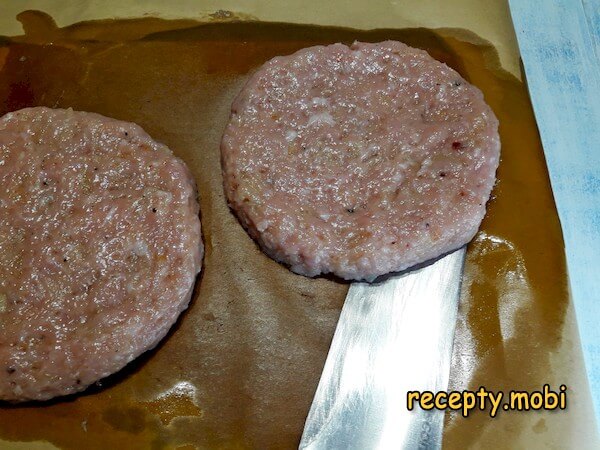
I pick up the pljeskavica with my other hand and move it onto the pan. I fry the first side for about 4 minutes — so that a golden crust forms and the meat inside begins to cook through.
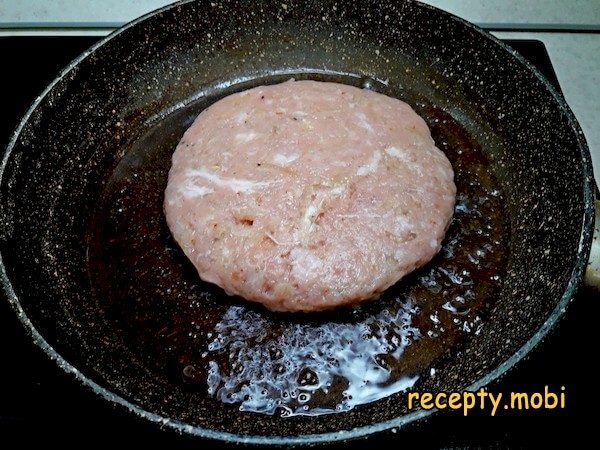
With a wide spatula I turn the pljeskavica onto the other side and fry it for the same amount of time — 8 minutes in total for one pljeskavica.
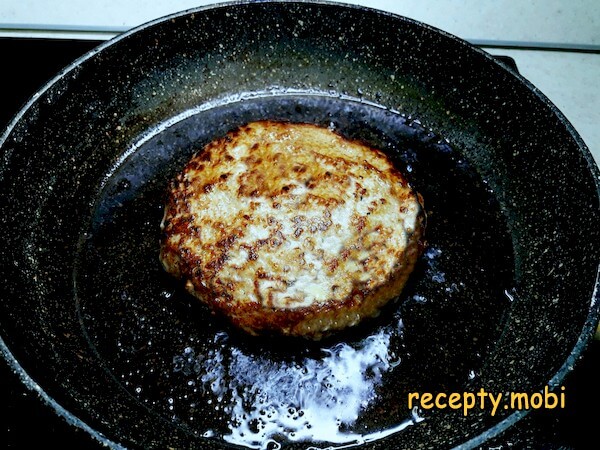
There is no need to cover with a lid and steam the patties (but if the dish is being made for children, you can hold them under a lid a little to steam through). You can check doneness by pressing the spatula on the soft middle — if no juices run out, the meat disc is ready and can be moved onto a plate. In this way I fry all the patties.Thanks to the carbonated water, Serbian pljeskavica turns out juicy and fluffy. You would not be ashamed to serve such a treat even on a festive table. I serve it hot, with any side dish and vegetables. These very meaty patties are so good that they are definitely worth a try.



Tips
- 1
CARBONATED WATER INSTEAD OF PLAIN WATER – the "secret" of an airy mince. Plain water in the mince makes it "dense" and heavy. Carbonated mineral water with its bubbles of carbon dioxide loosens the structure of the meat — the mince comes out airy, the patty fluffy and juicy. This is the Balkan "secret" that gave the dish its name "pljeskavica" — from "splashing in water".
- 2
A DAY OF MATURING – the "secret" of authentic flavour. Straight after kneading, pljeskavica will be an "ordinary patty". A day in the fridge under oil and film makes the flavour fundamentally different — the meat "matures", the spices penetrate every fibre, and the mince becomes dense and springy. This is the difference from other meat patties, which are fried straight away.
- 3
THROWING THE MINCE – the "secret" of elasticity. The mince with carbonated water needs to be "beaten" — lifted up and thrown forcefully into the bowl several dozen times. This technique creates an "elastic network" of meat proteins that holds the carbonated water's air inside. A similar method is used in lyulya kebab in a frying pan — there too the mince is beaten to hold its shape on the skewer.
- 4
ONION AT THE END – the "secret" of juiciness. Onion added to the initial mixture releases its juice over the day of marinating — the mince becomes watery. Onion added at the end (after the day-long maturing) keeps its juiciness and gives a crisp contrast in the finished patty. The same principle applies in Turkish kufta — a related Balkan-Eastern dish.
FAQ
What is pljeskavica and where is it eaten? +
Pljeskavica (Serbian "pljeskavica" — from "pljeskati", to slap, to splash) is a national Serbian dish, a large flat meat patty. It is widespread across the whole Balkan Peninsula: in Serbia, Bosnia and Herzegovina, Montenegro, North Macedonia and Croatia. It is the "Balkan hamburger" — usually served in a flat "lepinja" bread with a side of vegetables. It is both street food and restaurant food at the same time: it is sold in cafes and restaurants and at festivals. The most famous place for serving pljeskavica is Leskovac in Serbia, where the "Roštiljijada" grill festival is held every year.
Can the mixed mince be replaced with a single kind of meat? +
You can, but the result will be different. Pure pork is too fatty and less "meaty" in flavour. Pure beef is drier and denser, without the fatty tenderness. The ideal 1:1 combination gives the optimal balance of fat, density and flavour. Alternatives: beef and lamb 1:1 (a more "Balkan" character), beef and veal 2:1 (a premium, more tender option), turkey and pork 1:1 (a lighter version). Chicken mince is not suitable — too dry and bland for pljeskavica.
How long does ready pljeskavica keep? +
In the fridge under film — up to 3 days. Before serving I reheat it in the microwave for 1–2 minutes, or in a dry pan under a lid for 2–3 minutes on each side. Raw marinated mince keeps in the fridge for up to 2 days in an airtight container. After 24 hours the flavour starts to "fade" — fresh mince is always better. You can freeze portioned raw pljeskavica discs for 2 months — defrost them in the fridge for 12 hours, then fry as if fresh. I do not recommend freezing already-fried pljeskavica — the texture suffers.
What to serve with Serbian pljeskavica? +
The authentic Serbian way to serve it is with "lepinja" flatbread (Balkan flat bread), with "kajmak" sauce (a milk cream cheese) or "ajvar" (a paste of roasted peppers with aubergines). For fresh vegetables: red onion rings, sliced tomatoes, cucumbers, green salad. For sides: fried potatoes, mashed potatoes, baked vegetables. For drinks: beer (Balkan "Lav" or "Jelen"), Serbian "rakija", dry red wine. For a big Serbian table: pljeskavica as part of a "roštilj" (Balkan grill) — together with ćevapčići, ražnjići and shashlik. For desserts afterwards: "žito" (a sweet wheat dish) or "štrukli".
- Comment
or post as a guest
Be the first to comment.