avg —
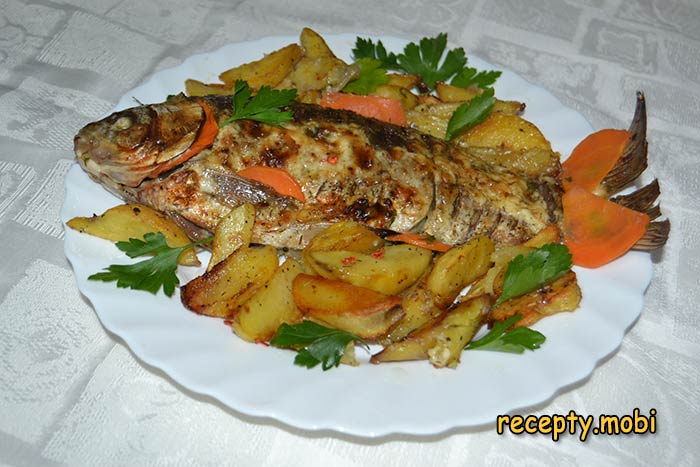
Lasagna with minced meat in the oven

Instructions
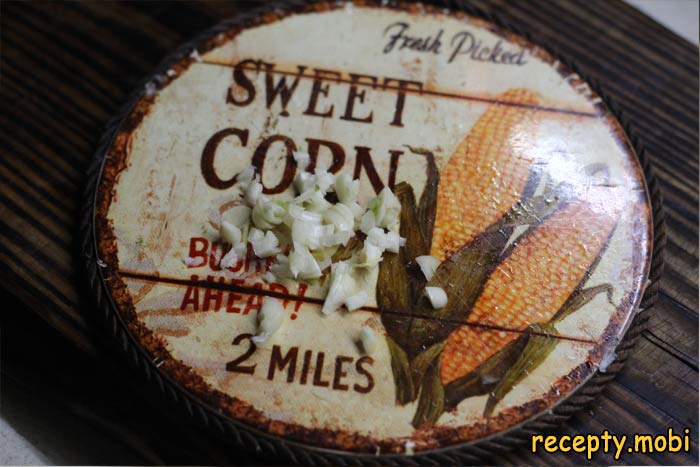
Finely chop the garlic – into roughly 2–3 mm cubes. Garlic is the foundation of the aroma of Italian Bolognese, so handle it carefully. Chopping it too finely will turn the garlic to mush during frying, while cutting it too coarsely will leave sharp pieces in the sauce. The ideal size is "like a grain of rice".
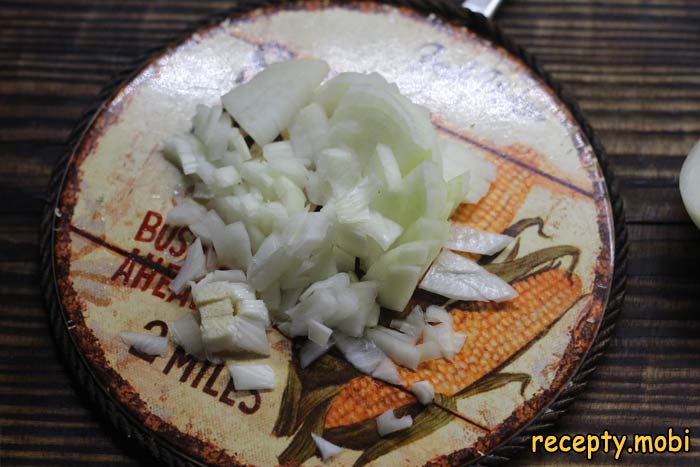
Cut the onion into small 3–4 mm cubes. A fine dice will dissolve into the sauce and give it a sweet depth, without leaving separate pieces. In a classic Bolognese the onion should be unnoticeable in texture but present in flavour. Use a sharp knife so as not to damage the fibres and bring on tears.
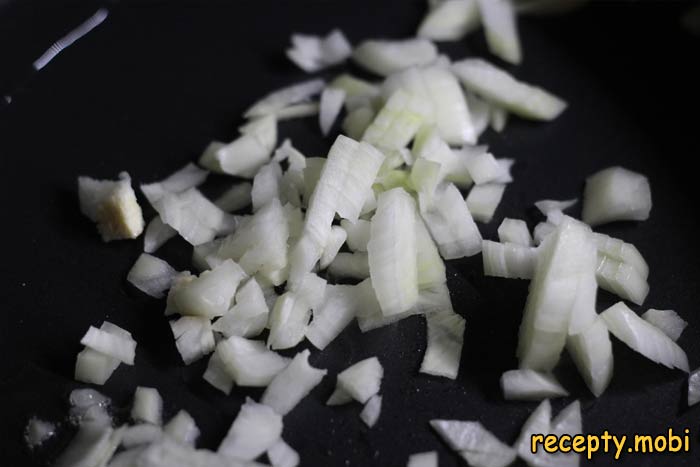
Saute the garlic and onion in extra virgin olive oil for 5–7 minutes over medium heat until fully translucent and lightly golden. Olive oil is essential – sunflower oil will give a flat, non-Italian taste. Keep the heat low so the garlic does not burn and turn the whole dish bitter.
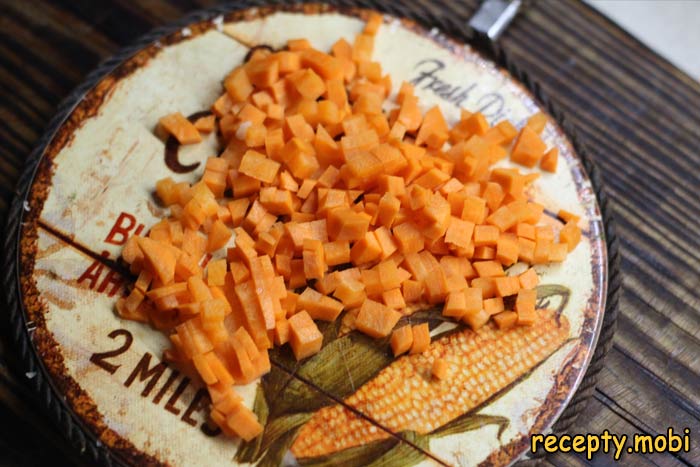
Add the carrot, cut into small 3–4 mm cubes, and fry for another 5 minutes until golden. The carrot gives a classic Bolognese its characteristic sweetness and the sauce its base colour. Do not grate it – it is precisely the fine dice that gives the correct texture of an Italian sauce.
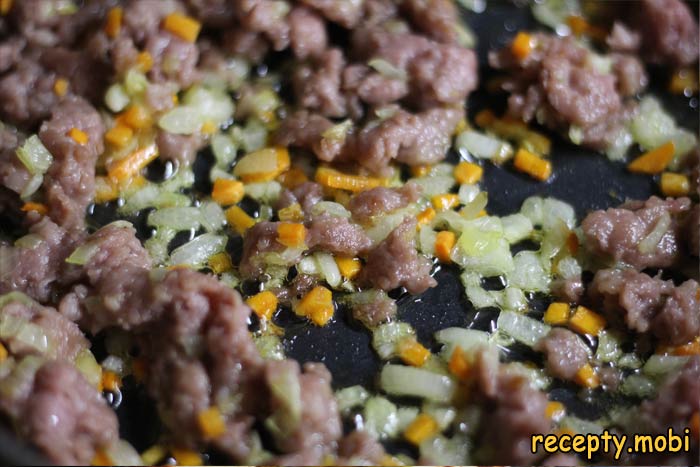
Add the beef mince and fry for 7–10 minutes over high heat until browned and a characteristic "fried" crust forms. Frying the mince over high heat creates the Maillard reaction – this is what gives the deep, meaty flavour. Over low heat the mince will simply stew and will not develop the right character.
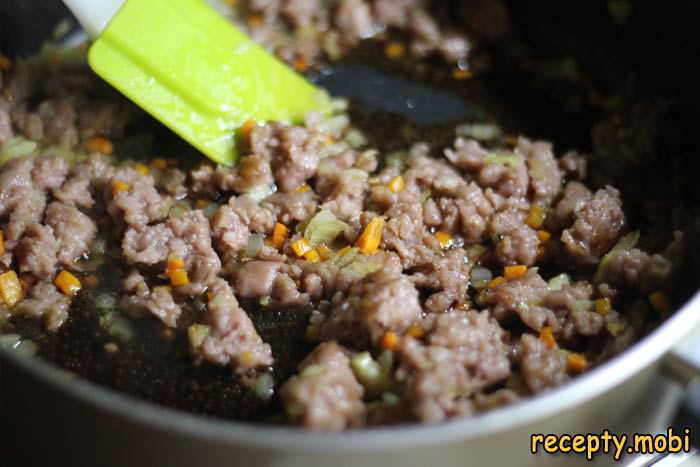
Pour in the dry red wine and simmer for 3–5 minutes until the alcohol has fully evaporated. Wine is an essential Italian ingredient: it "removes" the heavy smell of raw meat, adds depth of flavour and a characteristic "wine" bouquet. Without wine the Bolognese will not be authentic.
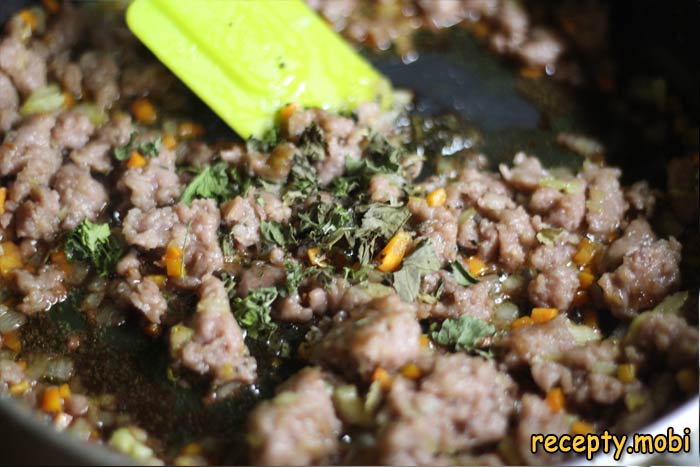
Add the dried basil and celery and simmer for a minute to release their aromas. Dried herbs open up more deeply during simmering than when added at the end. You can use a mix of Italian herbs or Provençal herbs – they give a similar character.
Pour in the tomato puree and tomato paste and mix thoroughly. Simmer, covered, over the lowest heat for about 1 hour, stirring occasionally. Long simmering is the key to restaurant-quality Bolognese. Over the hour the vinegary sharpness of the tomatoes disappears, leaving a velvety, deep flavour.
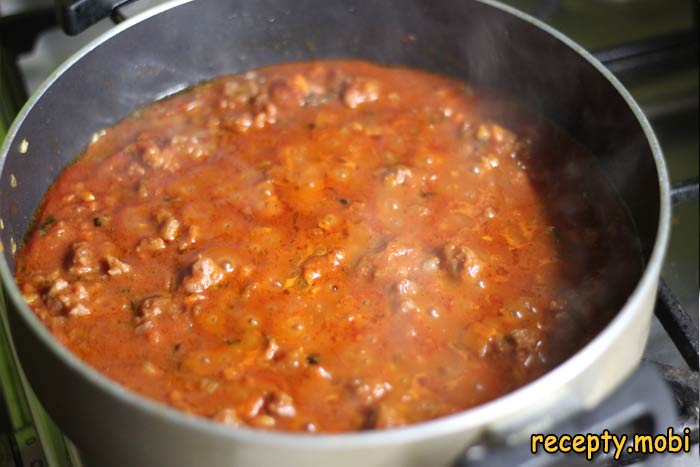
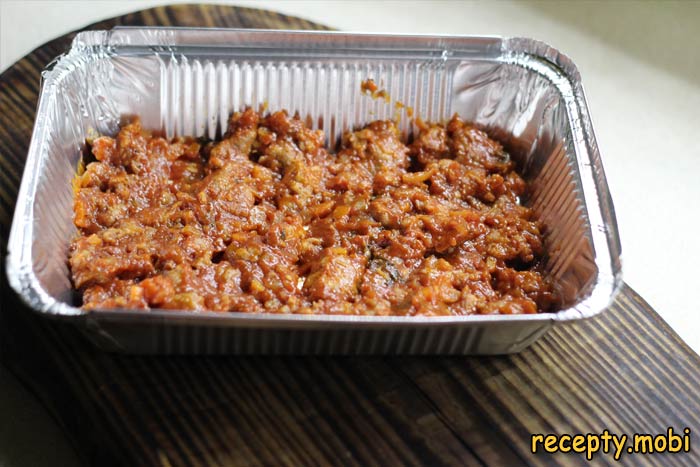
Spread a little of the finished Bolognese sauce in a thin layer over the bottom of an ovenproof dish – it will keep the pasta sheets from sticking to the dish while baking. This is the first "protective" layer of the future lasagna. Without it the bottom sheets may scorch onto the base, and the lower edge will be spoiled when serving.
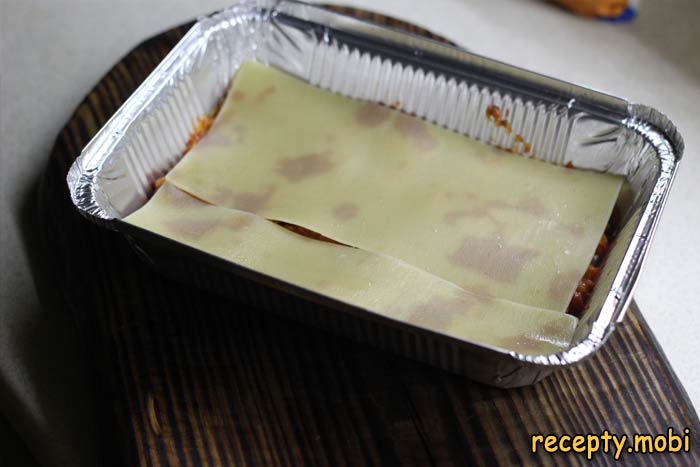
Lay the first layer of lasagna sheets over the sauce. Modern "instant" sheets do not need to be pre-boiled – check the packaging. Boil older sheets for 3–5 minutes in salted water according to the instructions.
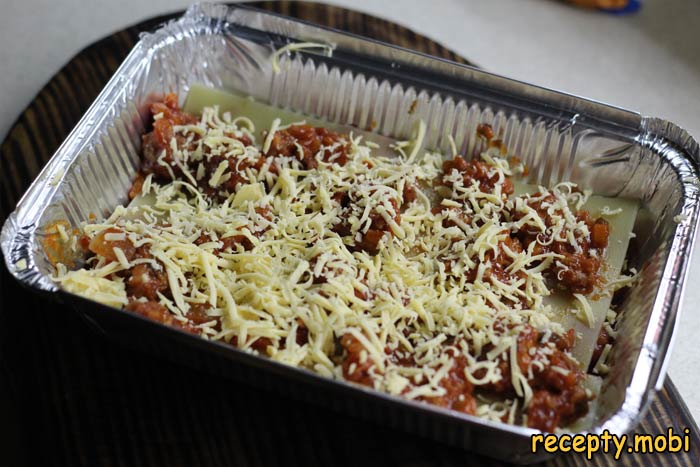
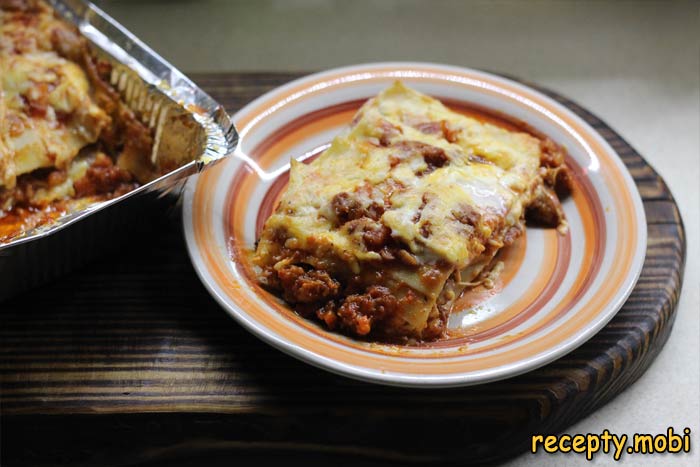
Alternate the layers in a strict order: Bolognese sauce, grated cheese, a spoonful of bechamel sauce, pasta sheets. Repeat until the dish is completely filled – usually 4–5 layers in a standard dish. This order gives the classic "striped" cross-section of a lasagna.
Cover the very top generously with bechamel sauce and sprinkle liberally with grated hard cheese (parmesan, gruyère, Russian cheese). The bechamel and cheese on top will create the characteristic golden crust during baking – the signature Italian "glaze".
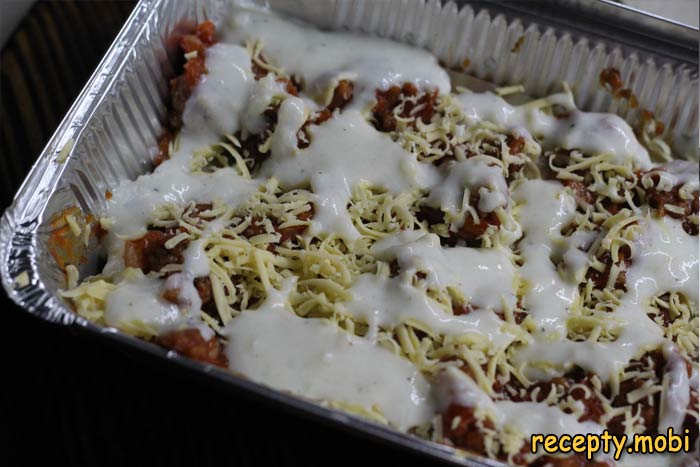
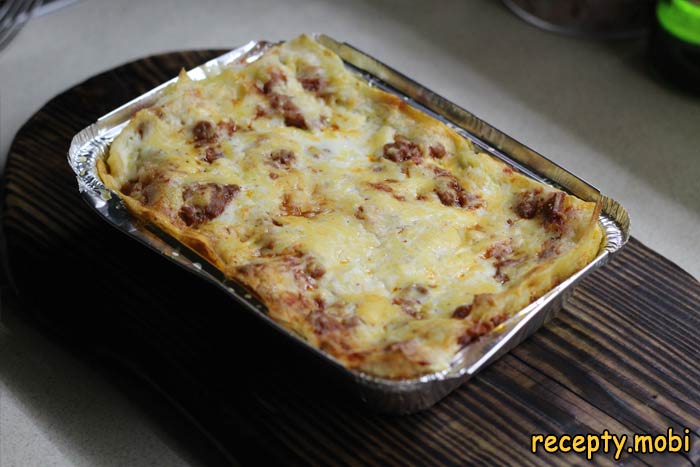
Bake in a preheated oven at 180–200 °C for 25–45 minutes depending on the type of sheets. Fresh or dry "instant" sheets – 25–30 minutes; ordinary pre-boiled sheets – 35–45 minutes. It is done when you see a golden crust and the sauce bubbling around the edges.
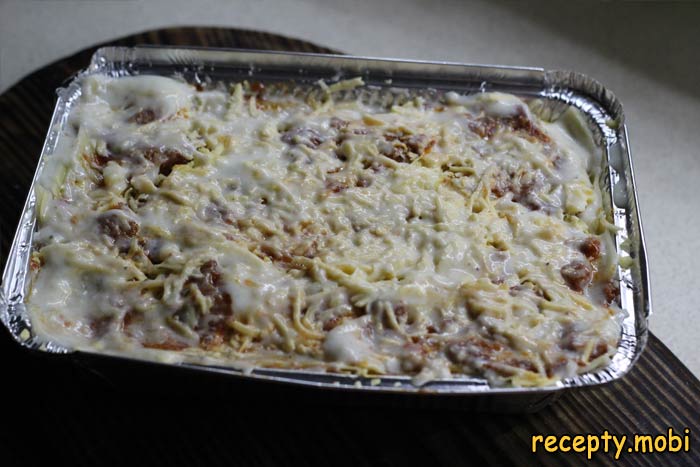
The lasagna with minced meat in the oven is ready! Take it out of the oven and be sure to let it "rest" for 10–15 minutes before slicing – the sauce will thicken and the lasagna will cut neatly without falling apart.
Cut into square portions with a sharp knife and serve with a sprig of fresh herbs and a green salad. A glass of dry red wine (Chianti, Montepulciano) goes wonderfully with lasagna – a classic Italian pairing.


Tips
- 1
Modern "instant" lasagna sheets do not require pre-boiling – they save a significant amount of time. Check the markings on the packaging.
- 2
You can make the Bolognese sauce the day before and keep it in the refrigerator – the next day the flavour becomes even richer.
- 3
Be sure to let the lasagna stand for 10–15 minutes before slicing – without this the sauce will run.
- 4
Serve with a green salad of rocket with parmesan and olive oil – a light contrast to the hearty lasagna.
FAQ
Can lasagna be made without wine? +
Yes, replace the red wine with 3 tablespoons of strong meat or beef stock with a teaspoon of apple cider vinegar. It will be less authentic, but quite acceptable for an alcohol-free home version. You can also use pomegranate juice or a cranberry drink with lemon juice – they will give a similar acidity and depth. Without a liquid flavouring the Bolognese will taste "flat". Do not skip this ingredient entirely; replace it with at least something.
What can replace bechamel sauce in lasagna? +
Good options are 33% double cream (200 ml, cooked for 5 minutes until thickened), 25–30% sour cream with grated cheese (a more "Russian" version), a mix of ricotta with milk (an Italian alternative), or processed cheese in hot milk. Each option gives its own character: cream is the closest to the classic, sour cream adds a light tang, ricotta gives an Italian taste. Without a creamy component the lasagna will taste too "meaty".
How long does cooked lasagna keep? +
In the refrigerator, in a tightly sealed container – up to 3 days without loss of quality. On the second day the flavour becomes deeper as all the components soak up the aromas. Always reheat in the oven at 160–180 °C under foil for 15–20 minutes – a microwave makes the sheets "rubbery" and unpleasant in taste. You can freeze the finished lasagna in portions in airtight containers for up to 2 months. Before serving, defrost in the refrigerator and warm through in the oven.
Can I use a different mince instead of beef? +
Yes, a classic Bolognese is made from a 70/30 mix of beef and pork – it gives the richest flavour. Pork mince alone will be too fatty, chicken alone too bland. You can use turkey (a lean option), lamb (an eastern accent), or a mix of beef and veal (a tender option). For a vegan version – mince made from lentils with stewed mushrooms. The main thing is to keep the fat content at 15–20%, otherwise the sauce will be either dry or too greasy.
- Comment
or post as a guest
Be the first to comment.