avg —
Italian Lasagna – Classic Recipe

Instructions
I prepare the ingredients for the "Bolognese" sauce – the base of Italian lasagna. Onion, carrot and celery are the "holy trinity" (soffritto) of Italian cuisine; without them there is no true Bolognese. I peel the root vegetables (carrot, celery root) and cut them into small 5 mm cubes. I cut the onion into small 5 mm cubes too. If you are using celery stems, I finely chop the celery leaves. Choose a herb mix that includes oregano and basil.
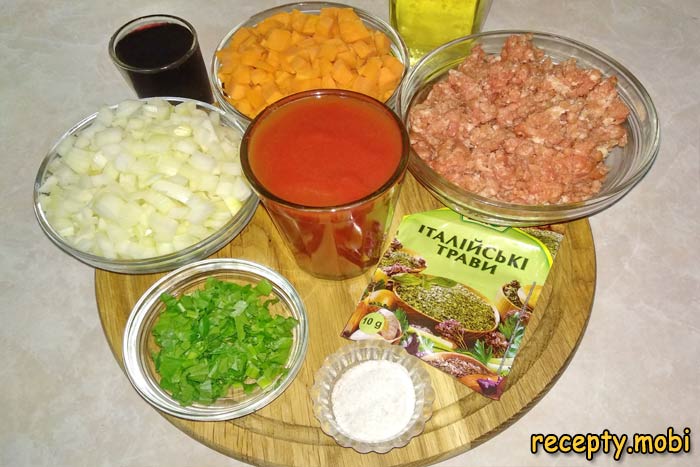
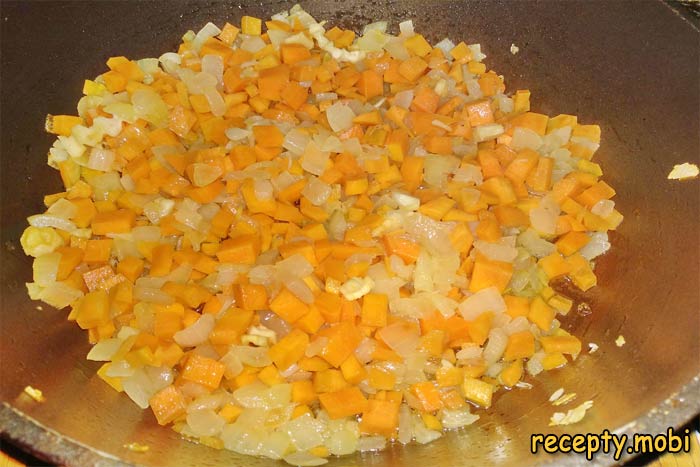
I pour olive oil (3 tbsp) into a large saucepan or thick-bottomed pan and heat it over medium heat. I add the vegetables (onion, carrot, celery) and sauté for 7–10 minutes until the onion is transparent and the carrot is soft, stirring constantly. The vegetables should "bloom" but not fry. This creates a fragrant base for the meat sauce.
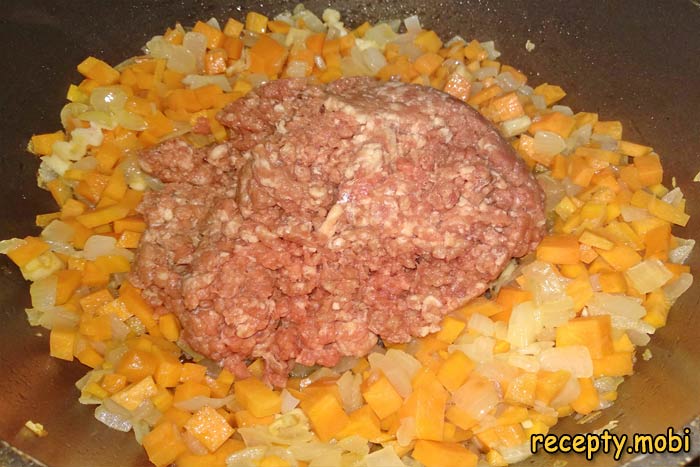
I add the ground beef (600 g) to the sautéed vegetables and mix thoroughly, breaking up the lumps with a spatula so the meat is spread evenly.
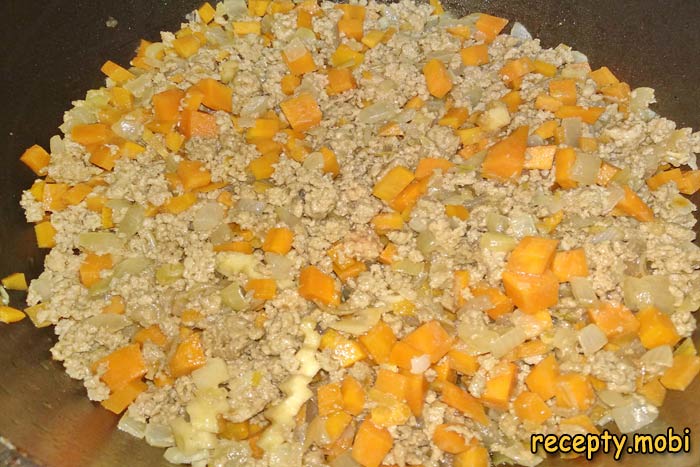
I stew the meat together with the vegetables over medium heat for 10–15 minutes until the meat is fully cooked (it completely changes colour from red to grey-brown), stirring occasionally.
I salt to taste (1–1.5 tsp), add ground pepper and generously add the Italian herb mix – oregano and basil must be in it (that is the "Italian" character!). You can also add marjoram, thyme or rosemary. I mix thoroughly so the spices open up in the hot meat and oil.
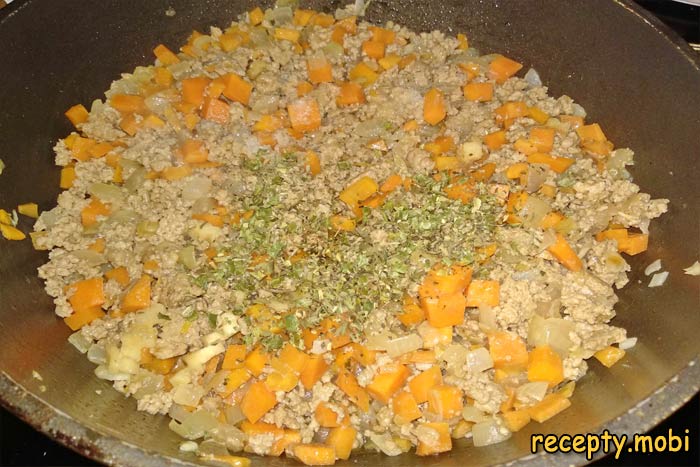
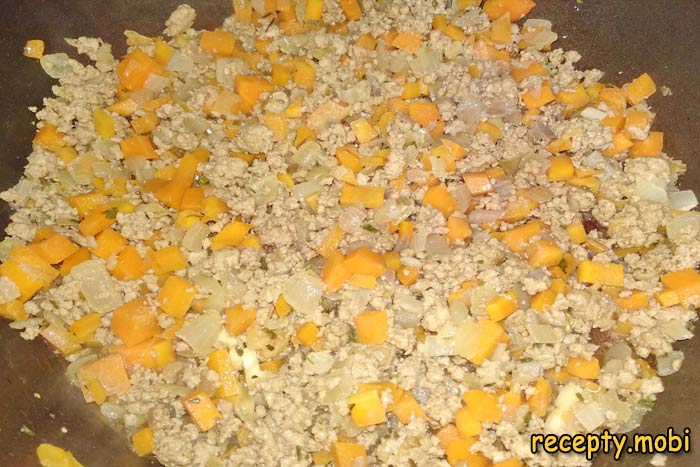
After 2–3 minutes I pour in the dry red wine (150 ml) – the "secret" ingredient of Bolognese by the Bologna canon. The wine gives depth of flavour and a characteristic "wine" note to the sauce. I stew it for 3–5 minutes over high heat until the alcohol has fully evaporated (the smell changes from sharp and winey to soft and fruity).
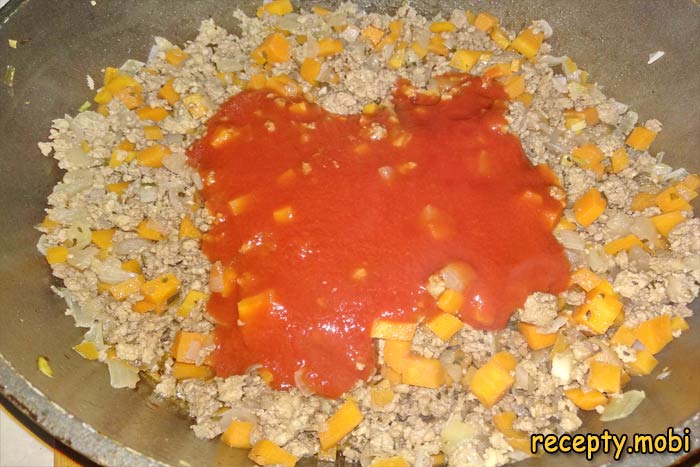
I add the tomato puree (250 ml) and the celery leaves. I mix thoroughly.
I cover the saucepan with a lid and switch the stove to the lowest heat. I leave it to simmer for at least 1.5 hours (ideally 2–3 hours). The longer the Bolognese simmers, the richer and tastier it becomes. As the liquid boils down, I top it up with 50 ml of tomato puree or water every 30 minutes – the sauce must not dry out completely.
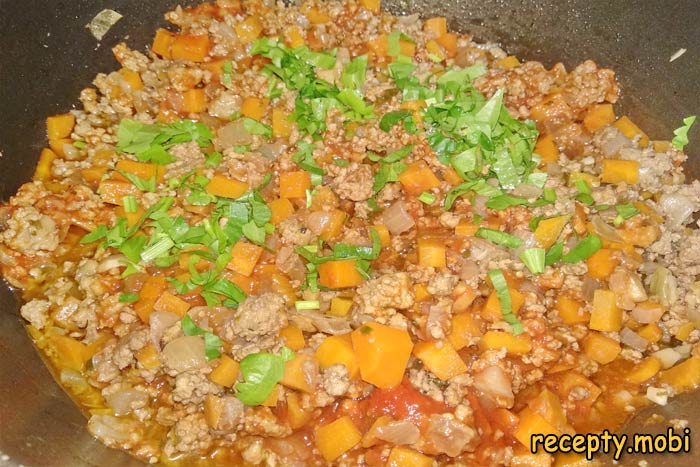
The classic "Bolognese" sauce is now ready.
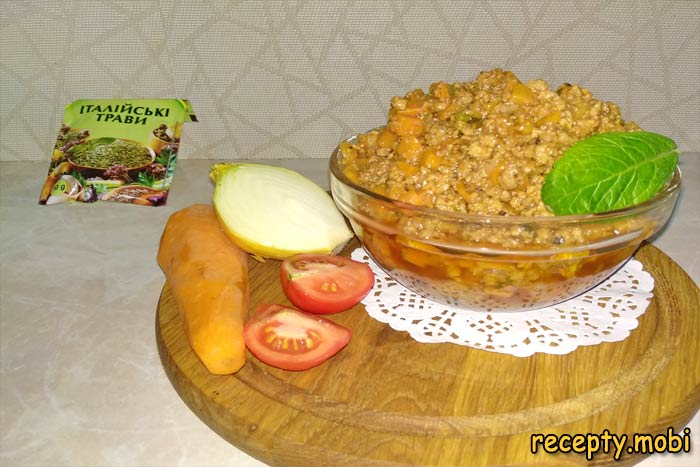
In parallel I prepare the "Béchamel" sauce – the second base of the lasagna. It takes about 15 minutes to make. On a separate burner I heat the milk (500 ml) until very hot but not boiling – about 80°C. Hot milk blends into the butter-and-flour base faster, without lumps.
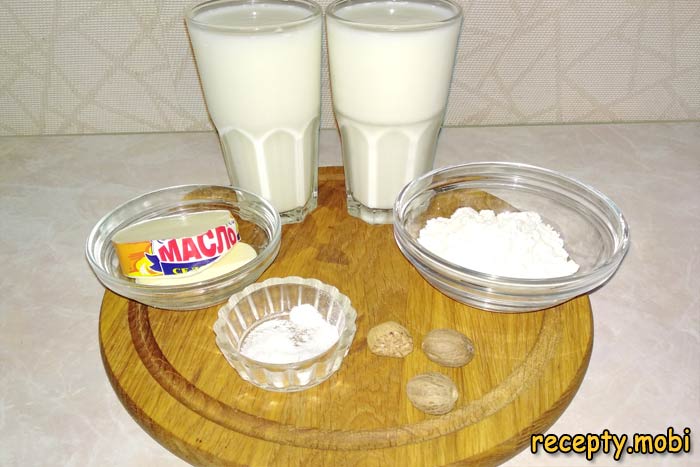
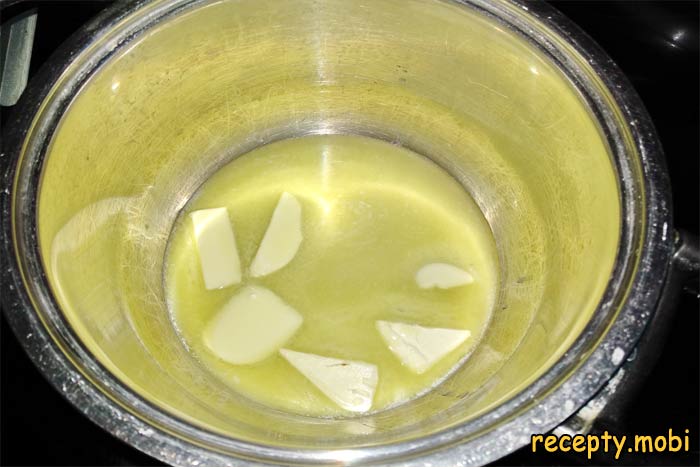
I put the butter (50 g) into a thick-bottomed pot and melt it over medium heat until fully liquid.
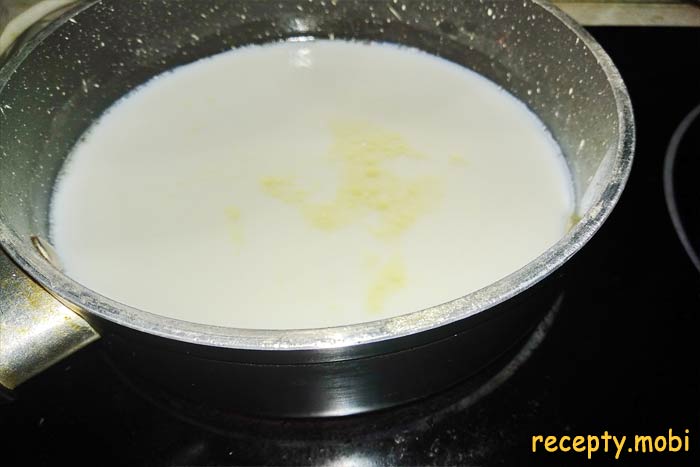
At the same time I heat the milk on a neighbouring burner until very hot (about 80°C, not boiling).
I add the flour (2 tbsp) to the melted butter and mix thoroughly with a silicone spatula for 1–2 minutes until smooth – this is the roux, the base of French and Italian sauces. Do not over-fry the flour; it should stay light cream-coloured, not golden.
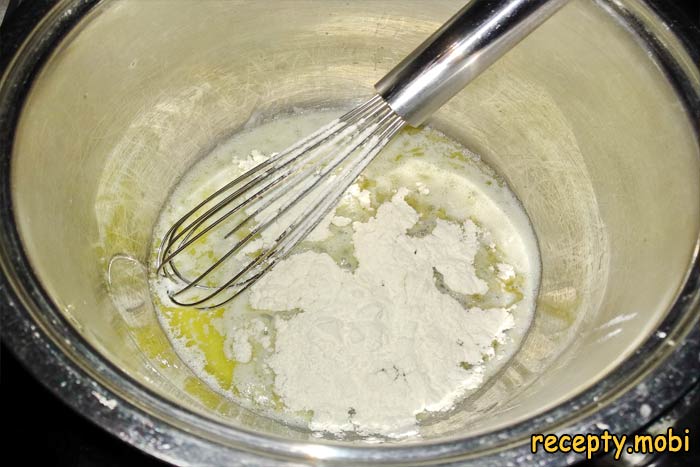
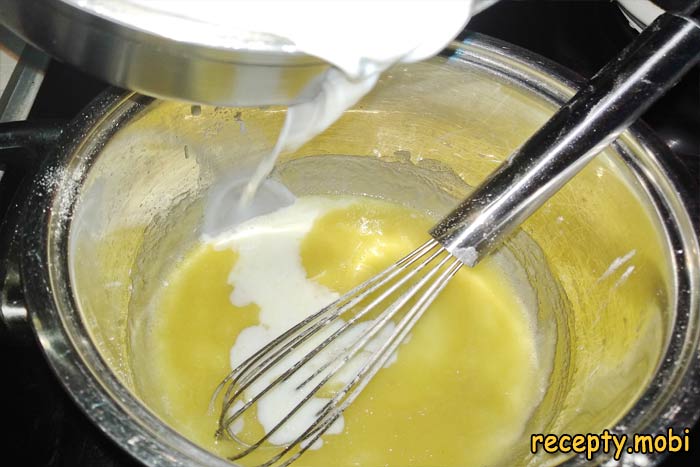
In 3 stages I gradually pour the hot milk into the butter-and-flour base, stirring vigorously and constantly with a whisk. The whisk prevents flour lumps from forming. After each portion of milk I mix it in completely until smooth before the next. The finished sauce is as thick as "liquid sour cream", with no lumps.
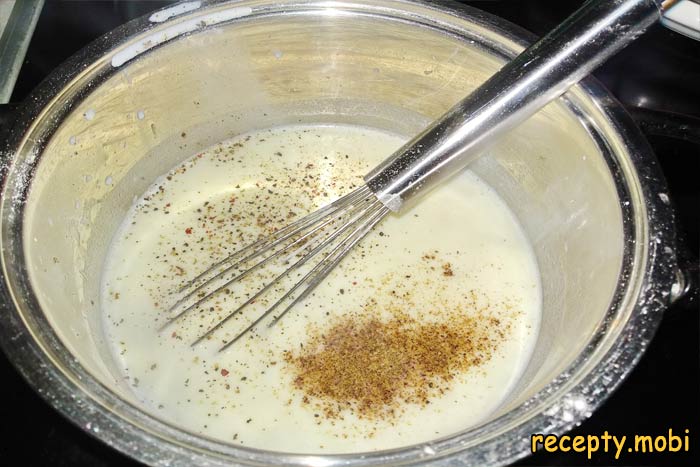
I add salt (½ tsp), ground black or white pepper (to taste) and 2 pinches of ground nutmeg to the Béchamel – an essential "Italian" spice for the sauce, without which it would taste "flat". I cook it for another 1–2 minutes until it thickens.
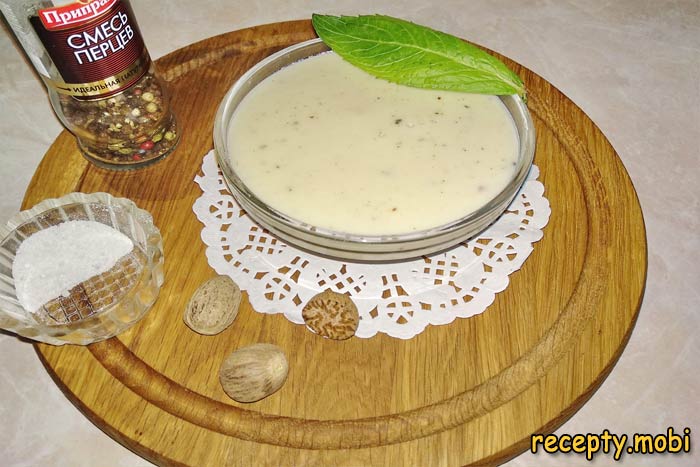
The Béchamel sauce is now ready.
I prepare the components for assembly. I grate the Parmesan (300 g) on a coarse grater. I grate the mozzarella (200 g) on a coarse grater or cut it into 5 mm balls.
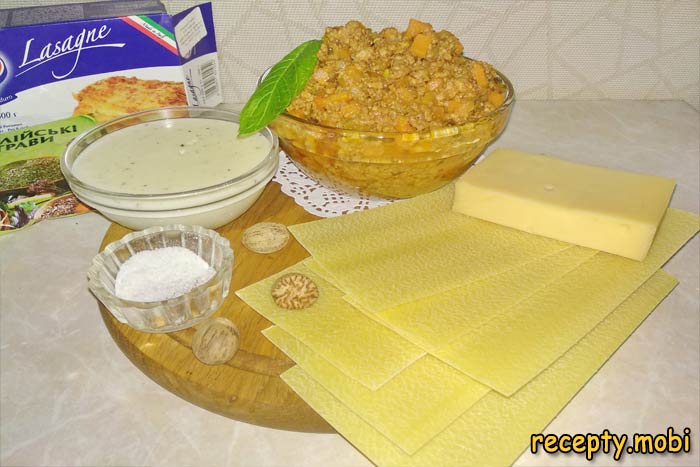
I pre-boil the lasagna sheets (8 pieces) in a large pot of salted water with 1 tsp of vegetable oil for 1–3 minutes, following the instructions on the packet ("no-boil" sheets do NOT need this step). I drain them in a colander and immediately rinse with cold water so the sheets do not stick together.
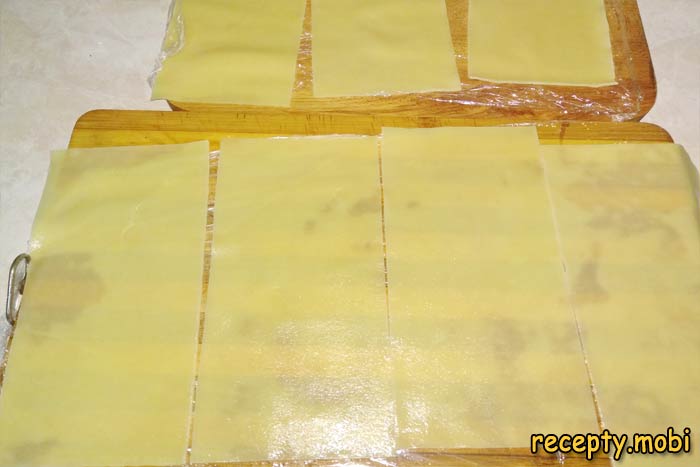
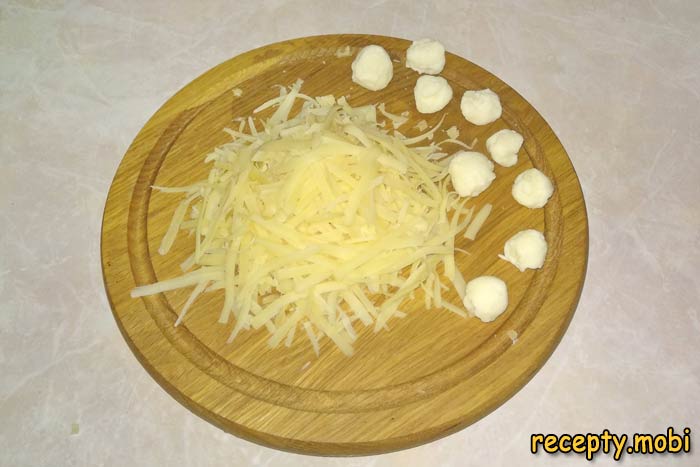
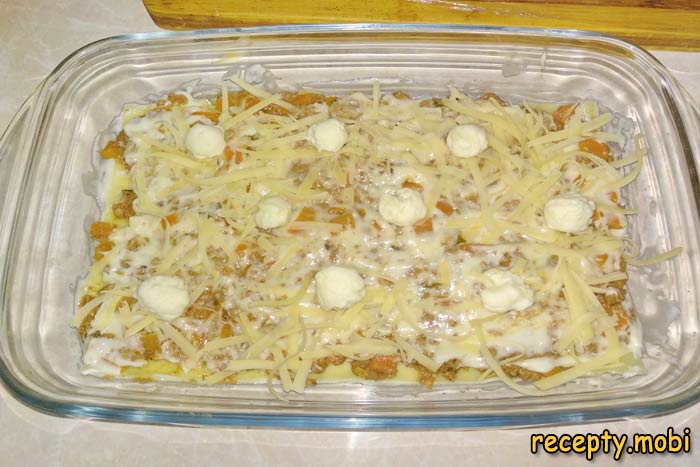
I grate the cheese on a coarse grater. You can add a few mozzarella balls.
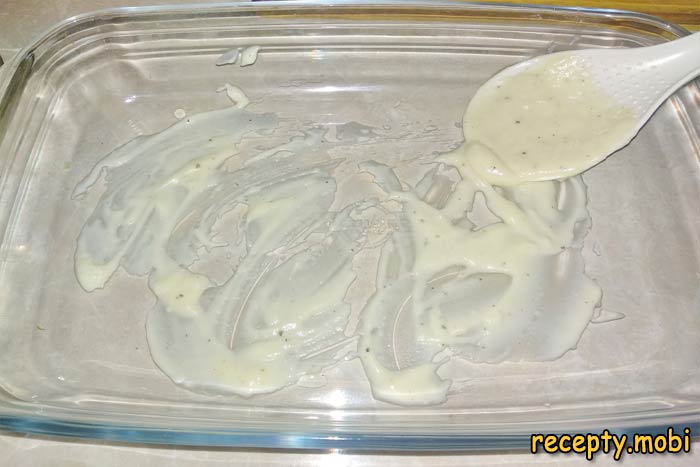
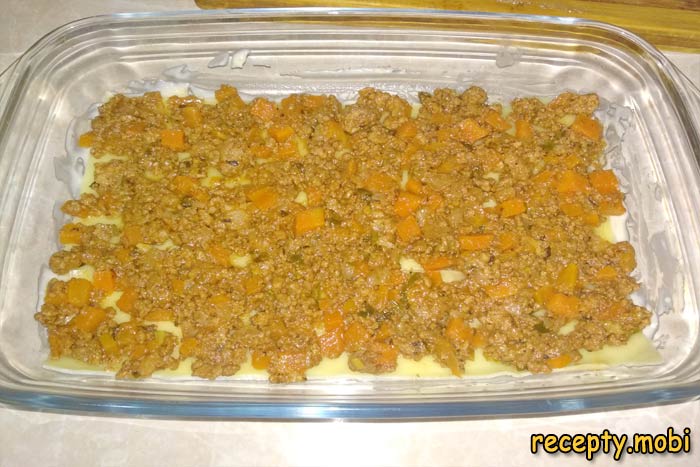
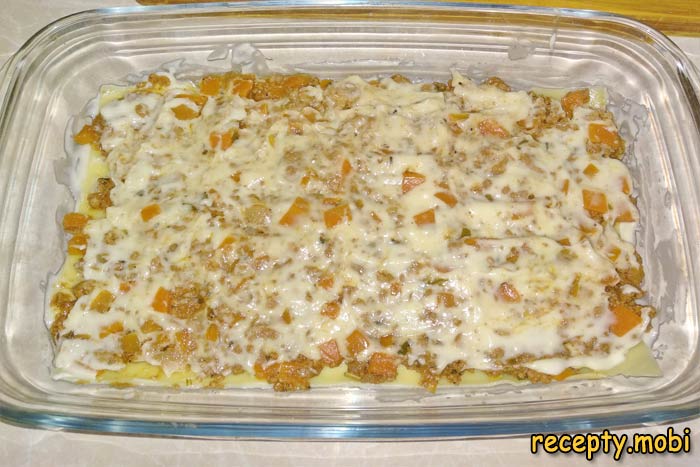
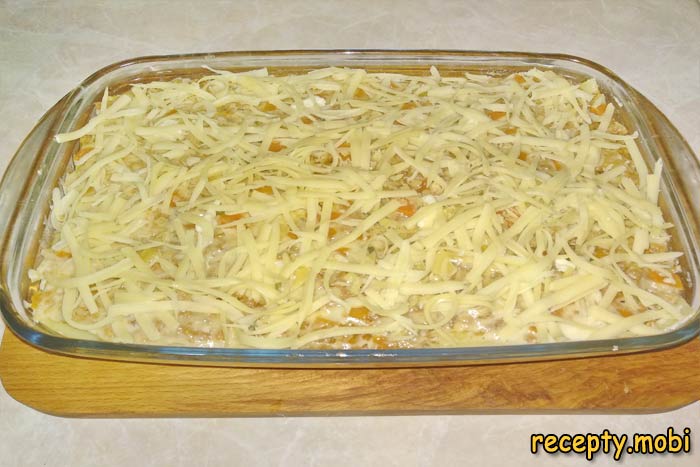
I assemble the lasagna in a 25x30 cm heatproof dish. I spread 3–4 tbsp of Béchamel on the bottom – it protects the pasta sheets from scorching. I lay down the first layer of lasagna sheets tightly together, with no gaps. On top I spread 1/3 of the Bolognese in an even layer, then 1/3 of the Béchamel in a zigzag, then 1/3 of the grated cheese (Parmesan + mozzarella).
On top I add the Bolognese sauce.
I cover it with Béchamel sauce using a spatula.
Hard cheese and mozzarella form the top of this layer.
I repeat the layers twice more: pasta sheets → Bolognese → Béchamel → cheese. The final top layer is plenty of cheese (Parmesan + mozzarella). The mozzarella gives a "stretchy" crust and the Parmesan a golden-brown finish. I cover the top with foil to prevent it drying out (I remove it 10 minutes before the end for a browned crust).
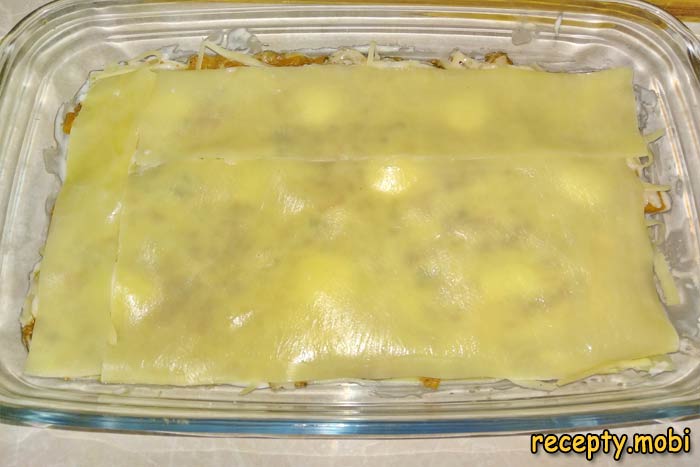
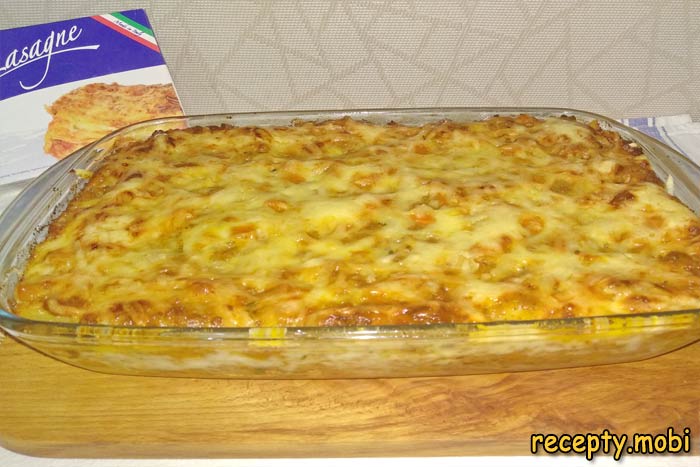
I preheat the oven to 180°C, top-and-bottom heat. I put the dish in the centre of the oven and bake for 30 minutes under the foil + 10 minutes without the foil until the top is golden-brown. The finished lasagna "bubbles" at the sides and the cheese on top is melted and browned.
I take out the lasagna and let it "rest" for 10 minutes – the sauces stabilise and the lasagna is easier to cut into even portions. I cut it with a sharp knife into 10 serving pieces. The Italian lasagna is ready! I serve it hot with a fresh vegetable salad and red wine.Made by the classic recipe, the Italian lasagna turns out incredibly fragrant, tender and hearty. It will surely please your family.The finished dish can be frozen and, if needed, reheated in the microwave or oven, and a fragrant dinner is ready in just a few minutes.


Tips
- 1
Simmer the Bolognese sauce for AT LEAST 1.5–2 hours over low heat. The longer it cooks, the richer the flavour. A quick version is just an ordinary ragout.
- 2
Be sure to add dry red wine – the "secret" of Italian Bolognese by the Bologna canon.
- 3
Nutmeg in the Béchamel is a must – without it the sauce tastes "flat". On a similar principle I make Béchamel sauce for other dishes.
- 4
Before cutting, let the lasagna "rest" for 10 minutes – the sauces stabilise and the slices come out even.
FAQ
What can I use instead of ground beef in Bolognese? +
The following work well: a 50/50 mix of beef and pork (the classic Italian ragù bolognese, juicier), lamb (for a "Greek" interpretation), turkey or chicken (a more diet-friendly option), venison or game (for a "gourmet" version). For a meatless version, use green lentils (300 g, boiled separately) or button and porcini mushrooms (400 g) for a rich "meaty" flavour. Each type of meat gives its own character. Pure beef is the "classic" of the classic Italian lasagna from Bologna – not fatty, but with a rich flavour.
Can I make lasagna without pasta sheets? +
Yes, there are "low-carb" options: thinly sliced courgette or zucchini (3 mm each), aubergine (5 mm each, pre-fried), Chinese cabbage leaves (blanched for 30 seconds), or layers of spinach leaves. All the alternatives give a similar layered effect but with a different texture. You can also use homemade pasta sheets (flour + egg + a pinch of salt) – the "authentic" Italian version. For a gluten-free option, use wide rice or buckwheat noodles.
How long does the finished lasagna keep? +
The finished lasagna keeps in the refrigerator for up to 3 days in a tightly closed container or under cling film. On the second day the flavour is even richer, as the sauces soak the pasta sheets through. Before serving, reheat in the oven at 150°C for 15–20 minutes under foil, or in the microwave for 3 minutes under a cover. You can freeze it in portions for 1 month in airtight containers – before eating, defrost it completely in the refrigerator for 8 hours and warm it through in the oven. It is ideal for cooking ahead for busy working days.
What goes well with lasagna? +
It is ideal with a light green salad (rocket + cherry tomatoes + olive oil + balsamic) – a contrast to the hearty lasagna. For drinks, an Italian dry red wine (Chianti, Sangiovese, Barbera), a dry white (Pinot Grigio), or a light beer (lager). For starters, bruschetta with tomatoes and basil, olives, mozzarella with tomatoes and basil (Caprese), or Parma ham. For dessert after the lasagna, tiramisu, panna cotta or lemon sorbet. It is ideal for a family Sunday lunch or a dinner with friends.
- Comment
or post as a guest
Be the first to comment.