avg —
Beef with Mushrooms in Cream Sauce in a Skillet

Instructions
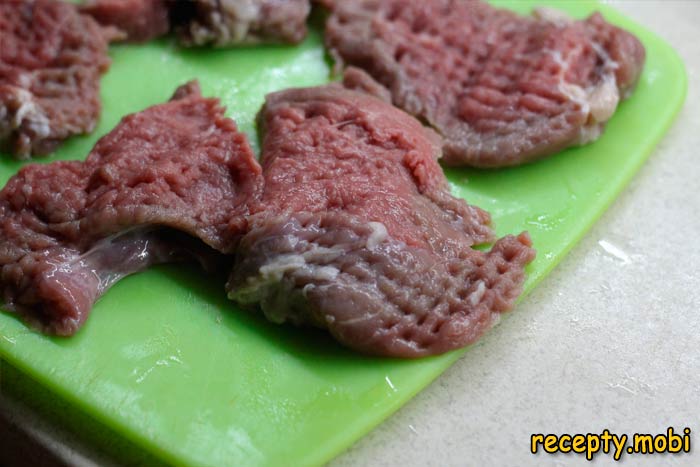
I cut the beef tenderloin into portion-sized pieces 1–1.5 cm thick, across the grain. I pound each piece with a mallet on both sides through cling film – the film stops the splatter from flying around. I season both sides with spices, salt and freshly ground pepper, rubbing them into the meat.
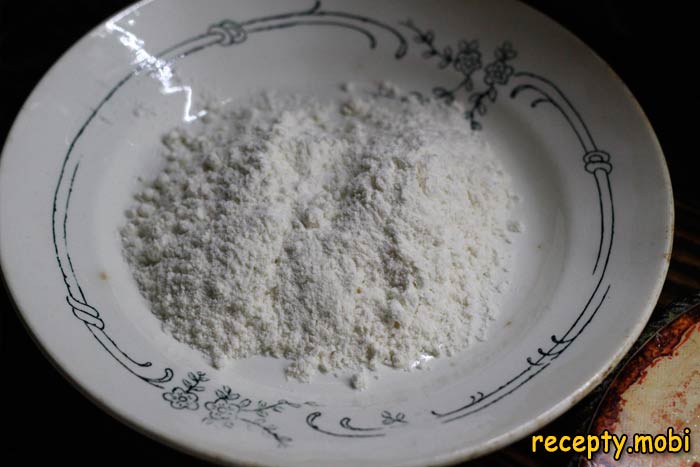
I dredge the pounded pieces of beef in wheat flour on both sides. During frying the flour creates a protective "coat" that keeps the juices inside the meat, and it also gives the sauce a light thickening base as it cooks.
I fry the beef in hot vegetable oil over high heat for 2–3 minutes on each side until golden. The high heat is needed to "seal" the juices inside with a crust. Over low heat the meat would stew rather than fry, and would turn out dry.
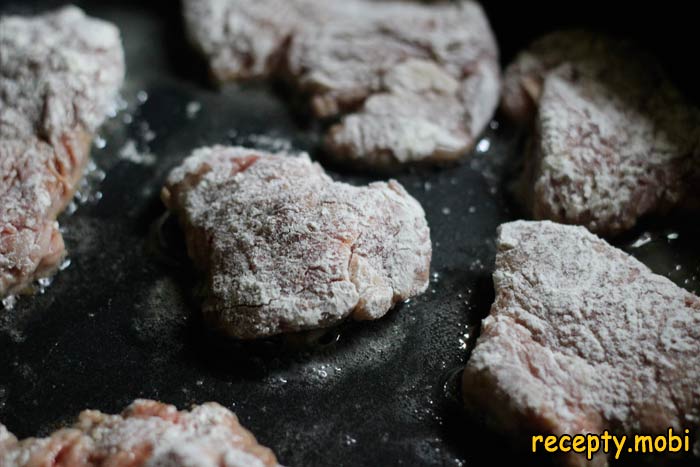
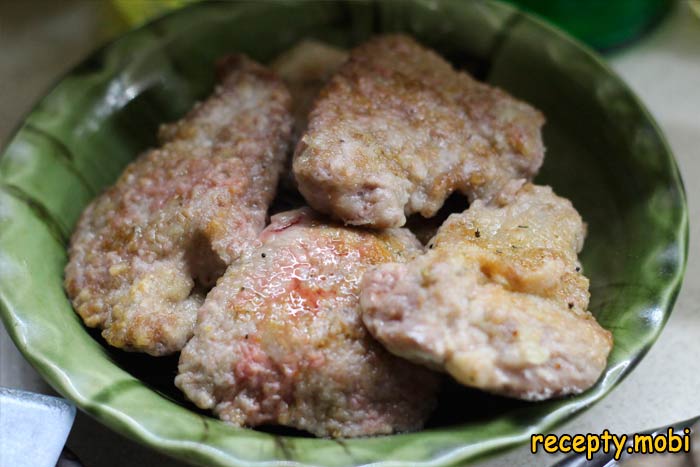
I take the fried beef off the skillet onto a separate plate. The meat will still finish cooking in the sauce – for now all we need is the golden crust. The pan keeps a delicious base of meat juices that will go into the sauce.
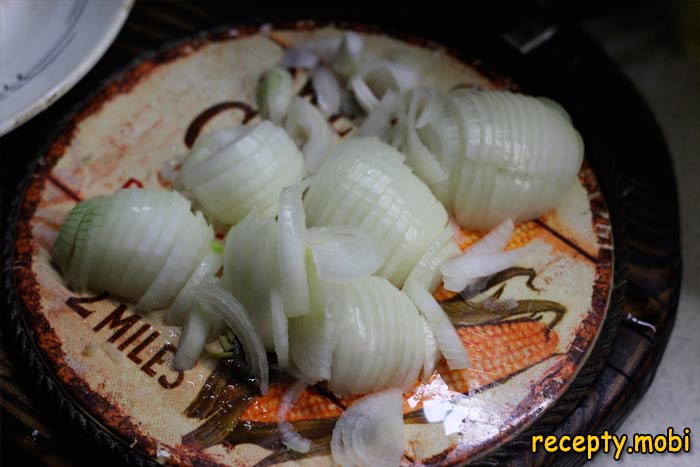
I cut the onion into thin half rings, 3–4 mm. The half rings spread out nicely in the finished dish and caramelise well. Three onions is a lot for this amount of meat, but it is the signature "French" generosity of a creamy ragout – the sauce comes out tender and rich.
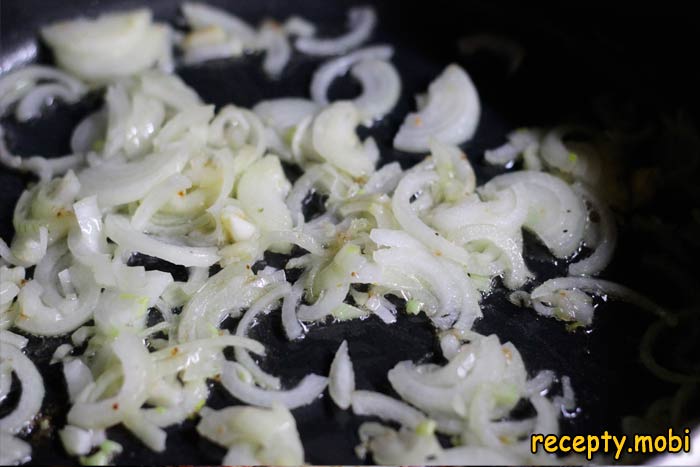
I sauté the onion in the same oil from the skillet for 5–7 minutes over medium heat until soft and lightly golden. In the meat juices the onion takes on a distinctive umami base that you cannot get by frying it in a clean pan.
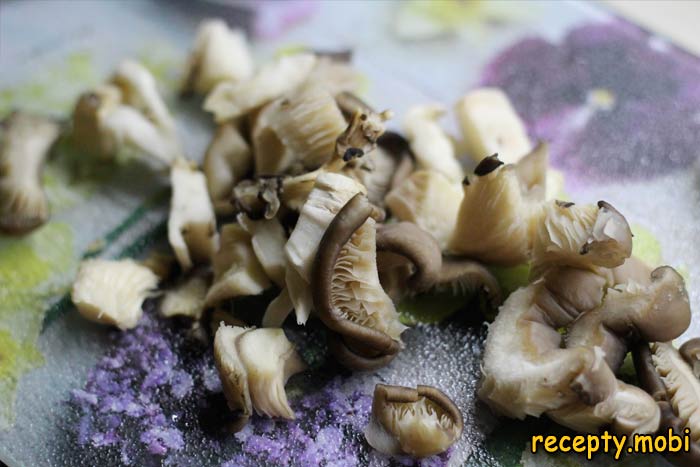
I cut the oyster mushrooms (or champignons) into thin strips, 5 mm. Oyster mushrooms give a more "restaurant-style" woodland aroma than champignons – choose to taste. If the mushrooms have been frozen, pat them dry first, otherwise they will release too much liquid into the sauce.
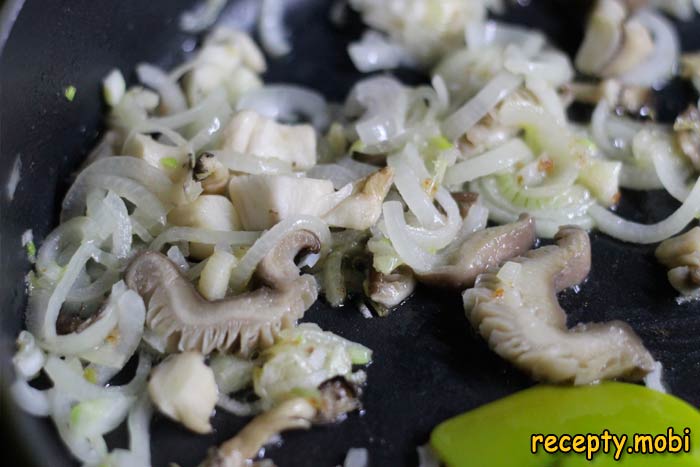
I add the sliced mushrooms to the sautéed onion and fry for another 5–7 minutes until the mushrooms are soft and the released moisture has evaporated. Without driving off the water the mushrooms end up "boiled", whereas we want them fried with a distinctive aroma.
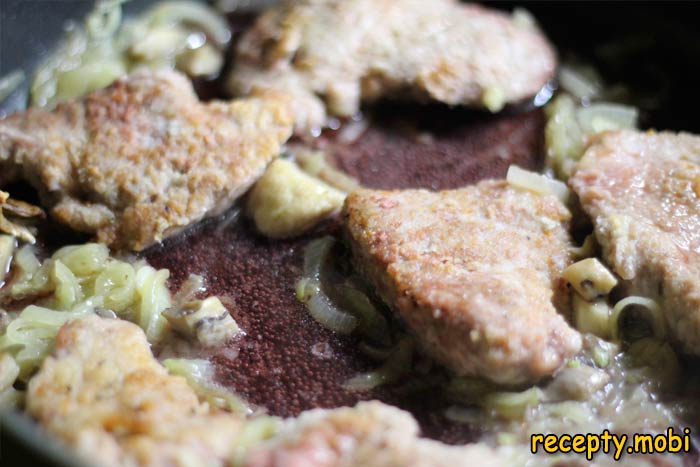
I return the fried beef to the skillet with the onion and mushrooms and pour in the dry red wine (30 ml). I bring it to a boil and evaporate the alcohol for 2–3 minutes – the smell of spirit should disappear completely. The wine gives a distinctive "restaurant" accent.
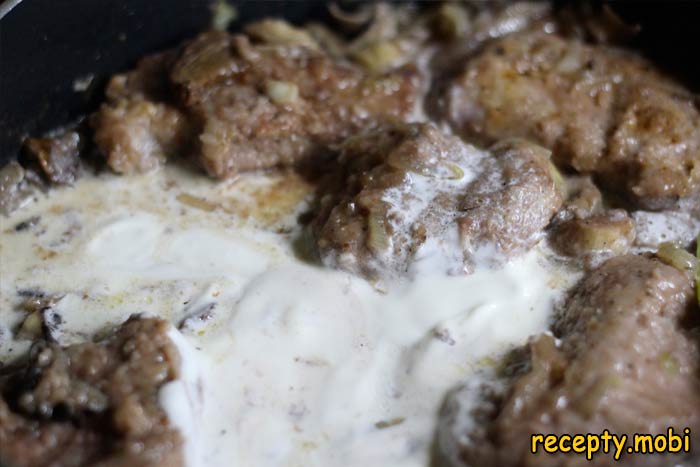
I pour in the cream and sour cream and stir thoroughly. I simmer it under a lid for 15 minutes over low heat – during this time the beef becomes as tender as possible and the sauce thickens to the right consistency. Check the salt at the end – the spices and cream can shift the overall balance.
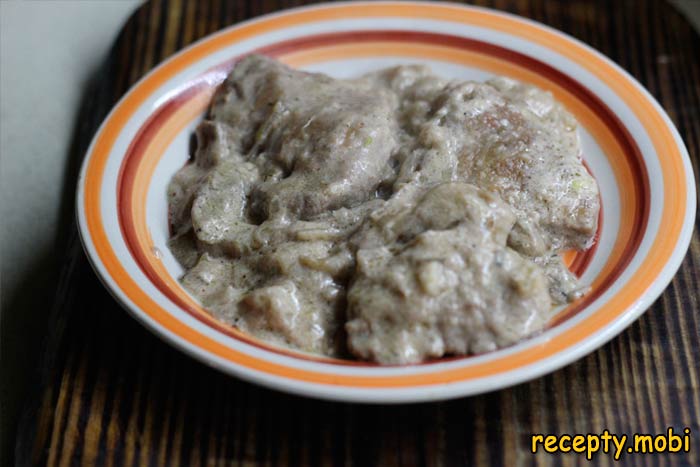
The beef with mushrooms in cream sauce is ready! I serve it with mashed potatoes, boiled rice or pasta. I garnish it with fresh herbs (parsley, dill) and serve it hot – the sauce should "run" across the plate.


Tips
- 1
Oyster mushrooms can be replaced with champignons, porcini or a mix – each kind of mushroom gives the sauce its own character.
- 2
Always pound the beef with a mallet before frying – this way it will be more tender and cook faster.
- 3
Evaporate the wine completely for 2–3 minutes – only the distinctive "restaurant" aroma will remain, without the alcohol. I use a similar principle when I make classic Beef Stroganoff.
- 4
Serve it with mashed potatoes, pasta, rice or a vegetable salad – the sauce is perfectly absorbed by any side dish.
FAQ
Can it be made without wine? +
Yes, replace the dry red wine with concentrated beef stock (30–50 ml) plus a teaspoon of apple cider vinegar or lemon juice for an acidic accent. The sauce will be milder in flavour, without the alcoholic notes. You can also use unsweetened grape juice with a drop of vinegar – it gives a similar "wine" aroma. For a children's table or a non-alcoholic version, simply skip the wine – the dish will still be tasty, just less "restaurant-like" in character.
What can replace the cream in the sauce? +
Full-fat sour cream of 25–30% works (a more tangy option), as does Philadelphia cream cheese plus a little milk for consistency (a thicker sauce), coconut cream (for a vegan version or an unusual tropical accent), or a mix of milk and flour (a budget option). Each substitute gives the sauce its own character. Cream is the classic for Beef Stroganoff – it provides that distinctive tenderness without a sour accent. Without a dairy component the sauce comes out "empty".
How should the finished dish be stored? +
In the fridge in a tightly sealed container – up to 2 days without loss of quality. On the second day the flavour becomes even richer, as the sauce fully soaks into the meat. When reheating, add a couple of spoonfuls of water or milk to restore the consistency (the sauce thickens as it cools). Reheat over low heat, without bringing it to a hard boil – the cream can split. I do not recommend freezing it – the sauce separates after thawing.
Which side dish suits it best? +
The ideal choices: mashed potatoes (the classic, it soaks up the sauce), boiled pasta (fettuccine, tagliatelle – Italian style), basmati or wild rice, buckwheat (Russian style), polenta (an Italian side). Among vegetables, braised cauliflower or broccoli and buttered green peas work well. For a fresh salad, try rocket with cherry tomatoes and olive oil. As for a drink, the same dry red wine that was used in the sauce.
- Comment
or post as a guest
Be the first to comment.