avg —
Beef Bourguignon

Instructions
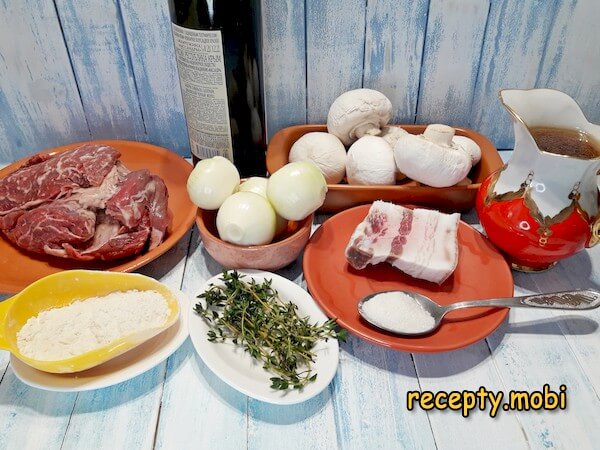
I prepare the ingredients for beef bourguignon. If you use young veal instead of beef, the cooking time will be shorter — you need to test the meat for tenderness from time to time (as soon as it can be mashed with a fork, it is ready). Chicken broth may be used instead of beef broth.
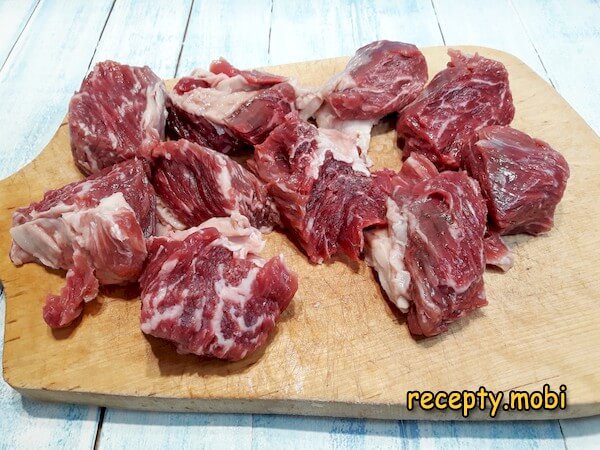
I cut the meat into large pieces. There is no need to trim off the membrane and sinews — during stewing they soften beautifully and improve the texture of the beef, enriching it with their collagen. This is the "secret" of a velvety sauce.
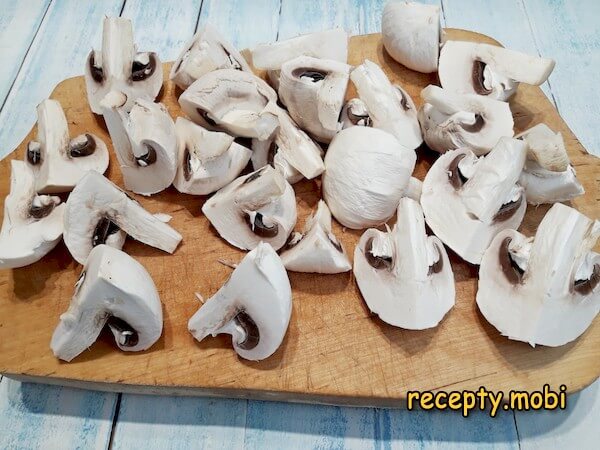
I cut the large mushrooms into 4 pieces, while the small ones can be left whole — this gives a "textured" sauce with mushrooms of different sizes.
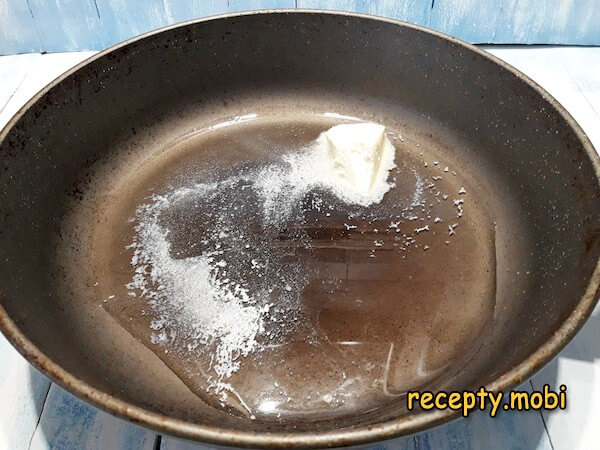
In a deep frying pan or cast-iron pot, I heat a little vegetable oil with some butter added over high heat — it is precisely the combination of the two fats that gives that "French" frying aroma.
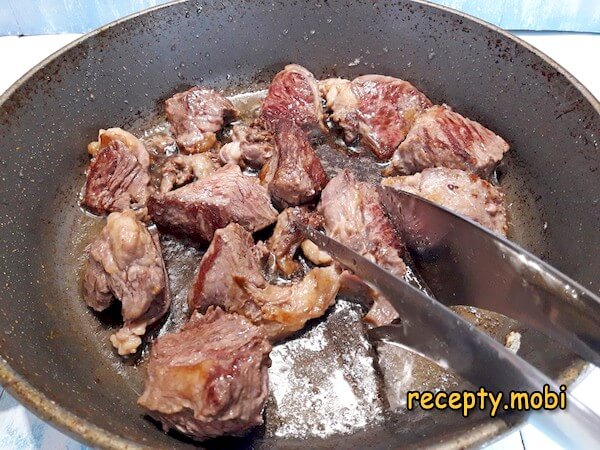
As soon as the oil is well heated, I lay the meat in the pan, making sure the pieces do not overlap each other. I sear them on all sides until a crust forms (this takes about 7 minutes) — it is the crust that "seals" the juices inside the meat.
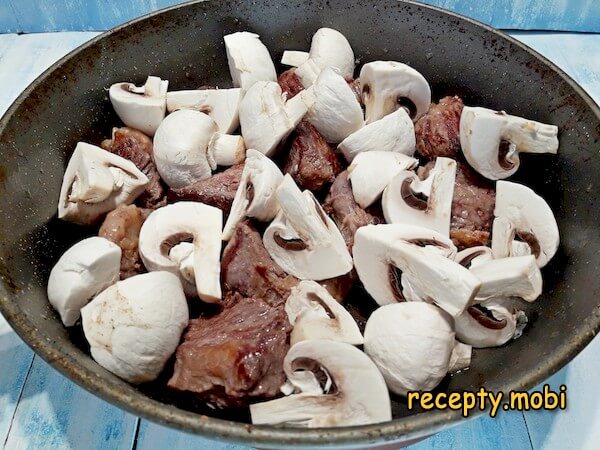
I add the mushrooms to the pan, joining the lightly golden meat.
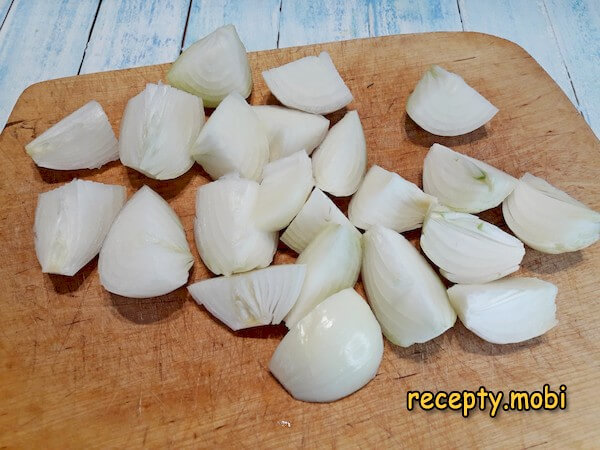
I chop the onion coarsely — roughly 1×1 cm, so that it can be felt in the finished dish rather than "dissolving" away.
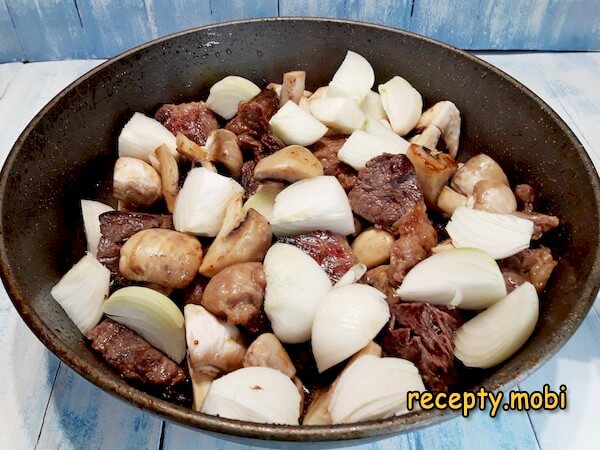
I add it to the pan (without reducing the heat). I fry everything for 3-4 minutes — the onion should turn slightly golden.
Meanwhile, I thinly slice the bacon — into thin strips 5 mm wide.
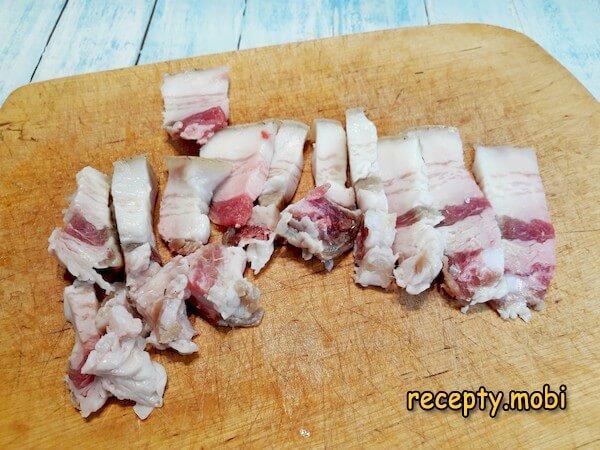
I add it to the rest. The fat it releases adds to the buttery soak, and the pieces themselves thin out until translucent — the bacon turns into a "smoky" aroma for the whole dish.
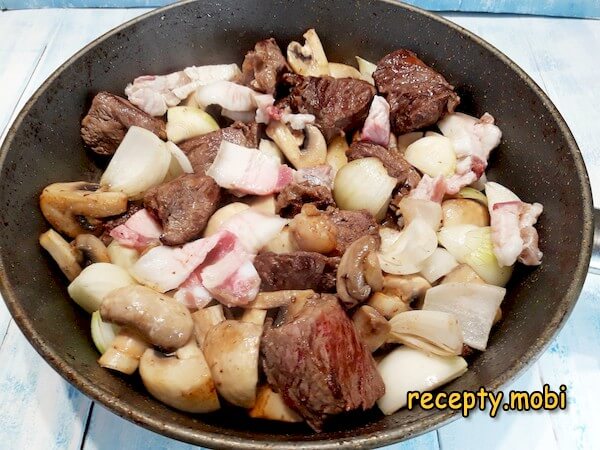
After another 5 minutes, I season the mixture with sprigs of thyme — this is the "soul" of Provençal and Burgundian dishes.
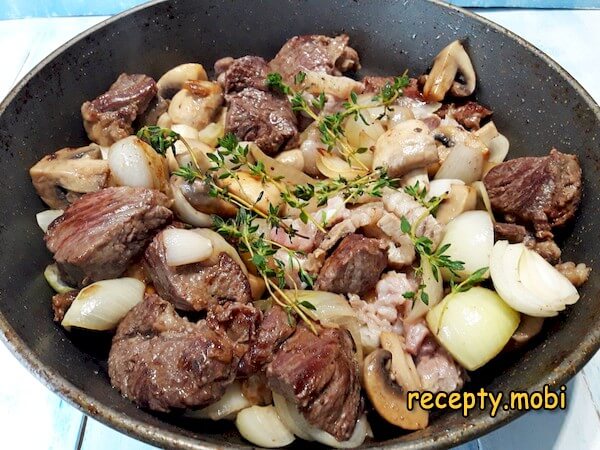
And straight away I dust them with flour. Without taking the mixture off the heat, I stir everything thoroughly so the flour coats all the ingredients evenly — this is the "secret" of thickening the sauce at the end.
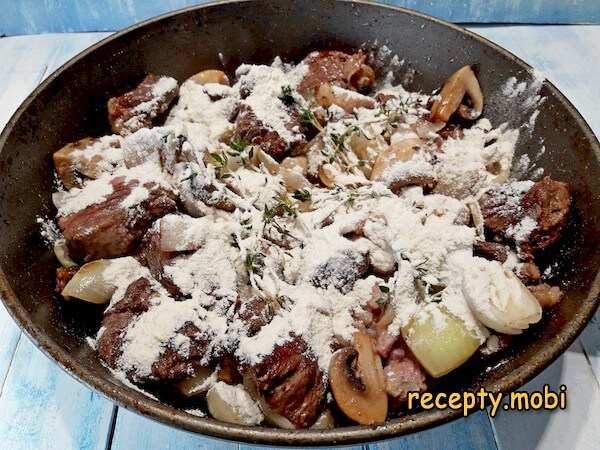
Now I can pour in the wine. I boil off the alcohol over medium heat for about 15 minutes — the spirit will go, leaving only the aroma and a pleasant tartness.
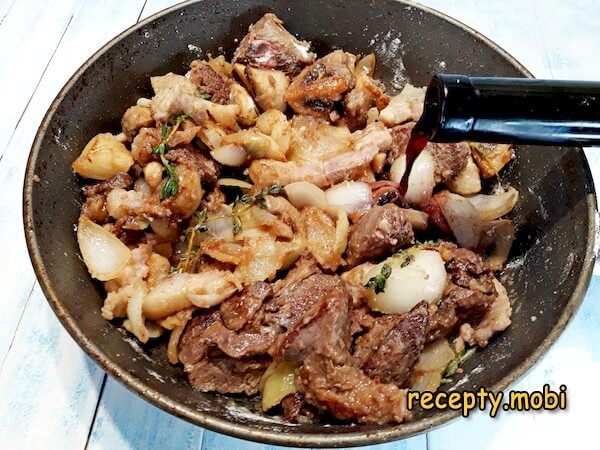
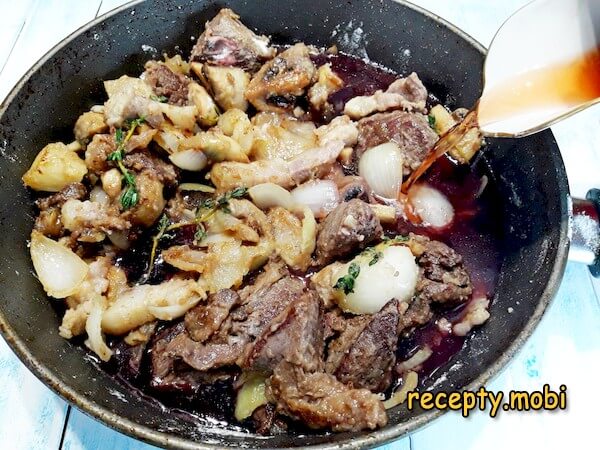
After this I add the beef broth (the liquid should be almost level with the meat). About 30 g of broth needs to be set aside for the garnish.
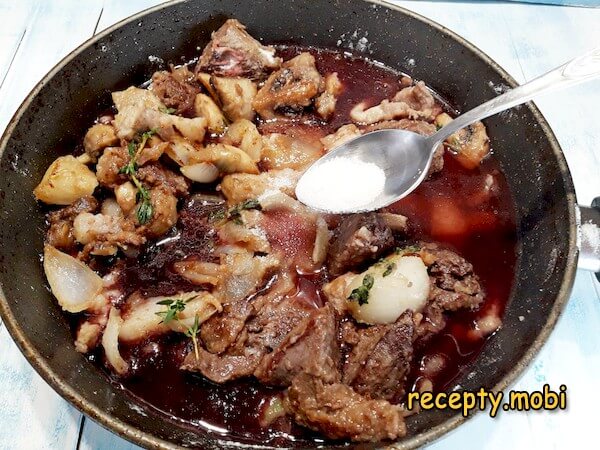
With the sugar I slightly reduce the tartness of the dry wine — it is exactly 0.5 tbsp of sugar that balances the wine's acidity without obvious sweetness.
I add salt, checking the amount by taste — the salt goes in last, once the wine's acidity has already been balanced with sugar.
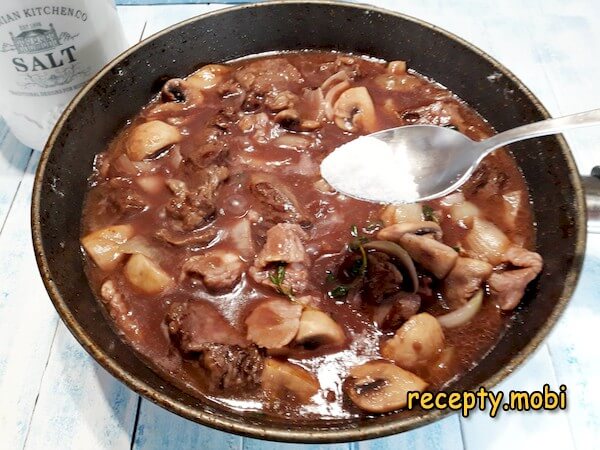
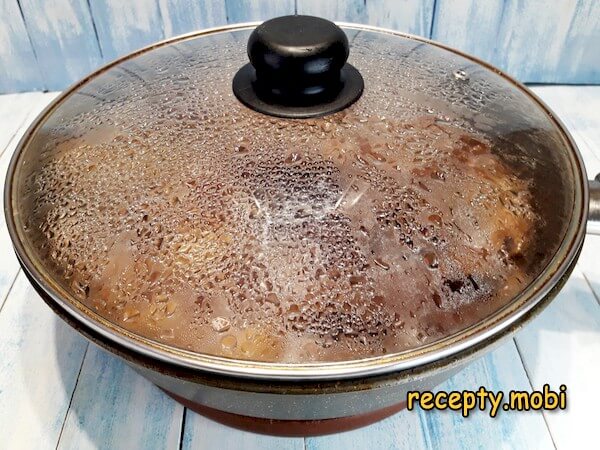
I cover the pan with a lid, reduce the heat, and stew the beef bourguignon for about 2-2.5 hours — it is precisely this long, gentle braising that turns ordinary beef into the most tender, "melting" texture.
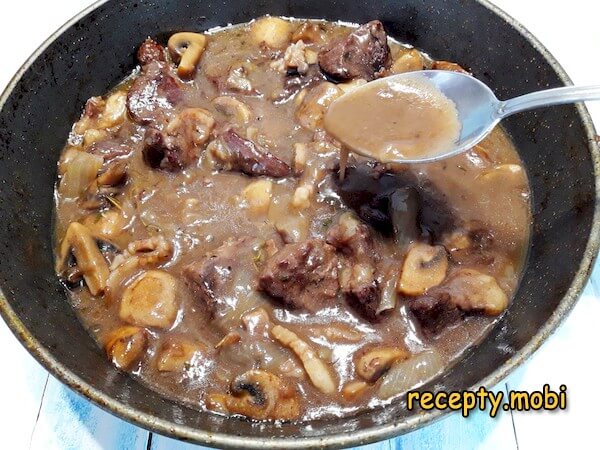
After the stated time, the wine sauce will have a silky, thick texture — it will run off the spoon in a continuous thread. This is the ideal consistency for a "bourguignon" sauce.
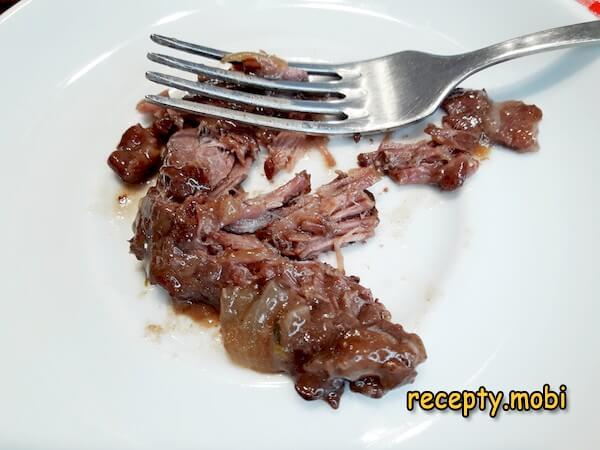
If you try to crush a piece of meat with a fork, it will be easy to do — which means the pan can be taken off the heat. This is the "doneness test" for long stewing.
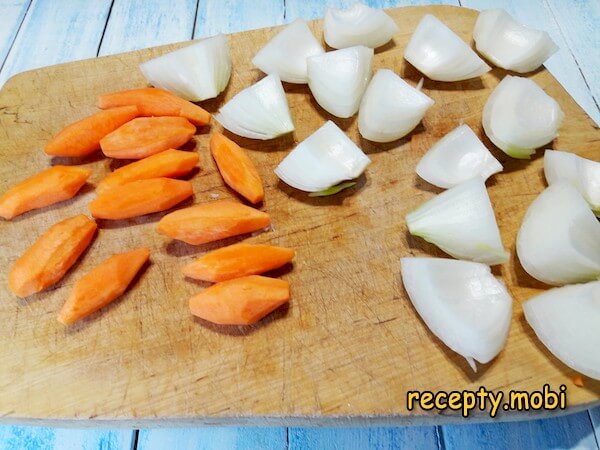
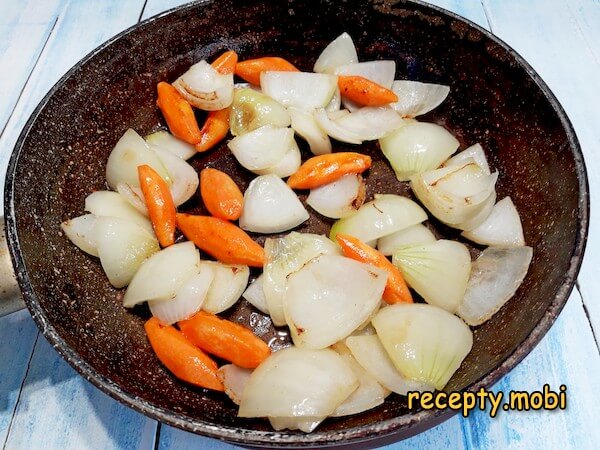
For the garnish, I cut the onion coarsely without separating its layers (remove the centre). The carrot takes a little more effort — you need to cut it into small barrels, although any other shape will be just as tasty. The "little barrels" are a classic of French presentation.
I fry the prepared pieces in a mix of vegetable and butter — until lightly golden.
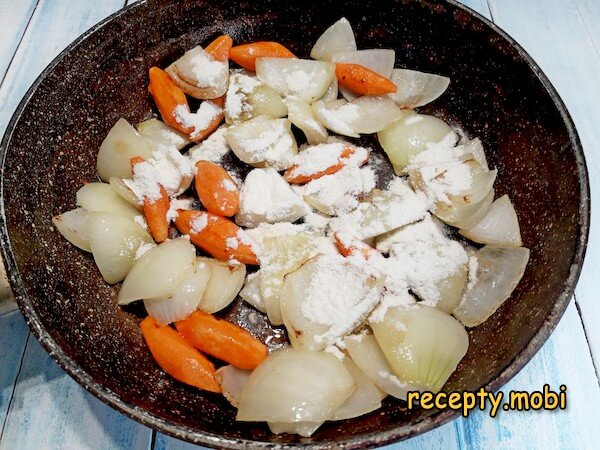
I add half a tablespoon of flour and 30 g of broth — this is a "glazing" sauce for the garnish that gives it a soft sweetness.
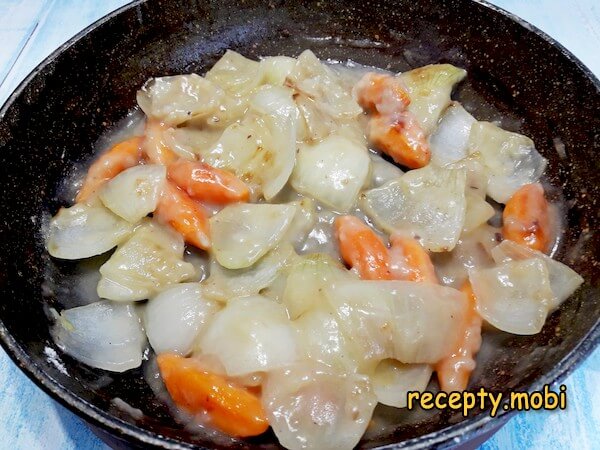
I stir everything well and stew for 7-10 minutes — the carrot and onion become coated in a glazed film and take on a "caramel" tint.The fragrant dish, steeped in the scent of celebration, is ready. To serve, I spoon the carrot-and-onion garnish over the beef bourguignon and decorate it with sprigs of fresh thyme. And of course, a glass of red wine will be perfectly in place here — preferably of the same variety that was used in the cooking.


Tips
- 1
THE RIGHT WINE is the "secret" of an authentic beef bourguignon. Cheap table wine gives a "sweet-and-sour" sauce with no character. Traditionally, bourguignon used Burgundy wine (Burgundy is the home of the recipe) made from the Pinot Noir grape. Good working choices are a dry Pinot Noir, a dry Merlot (more "fruity"), or Chianti (Italian, but it works). The main rule: "if you can drink it, you can cook with it." The wine should be of good quality, but not a premium bottle — its aroma will not survive 2-2.5 hours of stewing.
- 2
SEARING IN BATCHES is the "secret" of a crisp crust. If you throw all the meat into the pan at once, it "steams" in its own juices instead of frying. There will be no crust, and the meat will be "boiled". The correct technique: the pieces must not touch each other in the pan and should be seared in 2-3 batches. Between batches the pan should heat up again. The same "crust" principle works in beef stroganoff with mushrooms — another Russian-French "relative" of bourguignon.
- 3
FLOUR BEFORE WINE is the "secret" of a velvety sauce. The flour is added to the meat and vegetables and fried for 1-2 minutes before the wine is poured in. This creates a "roux" — the base for thickening the sauce. If you add the flour to the wine, you will get lumps that will not dissolve even after 2 hours of stewing. An alternative is a liaison at the end (flour plus cold water, added in a thin stream while stirring). For a gluten-free version, use cornflour at the end instead of flour.
- 4
2-2.5 HOURS OF STEWING is the "secret" of the most tender texture. Less than 2 hours and the beef will stay "tough" with a fibrous structure. More than 3 hours and the meat will fall apart "into mush", losing its piece-like shape. The ideal is 2-2.5 hours on the lowest heat under a lid. Over this time the collagen in the membranes and sinews turns into gelatine, making the sauce thick and silky and the meat "melt in the mouth". A similar "long, gentle braising" principle is used in the French tartiflette.
FAQ
What can replace thyme in the recipe? +
Thyme is a classic of Burgundian cuisine. The best alternatives are: rosemary (more "piney", but it works), oregano (for a "Mediterranean" character), or a ready-made "Provençal herbs" blend. Dried thyme: 1 tsp = 1 fresh sprig. For a "Russian" version, 2 bay leaves plus dried dill will do. From a "bouquet garni" (a bundle of herbs): thyme plus parsley stalks plus a bay leaf, tied together with string. Fresh herbs are added at the start of stewing, dried ones in the middle of the process.
Can beef bourguignon be made in a slow cooker? +
Yes, it is a convenient "modern" method. The stages are the same, but done in the bowl: sear the meat on the "Fry" setting for 7-10 minutes, add the onion/mushrooms/bacon for another 10 minutes, then the flour plus wine plus broth, and switch to "Stew" for 2-2.5 hours. The convenience is that you do not need to watch the heat and the meat does not burn. The downside is that the sauce will not "reduce" as intensely and may stay a little thin (at the end, remove the lid and switch to "Fry" for 10-15 minutes to reduce it). In a pressure-cooker slow cooker (under pressure) — 35-45 minutes under pressure.
Which meat is best for beef bourguignon? +
The ideal beef is "sinewy", not freshly slaughtered: shoulder, brisket, front shank, oxtail, rib. It is precisely the sinewy meat, which needs long stewing, that turns "velvety" from the wine. Young veal with streaks of connective tissue also works, but needs only 1-1.5 hours. Marbled fillet is not suitable — it cooks in 5-10 minutes and will turn "cottony" with long stewing. Premium steak beef is also not for bourguignon — it is a waste of money. As the old saying goes: "the more sinewy, the tastier in bourguignon".
What to serve beef bourguignon with? +
A French classic. Bread: fresh baguette (for "mopping up" the sauce), focaccia with rosemary, or garlic toasts. Side dishes: boiled potatoes with butter, mashed potato with butter and cream (the classic), dauphinoise potatoes with milk, basmati rice, or fine tagliatelle. For drinks: the same red dry wine used in the cooking (Burgundy Pinot Noir, Merlot), or a red semi-sweet for a "family dinner". From salads — a green mix with a Dijon mustard vinaigrette, or a Niçoise salad. For dessert — a Tarte Tatin with apples or a Crème Brûlée.
- Comment
or post as a guest
Be the first to comment.