avg —
Potato nests with minced meat in the oven

Instructions
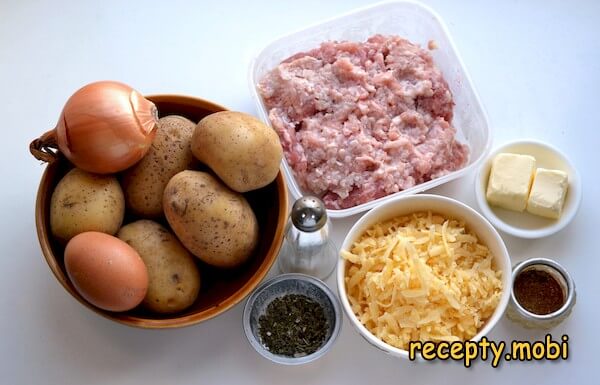
Prepare all the necessary ingredients.
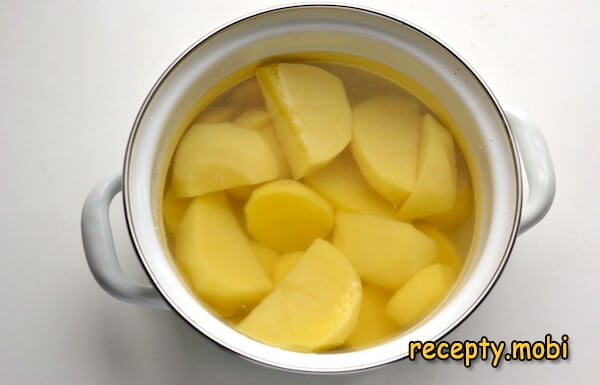
Peel the potatoes, rinse them and cut into random pieces. Put them in a pot and cover completely with water. After it boils, add salt to taste and boil until done, about 20 minutes.
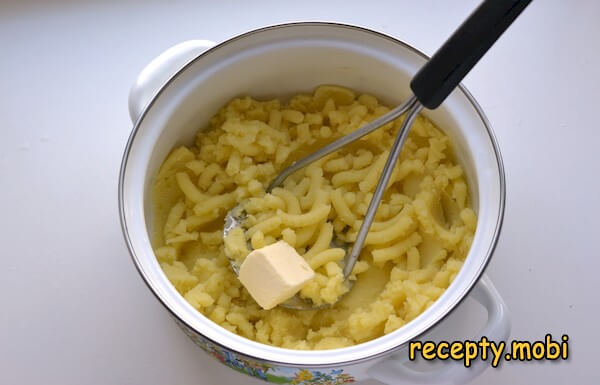
Drain the water. Mash the potatoes with a potato masher and add a piece of butter to the mash.
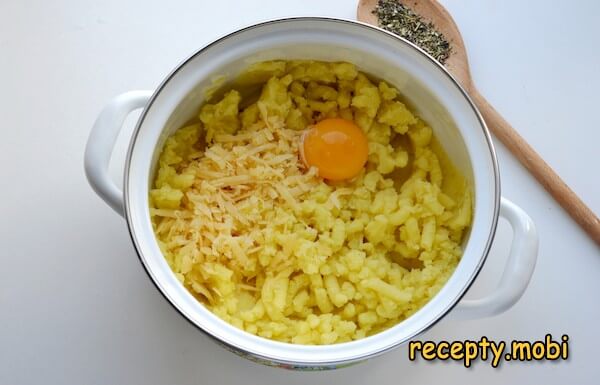
Add the raw egg yolk and 50 g of grated cheese and mix. Add the Provençal herbs – they give the potato a fragrant, spiced aroma.
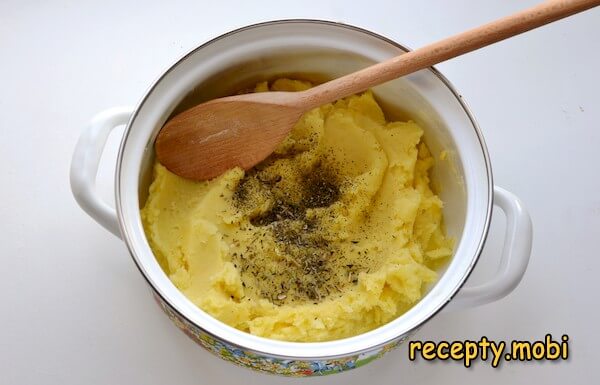
Mix the potatoes and herbs thoroughly – the potato part of the dish is ready. Set the bowl aside.
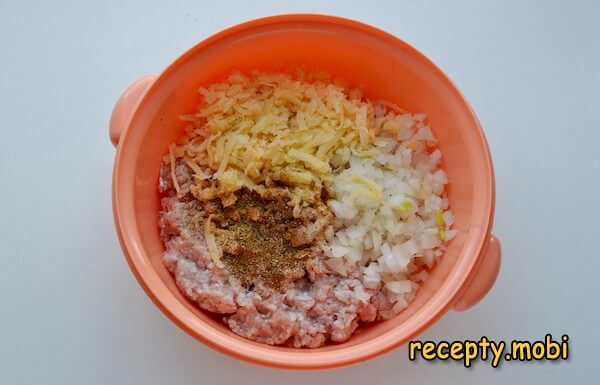
Add a fragrant seasoning to the chicken mince – mine is a chicken seasoning with a generous mix of spices, including ginger and garlic. Add 50 g of cheese grated on the large holes of the grater and a very finely chopped onion. Mix well. If the seasoning has no salt, do not forget to add it.
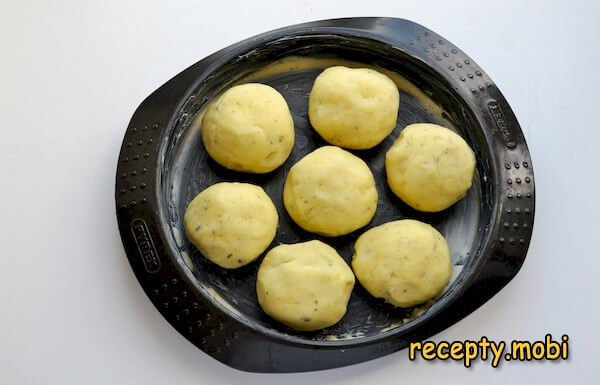
Turn the oven on to heat to 180–200 °C. Grease a baking dish with a piece of butter. Before shaping the potato, wet your hands with water so it does not stick. Scoop up the potato mixture with a tablespoon and form a ball in your palms. Place it in the dish – I ended up with 7 balls.
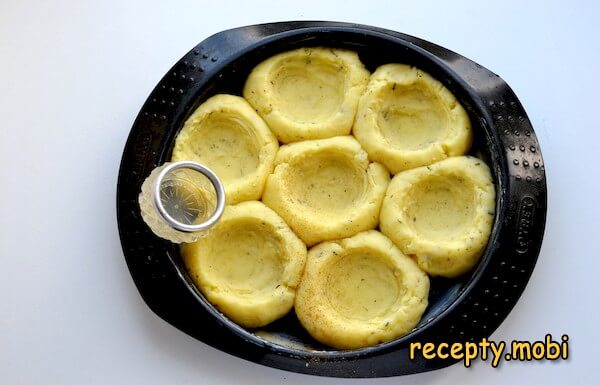
Using a small bowl chosen to fit (a little larger than the ball), make an indentation in each potato ball.
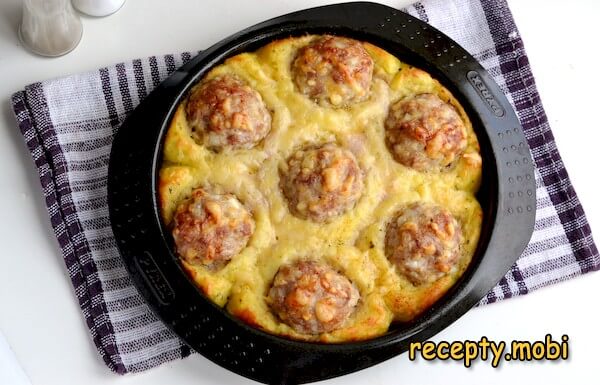
Shape balls from the meat mixture and place them in the indentations of the potato shells. Remember to wet your palms with water.

Sprinkle the potatoes and meatballs with grated cheese on top.

Put them in the preheated oven (180–200 °C) for 25–35 minutes, until fully cooked with a golden crust on top. The potato nests with minced meat are ready.Enjoy your meal!


Tips
- 1
WET YOUR HANDS WITH WATER – the mashed potato will not stick. The nests will come out even and neat.
- 2
THE YOLK IN THE MASH is the key "binding" ingredient. Without it, the nests can spread out during baking.
- 3
A SMALL BOWL FOR THE INDENTATION is a handy way to shape a "nest". Fingers give a less even shape, while a bowl works like a stamp.
- 4
A DOUBLE PORTION OF CHEESE – in the filling and on top. This gives a double flavour and a lovely golden crust.
FAQ
Which mince should I choose? +
The classic choice for this recipe is chicken mince (leaner and quick to cook). Alternatives: pork and beef 50/50 (more filling), turkey (for a diet or healthy eating), or a chicken-and-pork mix (a balance of flavour and fat). For a "children's" version, use chicken breast only. Fatty mince (pork with 30%+ fat) will add juiciness but increase the calorie count. With ready-made shop-bought mince, check the label: meat should be first, with no soya or starch. Homemade mince from chicken thigh meat is juicier than from breast. Avoid industrial turkey mince – it is often tough and dry.
Which cheese works best? +
Ideal are hard varieties that melt well: Russian, Dutch, Gouda, Mondseer or Emmental. They give an even crust and a pleasant flavour. Avoid: "cheese" made on vegetable fats (it quickly melts into a greasy puddle) and overly salty cheeses (feta, brynza). For a "premium" version, use parmesan (15 g) plus mozzarella (35 g). A young cheese such as Adyghe will not work – it melts poorly. For a "children's" version, use mild cheeses such as cream cheese or Philadelphia. It is best to grate the cheese on the large holes – it spreads evenly and bakes nicely.
How long do the nests keep? +
In the fridge in a container – 3 days. They reheat well in the oven, or in a frying pan under a lid with 2–3 tablespoons of water. A microwave makes the potato "rubbery", so it is best avoided. In the freezer – up to 1 month in a container, but after thawing the potato loses its texture. Freeze the raw assemblies – freeze the shaped nests on a tray, then transfer them to a bag. Cook from frozen for 30–35 minutes at 180 °C. Freshly made nests are the "star" option; on the second day the flavour holds, but the look suffers.
What to serve the nests with? +
This is a self-sufficient dish (potato + meat + cheese), so no side dish is needed. Classics: with fresh vegetables (cucumber, tomato, pepper), a green salad with a simple dressing, or pickled cucumbers. With ketchup, a sour-cream sauce with herbs, or barbecue sauce for variety. With black or grey bread. For a festive table – an eye-catching presentation of the "nests" on a platter with herbs, cherry tomatoes and olives. With a glass of dry red wine. For children – with vegetable purée or braised cabbage. For a "man's lunch" – with beer and pickled mushrooms. Garnish with herbs (dill, parsley) before serving for freshness.
- Comment
or post as a guest
Be the first to comment.