avg —
Pilaf with barberries and cumin

Instructions
Soak the rice in cold water for 2–3 hours, or better still overnight – during this time the grains absorb moisture and swell evenly during cooking, staying separate and fluffy. Parboiled long-grain rice (basmati or jasmine) is ideal for pilaf: it does not stick together and holds its shape well. Before soaking, rinse the rice 3–4 times until the water runs clear, to wash off the surface starch.
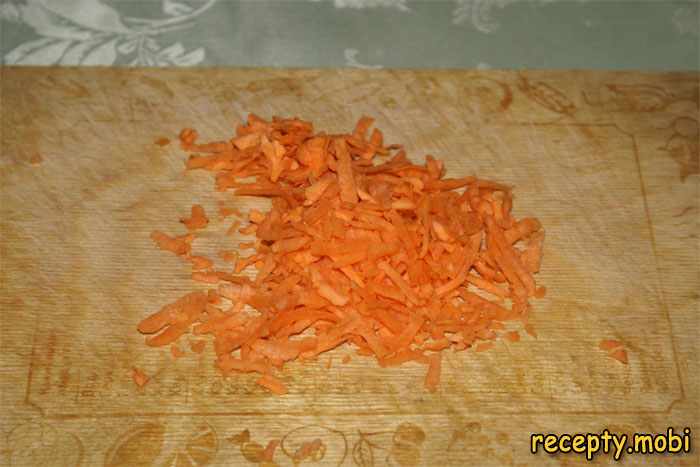
Wash the carrot thoroughly with a brush, peel it and grate it on a coarse grater with 5–6 mm holes. In Uzbek pilaf the carrot is traditionally cut into thin strips, but for a home version a grater is quicker and easier. Grated carrot spreads evenly through the dish and gives colour and sweetness to every grain of rice.
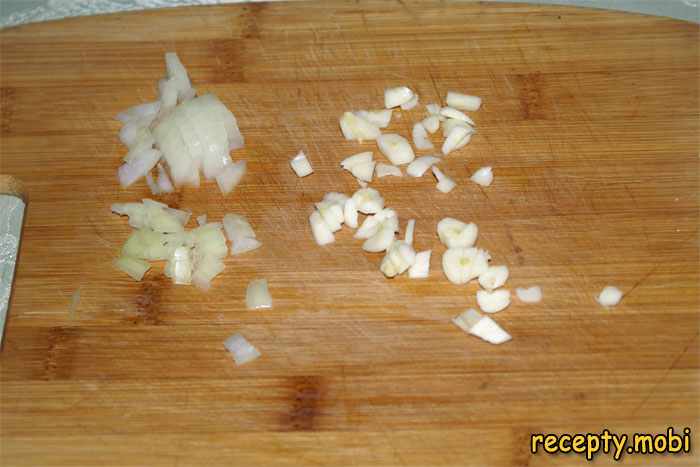
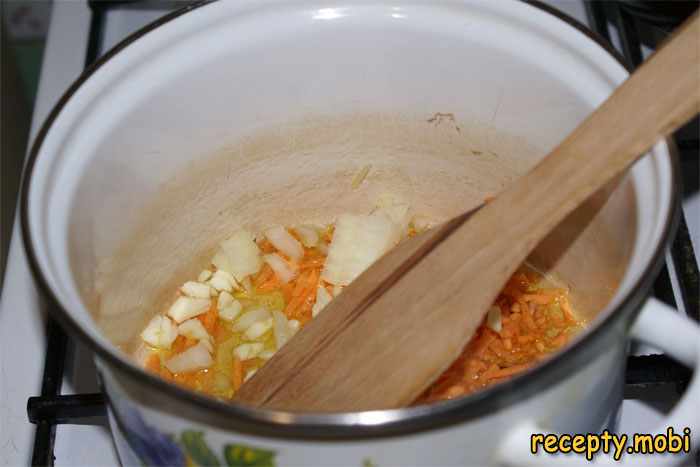
Peel the onion and cut it into small cubes, 4–5 mm. Separate the garlic into cloves, peel them and cut into thin slices 1–2 mm thick – this size lets the garlic release its aroma while frying without turning into a bitter mush. The prepared onion and garlic can be kept on separate plates until you start cooking.
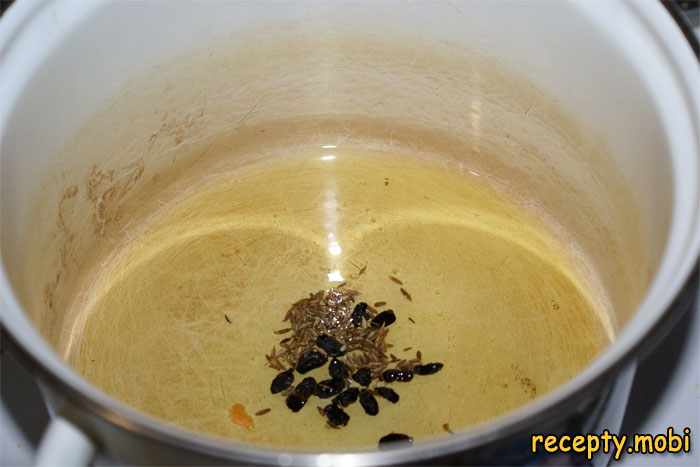
In a thick-walled pot or a heavy-bottomed cauldron, heat 3–4 tablespoons of vegetable oil over medium heat until it just shimmers. Add the cumin and barberry and dry-fry for 1–2 minutes, stirring constantly with a wooden spatula. The heat releases the essential oils of the spices and the kitchen fills with a characteristic spicy aroma. It is important not to overdo it – the spices should darken only slightly.
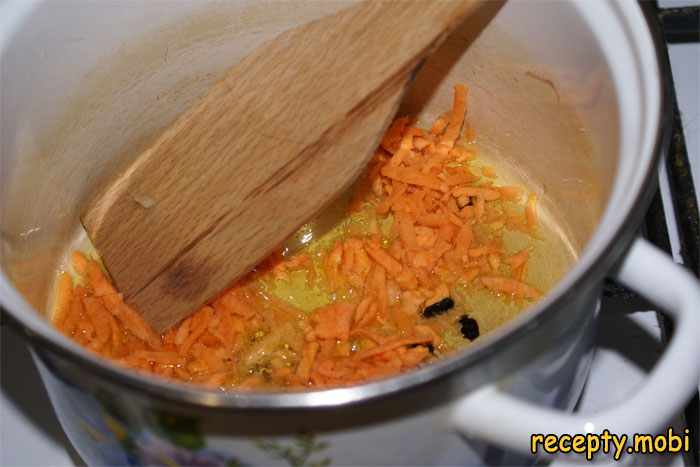
Add the grated carrot to the fried spices and sauté over medium heat for 5–6 minutes, stirring from time to time. The carrot should soften and caramelise slightly at the edges – this gives the pilaf a sweetish note and a beautiful orange colour. Watch that the carrot does not burn; lower the heat if needed.
Add the chopped onion to the carrot and fry for another 3–4 minutes until golden and translucent. The onion is added after the carrot because it cooks faster – this way both vegetables reach ideal softness at the same time. Golden onion gives the pilaf sweetness and depth of flavour.
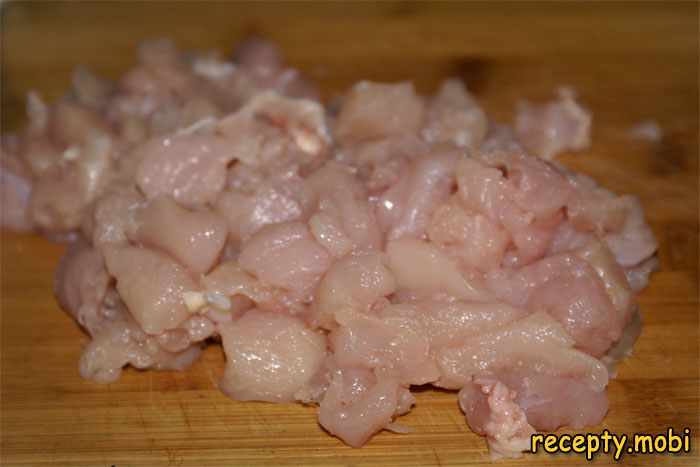
Rinse the chicken fillet, pat it dry with paper towel and cut it into medium pieces, about 3×3 cm. This size is best: large pieces take too long to cook and stay raw inside, while small ones dry out and become tough. The fillet can be replaced with boneless chicken thighs – they are juicier than breast.
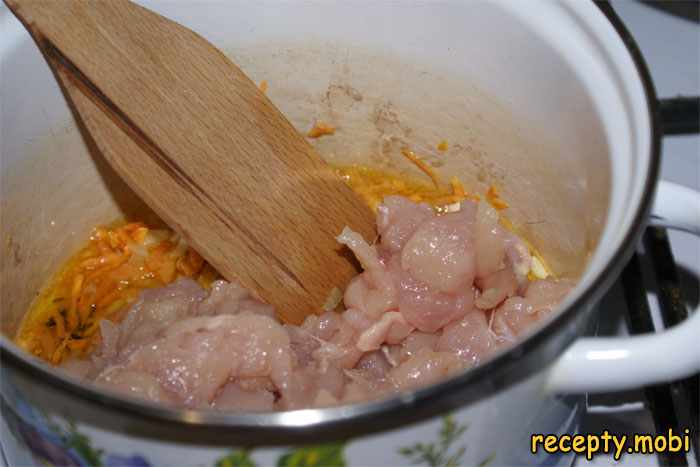
Add the chicken pieces to the fried vegetables and stir, distributing the meat evenly. Fry over medium heat for 7–8 minutes, stirring occasionally, until the meat turns white on all sides and lightly browns. At this stage the chicken is not yet fully cooked – it will finish together with the rice.
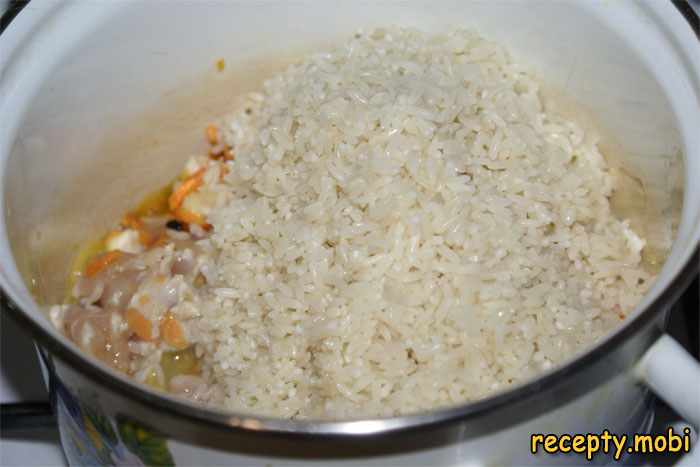
Drain the water from the soaked rice through a fine sieve, then rinse it once more under running water to remove any remaining starch. Well-rinsed rice is the key to a fluffy pilaf. Pour the rice into the pot over the meat and vegetables and level it gently with a spoon without mixing the layers – this is important for the right texture.
Pour in hot water so that it covers the rice by exactly 1–1.5 cm – no more, otherwise the pilaf will turn into porridge. Add 1 teaspoon of salt and, if you like, push a whole head of garlic into the centre – a traditional Uzbek touch for aroma. Bring to the boil over high heat, then reduce to the lowest setting, cover with a tight lid and cook for 20–25 minutes without opening or stirring. The rice should absorb all the water and become fluffy.
Check for doneness by carefully moving the rice aside in one spot – there should be no liquid at the bottom, and the grains should be soft but not overcooked. Remove the pot from the heat, take off the lid and cover the pilaf with a clean towel for 10–15 minutes – the cloth will absorb excess condensation and the rice will become even fluffier. The pilaf with barberry and cumin is ready!
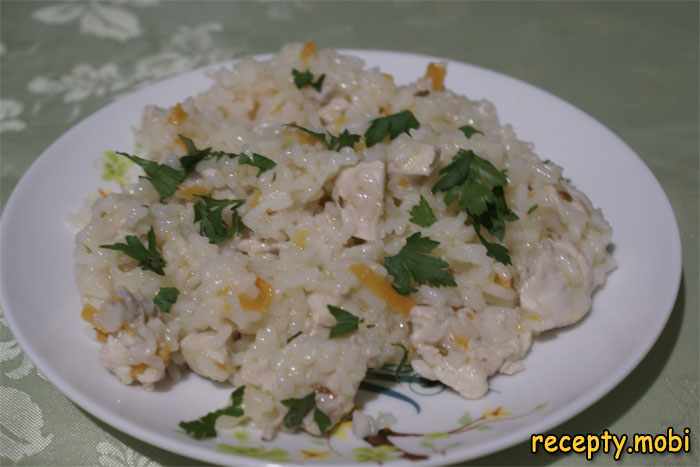
Arrange the pilaf on a large platter in the traditional way: the rice first, then the meat and vegetables on top. Sprinkle with fresh herbs – coriander or parsley. Serve hot with a salad of fresh tomatoes and cucumbers, or with pickled onion.


FAQ
Can pilaf be cooked without soaking the rice? +
Yes, but the cooking time will increase by 10–15 minutes, and the rice may turn out less fluffy. Be sure to rinse the rice 5–7 times until the water runs clear, to remove the surface starch – this partly makes up for the lack of soaking.
What can replace cumin? +
Cumin is hard to replace fully – it is the main spice of pilaf, giving it that characteristic Eastern aroma. You can try caraway, but the taste will be noticeably different. It is better to buy cumin – it is sold in most supermarkets.
Why did my pilaf turn into porridge? +
The main reasons: round-grain rice was used instead of long-grain, too much water was added (it should cover the rice by no more than 1.5 cm), the rice was stirred during cooking, or it was not rinsed free of starch. Follow all the steps and the pilaf will be fluffy.
Can pilaf be cooked in a multicooker? +
Yes, use the "Pilaf" or "Rice" programme. Fry the meat and vegetables on the "Fry" setting for 15–20 minutes, then add the rice and water and cook on the automatic programme until it signals.
- Comment
or post as a guest
Be the first to comment.