avg —
Minced Chicken Breast Cutlets

Instructions
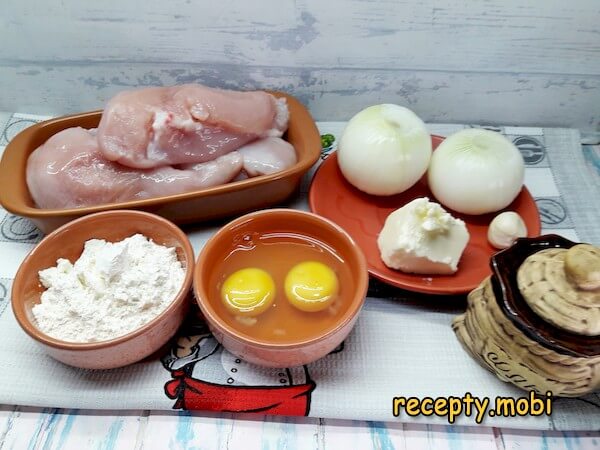
I prepare the ingredients for the chopped chicken breast cutlets. It is best to freeze the breast slightly so that it is easier to slice.
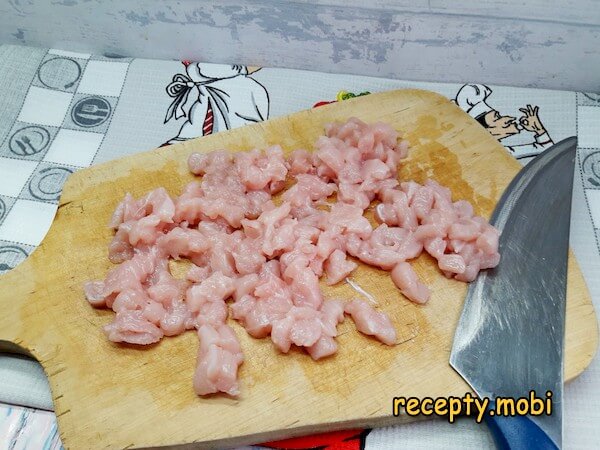
With a knife, chop the fillet as finely as possible. You should end up with cubes no larger than 3–5 mm on a side.
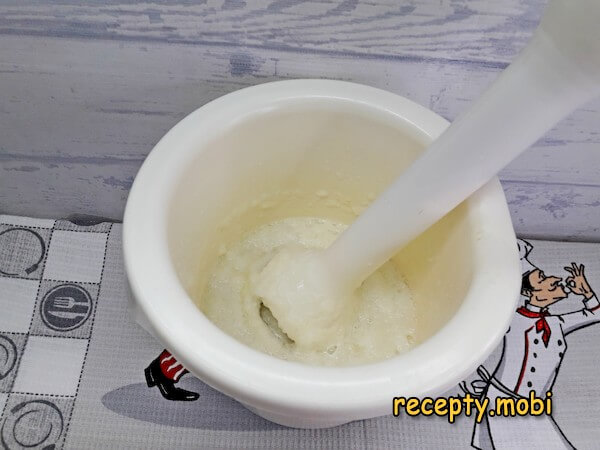
Blend the onion together with the garlic into a paste using a blender or another chopper with rotating blades. In this state the onion will not be noticeable in the cutlets, but will make them much juicier.
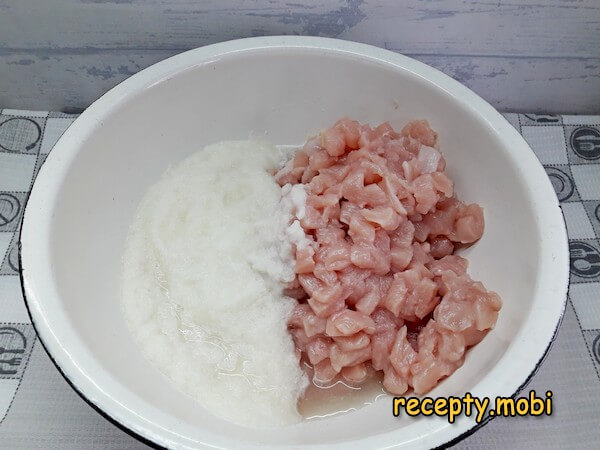
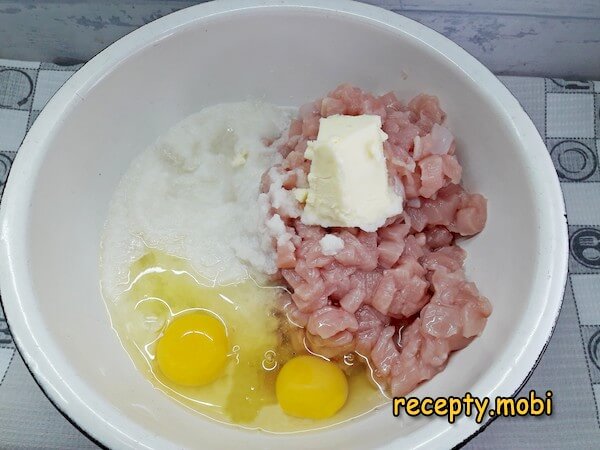
Put the chopped ingredients into a bowl that is convenient for mixing.
Add the eggs and a piece of butter to the same bowl.
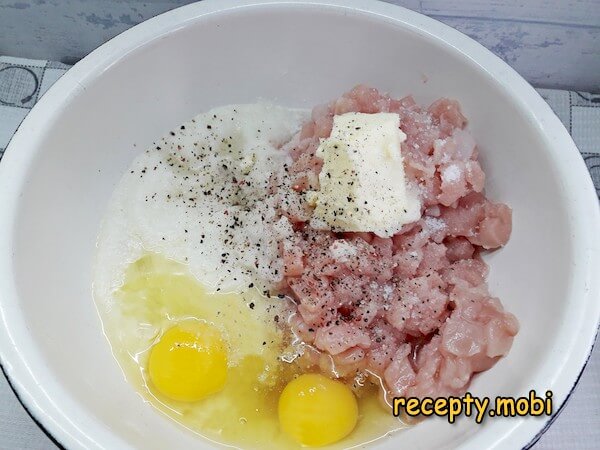
Season everything with salt and pepper.
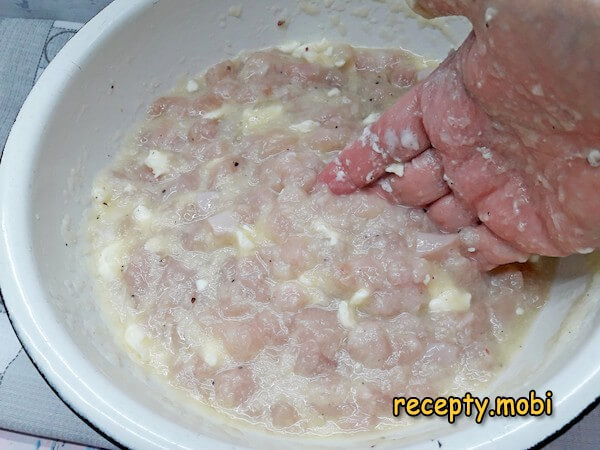
With your hand, kneading in the lumps of butter, mix the minced meat. Small pieces of butter will remain, but that is actually good – during frying they melt and soak into the cutlets.
Add the sifted flour.
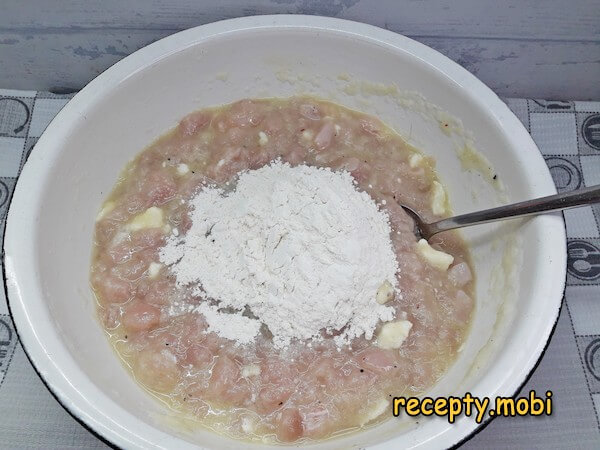
Now the mixture can be stirred simply with a spoon.
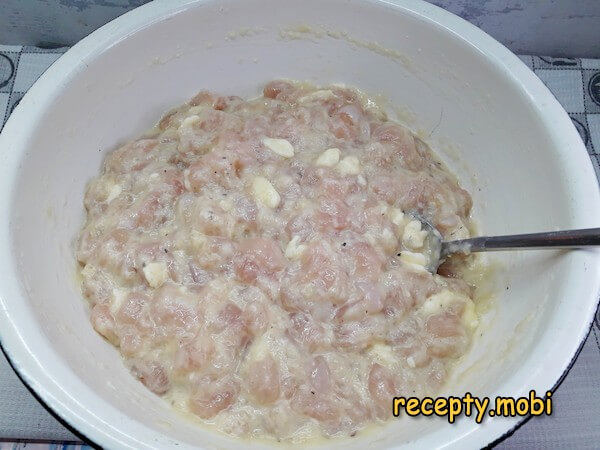
Into a pan with heated frying oil, spoon out the minced mixture, shaping it into rounded, elongated cutlets.
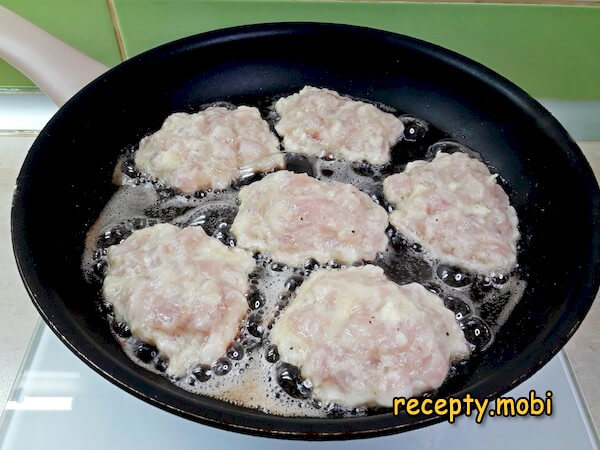
Fry each side for 3–4 minutes, without making the heat too high, so that the cutlets have time to cook through completely and do not burn.
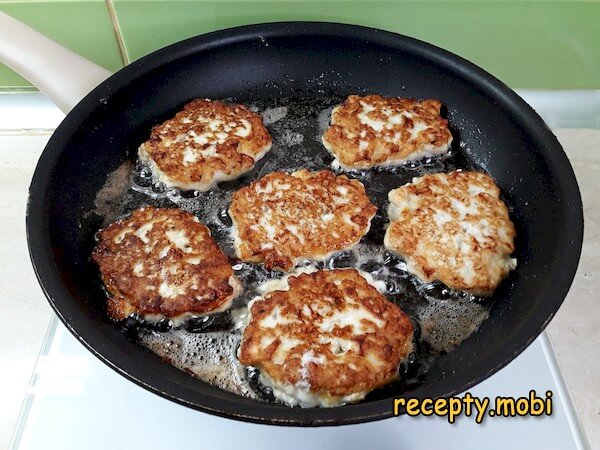
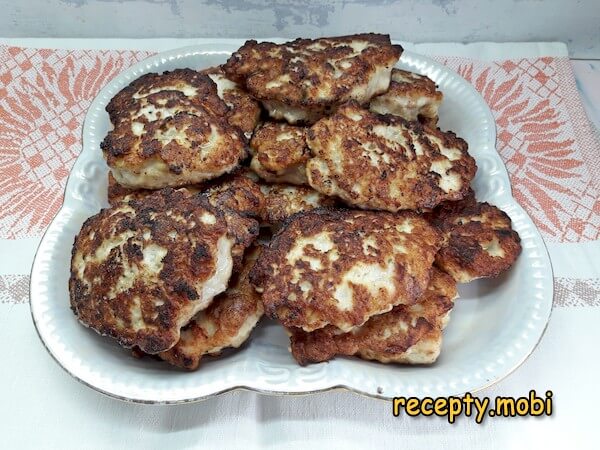
Fry a whole heap of cutlets this way.Golden and unusually juicy, these chopped chicken breast cutlets are good not only for a home lunch. You would not be embarrassed to put them on a festive table either, where they clearly will not be left untouched. Inside each cutlet is melted butter, and the cutlets themselves are very juicy. A dish like this vanishes from the table in the blink of an eye – give it a try!


Tips
- 1
FREEZE THE BREAST SLIGHTLY – the "secret" to slicing. Half-frozen fillet cuts into even 3–5 mm cubes. Warm fillet smears under the knife.
- 2
ONION IN THE BLENDER – the "secret" to juiciness. The onion paste soaks into the minced meat and is not felt as pieces. Maximum juice.
- 3
BUTTER IN PIECES – the "secret" to tenderness. While frying, the butter melts inside, making the cutlet juicy. Do not mix it to a smooth paste.
- 4
FRY ON MEDIUM HEAT – the "secret" to cooking through. High heat will burn them on the outside while they stay raw inside. 3–4 minutes per side is optimal. The same principle works for other kinds of chopped chicken cutlets.
FAQ
Which chicken should I choose? +
Ideally, chilled chicken breast fillet (670 g of white meat). Alternatives: boneless thigh (670 g – more aromatic and fattier), a whole chicken (use only the breast – 670 g), turkey fillet (670 g – even more tender), or boneless chicken wings (670 g – unusual). Fresh chilled meat with no signs of freezing is the best option. Do not use: shop-bought mince (it spoils the whole idea of "chopped" cutlets) or chicken necks (too little meat). Frozen breast will do once fully defrosted.
What can replace the butter? +
Alternatives: clarified ghee (50 g – I do not recommend it, it adds an "Indian" note), extra virgin olive oil (40 ml – it changes the flavour), 30% sour cream (60 g – more tender, for a "Russian" touch), or 33% cream (40 ml). Fresh, good-quality 82.5% butter is the best option. Do not use: spread (artificial), margarine (it spoils the flavour), or low-fat 60% butter (watery). For the "classic" version, 82.5% butter is a must; for an even richer result, add 1 tbsp of 33% cream. The pieces of butter should stay visible – do not work them into crumbs.
How long do the cutlets keep? +
In the fridge in a tightly closed container – 2–3 days. Any longer and the meat goes stale and loses its juiciness. Before serving, reheat them in a pan or in the microwave for 1–2 minutes. Cooked cutlets keep in the freezer for up to 1 month, and raw shaped cutlets for up to 2 months. Fry the raw ones straight from frozen. Fresh cutlets are at their best in the first 30 minutes (while the butter inside is still hot). On the second day the flavour "settles", but the texture is poorer. Do not leave them at room temperature for longer than 2 hours – meat and eggs spoil.
What should I serve the cutlets with? +
They work as a main course on their own or with a side: with mashed potatoes (the classic choice), with rice or buckwheat, with pasta or spaghetti, with boiled or stewed vegetables, with a fresh vegetable salad for a "light" lunch, or with a green salad and a lemon dressing. They also go with a garlic sauce or horseradish, with sour cream served separately, or with a tomato sauce or ketchup. As a "second course" they pair well with a bowl of borscht. A versatile hot dish for everyday meals and celebrations alike.
- Comment
or post as a guest
Be the first to comment.