avg —
Chicken fillet in a pot with potatoes in the oven

Instructions
I turn the oven on to preheat to 230°C – it is important that it is hot by the time the pot goes in. I brush the inside of a 1–1.5 litre ceramic pot with 1–2 tablespoons of unrefined sunflower oil, spreading it over the bottom and sides with a brush. The oil prevents sticking and gives the potatoes an appetizing crust.
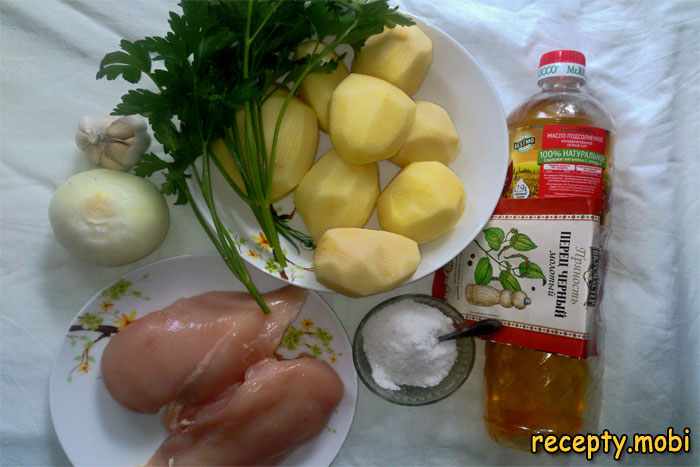
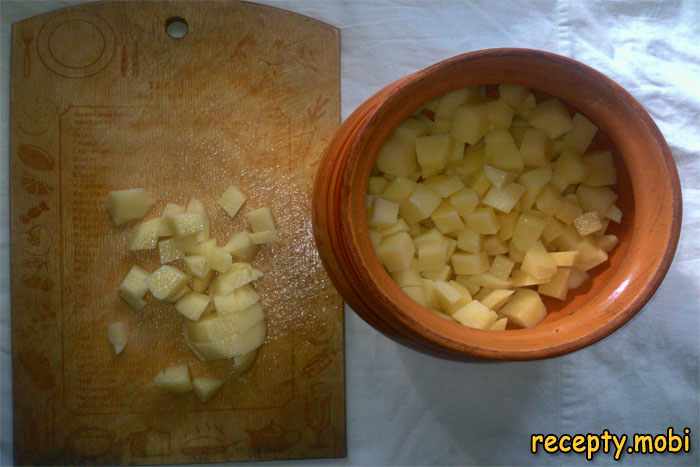
I wash 8 medium potatoes thoroughly, peel them and cut them into cubes about 2 cm in size – this size lets them bake evenly in the time it takes the chicken to cook. I fill the pot about halfway with the potatoes. I sprinkle over 0.5 teaspoon of salt and a pinch of freshly ground black pepper, distributing the seasoning evenly.
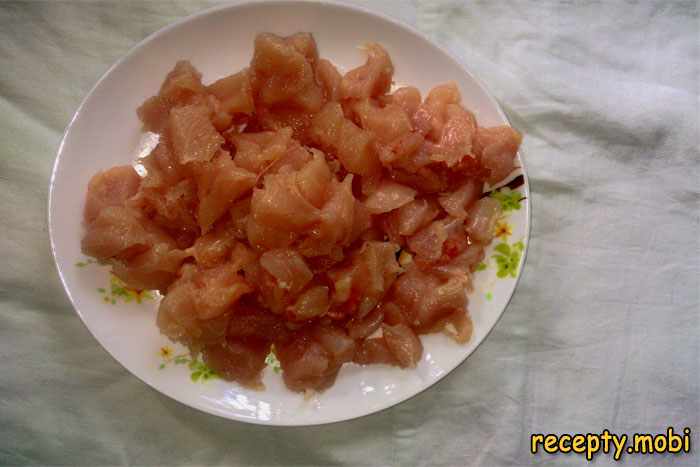
I rinse the chicken fillet and cut it into small pieces about 2–3 cm in size – smaller pieces dry out quickly, larger ones will not cook through in the centre within 60 minutes. I lay the meat over the potatoes in an even layer, without pressing it down – there should be small gaps between the pieces for the steam.
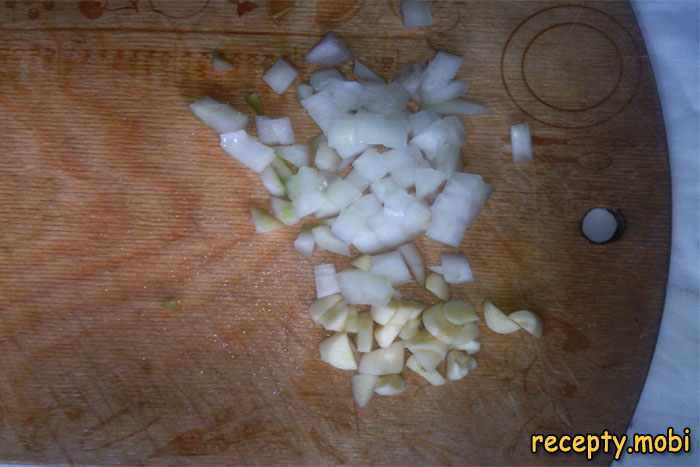
I peel and slice the onion into thin half-rings, and the garlic into slivers. I add them to the meat, spreading them evenly over the surface. If there is space left in the pot, I top it up with the remaining potatoes so that the lid closes tightly without a gap (a gap reduces the steam).
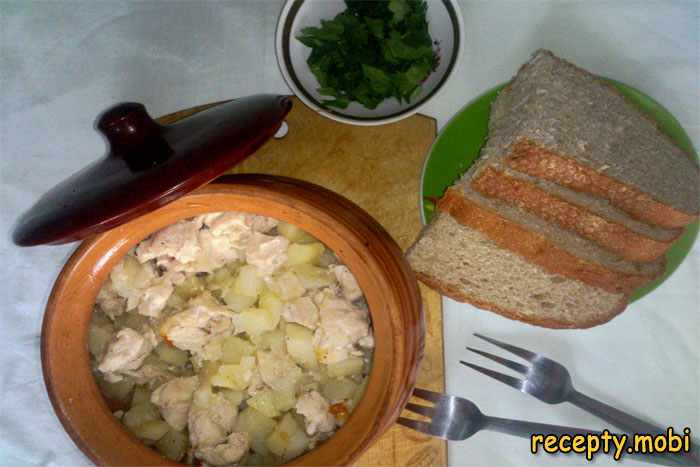
I put the pot into the oven, preheated to 230°C. I cook it for 55–60 minutes. For the first 40 minutes I do not open the lid, so that steam builds up inside and makes the chicken especially juicy. I check the potatoes for doneness with a fork – they should pierce easily. Once ready, I gently stir the contents of the pot with a wooden spoon and serve it hot, garnished with fresh parsley.


Tips
- 1
High heat at the start is the "secret" to juicy chicken fillet. 230°C for the first 40 minutes under the lid creates a "greenhouse" effect: the steam does not escape, the meat does not dry out, and the potatoes soak up the meat juices. At 180°C the potatoes take longer to cook and the fillet turns into dry fibre. A similar "high heat plus a closed pot" principle works in chicken with mushrooms in a pot in the oven – another dish made in ceramic.
- 2
Oil on the sides is the "secret" against sticking. A dry ceramic pot leaves the bottom layers of potato "burnt". 1–2 tablespoons of unrefined sunflower oil, spread with a brush over the whole inner surface (not just the bottom), create a protective layer and at the same time give the potatoes an appetizing "rustic" aroma. Refined oil works too, but is less aromatic.
- 3
100 ml of chicken stock or cream is the "secret" to a thick gravy. The basic recipe gives a "dry" bake, where the juices come only from the potatoes and the meat. If you want a dish with gravy, pour 100 ml of chicken stock (or 70 ml of 20% cream) into the pot before baking. You will get a thick, aromatic gravy that you can spoon over mashed potatoes or bread.
- 4
A crispy crust is the "secret" of an open lid at the finish. Fifteen minutes before the end of cooking you can take off the lid – the top layer of potatoes and chicken pieces will turn golden and form the characteristic crust that children love. You can also add chopped carrot or bell pepper for variety – the bright red/orange accents make the dish festive. For a "premium" version, sprinkle over grated cheese 10 minutes before the end, as in chicken fillet baked in cheese with tomato.
FAQ
Can I use frozen fillet? +
Yes, but it needs to be fully thawed in advance (12 hours in the refrigerator, or 1 hour in cold water in a sealed bag) and patted dry with paper towel. Frozen fillet placed straight into the pot without thawing releases a lot of liquid – the potatoes will stew in water rather than bake, and will not get the characteristic "rustic" crust. After thawing, always check the meat by smell: fresh chicken fillet smells neutral, while spoiled meat has an "ammonia" note.
Why don't the potatoes cook through in the centre? +
The cubes may be too large, or the pot may be overfilled. The potatoes should be cut no larger than 2.5 cm (ideally 2 cm) and fill no more than 2/3 of the pot. The oven temperature also matters. 230°C is the minimum needed; at 180–200°C the potatoes take 90–100 minutes instead of 60. To check for doneness: a fork should pass easily through the centre of a cube, without resistance. If the potato is still firm, extend the time by 10–15 minutes under the lid.
What can replace a ceramic pot? +
An ovenproof dish with a lid (glass or cast iron), a clay pot, or a frying pan with foil as a lid will work. The cooking time may differ: cast iron needs a lower temperature (200°C), glass is the same as ceramic (230°C). Press the foil firmly against the edges – through a gap the steam escapes and the dish "stews" rather than bakes. An alternative to a single-portion pot is small individual pots of 0.5 litre, with the time reduced to 40–45 minutes. Serving in individual cookware is "classic" for the Russian table.
What to serve potatoes with chicken in a pot with? +
It is a stand-alone dish – served straight from the pot, covered with the lid so it does not go cold. If you want to add to it: pickled gherkins or sauerkraut (acidic accents for the rich meat), fresh tomatoes with spring onion, a light cucumber salad. For drinks: lingonberry fruit drink, black tea from a samovar, homemade bread kvass. On the table: dark "Borodinsky" bread with caraway, or white rustic bread. For a celebration – with a glass of dry red wine or light beer. Fresh parsley on top is a must – it refreshes the taste of the meat.
- Comment
or post as a guest
Be the first to comment.