avg —
Chicken Breast Roll with Filling in the Oven

Instructions
I cut the chicken breast in half lengthways, stopping about 1 cm short of the edge, and open it out like a book. This technique is called butterflying and gives a thin, even sheet of meat that is then easy to pound and roll. Use a sharp, thin knife for a clean cut without ragged edges.
I cover the opened-out breast with cling film and pound it with a kitchen mallet to a thickness of 5–7 mm. The film is essential: without it, splatters fly around the kitchen and the fibres are damaged more. Pound with the smooth side of the mallet – the toothed side will tear the thin fillet to pieces.
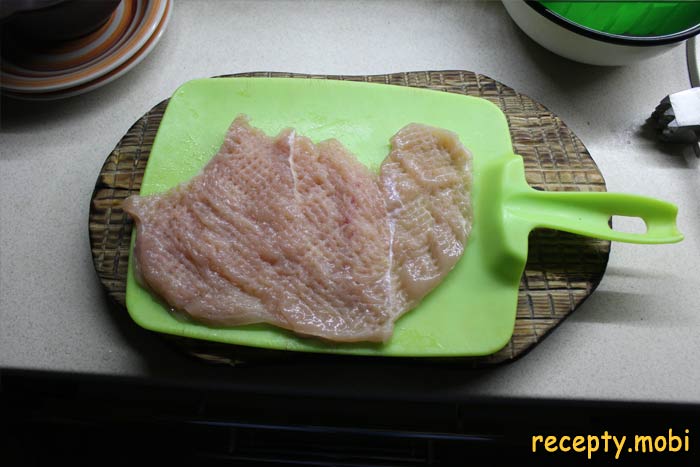
I salt and pepper the pounded breast and sprinkle it generously with chicken spices on both sides. I rub the spices into the fibres by hand so they penetrate deeper rather than sit on the surface. Thorough seasoning is especially important for chicken breast – lean meat depends heavily on seasoning.
I lay finely chopped garlic and sun-dried tomatoes cut into strips along the near edge of the breast. Do not overdo the filling – too much filling will stop the roll from being tightly wound, and it will fall apart while baking. Leave 1 cm of free edge on the opposite side.
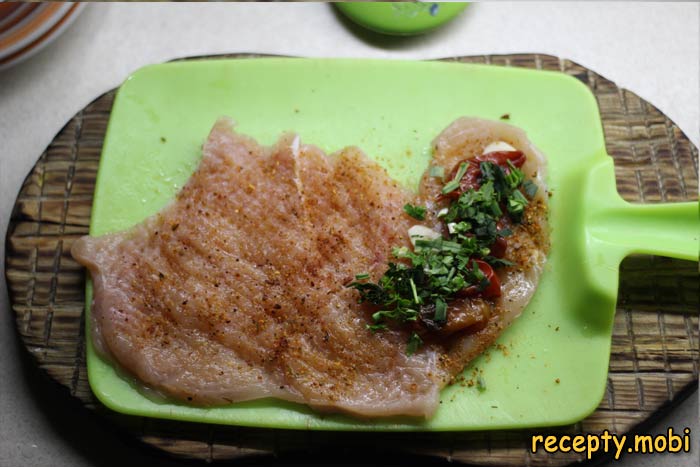
I scatter freshly chopped herbs over the filling – parsley, dill, basil or a mix of Italian herbs. Fresh herbs give a bright aroma and a lovely green accent on the cut surface of the finished roll. Dried herbs work too, but look less striking.
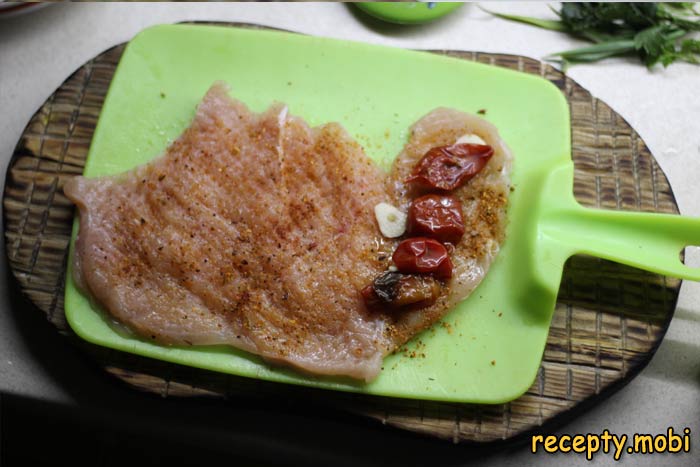
I roll the meat up tightly from the filled edge towards the opposite free edge. I brush the surface with melted clarified butter – it gives a lovely golden crust when baking and extra aroma. Ordinary butter works too, but clarified butter copes better with high heat.
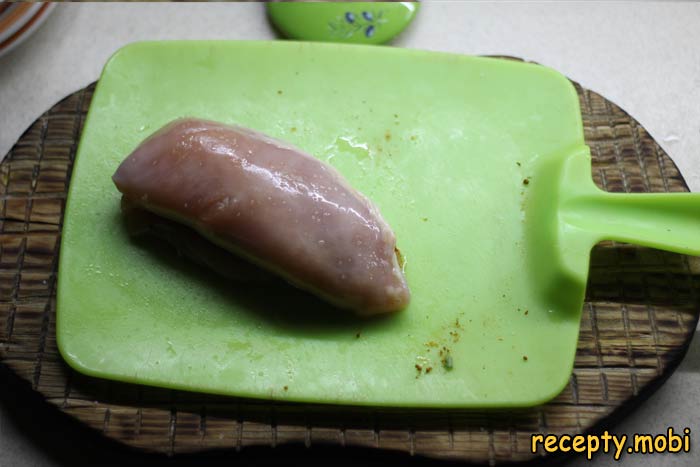
I wrap the roll tightly in two layers of foil so there are no gaps and bake it for 35 minutes at 180 °C. The foil works like a steamer: the breast does not dry out and cooks evenly. Five minutes before it is done, open the foil on top to form a golden crust – important for a nice presentation.
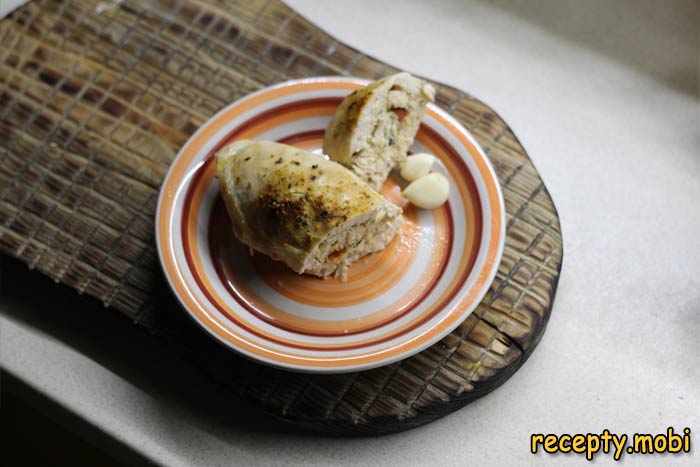
The chicken breast roll is ready! I check it is done by piercing the centre with a knife – the juices should run clear, with no pink tinge. I let the roll rest for 5–7 minutes under the foil – the juices redistribute through the fibres and do not run out when slicing.
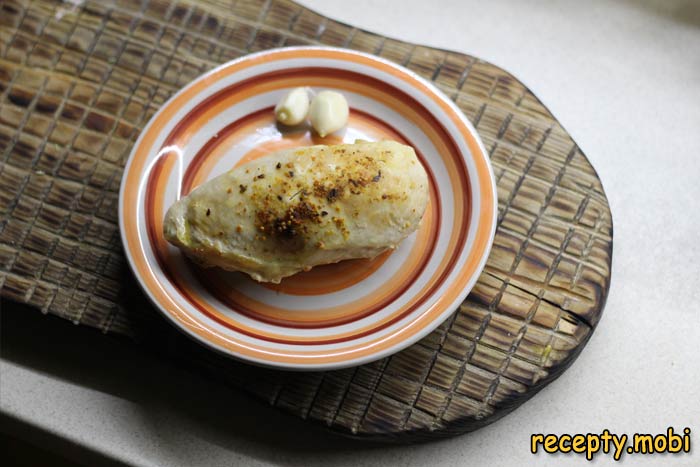
I slice the fully cooled roll into thin 5–7 mm pieces with a sharp knife. A cold roll slices much more neatly than a hot one – the cut is clean and the filling shows beautifully. I serve it as a cold appetiser on the festive table with mustard or horseradish.


Tips
- 1
Always pound the meat through cling film so it does not tear from the blows of the toothed mallet and so splatters do not fly around the kitchen.
- 2
You can replace the sun-dried tomatoes with fresh cherry tomatoes, sweet pepper, slices of mozzarella or prosciutto – different filling options.
- 3
Serve with sauces – sour cream with herbs, mustard, barbecue, tartare. I make a pork roll on a similar principle.
- 4
For portioned serving at a buffet, make small individual rolls for each guest – it makes an elegant one-bite appetiser.
FAQ
What can I use instead of sun-dried tomatoes in the filling? +
Fresh cherry tomatoes work well (halve them and fry for 2–3 minutes), as do sweet bell pepper (be sure to roast it first), hard cheese (parmesan, gouda, Russian cheese), soft mozzarella, prosciutto, olives with capers, or fried mushrooms. Each filling gives the dish its own character. It is very tasty with goat's cheese and nuts – a refined restaurant-style option. With mushrooms it has a more homely Russian feel. Experiment to taste; the main thing is not to overdo the amount.
Can I bake the roll without foil? +
Yes, but the chicken breast can dry out badly without foil – it is naturally lean as it is. If you decide to bake it without foil, grease the roll generously with butter on all sides, wrap it tightly with twine so it holds its shape, and set it in the dish on a bed of onion or vegetables – they will release moisture. It also helps to place a container of hot water on the bottom shelf of the oven to create steam. But the best result is always with foil for the first 30 minutes, then open it for the crust.
How should I store the finished chicken roll? +
In the fridge in a tightly sealed container or cling film – for up to 3 days. Store a sliced roll as a whole piece, cutting it as needed – thin slices dry out faster. On the second day the roll is even tastier – the filling soaks into the meat. Serve it cold as an appetiser. You can freeze it whole in film for up to 1 month, but after thawing the texture suffers slightly. It is best to make it the day before the festive table.
What should I serve the chicken roll with on the festive table? +
A classic presentation: overlapping on a platter with fresh vegetables (cherry tomatoes, cucumbers), spring onion, lettuce leaves or rocket. For sauces – Dijon mustard, tartare, sour cream with dill, horseradish with honey. For a buffet, serve it in small canapés on white toast or crackers with a sprig of herbs. It goes wonderfully with vegetable salads, olives and pickled gherkins. For drinks, serve a dry white wine (sauvignon blanc, riesling) or champagne.
- Comment
or post as a guest
Be the first to comment.