avg —
Boneless Stuffed Chicken

Instructions
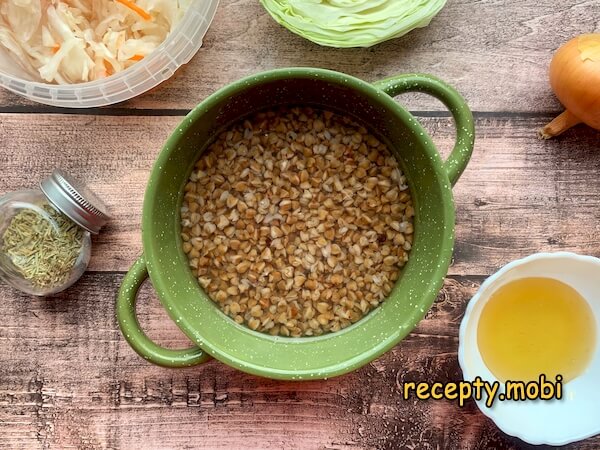
I start the cooking with the filling. I pour a glass of boiling water over the buckwheat and leave it covered to swell. We do not need to cook the grain until done – the feature of the filling is that, during baking, the half-cooked buckwheat will absorb the juices and aroma of the other ingredients.
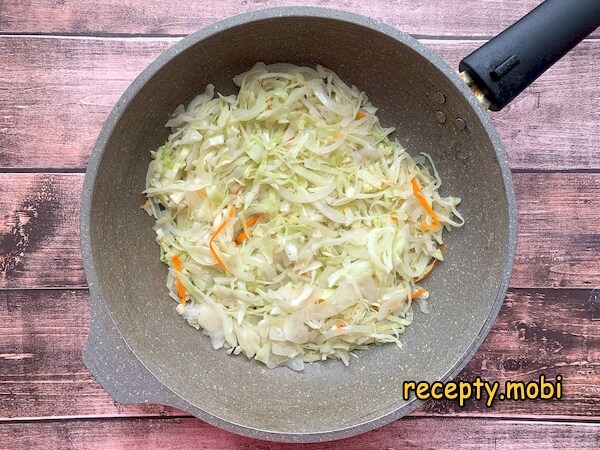
I shred the fresh cabbage into thin strips and the onion into half-rings. On a hot skillet I melt the butter, add both kinds of cabbage and the onion, and add a little rosemary. I cook the cabbage on low heat until soft, just about 5 minutes. Even if it does not finish cooking, that is fine. I leave it covered in a warm place – it needs to be hot for the filling.
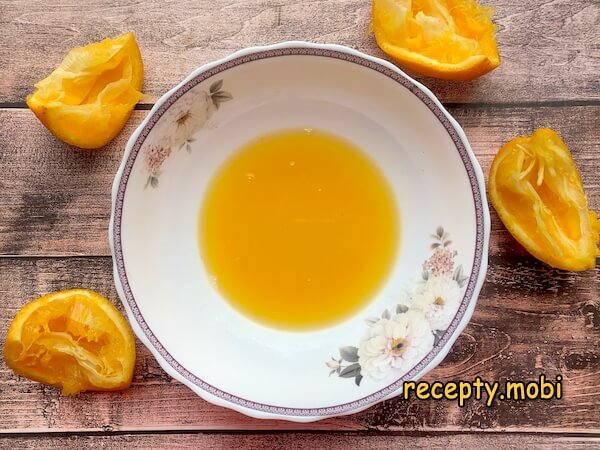
I squeeze the juice from the whole orange and add it to the cabbage. The orange itself, along with its peel, should not be added to the filling – it would make it bitter. You can put the peel on the baking tray next to the chicken – it will give the bird a bright aroma.
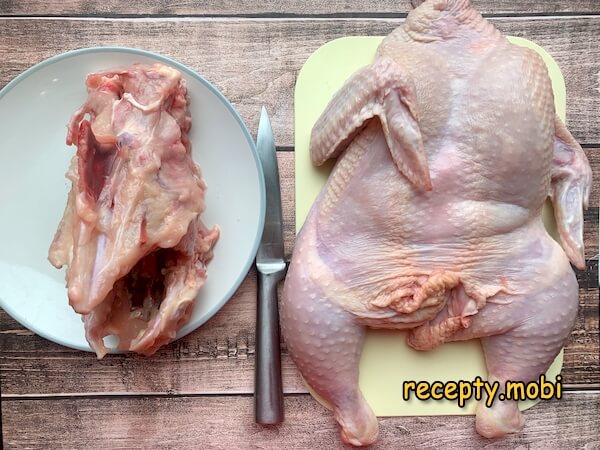
I prepare the chicken. The tricky part is that you need to remove the bone frame from the bird, leaving the wing and thigh bones in place. I begin separating the meat from the bone at the back of the chicken. I always use a very sharp knife. I carefully cut the meat first from the side of the keel bone and move on further. In the breast area I help myself with my hands. I cut off the shoulder joints, then the thigh joints. I move to the back, then, turning the chicken inside out, I separate the meat from the wishbone. I cut off the neck and remove the esophagus. The main difficulty is not to tear the chicken's skin. Even if you do it untidily on the inside, that is not a problem. While cutting, I do not remove the tail – it will be useful for securing the skin.
Now you need very thin skewers or toothpicks. First I close the hole at the neck area: I make a fold of skin and pierce it with a skewer. Instead of skewers, you can simply sew the skin with ordinary thread.
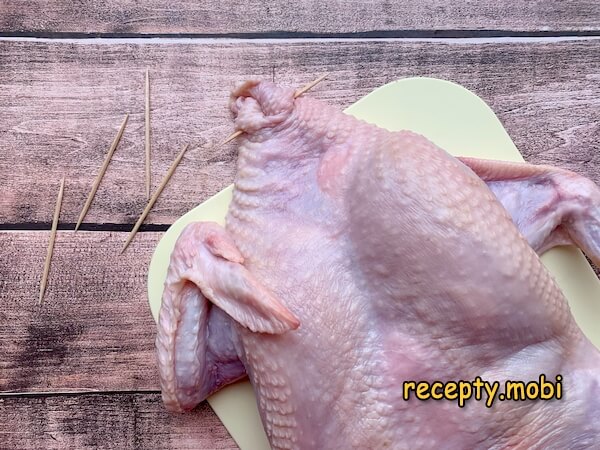
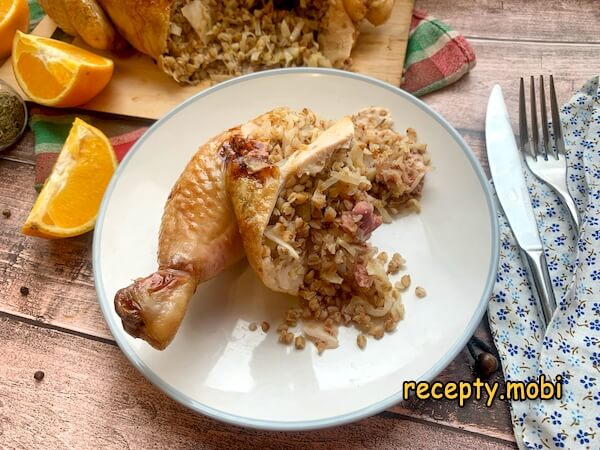
I combine the hot cabbage with the buckwheat, add pepper and salt the filling to taste. I place this filling inside the chicken. I pack it tightly enough so the bird keeps its original shape. Then I again make a fold of skin and secure it with a toothpick or thread.
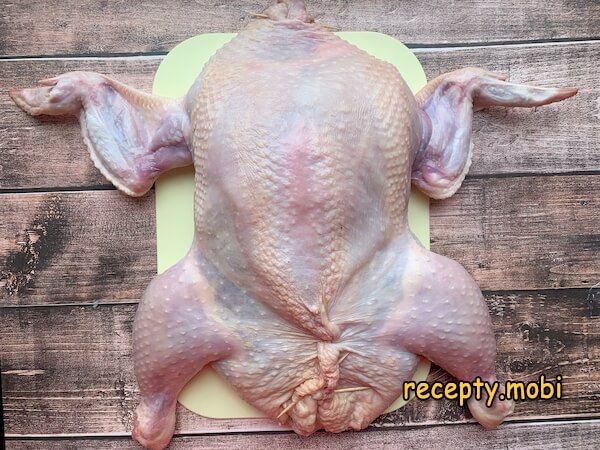
I take a string and tie the wings together around the breast. With a second string I join the legs together, then wrap it around the tail and tie the ends of the string on the belly.
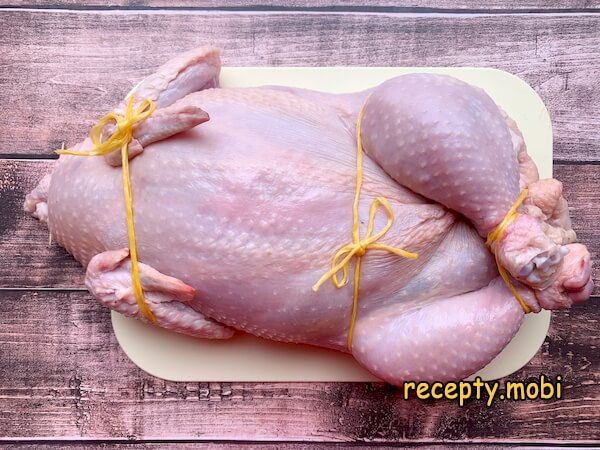
I place the chicken on a baking tray and drizzle it with oil. I sprinkle salt on top and lightly rub it in, distributing it over the whole chicken. So that the top does not burn, I put a sheet of foil over the bird for the first 25 minutes of baking. I put it in the oven at 180 °C using the top-and-bottom mode.
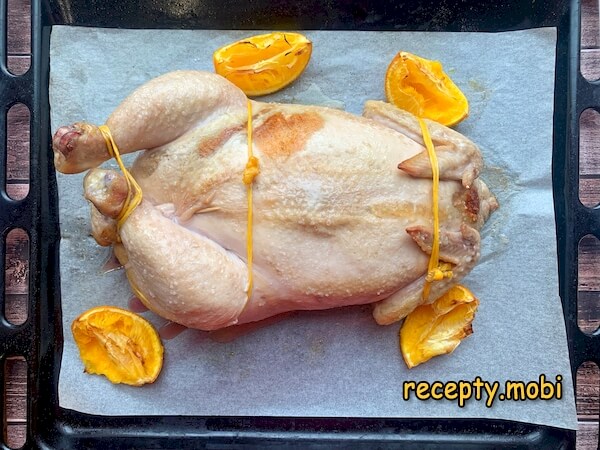
After 25-30 minutes I take the chicken out and remove the foil, switching the oven to top heat. In a bowl I mix the honey and soy sauce. I brush the chicken with this sauce on all sides and put it in the oven for 5-7 minutes. Then I take it out, brush it with the sauce again and bake for another 5 minutes.
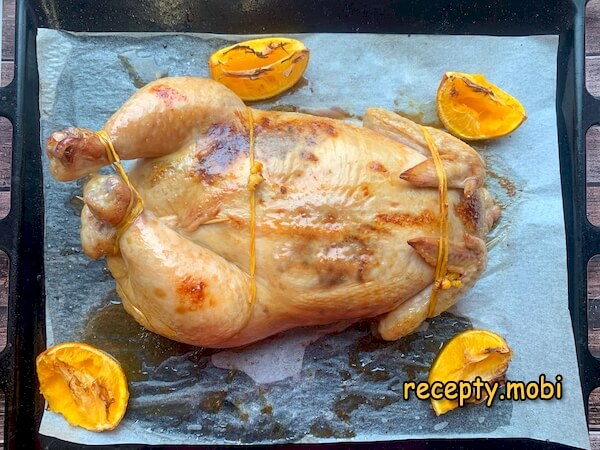
The boneless stuffed chicken is ready! Before serving, I cut off the strings and remove the skewers – the baked chicken holds its shape well.Enjoy your meal and have a wonderful feast!


Tips
- 1
A VERY SHARP KNIFE is the main tool. A blunt knife "tears" the skin, which must stay intact. Sharpen your knife before boning.
- 2
THE BUCKWHEAT IS HALF-COOKED – not all the way through. In the oven it will absorb the juices and reach full doneness. Overcooked, it would turn into mush.
- 3
SOY SAUCE + HONEY at the end give a "glossy" crust. Brush 2-3 times for maximum effect.
- 4
FOIL FOR THE FIRST 25 MINUTES protects the skin from burning. Without it the chicken would burn on top before heating through inside. A similar principle works with other whole roasted birds.
FAQ
Which chicken should you choose? +
The ideal weight is 1.5-2 kg (for 4 servings). A farm or home-raised bird gives a richer flavour but needs longer baking. A shop-bought broiler cooks faster and is more tender. Avoid small chicks (tiny, hard to bone) and overly large birds (3 kg+, hard to handle with your hands). Fresh chicken is better than frozen – the skin is more elastic and easier to work with. Chilled "from the market" is the best option for this recipe.
Can the buckwheat be replaced? +
Yes, but the result will be different. Rice (half-boiled) is the classic substitute, with a "lighter" texture. Pearl barley is denser, with a "Russian" note. Bulgur gives a Mediterranean accent. Couscous is a quick option. A mix of grains adds variety. Buckwheat gives the characteristic "Russian" flavour and absorbs the chicken's juices well. If using rice, choose long-grain (it will not turn mushy). For a "pilaf style", use rice + carrot + raisins.
How long does the chicken keep? +
In the refrigerator in a closed container – 3 days. The next day the flavour is brighter – the juices have fully soaked into the filling and the meat. Reheat in the oven at 160 °C for 10-15 minutes (the microwave makes the chicken "rubbery"). It can be frozen (up to 2 months) – defrost in the refrigerator for 12 hours. Sliced pieces of chicken with the filling make an excellent lunch for work. On the second day the chicken is good cold too – like a cold cut for the festive table.
What to serve it with? +
A New Year classic: with salads (Olivier, herring under a fur coat), pickled cucumbers, dry red wine. With a green salad (for lightness). With mashed potatoes – a "family dinner". For the festive table – with red caviar and a cheese platter. For children – with boiled rice. Decorate with orange rings and fresh herbs. For a photogenic presentation, serve on a large flat plate with the orange peels (which we did not use in the filling) arranged around the edge.
- Comment
or post as a guest
Be the first to comment.