avg —
Cottage Cheese Pancakes with Semolina and Raisins in a Skillet

Instructions
Transfer the cottage cheese (300 g) into a deep bowl and assess its consistency: if the cottage cheese is too wet, drain it on several layers of cheesecloth and leave it to drip for 30–40 minutes, or squeeze it lightly by hand. For airy syrniki, rub the cottage cheese through a fine sieve, breaking up all the lumps – this takes about 2 minutes, but the result is worth it.
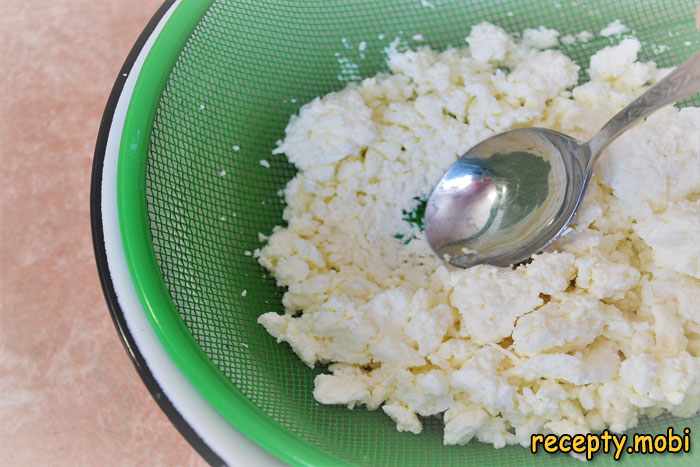
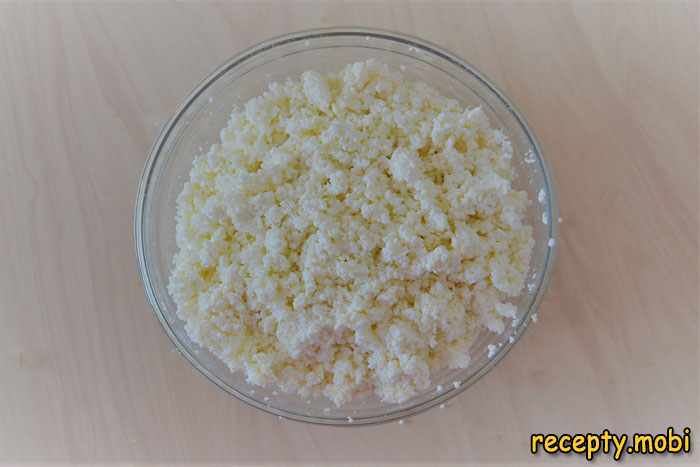
The sieved cottage cheese turns out light, fluffy and perfectly smooth, with no large lumps or graininess. This texture gives the finished syrniki a tender, airy structure. If you do not have a sieve, you can blitz the cottage cheese with a blender or mash it thoroughly with a fork, although the result will be slightly less airy.
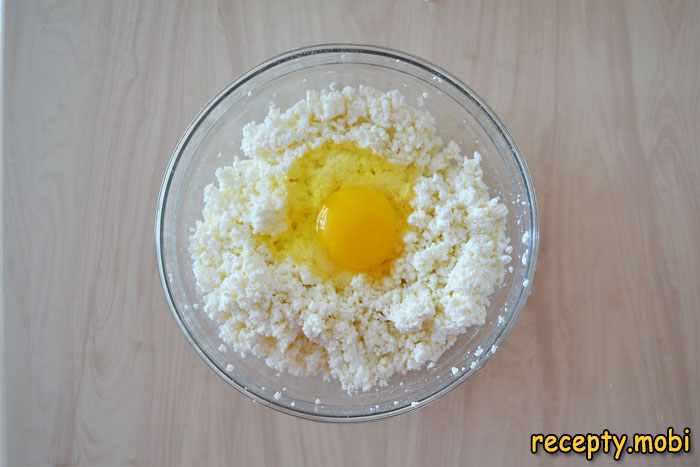
Crack one medium chicken egg into the bowl of sieved cottage cheese. The egg acts as a binder – it stops the syrniki from falling apart during frying. Mix the egg in with a fork or whisk until you have a smooth mass, breaking up any streaks of yolk. Do not add too many eggs – the dough would become runny.
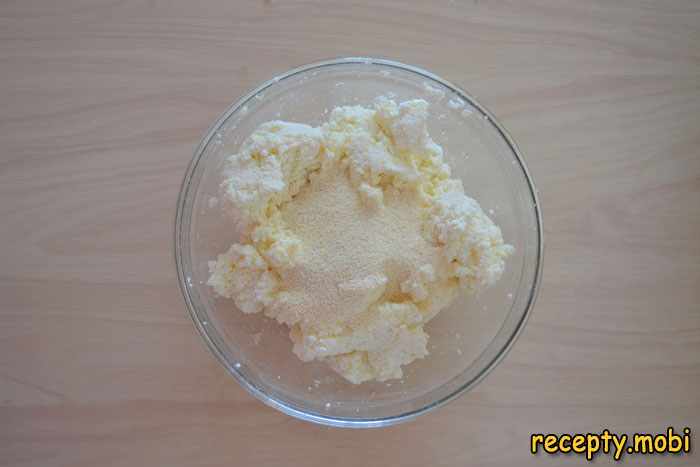
Add 50 g of semolina – it is the semolina that makes the syrniki more tender and fluffy than flour does, while also absorbing excess moisture from the cottage cheese. Gradually sprinkle in the flour, watching the consistency of the dough – if the cottage cheese was dry, you may need less flour (70–80 g); if it was wet, you may need all 100 g. The dough should be soft, slightly sticky to the hands, but still easy to shape.
Leave the dough to rest for 7–10 minutes at room temperature – during this time the semolina will swell, absorb moisture, and the dough will become denser and more pliable. This is a critically important step: without resting, the semolina will be gritty in the finished syrniki. Do not skip this stage, even if you are in a hurry.
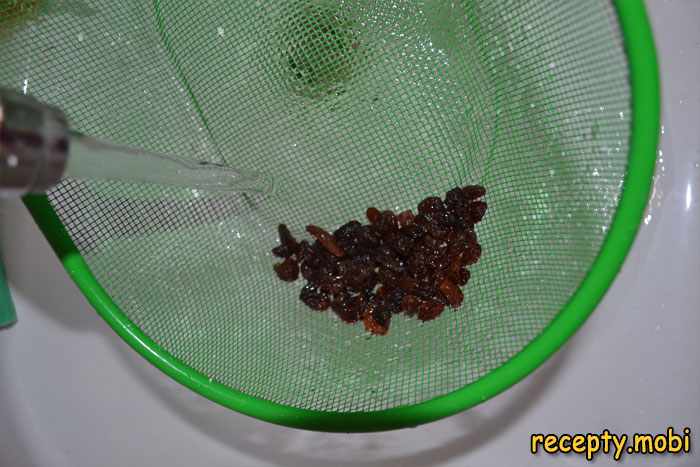
While the dough is resting, prepare the raisins: pick them over, remove any stalks and debris, and rinse under warm running water. There is no need to soak the raisins – they will soften during frying while keeping their shape and not spreading into the dough. After rinsing, pat the raisins dry on paper towels so they do not add extra moisture.
Add the prepared raisins to the dough. If you like, sprinkle in a pinch of vanilla sugar (½ tsp) – it will give the syrniki a subtle aroma. Add a pinch of salt and sugar to taste (2–3 tbsp) – remember that the raisins are sweet on their own, so you can use less sugar. Mix thoroughly, distributing the raisins evenly throughout the mass.
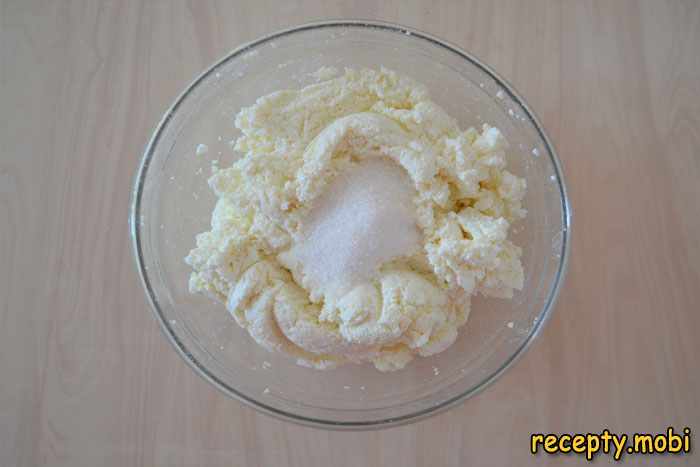
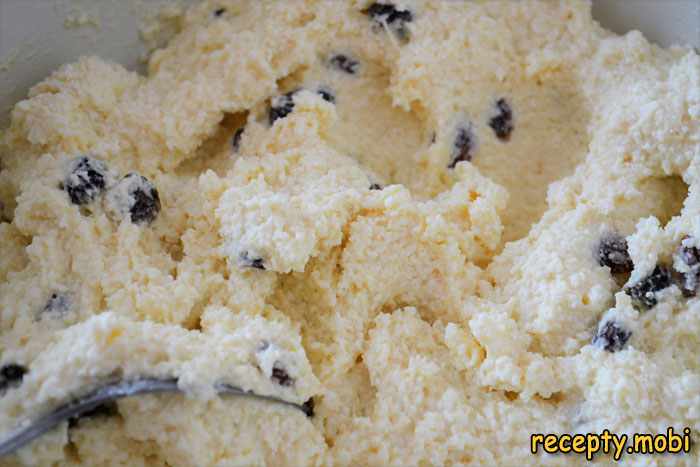
Once all the ingredients have been added, the dough should have the consistency of thick sour cream or soft modelling clay – it holds its shape but deforms easily when pressed. If the dough is too runny, add another 1–2 tbsp of flour; if it is too stiff, add 1 tbsp of sour cream or milk.
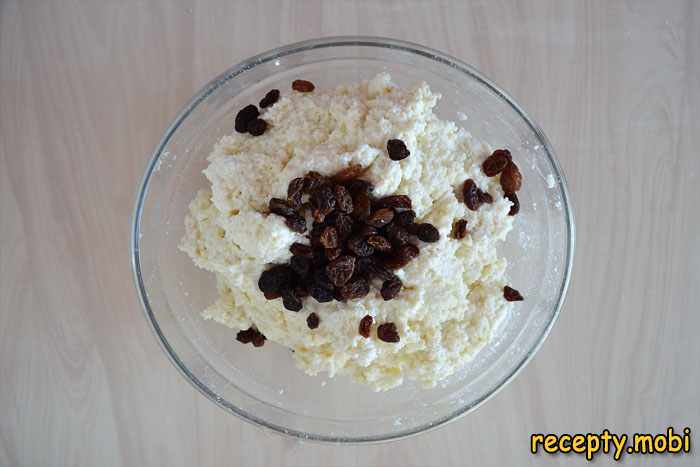
The finished dough looks smooth, with the raisins evenly distributed and a slight sheen from the egg. At this stage the dough is completely ready for shaping. Dust the work surface with a thin layer of flour – this will stop the dough sticking as you form the syrniki.
Scoop up a portion of dough with a tablespoon and place it on the floured surface. With your hands lightly moistened with water or dusted with flour, shape the dough into a ball, then flatten it slightly with your palm into a thick puck. The ideal dimensions are 1–1.5 cm thick and 7–8 cm in diameter. Syrniki that are too thin turn out dry, while ones that are too thick will not cook through inside.
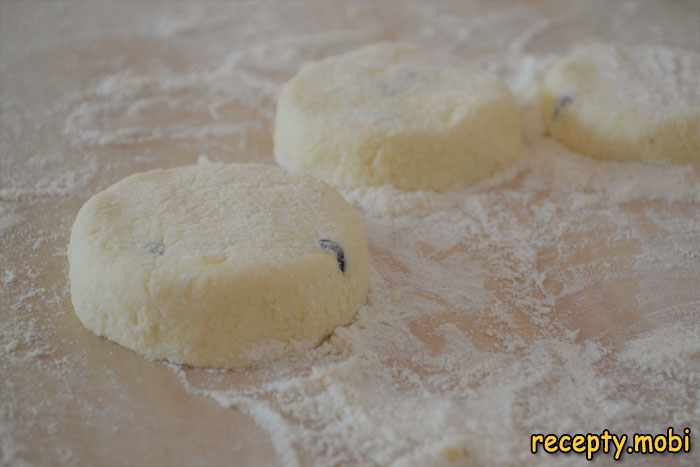
Heat a heavy-based frying pan over medium heat (not high!) and pour in 3–4 tbsp of vegetable oil. The oil should be hot but not smoking – check it by dipping the edge of a syrnik in: there should be a gentle sizzle. Carefully place the shaped syrniki in the pan, leaving 2–3 cm between them so they are easy to turn.
Fry the syrniki over medium heat for 3–4 minutes on the first side until an even golden-brown crust forms. Medium heat is the key: over high heat the crust will burn while the centre stays raw; over low heat the syrniki will soak up a lot of oil and become greasy. Turn them with a wide spatula in a single movement.
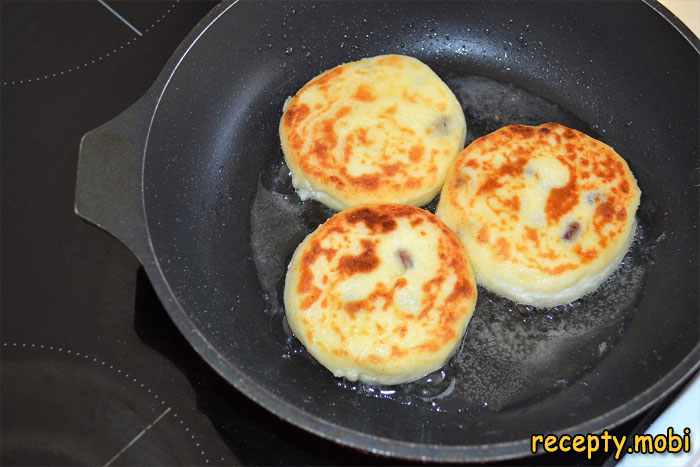
Fry the second side for another 2–3 minutes until golden. The finished syrniki should be golden on the outside and fully cooked through inside – check by pressing gently with the spatula: the centre should not be raw or sticky. Transfer the finished syrniki onto a plate lined with paper towel to soak up the excess oil.
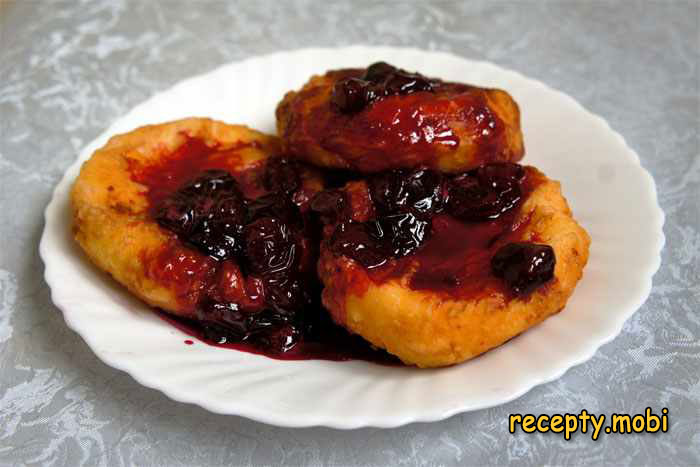
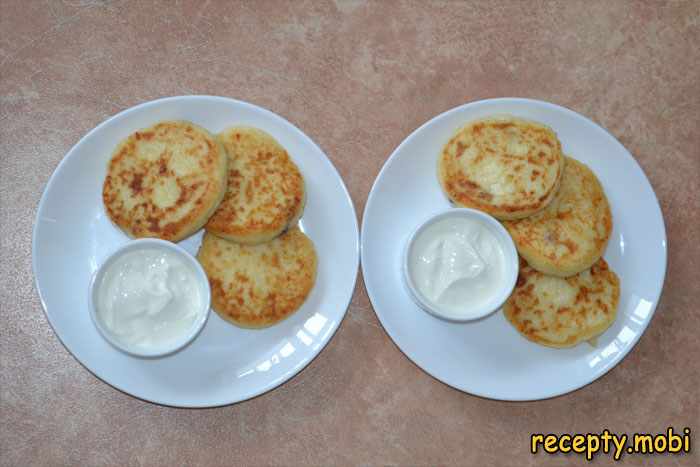
The cottage cheese pancakes with semolina and raisins are ready! Serve them hot with sour cream, honey, fresh berries or your favourite jam. The dish turns out tender inside with an appetising crisp crust outside – the perfect breakfast for the whole family, rich in protein and calcium.


Tips
- 1
The cottage cheese should be dry – wet cottage cheese gives a runny dough, and the syrniki will spread out in the pan. If your cottage cheese is wet, be sure to squeeze it through cheesecloth or leave it to drain in a sieve for 30–40 minutes before cooking.
- 2
Semolina makes the syrniki more tender and fluffy than flour does, while also absorbing excess moisture. Be sure to let the dough stand for 7–10 minutes after adding the semolina – it needs to swell, otherwise it will be gritty in the finished syrniki.
- 3
Fry over medium heat – this guarantees that the syrniki cook through inside without burning on the outside. High heat gives a dark crust and a raw centre; low heat gives greasy, watery syrniki.
- 4
You can freeze the syrniki raw and fry them straight from the freezer – just increase the cooking time by 2–3 minutes on each side. This is handy for quick breakfasts during the week.
FAQ
Why do syrniki fall apart during frying? +
The main reasons are cottage cheese that is too wet or not enough flour in the dough. Try adding another 2–3 tbsp of flour or one extra egg for better binding. Also make sure the pan is hot enough before you add the syrniki.
What can I use instead of raisins in syrniki? +
Candied fruit, chopped dried apricots, dried cherries, and fresh or frozen berries (raspberries, blueberries) all work well. You can also add grated apple or mashed banana – the flavour will be quite different, but no less delicious.
Can I bake the syrniki in the oven instead of frying? +
Yes, this is a more diet-friendly option. Place the shaped syrniki on a baking tray lined with parchment and bake at 180 °C for 15–20 minutes until golden. This way they turn out less greasy, but without the crisp crust.
Which cottage cheese is best for syrniki? +
Syrniki are tastiest made with full-fat farmhouse cottage cheese (9–18%). Low-fat cottage cheese gives drier, less aromatic syrniki, but is suitable for a diet version. The main thing is that the cottage cheese should be fresh and not too wet.
- Comment
or post as a guest
Be the first to comment.