Whole Baked Fish in the Oven – Juicy and with a Crispy Crust
Whole roasted fish is one of the most impressive yet effortless dishes for a special dinner — the trick is getting juicy flesh on the inside and a crackling crispy skin on the outside. Any medium-sized fish works beautifully: sea bream, sea bass, bream, carp, trout or mackerel. Rub the fish with salt, pepper, olive oil and lemon juice, score the sides with diagonal cuts (this helps it cook evenly) and stuff the cavity with fresh herbs, lemon slices and smashed garlic. Roast on a baking sheet (no foil) at 200°C (400°F) for about 25-35 minutes depending on size. I'll share exact timing for different types of fish and how to get that perfect crispy skin.
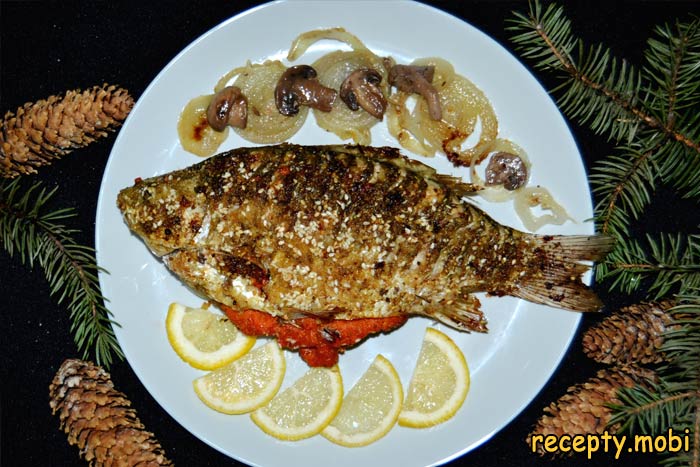
I make whole baked fish in the oven as a festive dish for the family table. From my experience, the main secret to a crispy crust and juicy meat inside is to make frequent crosswise cuts along the sides every 1 cm and to brush the fish with oil and breadcrumbs. The cuts help the thick parts bake evenly and "soften" the small bones – this is especially important for river fish.
This step-by-step recipe is my homemade classic for baking a whole fish without foil or a baking sleeve. At 395 kcal per 100 g, it makes a filling main dish. I serve it with lemon wedges, fresh herbs and a vegetable salad – a simple but impressive festive presentation.
Ingredients
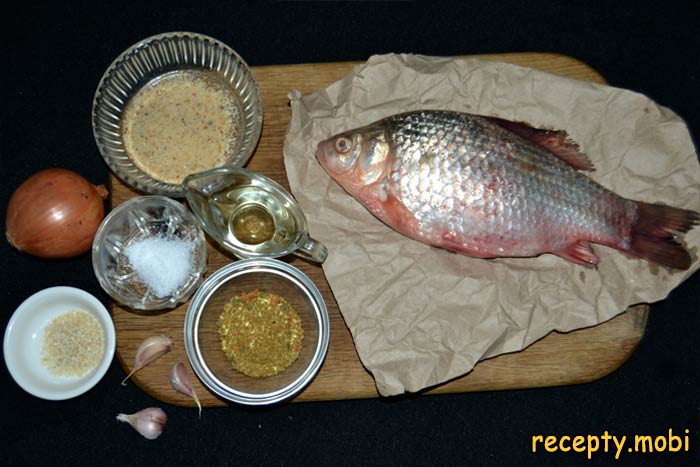
Show ingredients
- crucian carp – 1 piece (500 g);
- fish spice – 1 tbsp;
- vegetable oil – 2 tbsp;
- sesame – 1 tsp;
- breadcrumbs – 2 tbsp;
- garlic – 3 cloves;
- onion – 1 piece.
Baking the whole fish in the oven step by step
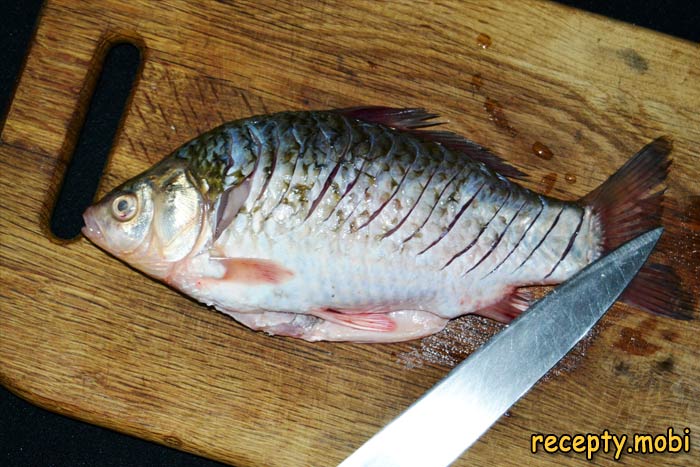
1. I clean the scales off the crucian carp with a special scraper or a knife, moving from the tail towards the head against the grain of the scales. I remove the gills with scissors – they give bitterness during baking. I gut the fish through the belly, removing the insides. Be sure to take off the dark film inside the belly – it also makes the finished dish bitter. I make frequent crosswise cuts along the sides every centimetre.
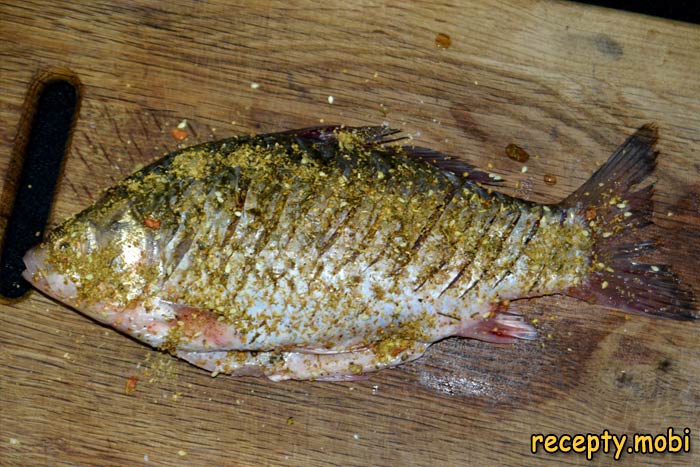
2. I rub the fish with salt and fish spice on the outside and inside, working it thoroughly into the cuts with my fingers. Rubbing matters: the spices should penetrate deep into the flesh rather than stay on the surface. I treat the cuts especially carefully – they are the most important "points" for soaking up flavour.
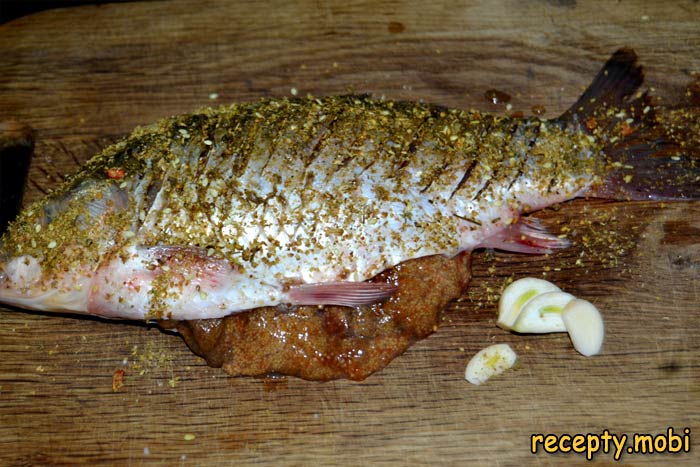
3. I tuck whole peeled garlic cloves inside the belly. During baking the garlic gives the fish an aromatic juice while becoming tender and sweet itself. You can add a sprig of rosemary or thyme for extra aroma – a classic Mediterranean touch.
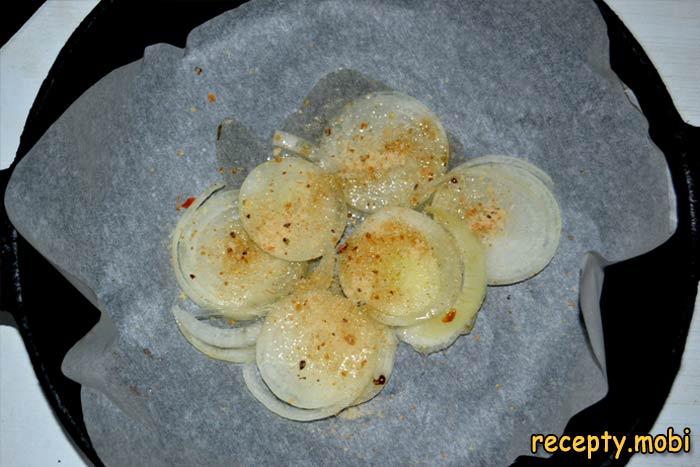
4. I line the baking dish with parchment and pour in 1 tablespoon of vegetable oil. I lay out large onion rings in an even layer – they will be a "cushion" for the fish. I sprinkle the onion rings with 1 tablespoon of breadcrumbs – they will soak up the fish juices during baking.
5. I carefully place the crucian carp on the onion cushion, spreading out the fins. The onion protects the fish from direct contact with the hot tray – it will not burn underneath or stick to the parchment. The onion also releases an aromatic juice that soaks into the fish.
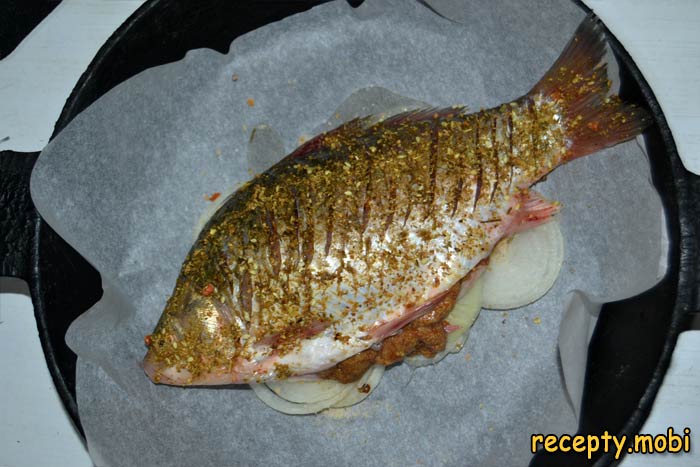
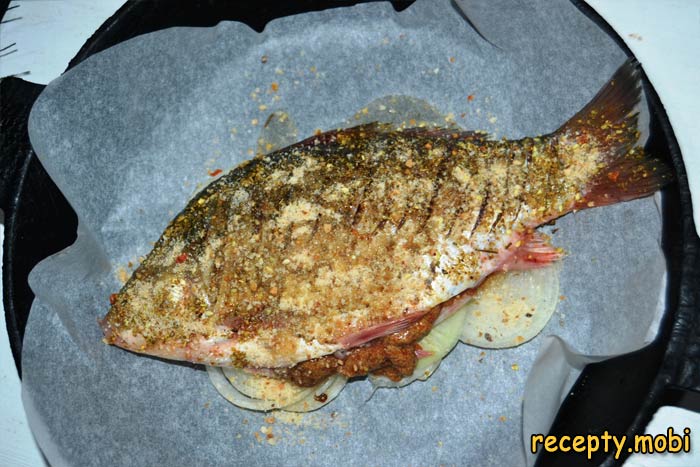
6. I drizzle the fish with the remaining tablespoon of vegetable oil and sprinkle on the rest of the breadcrumbs. During baking the breadcrumbs create a crispy golden crust – that is the highlight of this recipe. Without breadcrumbs the crust is less impressive and less crispy.
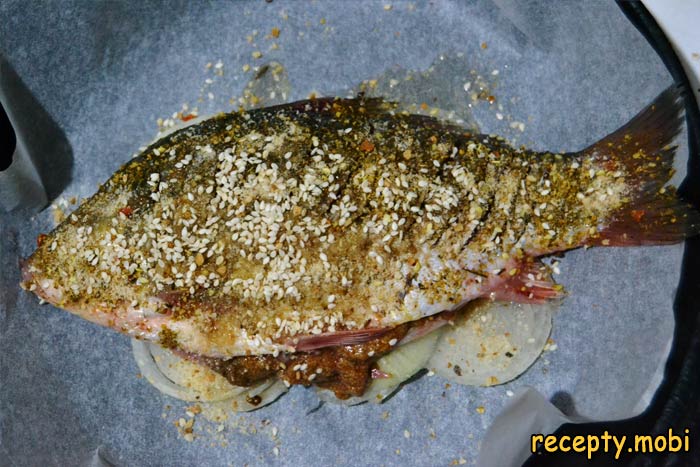
7. I sprinkle on sesame for a pretty decoration and an extra nutty aroma. You can use a mix of black and white sesame for a contrasting effect. I put the fish into an oven preheated to 200°C for 30 minutes – the high temperature is needed for a golden crust.
8. After 15 minutes of baking I take the dish out and drizzle the fish with the fat released at the bottom of the dish. This basting is the key to juiciness: the fish juices plus the oil create a protective barrier against drying out. The basting should cover the whole surface of the fish.
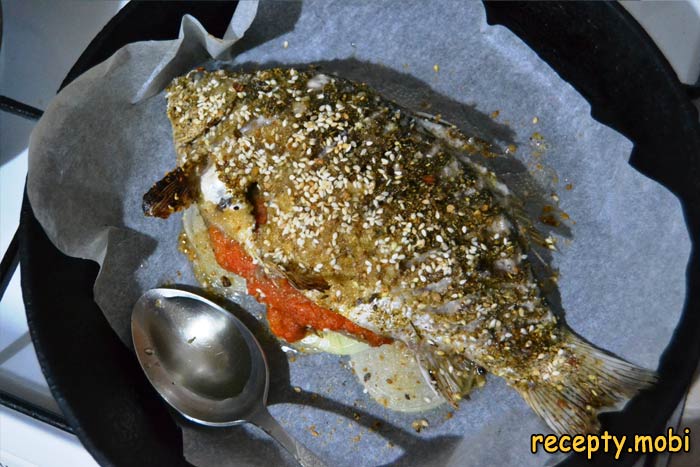
9. I return it to the oven for the remaining 15 minutes until fully cooked with a golden crust. Check for doneness by piercing the thickest part near the backbone – the meat should come away from the bone easily and be white with no pink.
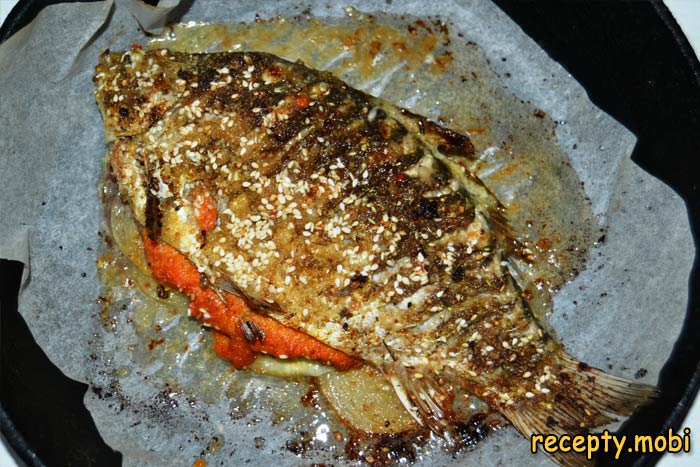
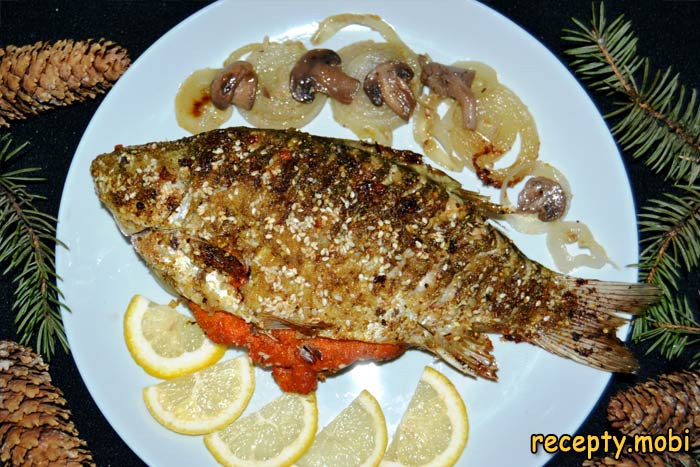
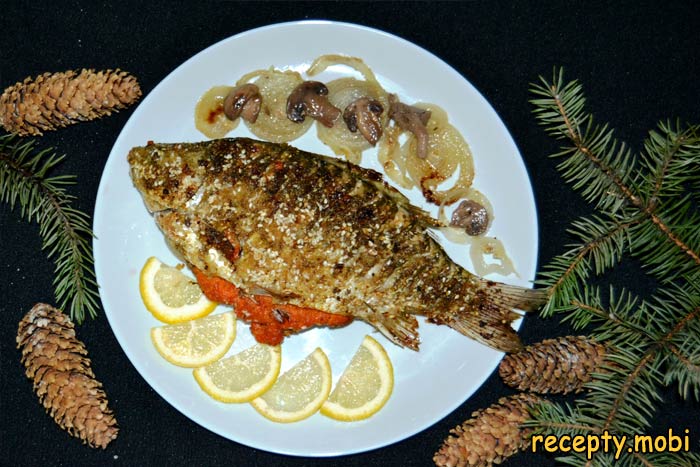
10. The whole baked fish is ready! I carefully transfer it to a nice serving plate and garnish with fresh lemon wedges and sprigs of parsley or dill. I serve it hot with a vegetable salad or mashed potatoes – the classic presentation.
Tips and Tricks
Tip 1. Frequent crosswise cuts along the sides every 1 cm make the small bones less "prickly" and help the fish bake evenly.
Tip 2. Always leave the head on – the fish looks nicer on the plate this way and dries out less around the neck during baking.
Tip 3. For a large fish of 1 kg or more, increase the baking time by 15–20 minutes. I bake whole carp on a similar principle.
Tip 4. You can stuff the belly with fried mushrooms and onions, boiled roe or sliced lemon – different options for variety.
FAQ
Which fish can be baked whole?+
Any river or sea fish weighing 500 g – 1.5 kg will do: crucian carp, carp, silver carp, bream, gilthead bream, sea bass, trout, mackerel, or a small catfish. Sea fish is usually tastier than river fish because it lacks the muddy smell. For river fish, soak it in milk for 30 minutes beforehand – this removes the characteristic odour. A very large fish (over 2 kg) is better cooked in foil or a baking sleeve – otherwise it dries out on the outside before it is done inside.
Why remove the dark film inside the belly?+
The dark film is part of the fish's digestive system, and it gives the finished dish a bitter taste. Removing the film is the basic rule for preparing any fish before cooking, especially river fish. Take it off with a knife or your fingers, rinsing the inside surface of the belly thoroughly. Without removing the film, even the best fish with the most aromatic marinade will be bitter. Many people ignore this rule, but it is exactly what separates "home-cooked" fish from "restaurant" fish.
Can the fish be baked in foil instead of the open method?+
Yes, this gives a juicier result, but without the characteristic crispy crust. Foil creates a steamer effect – the meat stays as juicy as possible, but the outside will be "boiled" rather than "baked". As a compromise, bake for 25 minutes in foil for juiciness, then unwrap and finish baking for 5–7 minutes uncovered for the crust. This is the best "hybrid" method. A baking sleeve works in the same way as foil.
What is best to serve with whole baked fish?+
Classic side dishes: boiled potatoes with herbs, basmati rice, mashed potatoes, quinoa, buckwheat. For vegetables – baked root vegetables (carrots, beetroot), a fresh salad of tomatoes and cucumbers, a warm spinach salad with parmesan. For sauces – tartare, sour cream with dill, white wine, lemon-cream, hollandaise. Always serve lemon wedges with the fish – they neutralise the fishy smell and bring out the flavour. For drinks – a dry white wine or a light craft beer.