avg —
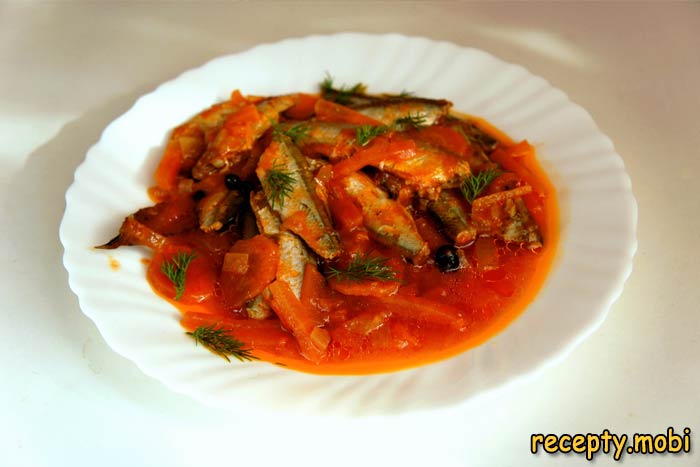
Small river fish stewed in tomato sauce

Instructions
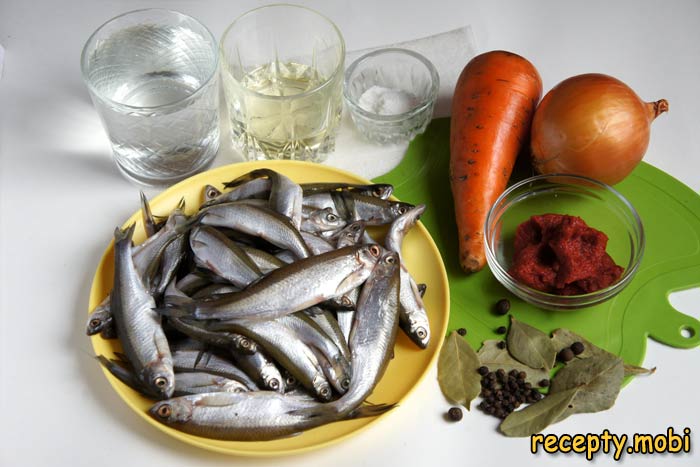
Lay out all the ingredients on your work surface: the small river fish (500 g – topminnow, bleak, roach, ruffe or similar), carrot, onion, spices and tomato paste. Fresh fish should have shiny scales, bright red gills and clear eyes. Do not use "tired" fish showing signs of spoilage – it will ruin the dish.
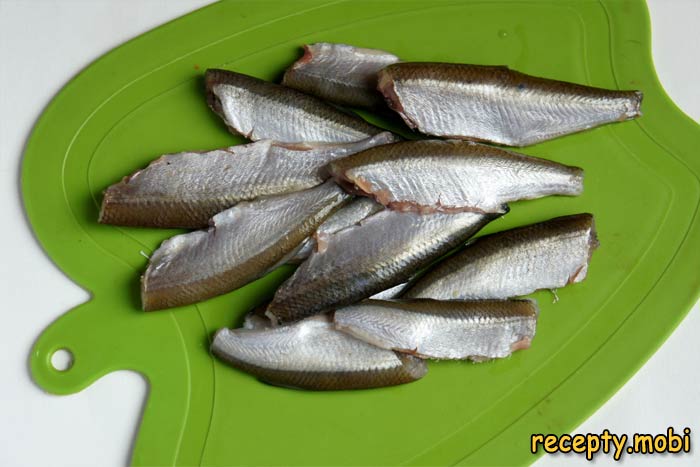
Thoroughly clean all the small fish, removing the scales under cold running water – small fish are quick to clean but it takes patience. With a sharp knife, cut off the heads, tails and fins, and remove the insides. Rinse each fish well, inside and out. Removing the scales and innards is essential for a pleasant flavour in the finished preserve.
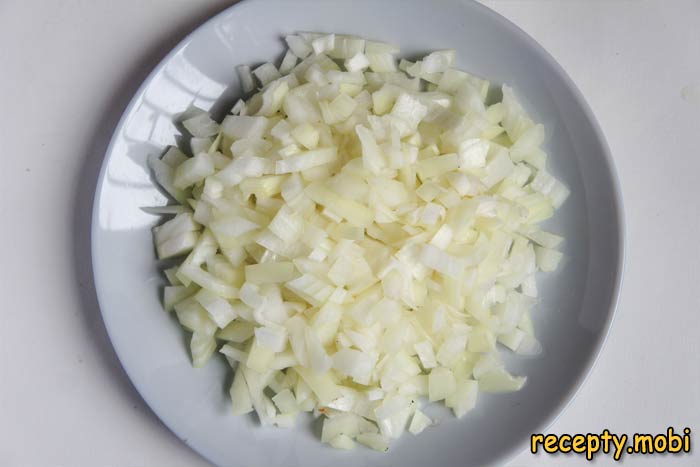
Peel the onion (1 pc) and cut it into small or medium dice, 5–7 mm. A fine dice lets the onion "dissolve" into the sauce during the long cook, while a medium dice gives more "texture". Use a good, firm onion with no sprouts.
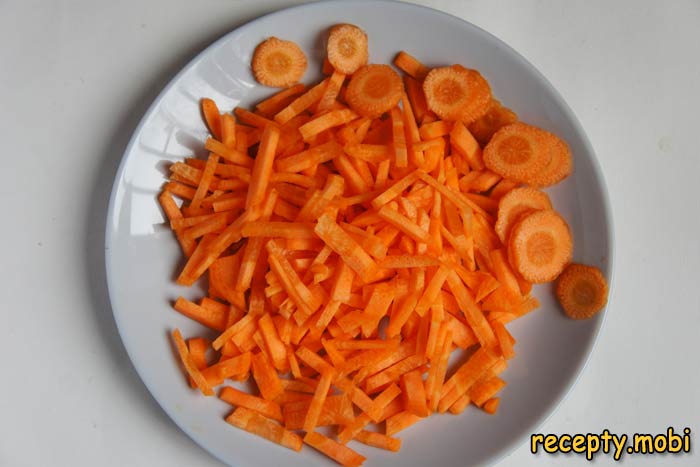
Peel the carrot (1 pc) and cut it into neat rounds or batons 5–7 mm thick. The carrot adds sweetness and bright colour to the sauce. Rounds sit nicely between the layers of fish, while batons break down more during the long stew. The shape is up to you.
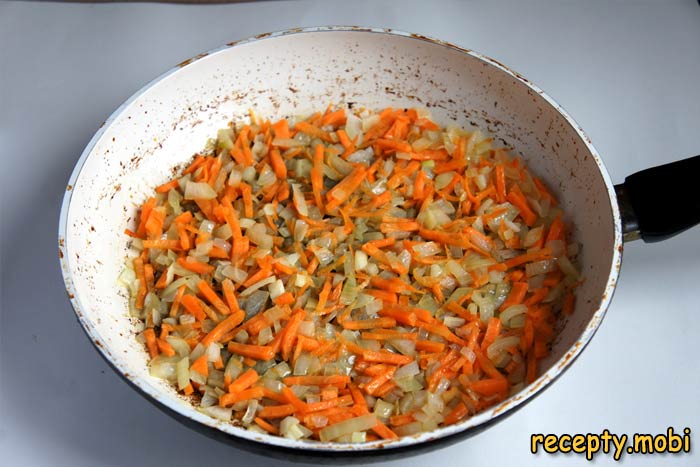
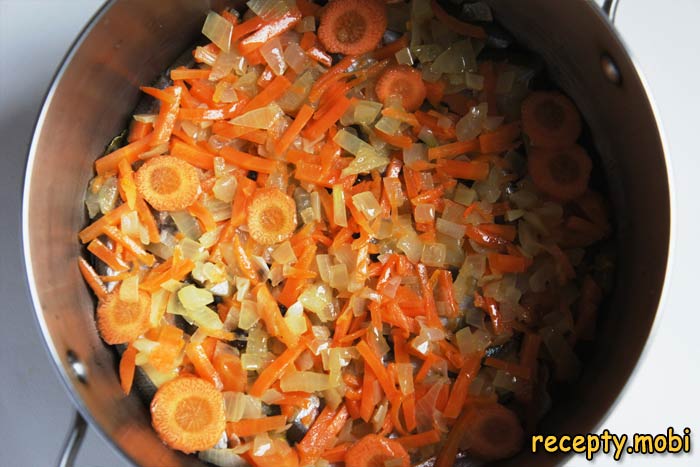
Heat the vegetable oil (2 tbsp) in a large frying pan and fry the onion and carrot for 7–10 minutes until soft and lightly golden. The vegetables should brown slightly – this gives the sauce a deep "fried" flavour. Without frying, the vegetables will taste "boiled" and less aromatic.
Take a pot or cast-iron pan with a thick base – a thick base spreads the heat evenly during the long stew. Arrange the ingredients in layers: half the fried vegetables on the bottom, then half the fish, the bay leaf and peppercorns, the rest of the fish, and the remaining vegetables on top.
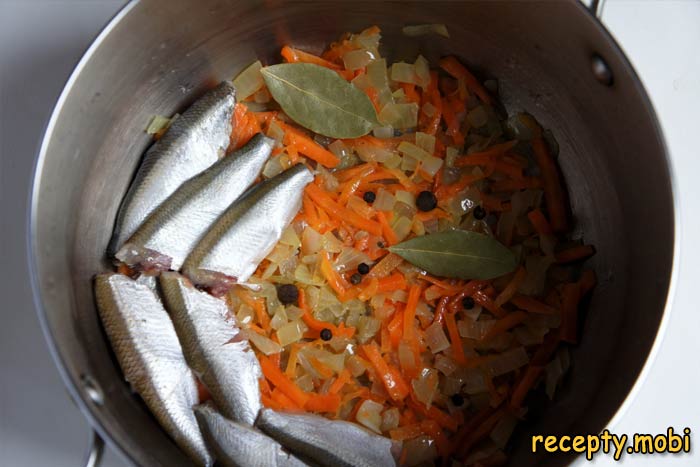
CRITICAL RULE: the first and last layer must ALWAYS be vegetables – they protect the fish from scorching on the bottom and drying out on top. Distribute the bay leaf (5 pcs) and allspice (5 pcs) evenly between the layers – the spices give aroma to every layer.
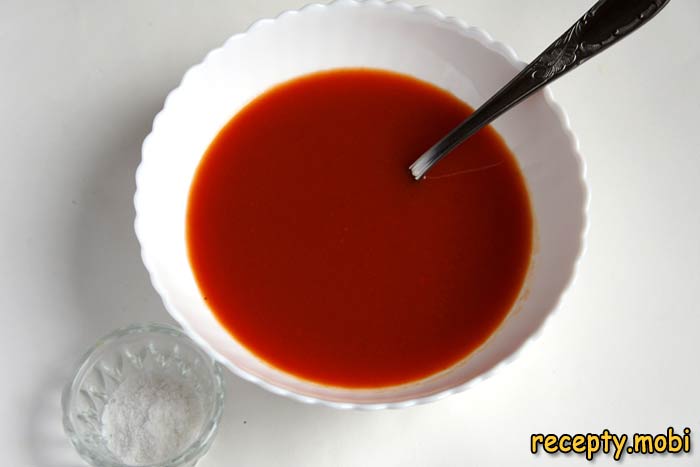
In a separate cup, dilute the tomato paste (25 g) in a glass of warm water (250 ml) until smooth, then add the salt (1 tsp). You will get a thin "tomato pour" – the base of the stewing sauce. Thick paste will not seep between the layers well.
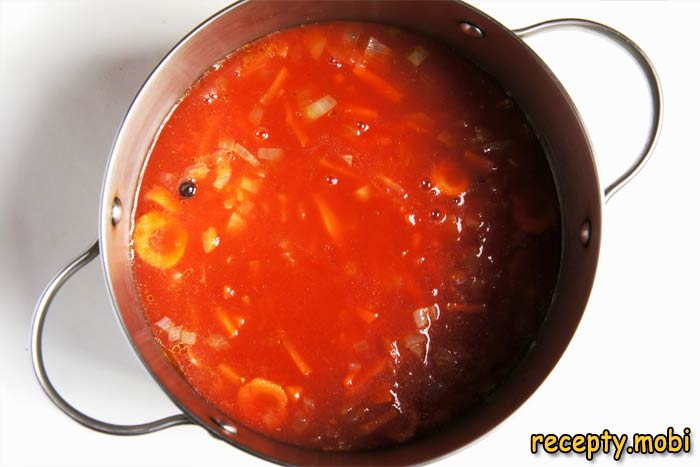
Pour the prepared tomato sauce over the layered fish and vegetables. The liquid should just cover the top layer – if there is too little, add some boiled water. Cover tightly with a lid and set over the LOWEST heat. Stew for 2.5–3 hours without stirring – it is important not to "break up" the layered structure.
After 2.5–3 hours the small river fish in tomato sauce is ready! Check that it is done: the bones should chew easily, just like in shop-bought sprat in tomato. If the bones still "crunch", extend the stewing by another 30–60 minutes. Serve it as a snack, or use it for sandwiches, fish soup or as a pie filling.


Tips
- 1
With long stewing (2.5–3 hours over low heat) the small bones soften completely and become "edible", just like in shop-bought sprat.
- 2
ANY small river fish will do: topminnow, bleak, roach, ruffe, small perch or little crucian carp. The main thing is that it is fresh.
- 3
The finished fish can be sealed in sterilised jars for the winter – natural preserves with no additives. I make sprat in tomato on a similar principle.
- 4
Store in the refrigerator for up to 5 days in a glass jar with a lid – a sealed jar keeps it fresh.
FAQ
Why stew the fish for so long – 3 hours? +
Long stewing (2.5–3 hours over the lowest heat) is the "secret" to softening the small bones to the texture of "shop-bought sprat in tomato". In that time the collagen in the bones dissolves completely and the bones become as soft as the flesh of the fish. This means you can eat each little fish whole, without having to pick out the bones – handy for a snack or for sandwiches. If you stew for less time (1–1.5 hours), the bones will stay tough and awkward to eat. Long stewing is the key to "proper" canned fish.
Can the dish be made in a slow cooker? +
Yes, a slow cooker works very well – use the "Stew" or "Simmer" mode for 2–3 hours. In a pressure cooker (under pressure), 40–60 minutes will be enough to soften the bones. The principles are the same: layers of vegetables, fish and spices, topped up with the tomato pour. The advantages of a slow cooker are automatic temperature control, no need to watch the process, and energy saving. The drawback is less control over the stewing than on the hob. For a large batch of fish, a big pot is better.
What can replace the tomato paste in the recipe? +
Several alternatives will work: fresh tomatoes (4–5 pcs) put through a mincer or blitzed in a blender (this gives a "lighter" tomato flavour), tinned tomatoes in their own juice (300 g), or ready-made thick tomato sauce (200 ml) – including home-made "summer" preserves. Fresh tomatoes grated "Italian-style" (grated on a coarse grater without the skin) give a fresher aroma. Each substitute changes the flavour of the sauce; tomato paste is the most "concentrated" option in taste.
What to serve the fish in tomato with? +
It is ideal on its own as a cold snack – on dark Borodinsky bread with butter and spring onion (a classic "just like grandma's"). With boiled potatoes or mashed potato it makes a "Russian" dinner. As part of a fish soup or ukha (as a "base") it lends a ready "canned" flavour. As a filling for pies and pastries – with egg and onion. With beer or red wine it is a hearty snack. In winter it serves as "home-made preserves" – it keeps for a long time and is handy for a quick bite. A versatile product "for all occasions".
- Comment
or post as a guest
Be the first to comment.