avg —
Sea bass in the oven in foil

Instructions
I prepare the ingredients. If the sea bass is frozen, I thaw it in advance by placing it on the bottom shelf of the fridge for about 6 to 8 hours, and then leave it for 30 to 60 minutes at room temperature. I never thaw the fish in hot water – that would completely ruin its structure and flavour. Straight away I turn the oven on to 190 degrees with top and bottom heat and no convection.
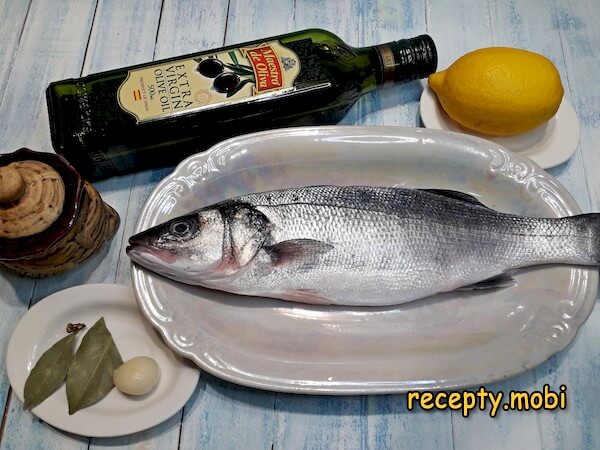
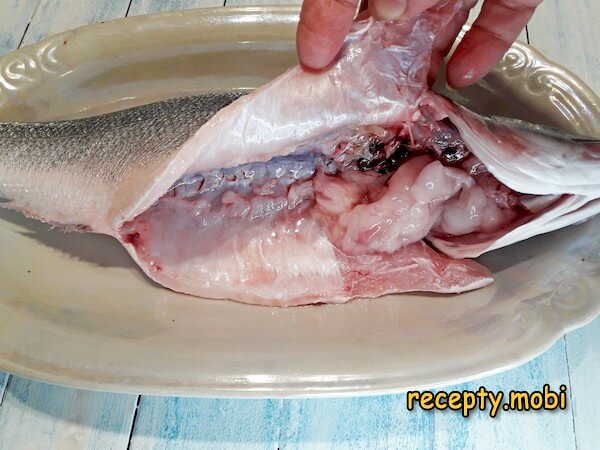
First I scale the fish, cut off the fins, slit the belly and remove the entrails together with the gills. I rinse the fish – especially thoroughly on the inside, to remove any remaining entrails and the clots of blood by the spine, otherwise they will give a bitter taste.
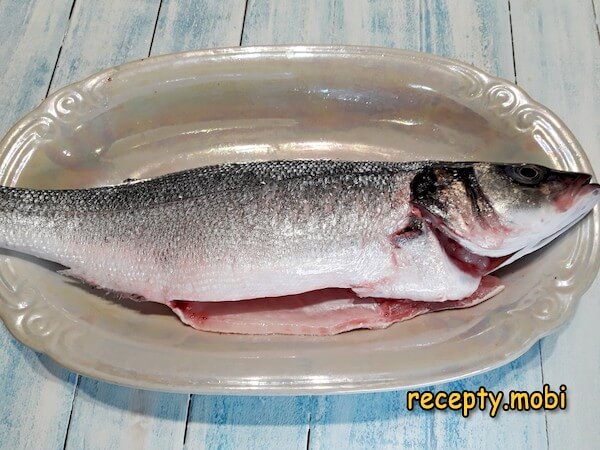
The removed entrails may contain fat that has kept well – in that case I separate it from the rest of the innards and put it back inside the belly. If the gall bladder is not crushed and the liver is clean and in good condition, it can be left in too – this adds extra juiciness.
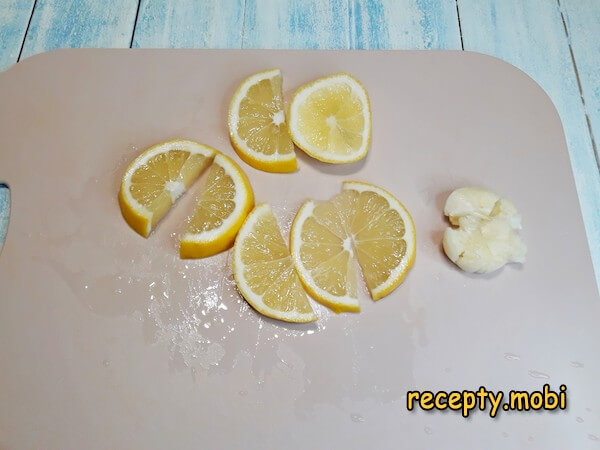
I cut the lemon into wedges, and crush the garlic with a knife for better release of aroma – crushed garlic gives off more essential oils than a whole clove, and at the same time does not leave an unwanted sharp, pungent taste in the fish.
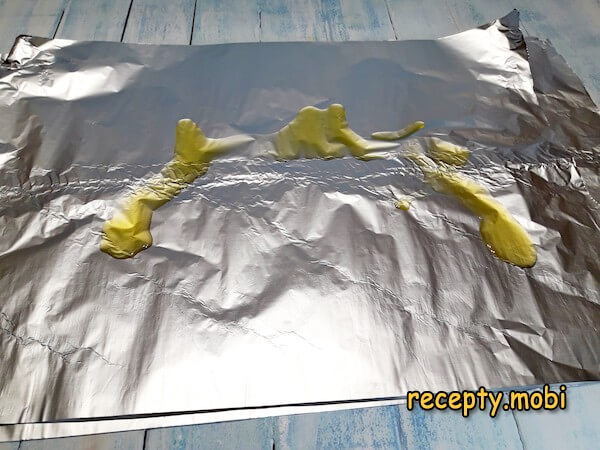
I cut two layers of foil large enough to wrap the fish. I pour out and spread the olive oil – the double layer of foil is needed for a reliable seal, while the olive oil protects against sticking and gives a light aroma.
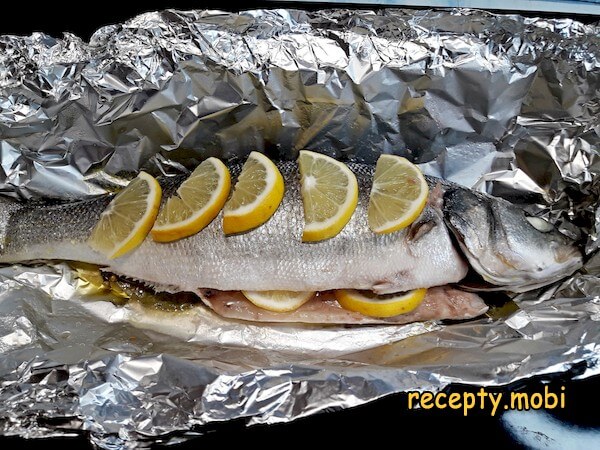
I place the sea bass in the middle – salting it outside and inside to taste. At this stage the salt soaks evenly into the flesh during baking and does not have time to draw out much moisture.
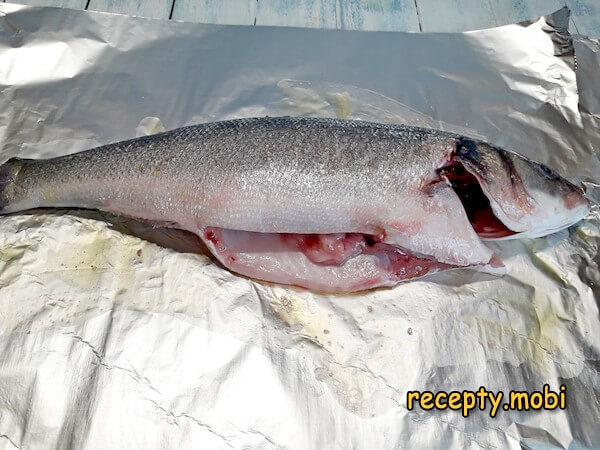
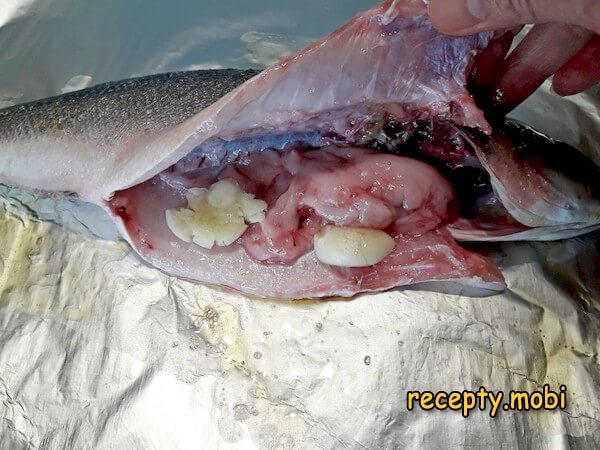
Into the belly I put the garlic – inside specifically, so that the aroma soaks the flesh from within without direct contact of the garlic with the surface of the fish.
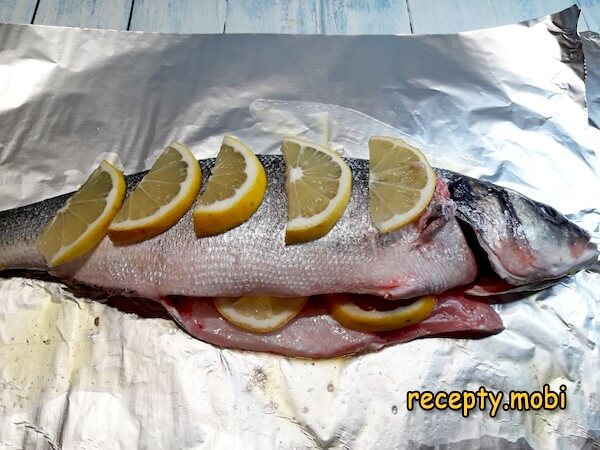
I also send in two or three lemon wedges there, and lay the rest on top along the back – the citrus inside gives aroma from within, while on top it works on the crust and adds acidity to the upper layer of flesh when served.
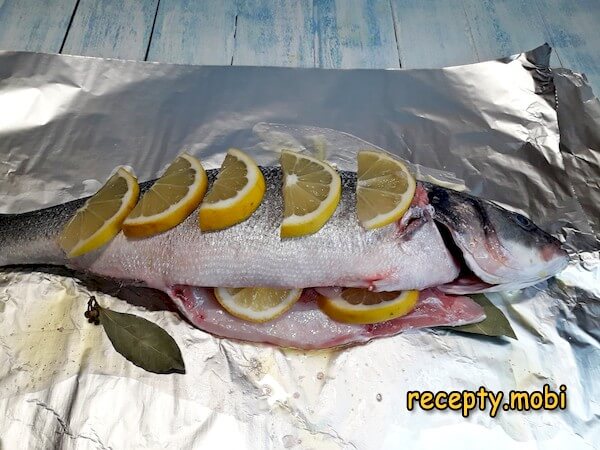
Underneath I tuck a couple of bay leaves – the bay under the fish works as an aromatic "base" that releases its aroma into the steam circulating around the fish during baking.
I lift the edges of the foil up and pinch them tightly, but in such a way that there is air space left between the fish and the top of the packet – I do not wrap it tight against the fish. The air pocket is needed for free circulation of steam. I place the parcel on a baking sheet and put it on the middle level of the preheated oven.
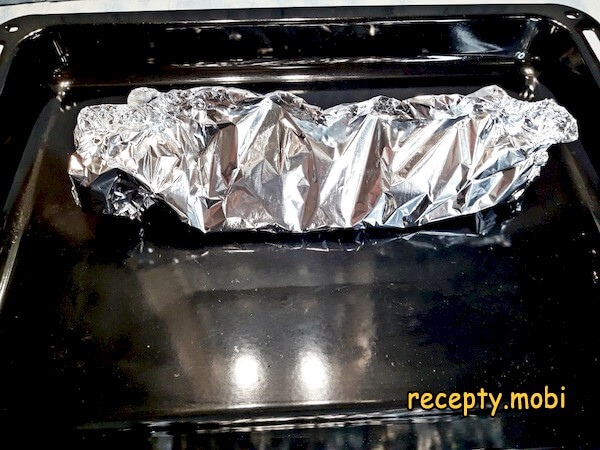
After 15 to 20 minutes (for fish of the stated weight 17 minutes is enough) I take out the parcel and unfold it. You can spoon the juices that have formed over the sea bass when serving – this is the most aromatic and concentrated "sauce" for the fish.Sea bass baked in the oven in foil stays tender, juicy and not over-roasted – this way of cooking is suitable even for a diet. It is a dish in its own right, but you can also serve it with any side: potatoes, pasta, porridge, steamed vegetables, or a leafy salad.


Tips
- 1
TIME is the "secret" to a juicy sea bass. The main mistake with this fish is to keep it in the oven too long. For a 700 g fish at 190 degrees, 17 to 20 minutes is enough, not a minute more. An overcooked sea bass becomes dry and fibrous and loses its signature tenderness. I check for doneness by gently pressing on the fillet – it should spring back slightly rather than feel firm.
- 2
THE AIR POCKET IN THE FOIL is the "secret" to the steaming effect. If you wrap the fish tightly in foil with no air gap, the foil will "breathe" and the steam will not be able to circulate – the flesh will cook unevenly. The air pocket on top creates a mini combi-steamer in which the sea bass heats evenly from all sides. The same trick works in dorado in the oven.
- 3
LEMON INSIDE AND OUT is the "secret" to a double aroma. Lemon wedges only on top give just a surface aroma, while the flesh inside stays "neutral". Wedges only inside flavour it from within, but the skin stays bland. The combination of "both inside and out" creates a multi-layered citrus profile that is present both on the outside of the skin and in the most tender part of the fillet.
- 4
AN ALTERNATIVE FROM ANOTHER WHITE FISH is the "secret" to versatility. The same technique works with any medium-fat sea fish – following the principle of sea perch in foil in the oven, I cook any sea fish weighing 600 to 800 g. Dorado, sea perch, red mullet, trout – they all bake beautifully in foil in 17 to 20 minutes with the same set: lemon + garlic + olive oil.
FAQ
What is sea bass and where is it found? +
Sea bass (also known as sea wolf, loup de mer, branzino, bar de mer) is a sea fish of the Moronidae family, living in the eastern Atlantic from Norway to North Africa and in the Mediterranean Sea. Commercial sea bass weighing 400 to 800 g is the size most prized by restaurants, and it is to this weight that it is raised on specialised farms in Greece, Turkey, Italy and Croatia. The flesh is white, firm and slightly sweet, with a moderate fat content of 6 to 8%. Thanks to its elegant flavour and versatility in cooking, sea bass is a favourite of Mediterranean and French cuisine.
What can replace sea bass in this recipe? +
The ideal substitutes in texture and flavour are dorado (golden bream), sea perch, another type of bass, red mullet, cod, hake and sole. They are all tender white sea fish and cook in 15 to 20 minutes per 700 g. Among freshwater fish, pike-perch, rainbow trout and whitefish are suitable – but their flavour is more "earthy" and less marine. Not suitable are: salmon (too fatty, requires a different technique), mackerel and herring (too bony) and tilapia (too watery, it falls apart). The main rule is a fish weighing 500 to 800 g with firm white fillet.
Can you bake sea bass without foil? +
You can, but the technique changes fundamentally – without foil the fish loses moisture to the hot air and comes out noticeably drier. If you have no foil, you can lay the sea bass on parchment in a dish and cover it on top with damp parchment paper – similar to the culinary method "en papillote". You can use a roasting bag, a ceramic dish with a lid, or a cast-iron pan with a lid. Without any protection, sea bass will only work if you lower the temperature to 160 degrees and coat the fish with a thick layer of olive oil or butter.
What to serve with sea bass in foil? +
Sea bass goes well with Mediterranean side dishes. The classic is new potatoes, boiled or baked with rosemary and olive oil. From grains: basmati rice, quinoa, couscous. Vegetables: grilled courgettes and aubergines, tomato confit, artichokes, green beans. Fresh leaves: rocket with a lemon dressing, spinach, leafy salad. From sauces: creamy garlic, pesto, tartare, lemon and dill. For a festive table – with a dry white wine (Sancerre, Chablis, Vermentino), which will highlight the delicacy of the fish.
- Comment
or post as a guest
Be the first to comment.