avg —
Pollock stewed with carrots and onions in tomato – a simple and quick recipe

Instructions
Defrost the pollock (2 carcasses) at room temperature for 2–3 hours, or in the refrigerator overnight – quick thawing in hot water gives a loose, mushy texture. Once thawed, scrape off any remaining scales with the blunt side of a knife, remove the insides and, especially carefully, the black membrane inside the belly, as it is exactly what makes the finished dish bitter. Rinse well under cold running water and pat dry with a paper towel.
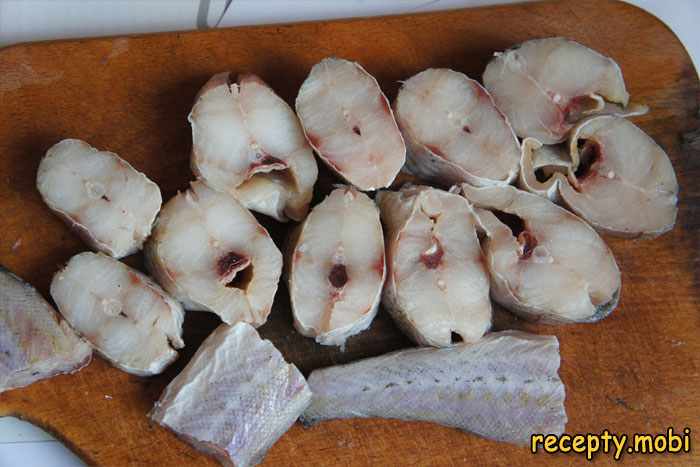
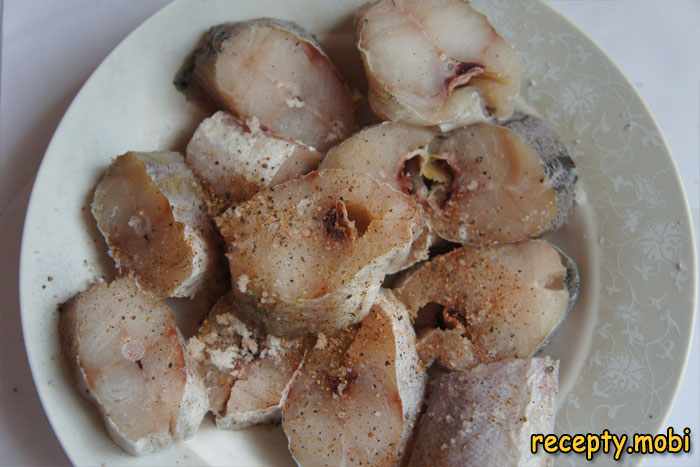
Cut the fish into portion-sized pieces 4–5 cm wide – this size is ideal for stewing: large pieces take longer to cook, small ones fall apart. Salt each piece on both sides, pepper it and leave for 15 minutes at room temperature – during this time the salt penetrates the flesh and gives the finished fish a more pronounced flavour.
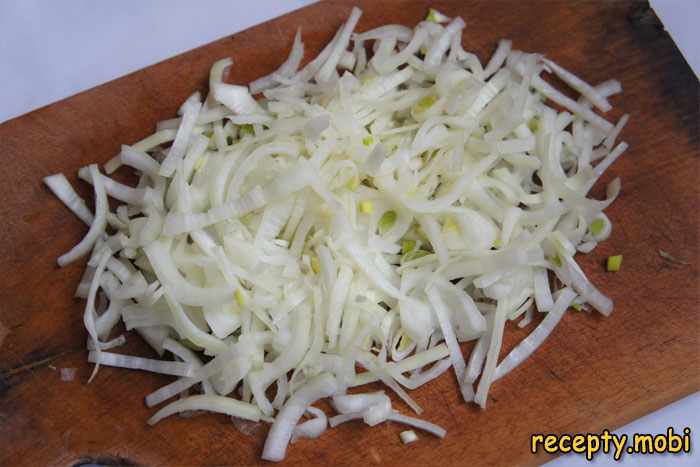
While the fish is marinating, cut 2 onions into half-rings 3–4 mm thick – the home recipe also allows for a finer cut to taste. The half-rings look attractive in the finished gravy and spread evenly through the dish.
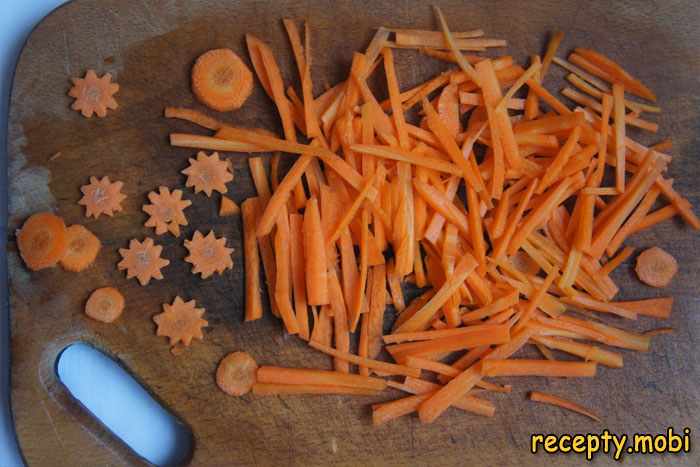
Peel the carrots (2 pcs) with a vegetable peeler and cut them into long thin strips 3–4 mm wide – this way they look attractive in the finished dish and have a pleasant bite. A coarse grater works too, but strips give a more presentable look.
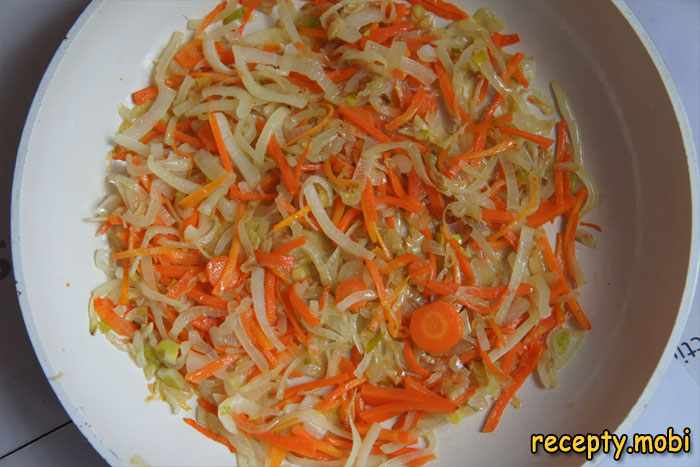
In a deep, heavy-bottomed frying pan, saute the onion and carrot in 3–4 tbsp of vegetable oil – not until golden, but until soft, for 5–7 minutes over medium heat, stirring occasionally. Over-fried vegetables turn bitter, while half-raw ones will not release their sweet juices into the gravy. The ideal state is soft, slightly translucent vegetables with no browning.
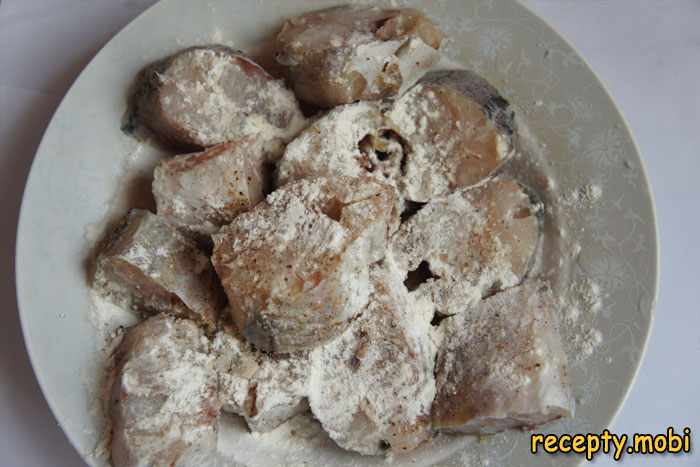
In a separate pan, heat vegetable oil to 170 °C and coat the pieces of pollock in flour (4 tbsp) – dredge them on both sides, shaking off the excess. The flour crust holds the juices inside the fish and prevents it from falling apart during stewing. Fry until a thin, light crust forms, but not until fully cooked.
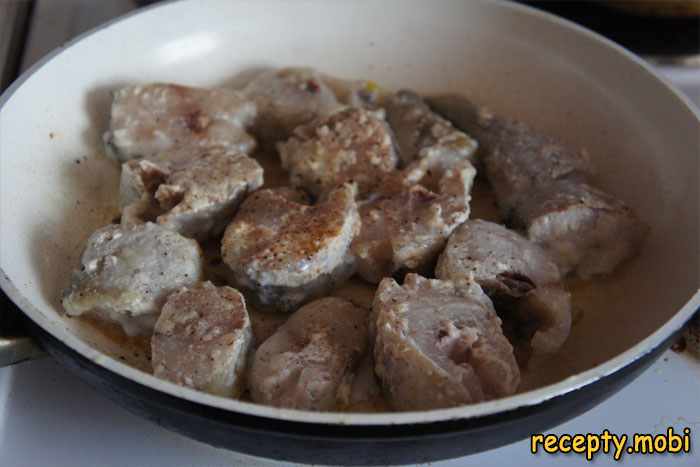
Fry the pollock on both sides for 2 minutes each over medium heat – a light golden crust is enough. The fish should stay half-raw inside, as it will finish cooking while stewing in the sauce. Carefully transfer the cooked pieces onto a plate lined with a paper towel.
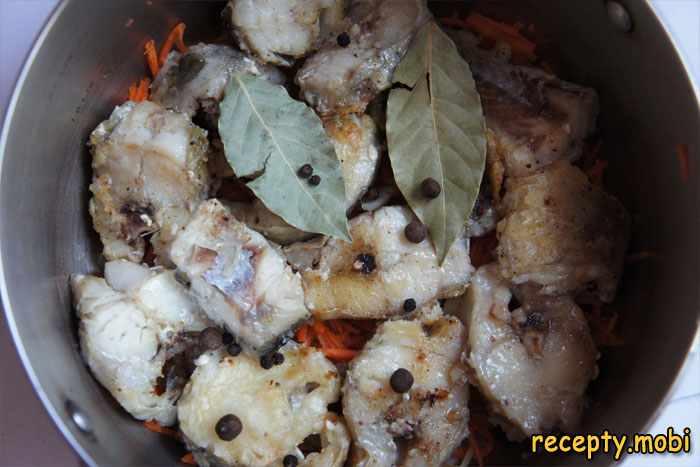
Set aside about a third of the sauteed vegetables on a separate plate – they will go on as the top layer. Onto the remaining vegetables in the deep pan, carefully lay the fried pieces of fish in a single layer.
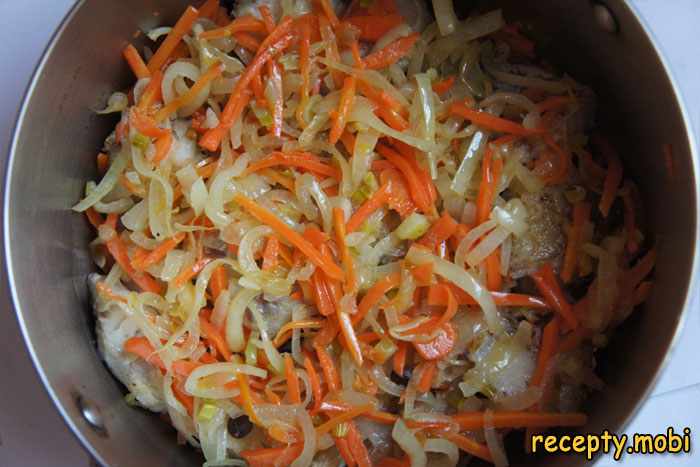
Cover the fish with the reserved vegetables – this makes a «vegetable coat» of carrots and onions that keeps the pollock from drying out during stewing and adds extra aroma to the flesh as it cooks. Spread the vegetables evenly over the entire surface of the fish.
Into the cup of tomato juice (200 ml) add 2 tbsp of tomato paste and a pinch of salt, and stir thoroughly until smooth. If the tomato juice is sour, add 1 tsp of sugar to balance it – a sour marinade makes the fish tougher. The paste makes the gravy thicker and richer in flavour.
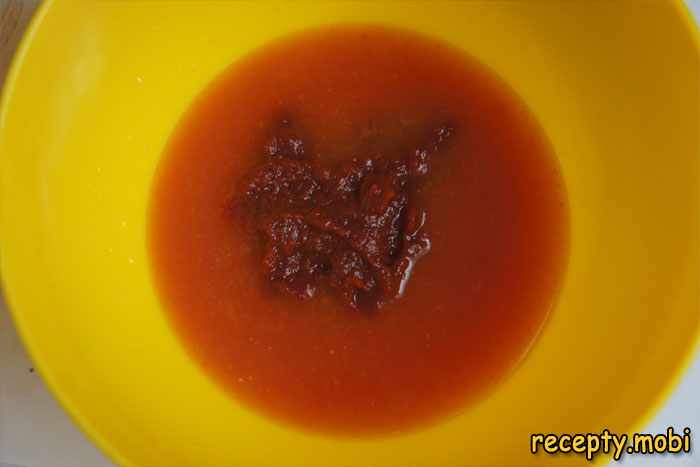
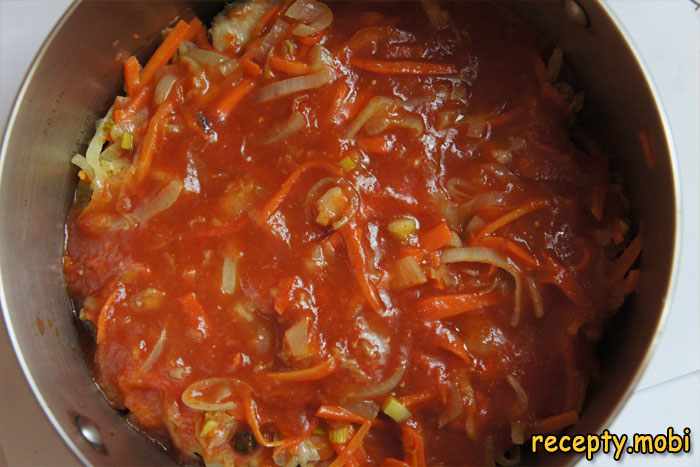
Pour the tomato sauce over the fish and vegetables, add 2–4 bay leaves and 10 black peppercorns and 5 allspice peppercorns. Bring to a boil over medium heat, then reduce to the lowest setting, cover with a lid and stew for 40 minutes. After turning off the heat, let it stand for another 15 minutes under the lid to soak in – this is critically important for the flavour to develop fully.
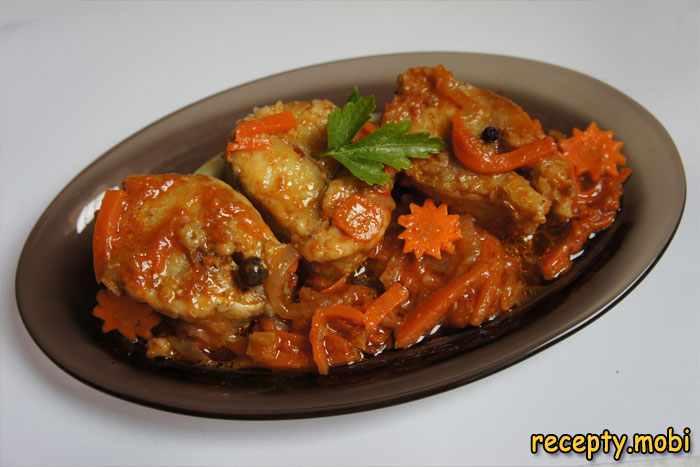
The home-made stewed pollock in tomato is ready! Serve it as a dish on its own or with any side – fluffy rice, mashed potatoes, pasta or buckwheat. Spoon the gravy over the top – this is exactly what makes the dish so juicy. Garnish with fresh herbs (dill, parsley) for colour and aroma.


Tips
- 1
Be sure to remove the black membrane inside the fish's belly – it is exactly what gives the finished dish its characteristic bitterness. Pay particular attention to this step when cleaning pollock, navaga or hake.
- 2
Instead of tomato juice, you can dilute 3 tbsp of tomato paste in 250 ml of water – the result will be similar. Home-made tomato juice from fresh tomatoes gives the richest flavour in summer.
- 3
In a multicooker, set the «Stew» mode for 50 minutes – the result will be even more tender and the gravy thicker. This is a perfect option for busy cooks.
- 4
The flour coating not only gives a crust but also thickens the tomato sauce during stewing – the gravy becomes velvety. Without flour the sauce comes out thinner, but less rich.
FAQ
Which fish, besides pollock, is suitable for stewing in tomato? +
Great options are: hake (more tender than pollock, but pricier), cod (a premium choice with dense white flesh), haddock (close to cod in flavour), and navaga (a seasonal delicacy with a tender texture). All of these are white, lean fish that are ideal for stewing in tomato sauce. Do not use red fish (salmon, trout) – its bold flavour clashes with the tomato. Pollock remains the most economical and accessible option for the home kitchen. When substituting, reduce the stewing time by 10 minutes for the tender varieties (haddock, navaga).
Why coat the fish in flour before stewing? +
The flour crust serves two important purposes: it holds the pieces together during long stewing (the fish does not fall apart in the tomato gravy) and it thickens the tomato sauce, making it denser and more coating. Without the coating the pollock will crumble when stirred, and the gravy will turn out watery. An added bonus is that the aromatic juices of the fish stay on the crust and pass into the sauce during stewing. For a diet version you can skip the coating – in that case increase the stewing time to 50 minutes.
Can pollock be cooked without frying – stewed straight away? +
Yes, you can skip the frying step – this gives a more diet-friendly version without the extra calories from oil. Place the raw pollock onto the sauteed vegetables, pour over the tomato sauce and stew for 50 minutes under a lid. The texture will be softer and more crumbly, and the gravy thinner (without flour). The calorie content drops from 169 to 130 kcal per 100 g. The downside: the fish may partly fall apart into flakes. To keep its shape, lightly fry the pollock for even 1 minute on each side – that will be enough.
How long does stewed pollock in tomato keep? +
In the refrigerator, in an airtight container, home-made pollock in tomato keeps for up to 3 days without losing quality – on the contrary, the next day the flavour becomes richer, as the gravy soaks deeper into the flesh. Reheat in the microwave for 2–3 minutes under a lid, or in a pan under a lid with 2–3 tbsp of water. The finished dish can be frozen for up to 1 month, but on thawing the fish partly loses its shape – the texture will be softer. It is better to freeze raw portioned pieces with the sauce.
- Comment
or post as a guest
Be the first to comment.