avg —
Pollock in Milk-Onion Sauce

Instructions
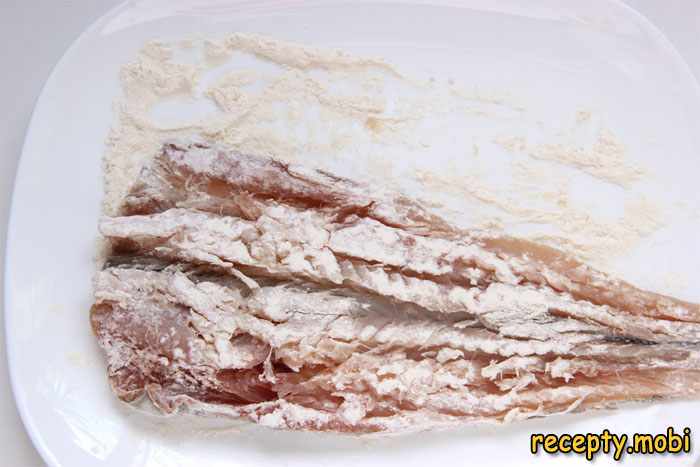
I prepare the pollock: I scrape off the scales, cut off all the fins, slice the carcass in half lengthwise and remove the backbone with the bones. This gives me two whole fillets. I heat 2–3 tablespoons of vegetable oil in a frying pan over medium heat. I coat each fillet in flour on both sides and fry until golden and cooked through – about 3–4 minutes on each side.
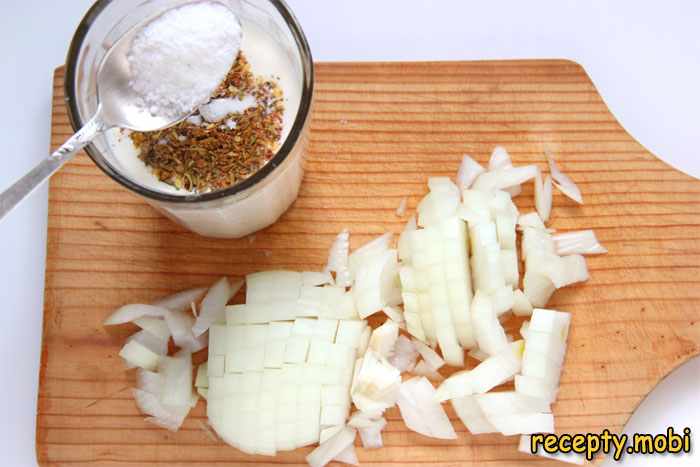
While the pollock is frying, I cut the onion into half-rings or quarter-rings – not too finely, so the onion keeps its texture. I add the fish seasoning and salt to the milk and stir well. I use any fish seasoning, or simply a mix of black pepper, dried dill and garlic.
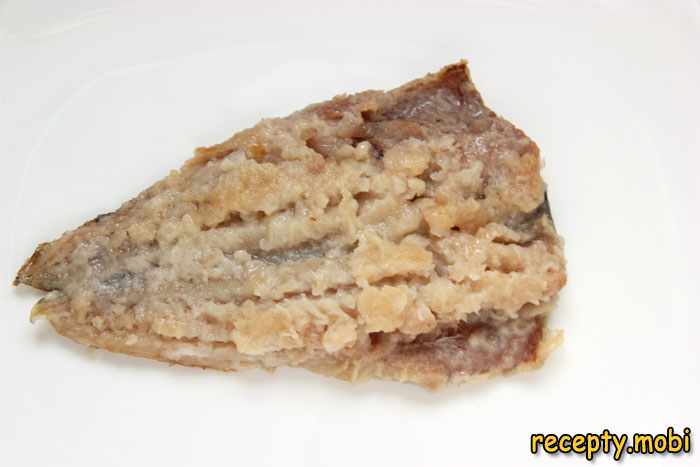
I transfer the fully fried fish to a plate and wash the frying pan to remove the leftover flour and oil – this is important for a clean sauce. I wipe the pan dry with a paper towel.
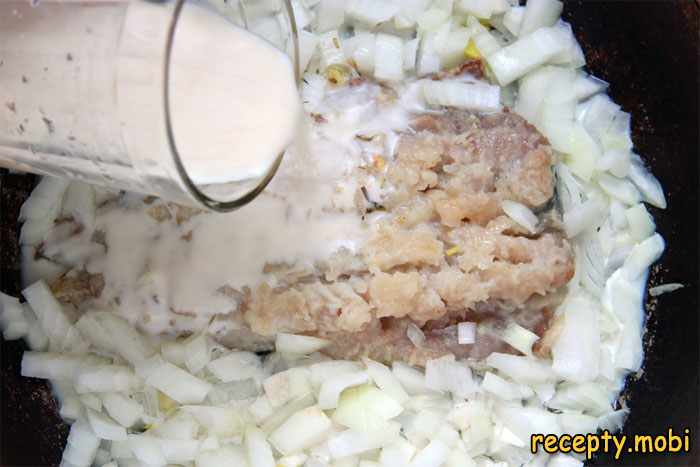
I put the clean frying pan back on medium heat and pour in 1 tablespoon of fresh oil. I return the fried pollock to the pan and fill the free space with pieces of onion. I pour in the prepared milk with the seasonings – the liquid should cover the fish about halfway.
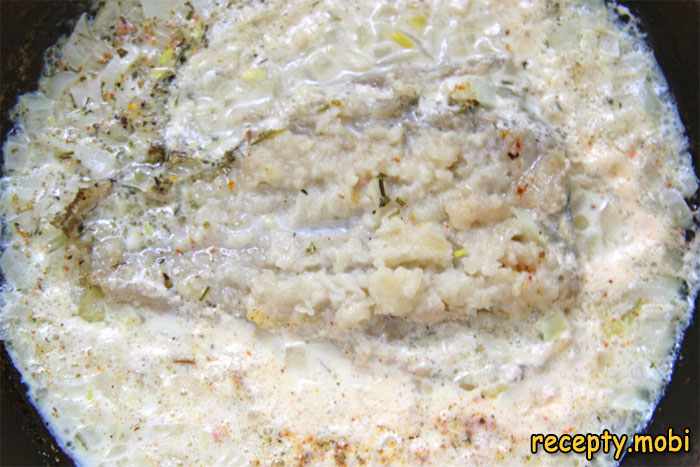
I cover the pan with a lid and stew over medium heat for no longer than 15 minutes. The milk will bubble and gradually thicken, and the onion will become soft and almost translucent. It is important not to overcook, otherwise the fish will fall apart and the sauce will become too thick.
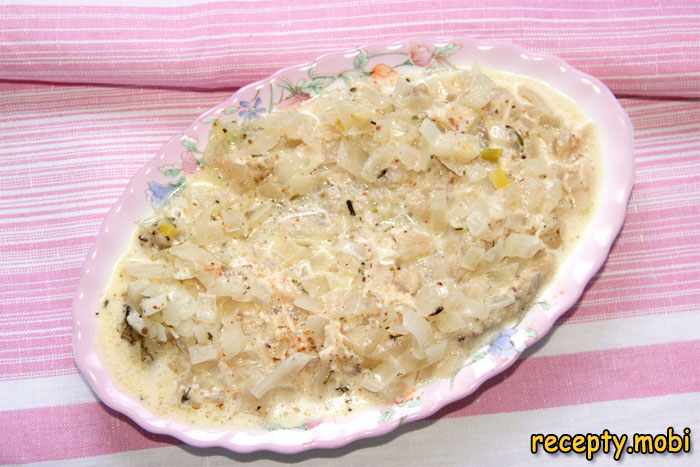
I carefully transfer the finished pollock to a deep plate, lay the onion on top and pour over the thick milk-onion sauce from the pan. I serve it hot with mashed potatoes, boiled rice or fresh bread – the sauce is so tasty that you want to mop up every last drop.


Tips
- 1
This recipe works with any white fish – hake, notothenia, grenadier, cod or sea bass. The cooking time stays the same; the main thing is not to overcook the fish while stewing.
- 2
For a thicker sauce, I add 1 tablespoon of sour cream or cream to the milk before stewing. The sauce turns out creamy and rich. You can also thicken the sauce slightly with flour – I dissolve 1 tsp of flour in cold milk before adding it.
- 3
If I don't like the fishy smell, I soak the pollock fillet in milk for 20–30 minutes before frying. The milk completely neutralises the specific aroma.
- 4
I serve the pollock with mashed potatoes, boiled rice, buckwheat or simply with fresh bread. You can sprinkle the sauce with fresh dill or parsley for colour and aroma.
FAQ
Can I use a different fish instead of pollock? +
Yes, I often cook this recipe with hake, cod, notothenia, sea bass or any other white fish. The main thing is that the fish should not be fatty or bony. The cooking time and proportions stay the same.
Do I have to coat the pollock in flour before frying? +
The flour creates a thin crust that seals the juices inside the fish and stops it from falling apart while stewing. If you skip this step, the pollock may turn out drier and break into pieces in the sauce. I recommend not skipping the flour coating.
Which milk is better to use – full-fat or skimmed? +
I use milk with 2.5–3.2% fat – it gives a rich enough sauce while keeping the dish light. Skimmed milk will make the sauce runnier, and high-fat milk (over 3.2%) will make it too calorific. Medium fat content is the best option.
How long can I store the finished pollock in milk-onion sauce? +
I keep the finished dish in the refrigerator in a closed container for no more than 1–2 days. The fish loses its freshness quickly, so I recommend cooking exactly as much as you plan to eat. Before serving, I reheat it in the microwave or in a frying pan under a lid.
Why does the milk sauce turn out too runny? +
The sauce thickens during stewing as the milk evaporates. If it stays runny, I simply continue stewing for another 3–5 minutes without the lid, or add 1 tsp of flour dissolved in cold milk. It is also important not to add too much milk – ¾ cup is enough for 300 g of fish.
- Comment
or post as a guest
Be the first to comment.